8% Off
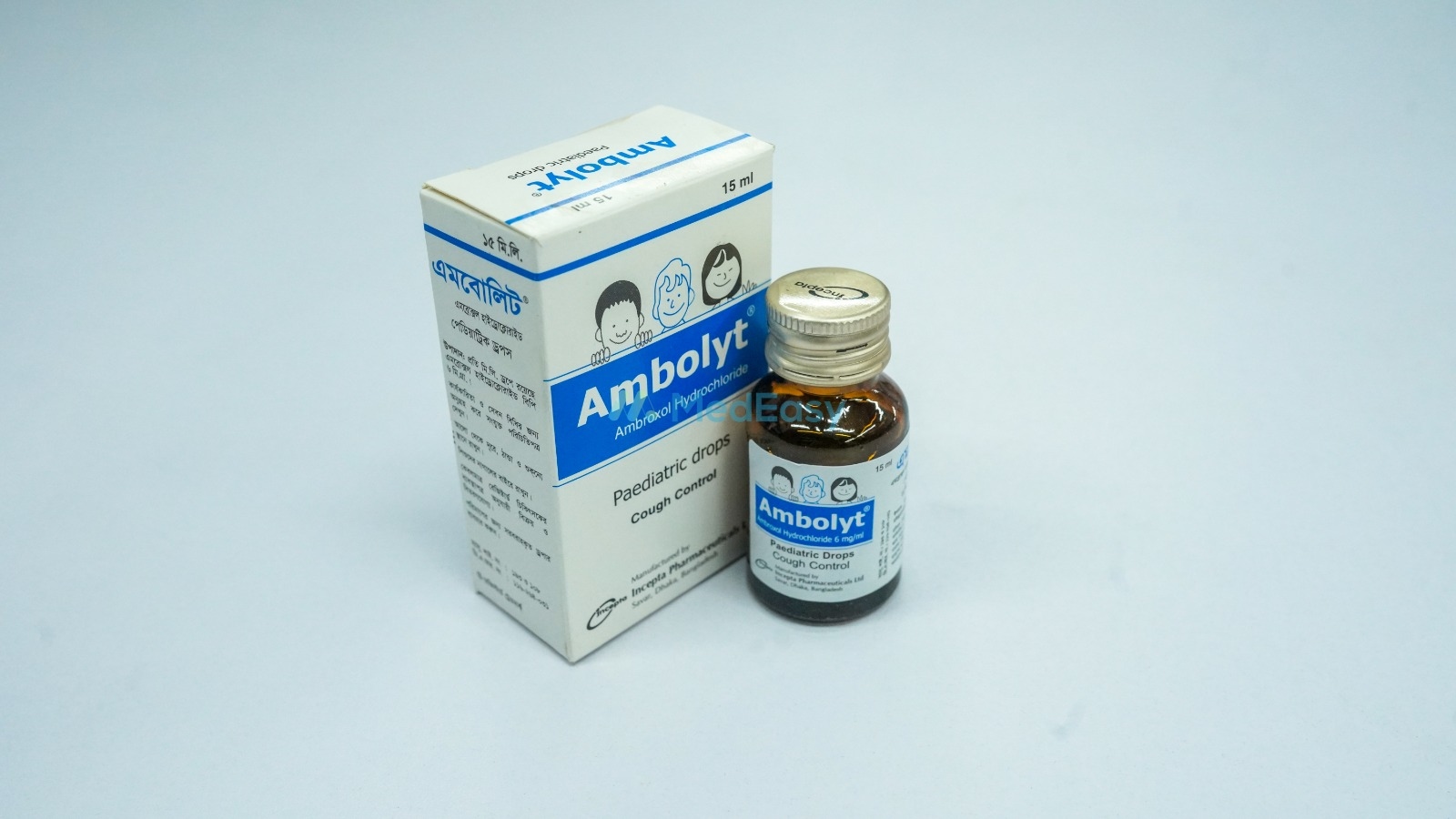
Ambolyt15 ml
Incepta Pharmaceuticals Ltd.
৳27.60
Add to cart
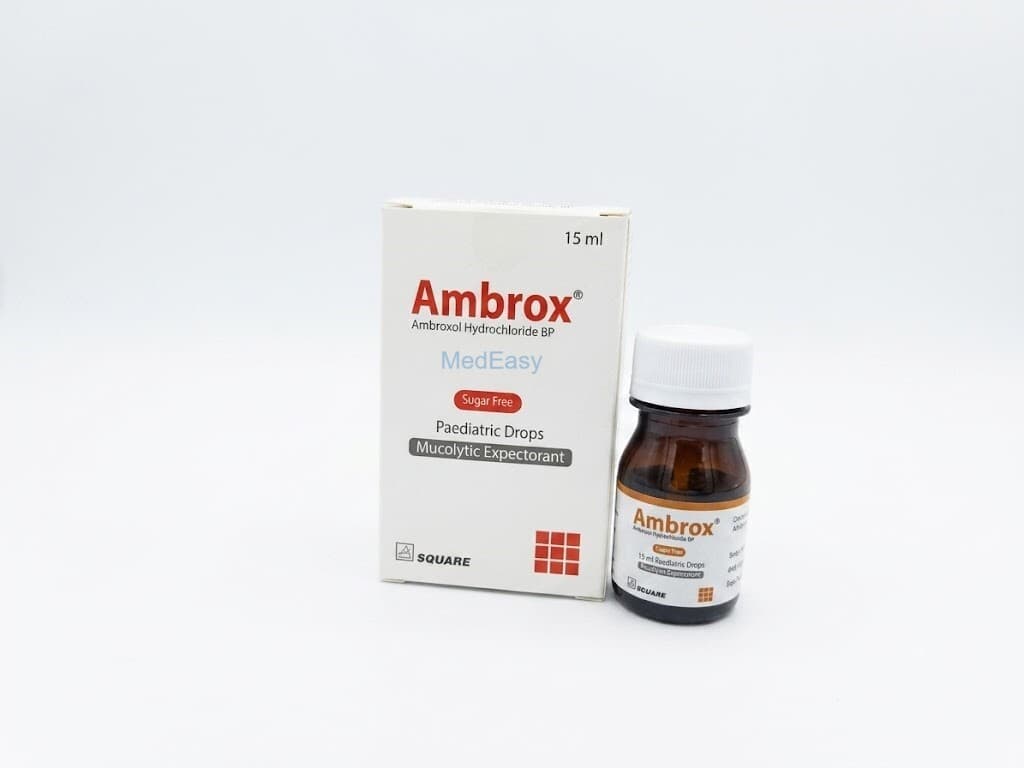
Ambrox 15 ml Pediatric Drops is available on MedEasy for ৳37.20 per 15 ml bottle, with home delivery anywhere in Bangladesh. It is manufactured by Square Pharmaceuticals PLC. Its generic name is Ambroxol Hydrochloride.

Ambrox is indicated as a mucolytic/expectorant for the symptomatic treatment of acute and chronic respiratory disorders associated with excessive, viscous mucus, including:
In some markets, Ambrox lozenge or spray formulations are used for symptomatic relief of sore throat. This is a secondary use with a lower strength of evidence than its mucolytic indication.
Ambrox treats the symptom of thick mucus; it does not treat an underlying bacterial infection and is not a substitute for antibiotics when a bacterial infection is present.
Ambroxol Hydrochloride is available in several dosage forms and strengths for different age groups:
Each formulation also contains standard pharmaceutical excipients (e.g. preservatives, sweeteners, flavoring agents); exact excipients vary by manufacturer and brand.
Ambrox is a mucoactive (mucolytic) agent and the major active metabolite of bromhexine. It is used to help clear thick, sticky mucus from the airways in respiratory conditions accompanied by a productive cough, working by breaking down mucus fibers and supporting the lung's natural clearance mechanisms so that cough becomes more productive and less effortful.
Ambrox is widely marketed in Bangladesh and internationally as tablets, sustained-release capsules, syrup, and pediatric drops. While available without a prescription in many markets, medical advice is recommended before use, particularly for infants, pregnant or breastfeeding women, and patients with chronic liver, kidney, or gastric conditions.
Ambrox belongs to the therapeutic class of Mucolytics / Expectorants, medicines used to reduce the viscosity of respiratory secretions and facilitate their clearance from the airway.
Ambroxol Hydrochloride is the principal active metabolite of bromhexine. It produces a mucolytic (secretolytic) effect by depolymerizing acid mucopolysaccharide fibers within bronchial mucus, reducing sputum viscosity. It also stimulates surfactant synthesis and release from type II pneumocytes, which improves mucociliary clearance and reduces mucus adherence to the bronchial wall. Laboratory studies also suggest mild anti-inflammatory and antioxidant properties, and a local anesthetic-like action that underlies the use of Ambroxol Hydrochloride in some throat lozenge formulations.
Onset of action typically begins within about 30 minutes of oral administration, with a noticeable clinical effect on sputum viscosity generally apparent within 1-2 days of regular use. Ambroxol Hydrochloride is well absorbed orally, extensively metabolized in the liver, and eliminated mainly via the kidneys, with a plasma elimination half-life of approximately 7-12 hours (longer with sustained-release formulations).
Dosage of Ambrox should be individualized by age, indication, and formulation. Typical dosing is summarized below; always follow the prescribing physician's instructions.
| Age / Group | Formulation | Typical Dose |
|---|---|---|
| Adults & children over 12 years | Tablet (30 mg) | 1 tablet (30 mg) 2-3 times daily, or one 75 mg sustained-release capsule once daily |
| Adults & children over 12 years | Syrup (15 mg/5 mL) | 10 mL (2 teaspoonfuls) 2-3 times daily |
| Children 5-12 years | Syrup (15 mg/5 mL) | 5 mL 2-3 times daily |
| Children 2-5 years | Syrup (15 mg/5 mL) | 2.5 mL 2-3 times daily |
| Children 1-2 years | Pediatric drops (6 mg/mL) | 1-1.25 mL twice daily |
| Infants 6-12 months | Pediatric drops (6 mg/mL) | 1 mL twice daily |
| Infants 0-6 months | Pediatric drops (6 mg/mL) | 0.5 mL twice daily, only under medical supervision |
Total daily dose of Ambrox in adults generally ranges from 30-120 mg, divided into 2-3 doses. Sustained-release capsules are taken once daily, ideally after a meal. Ambrox may be taken with or without food, though taking it with food can help reduce stomach upset.
Ambrox tablets and sustained-release capsules should be swallowed whole with a glass of water and should not be crushed or chewed. Syrup and pediatric drops should be measured accurately using the measuring cup or dropper supplied with the product, and the bottle should be shaken well before use. Ambrox can be taken with or without food, though taking it after meals may help minimize gastrointestinal discomfort. Adequate fluid intake is recommended while taking Ambrox, as this supports its mucolytic effect.
Ambrox has a low potential for clinically significant drug interactions. Notable considerations include:
No other well-established, clinically significant drug interactions have been documented for Ambrox. Patients should inform their physician of all medicines they are taking before starting Ambrox.
Ambroxol Hydrochloride is contraindicated in:
No other absolute contraindications are well established for Ambroxol Hydrochloride. Other cautions, such as peptic ulcer disease or severe hepatic/renal impairment, are addressed under Precautions and Warnings rather than being absolute contraindications.
Most patients tolerate Ambrox well. Reported side effects include:
Patients should stop Ambrox and seek immediate medical attention if signs of a severe allergic or skin reaction occur.
Ambrox should be used during pregnancy only if clearly needed and if the potential benefit justifies the potential risk to the fetus; conservative practice generally advises avoiding use during the first trimester. Animal reproduction studies have not shown harmful effects, but adequate, well-controlled studies in pregnant women are limited. A physician should always be consulted before using Ambrox during pregnancy.
It is not established whether Ambrox passes into breast milk in clinically significant amounts. As a precaution, use during breastfeeding should occur only on medical advice, weighing the benefit against any unknown risk to the nursing infant.
Use Ambrox with caution in the following situations:
Discontinue Ambrox and consult a physician if cough persists beyond 5-7 days, recurs, or is accompanied by high fever, skin rash, persistent headache, or difficulty breathing, as this may indicate a condition requiring different treatment. Stop immediately and seek medical care if any sign of a skin or hypersensitivity reaction develops (see Side Effects). Ambrox should not be combined with cough suppressants (see Interaction).
Overdose with Ambrox is generally expected to cause, at most, transient gastrointestinal disturbances (nausea, vomiting, diarrhea, abdominal pain), restlessness, or drooling, based on available data. In case of a known or suspected overdose of Ambrox, seek immediate medical attention or contact a poison control center or emergency services; do not attempt to manage a suspected overdose at home. Treatment is generally supportive and symptomatic.
Store Ambrox at room temperature (below 30°C), away from light and moisture. Keep out of reach of children.
Ambrox and its metabolites are eliminated mainly via the kidneys; in patients with severe renal impairment, elimination may be reduced, and dose reduction or extended dosing intervals should be considered under medical supervision.
Ambrox is extensively metabolized in the liver; patients with severe hepatic impairment may have reduced clearance, and lower doses or closer monitoring are advised.
No specific dose adjustment is generally required for Ambrox in elderly patients, but age-related decline in renal or hepatic function should be considered.
See Pediatric Uses and Dosage and Administration for age-appropriate dosing of Ambrox.
Ambrox is generally intended for short-term symptomatic use. If cough or respiratory symptoms do not improve within 5-7 days of starting Ambrox, or if they worsen, medical review is recommended, as this may indicate an underlying condition needing separate treatment (e.g. a bacterial infection). For chronic bronchitis or COPD, a physician may prescribe Ambrox for longer, intermittent courses as part of overall disease management.
Ambroxol Hydrochloride is classified as a Mucolytic Agent / Expectorant, and is the major active metabolite of the related mucolytic agent bromhexine.
Ambroxol Hydrochloride reduces the viscosity of mucus by breaking down acidic mucopolysaccharide fibers within bronchial secretions and by stimulating the production and release of pulmonary surfactant from alveolar type II cells. This dual action loosens thick mucus and improves mucociliary transport, making cough more effective at clearing the airway.
Use of Ambrox in children should follow age-appropriate, weight-based dosing under medical guidance:
Safety and efficacy of Ambrox sustained-release capsules have not been established in children under 12 years; the syrup or pediatric drop formulations should be used instead. Parents and caregivers should not exceed the recommended dose of Ambrox and should consult a pediatrician for infants and for symptoms lasting more than a few days.
Q: What is Ambrox 15 ml Pediatric Drops used for?
A: Ambrox 15 ml Pediatric Drops is a mucolytic (expectorant) medicine used to loosen and clear thick, sticky mucus from the airways in respiratory conditions such as acute and chronic bronchitis, where cough is accompanied by excessive, viscous phlegm.
Q: Is Ambrox 15 ml Pediatric Drops an antibiotic?
A: No. Ambrox 15 ml Pediatric Drops is not an antibiotic and does not kill bacteria or treat infections directly; it only helps clear mucus. If a bacterial infection is suspected, a physician may separately prescribe an antibiotic alongside Ambrox 15 ml Pediatric Drops.
Q: Can Ambrox 15 ml Pediatric Drops be given to infants?
A: Ambrox 15 ml Pediatric Drops pediatric drops can be used in infants only under medical supervision, at doses appropriate for age and weight. Use in infants under 6 months should be guided by a physician, since safety data in this age group are limited.
Q: Can Ambrox 15 ml Pediatric Drops be taken during pregnancy?
A: Ambrox 15 ml Pediatric Drops should be used during pregnancy only if a physician determines it is clearly needed and the benefit outweighs any potential risk; it is generally avoided during the first trimester as a precaution. Always consult a physician before using Ambrox 15 ml Pediatric Drops while pregnant.
Q: What should I do if I miss a dose of Ambrox 15 ml Pediatric Drops?
A: If a dose of Ambrox 15 ml Pediatric Drops is missed, take it as soon as remembered unless it is almost time for the next dose, in which case skip the missed dose and resume the normal schedule. Do not double the next dose of Ambrox 15 ml Pediatric Drops.
Q: What side effects should make me stop Ambrox 15 ml Pediatric Drops and see a doctor?
A: Stop Ambrox 15 ml Pediatric Drops and seek immediate medical attention if you notice a skin rash, hives, swelling of the face, lips, or throat, difficulty breathing, or any other sign of a severe allergic reaction while taking Ambrox 15 ml Pediatric Drops.
Disclaimer
The information provided is accurate to the best of our knowledge, but it does not replace professional medical advice. We cannot guarantee its completeness or accuracy, and the absence of specific information about a drug should not be taken as an endorsement. We are not responsible for any consequences arising from this information, so please consult a healthcare professional for any concerns or questions.