
7% Off
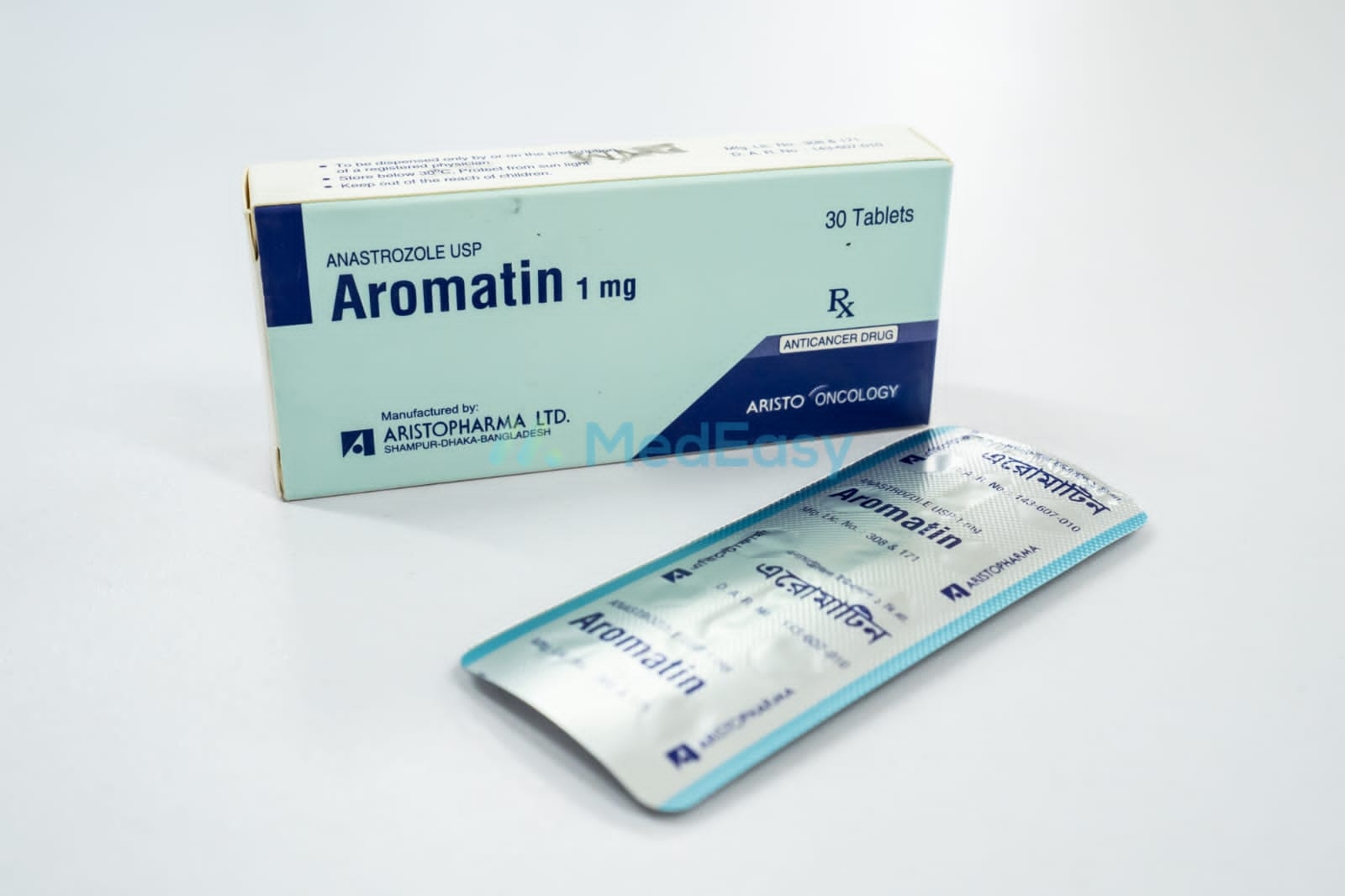
Aromatin1 mg
Aristopharma Ltd.
৳465.00
Add to cart


Anacare is a non-steroidal aromatase inhibitor indicated in postmenopausal women for hormone receptor (HR)-positive breast cancer. Its established, evidence-based uses are:
Patients with estrogen receptor-negative disease, and those who did not previously respond to tamoxifen, are unlikely to respond to Anacare.
Anacare is not indicated in premenopausal women, because its mechanism of lowering estrogen depends on postmenopausal physiology (peripheral aromatization); it does not reliably suppress ovarian estrogen production. It is sometimes used off-label (unlicensed, based on limited evidence) for conditions such as pubertal gynecomastia in boys or fertility-related ovulation induction protocols, but efficacy and safety for these uses have not been established, and such use should occur only under specialist supervision.
Anacare is an orally active, potent and highly selective non-steroidal aromatase inhibitor. It belongs to the class of hormonal antineoplastic agents used to treat hormone-sensitive breast cancer in postmenopausal women. Unlike cytotoxic chemotherapy, Anacare works by reducing the body's production of estrogen, thereby depriving estrogen-dependent tumor cells of the hormone signal they need to grow.
It is supplied as an oral tablet (typically 1 mg strength) and is taken once daily as long-term maintenance therapy under oncologist supervision.
Aromatase Inhibitor (non-steroidal) — Hormonal Antineoplastic Agent used in the treatment of hormone receptor-positive breast cancer.
Anastrozole potently and selectively inhibits the aromatase enzyme, which converts androgens (androstenedione and testosterone) produced in the adrenal glands and peripheral tissues into estrogens (estrone and estradiol). In postmenopausal women, peripheral aromatization is the principal source of circulating estrogen. By blocking this pathway, Anastrozole significantly lowers serum estradiol levels, depriving estrogen receptor-positive breast tumor cells of the hormonal stimulus that drives their growth.
Anastrozole does not have significant effects on adrenal corticosteroid or aldosterone synthesis, so routine corticosteroid replacement is not required.
| Indication | Adult Dose | Typical Duration |
|---|---|---|
| Adjuvant treatment of early breast cancer (postmenopausal, HR-positive) | 1 mg orally once daily | Commonly up to 5 years (based on major clinical trials), or as directed by the oncologist |
| Advanced/metastatic breast cancer, first-line | 1 mg orally once daily | Continued until disease progression is documented |
| Advanced breast cancer after tamoxifen failure | 1 mg orally once daily | Continued until disease progression is documented |
Tablets may be taken with or without food, at approximately the same time each day, to maintain consistent blood levels. If a dose is missed, it should be taken as soon as remembered unless it is nearly time for the next dose; doses should not be doubled.
No dosage adjustment is required in renal impairment or in the elderly. No adjustment is required in mild-to-moderate hepatic impairment; Anacare has not been formally studied in severe hepatic impairment, so it should be used with caution in that setting. See Use in Special Populations for details.
Well-documented, clinically significant interactions with Anacare include:
Anacare is not a significant inhibitor of major cytochrome P450 enzymes at therapeutic doses, so it is unlikely to meaningfully alter the metabolism of most other co-administered drugs; nonetheless, patients should inform their physician of all medicines, supplements, and herbal products being used.
Anastrozole is contraindicated in:
Anastrozole is also not indicated for use in premenopausal women, since its efficacy depends on the low-estrogen physiology of the postmenopausal state; use outside postmenopausal status is considered inappropriate rather than beneficial.
Adverse effects reported with Anacare in clinical trials, listed by frequency:
Patients should seek prompt medical attention for severe rash, swelling, breathing difficulty, chest pain, or yellowing of the skin/eyes.
Pregnancy: Anacare is contraindicated in pregnancy and can cause fetal harm based on animal reproduction studies. It must not be used by women who are or may become pregnant. Postmenopausal status should be confirmed before starting therapy; in women of uncertain menopausal status, pregnancy must be excluded first. Effective non-hormonal contraception is advised for women who are not clearly postmenopausal, continued during treatment and for at least 3 weeks after the last dose.
Lactation: It is not known whether Anacare passes into breast milk. Because of the potential for serious adverse reactions in a nursing infant, breastfeeding is not recommended during treatment and for at least 2 weeks after the last dose. As Anacare is used almost exclusively in postmenopausal women, lactation is rarely a practical concern, but the physician should be consulted regarding any breastfeeding plans.
Limited clinical experience with Anacare overdose exists. Doses up to 60 mg as a single dose and up to 10 mg daily have been tolerated in trials without life-threatening effects, but this does not mean higher doses are safe. There is no specific antidote for Anacare overdose.
If an overdose is suspected, seek immediate medical attention or contact emergency services / a poison control center. Management is supportive and symptomatic, including monitoring of vital signs and general clinical status; because Anacare has low plasma protein binding, dialysis may be considered by treating physicians if clinically indicated. Do not attempt home treatment for a suspected overdose.
Store at room temperature (below 30°C), away from light and moisture. Keep out of reach of children.
For adjuvant treatment of early breast cancer, Anacare is commonly continued for up to 5 years, based on major clinical trial data, though the optimal total duration (including possible extended therapy) should be individualized by the treating oncologist based on recurrence risk and tolerability. For advanced or metastatic disease, Anacare is continued until disease progression or unacceptable toxicity occurs. Treatment should never be stopped or interrupted without consulting the prescribing physician.
Aromatase inhibitors (non-steroidal); Hormonal antineoplastic agents used in breast cancer treatment.
D (legacy FDA pregnancy category system). Current U.S. labeling follows the Pregnancy and Lactation Labeling Rule (PLLR) narrative format and states that this medicine can cause fetal harm; it remains contraindicated in pregnancy.
Safety and efficacy of Anacare in pediatric patients have not been established for routine use. It has been studied in limited clinical trials for pubertal gynecomastia in boys and for McCune-Albright Syndrome in girls, but these trials did not demonstrate a statistically significant benefit over placebo for the studied endpoints. Anacare is therefore not recommended for use in children outside of specialist-supervised clinical settings.
Q: What is Anacare 1 mg Tablet used for?
A: Anacare 1 mg Tablet is used to treat hormone receptor-positive breast cancer in postmenopausal women, including as adjuvant therapy after surgery and for advanced or metastatic disease.
Q: How should I take Anacare 1 mg Tablet?
A: Take one tablet (typically 1 mg) by mouth once daily, with or without food, at the same time each day. Do not stop taking it without talking to your doctor, even if you feel well.
Q: Can Anacare 1 mg Tablet be used during pregnancy?
A: No. Anacare 1 mg Tablet is contraindicated in pregnancy because it can cause fetal harm. Your postmenopausal status should be confirmed before starting treatment, and effective non-hormonal contraception should be used if there is any possibility of pregnancy, continuing for at least 3 weeks after the last dose.
Q: What are the most common side effects of Anacare 1 mg Tablet?
A: The most common side effects include hot flashes, joint pain or stiffness, fatigue, mood changes, headache, and thinning of the bones (osteoporosis) with long-term use. Report severe joint pain, bone pain, or signs of allergic reaction to your doctor.
Q: Can I take Anacare 1 mg Tablet together with tamoxifen?
A: No, combining Anacare 1 mg Tablet with tamoxifen is not recommended, as tamoxifen reduces Anacare 1 mg Tablet blood levels and the combination has shown no additional benefit over Anacare 1 mg Tablet alone.
Q: What should I do if I miss a dose or take too much Anacare 1 mg Tablet?
A: If you miss a dose, take it as soon as you remember unless it is almost time for your next dose — do not double up. If an overdose is suspected, seek immediate medical attention or contact a poison control center right away.
Disclaimer
The information provided is accurate to the best of our knowledge, but it does not replace professional medical advice. We cannot guarantee its completeness or accuracy, and the absence of specific information about a drug should not be taken as an endorsement. We are not responsible for any consequences arising from this information, so please consult a healthcare professional for any concerns or questions.

