
10% Off
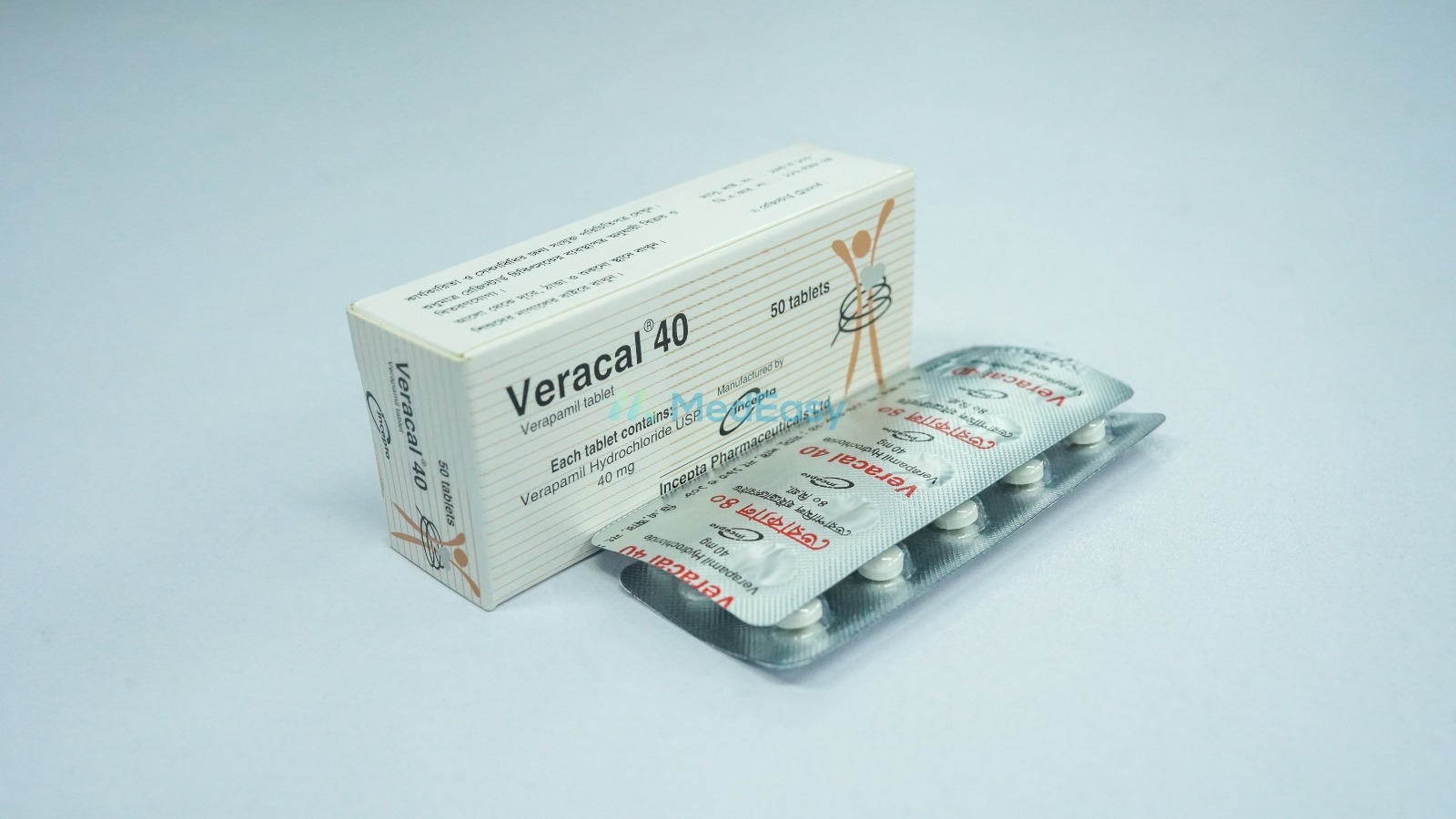
Veracal40 mg
Incepta Pharmaceuticals Ltd.
৳20.25
Add to cart


Angimil is a non-dihydropyridine calcium channel blocker used for the following indications, classified by strength of evidence:
Angimil is frequently combined with a thiazide diuretic, an ACE inhibitor, or a long-acting nitrate when a single agent does not adequately control blood pressure or angina symptoms.
The decision to use Angimil for any indication, especially off-label ones, should be individualized by a physician.
Each formulation contains Verapamil Hydrochloride INN as the active pharmaceutical ingredient.
Exact strengths and available dosage forms may vary by manufacturer and market; refer to the specific product label for confirmed composition.
Angimil is a synthetic calcium channel blocker belonging to the phenylalkylamine chemical class. Unlike the dihydropyridine calcium channel blockers (e.g., amlodipine, nifedipine), which act predominantly on vascular smooth muscle, Angimil has significant effects on both cardiac tissue and vascular smooth muscle. This gives it useful antihypertensive, antianginal, and antiarrhythmic properties, making it distinct among calcium channel blockers in its ability to control heart rate and rhythm in addition to lowering blood pressure and relieving angina.
Angimil is available in immediate-release, sustained-release, and injectable formulations, allowing flexible use across chronic oral therapy and acute intravenous management of arrhythmias.
Angimil belongs to the Calcium Channel Blocker class, specifically the non-dihydropyridine (phenylalkylamine) subgroup. It functions as an antihypertensive, antianginal, and antiarrhythmic agent.
Verapamil Hydrochloride inhibits the influx of calcium ions through voltage-sensitive L-type calcium channels in cardiac muscle and vascular smooth muscle, without altering serum calcium concentrations.
Dosage of Angimil must be individualized based on indication, formulation, patient response, and tolerability. Typical adult dosing ranges are summarized below; always follow the prescribing physician's instructions.
| Indication | Typical adult dose |
|---|---|
| Hypertension (immediate-release) | 80 mg three times daily, titrated to response (usual range 240-480 mg/day in divided doses) |
| Hypertension (sustained-release) | 120-240 mg once daily, may be increased up to 480 mg/day |
| Chronic stable / vasospastic angina | 80-120 mg three times daily (immediate-release); up to 480 mg/day in divided or sustained-release doses |
| Supraventricular arrhythmia prophylaxis (oral) | 240-480 mg/day in divided doses |
| Acute PSVT (intravenous, adult) | 5-10 mg (0.075-0.15 mg/kg) IV over at least 2 minutes; a repeat dose of 10 mg may be given after 15-30 minutes if needed, under continuous cardiac monitoring |
Dose reduction and careful titration are recommended in patients with hepatic impairment, as Angimil clearance is significantly reduced (up to 70% of normal). Caution and slower titration are also advised in significant renal impairment.
If a dose of Angimil is missed, it should be taken as soon as remembered unless it is close to the time of the next dose, in which case the missed dose should be skipped. Doses should not be doubled.
Angimil has several clinically significant drug interactions:
This list is not exhaustive. Patients should inform their physician of all medicines, supplements, and herbal products they are taking before starting Angimil.
Verapamil Hydrochloride is contraindicated in patients with:
Side effects of Angimil vary by formulation and dose. Constipation is notably common and characteristic of Angimil among calcium channel blockers.
Patients should seek prompt medical attention for signs of very slow heartbeat, severe dizziness/fainting, or worsening shortness of breath while taking Angimil.
Pregnancy: Animal reproduction studies have not shown clear evidence of fetal harm, but adequate and well-controlled studies in pregnant women are lacking. Angimil should be used during pregnancy only if the potential benefit to the mother justifies the potential risk to the fetus. A physician should be consulted before use in pregnancy.
Lactation: Angimil is excreted in human breast milk. Because of the potential for adverse effects in a nursing infant, a decision should be made whether to discontinue breastfeeding or discontinue Angimil, taking into account the importance of the drug to the mother, in consultation with a physician.
Angimil should be used with caution in the following situations:
Abrupt discontinuation of Angimil should be avoided; dose reduction should be gradual under medical supervision, particularly in patients being treated for angina.
Overdose of Angimil can cause severe hypotension, bradycardia progressing to complete heart block, cardiogenic shock, and cardiac arrest. Signs and symptoms may include marked dizziness, confusion, slurred speech, extreme weakness, and loss of consciousness.
Suspected overdose of Angimil is a medical emergency. Seek immediate medical attention or contact emergency services/a poison control center right away. Do not attempt to manage a suspected overdose at home. Management will require hospital-based supportive care and cardiac monitoring, which should only be provided by qualified medical personnel.
Store at room temperature (below 30°C), away from light and moisture. Keep out of reach of children.
Safety and efficacy of oral Angimil have not been well established in children. Intravenous Angimil has been used for supraventricular tachyarrhythmias in children under specialist cardiology supervision, but intravenous Angimil should generally be avoided in neonates and young infants because of the risk of severe hypotension, bradycardia, and cardiac arrest in this age group.
Elderly patients may have reduced clearance of Angimil and increased sensitivity to its hypotensive and cardiac conduction effects; a lower starting dose and gradual titration are recommended.
Substantially reduced doses are required due to decreased first-pass metabolism and clearance (see Dosage and Administration).
Dose adjustment and monitoring may be needed, though Angimil is primarily hepatically metabolized.
Angimil is generally used as a long-term, ongoing therapy for chronic conditions such as hypertension, chronic angina, and rate control of atrial fibrillation/flutter, with duration determined by the treating physician based on clinical response and tolerability. For acute intravenous use in arrhythmia termination, treatment is a single or limited repeat dose under monitored conditions. Angimil should not be stopped abruptly without medical advice, particularly when used for angina, as sudden discontinuation may worsen symptoms.
Calcium Channel Blocker - Non-dihydropyridine (Phenylalkylamine derivative); antihypertensive, antianginal, and antiarrhythmic agent. Verapamil Hydrochloride is the representative agent of this subclass.
Verapamil Hydrochloride blocks the slow inward movement of calcium ions through L-type calcium channels located in cardiac myocytes and vascular smooth muscle cells. By reducing intracellular calcium availability, it decreases smooth muscle contraction (causing vasodilation) and reduces the force and rate of myocardial contraction. It also depresses the rate of spontaneous depolarization of the SA node and slows conduction velocity through the AV node, which is the basis for its effectiveness in controlling supraventricular arrhythmias.
C
The safety and efficacy of oral Angimil in pediatric patients have not been well established, and it is generally not recommended for routine pediatric hypertension management. Intravenous Angimil may be used by pediatric cardiology specialists for termination of supraventricular tachyarrhythmias in older infants, children, and adolescents, with appropriate dose adjustment by body weight and continuous cardiac monitoring.
Intravenous Angimil should generally not be used in neonates and young infants because of reports of serious adverse hemodynamic effects, including severe hypotension, bradycardia, and cardiac arrest, in this age group. Use in this population should only occur under close specialist supervision when no safer alternative is appropriate.
Q: What is Angimil 40 mg Tablet used for?
A: Angimil 40 mg Tablet is used to treat high blood pressure (hypertension), certain types of chest pain (angina, including exercise-induced and vasospastic angina), and to control heart rate in certain fast heart rhythm conditions such as atrial fibrillation, atrial flutter, and paroxysmal supraventricular tachycardia.
Q: How should I take Angimil 40 mg Tablet?
A: Immediate-release tablets of Angimil 40 mg Tablet are usually taken multiple times a day with or without food, while sustained/extended-release forms are usually taken once or twice daily and must be swallowed whole, not crushed or chewed. Always follow your physician's specific instructions and do not change your dose without medical advice.
Q: What are the common side effects of Angimil 40 mg Tablet?
A: The most common side effects of Angimil 40 mg Tablet include constipation, swelling of the ankles or feet, headache, dizziness, fatigue, and flushing. Less commonly, it can cause a slow heart rate, low blood pressure, or heart conduction problems. Contact your doctor promptly if you experience severe dizziness, fainting, a very slow pulse, or worsening shortness of breath.
Q: Who should not take Angimil 40 mg Tablet?
A: Angimil 40 mg Tablet should not be used by people who are allergic to it, who have severe heart failure, very low blood pressure or cardiogenic shock, certain heart conduction disorders (sick sinus syndrome or second-/third-degree AV block without a pacemaker), atrial fibrillation/flutter with an accessory conduction pathway (such as Wolff-Parkinson-White syndrome), or who are receiving an intravenous beta-blocker at the same time as intravenous Angimil 40 mg Tablet. Always disclose your full medical history to your physician before starting this medicine.
Q: Can Angimil 40 mg Tablet be taken during pregnancy or breastfeeding?
A: Angimil 40 mg Tablet should be used during pregnancy only if the potential benefit justifies the potential risk to the fetus, and it does pass into breast milk. Pregnant or breastfeeding women should consult their physician before starting or continuing Angimil 40 mg Tablet, so that risks and benefits can be weighed for their specific situation.
Q: What should I do if I miss a dose or take too much Angimil 40 mg Tablet?
A: If you miss a dose of Angimil 40 mg Tablet, take it as soon as you remember unless it is nearly time for your next dose, in which case skip the missed dose - do not double up. If you or someone else has taken too much Angimil 40 mg Tablet and shows signs such as severe dizziness, fainting, a very slow heartbeat, or confusion, seek emergency medical care or contact a poison control center immediately.
Disclaimer
The information provided is accurate to the best of our knowledge, but it does not replace professional medical advice. We cannot guarantee its completeness or accuracy, and the absence of specific information about a drug should not be taken as an endorsement. We are not responsible for any consequences arising from this information, so please consult a healthcare professional for any concerns or questions.
