
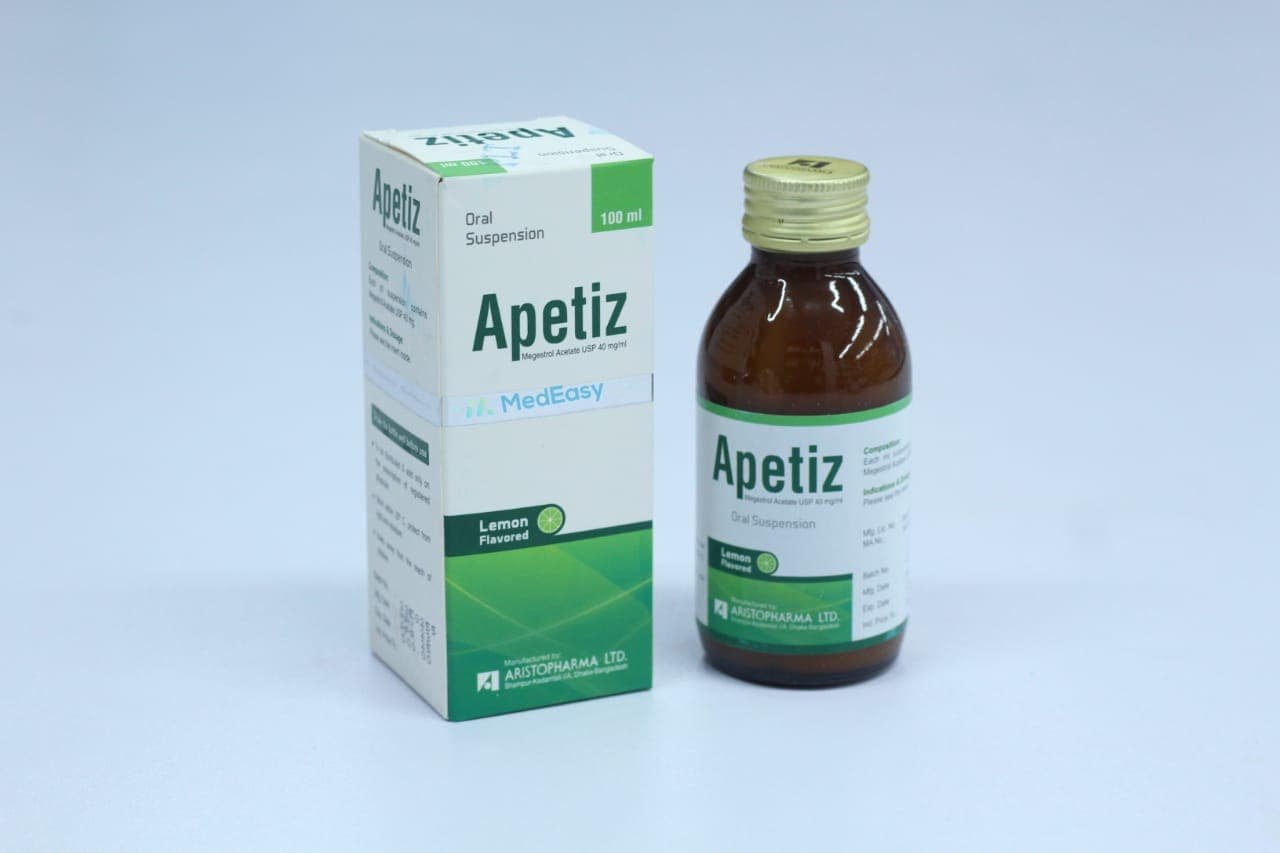

Medicine overview
Indications of Apetiz
FDA-Approved Indications
- Anorexia, cachexia, or unexplained significant weight loss in patients with acquired immunodeficiency syndrome (AIDS) - Apetiz oral suspension is approved for the management of significant involuntary weight loss associated with HIV/AIDS.
- Palliative treatment of advanced breast cancer - Apetiz tablets are approved for palliative management of advanced, recurrent, or metastatic breast carcinoma in women whose disease has progressed following surgery and/or radiotherapy.
- Palliative treatment of advanced endometrial carcinoma - Apetiz tablets are approved for palliative management of advanced or recurrent endometrial carcinoma, generally in patients not considered candidates for surgery or radiotherapy.
Guideline-Supported / Commonly Used Off-Label Uses
- Cancer-associated anorexia-cachexia syndrome (non-AIDS malignancies) - Apetiz is widely used off-label, and supported by some palliative-care and oncology guidelines, as an appetite stimulant to improve weight and quality of life in patients with cancer-related cachexia.
- Anorexia/weight loss in other chronic debilitating conditions - used off-label under close medical supervision when standard measures have failed; the potential benefit of Apetiz must be individually weighed against thromboembolic and other risks.
Apetiz is not indicated for the prevention of pregnancy and should never be used as a contraceptive.
Composition
Megestrol Acetate is the active ingredient in each tablet and in each dose of the oral suspension. Megestrol Acetate is a synthetic derivative of the naturally occurring hormone progesterone. In Bangladesh, Megestrol Acetate is commonly available as tablets (40 mg and 160 mg strengths) and as an oral suspension (200 mg/5 mL), formulated with standard pharmaceutical excipients to ensure stability and appropriate absorption.
Description
Apetiz is a synthetic, orally active derivative of progesterone (a progestin). It was originally developed as a hormonal agent for the palliative treatment of certain hormone-responsive cancers, and was later found, at higher doses, to stimulate appetite and promote weight gain in patients with cachexia and anorexia related to cancer or AIDS. Apetiz is available as tablets and as an oral suspension, used at different dose ranges for its different indications.
Therapeutic Class
Progestin (Synthetic Progestogen); Appetite Stimulant; Hormonal Antineoplastic Agent - Apetiz belongs to this therapeutic class.
Pharmacology
Pharmacodynamics
Megestrol Acetate is a synthetic progestin that binds to progesterone receptors, producing antiestrogenic and antigonadotropic effects that underlie its antitumor activity in hormone-responsive breast and endometrial cancers. At the higher doses used for appetite stimulation, Megestrol Acetate exerts glucocorticoid-like activity and is believed to stimulate appetite by modulating hypothalamic neuropeptide Y and by inhibiting production of pro-inflammatory cytokines (such as TNF-alpha, IL-1, and IL-6) that contribute to cachexia.
Pharmacokinetics
Megestrol Acetate is well absorbed after oral administration, with peak plasma concentrations achieved within a few hours; absorption of the oral suspension is enhanced when taken with food. Megestrol Acetate is extensively metabolized in the liver and excreted mainly via the kidneys, with a terminal half-life of approximately 15-20 hours, supporting once- or divided-daily dosing.
Dosage & Administration of Apetiz
Dosage of Apetiz by Indication
| Indication | Recommended Dose of Apetiz |
|---|---|
| Anorexia, cachexia, or unexplained weight loss in AIDS | Oral suspension: initiate at 400-800 mg/day (10-20 mL); usual effective dose is 800 mg/day (20 mL) once daily |
| Advanced/recurrent/metastatic breast cancer (palliative) | Tablets: 160 mg/day, given as 40 mg four times daily |
| Advanced/recurrent endometrial carcinoma (palliative) | Tablets: 40-320 mg/day in divided doses |
A treatment trial of at least two months with Apetiz is generally recommended before concluding that treatment has failed to produce a response, particularly for the oncologic indications. See Administration and Duration of Treatment for further guidance.
Administration of Apetiz
Apetiz tablets may be taken with or without food, but should be taken consistently the same way each time. The oral suspension of Apetiz should be shaken well before each use and measured with an accurate oral dosing device (not a household spoon); taking it with food may improve absorption. If a dose of Apetiz is missed, take it as soon as remembered unless it is close to the time of the next dose, in which case skip the missed dose - do not double the next dose. Apetiz should be taken exactly as prescribed by a physician, and any change in dose or discontinuation, especially after prolonged use, should be discussed with a physician first because of the risk of adrenal insufficiency (see Precautions and Warnings).
Interaction of Apetiz
Clinically Significant Interactions with Apetiz
- Antidiabetic medications (insulin, oral hypoglycemics): Apetiz can raise blood glucose; dose adjustment of antidiabetic therapy may be needed, with closer monitoring of blood glucose, especially in patients with diabetes.
- Anticoagulants: Because Apetiz independently increases the risk of venous thromboembolism, concurrent use with anticoagulant or prothrombotic drugs warrants closer clinical monitoring for both bleeding and clotting risk.
- Other hormonal agents/corticosteroids: Concurrent use of Apetiz with other progestins, estrogens, or corticosteroids may add to hormonal and glucocorticoid-like effects (e.g., fluid retention, hyperglycemia, adrenal suppression); combined use should be supervised by a physician.
- Hepatically metabolized drugs: Apetiz is metabolized in the liver; caution is advised with strong hepatic enzyme inducers/inhibitors, as they may alter plasma levels of Apetiz.
Always inform your physician of all prescription, over-the-counter, and herbal products used together with Apetiz.
Contraindications
- Known hypersensitivity to Megestrol Acetate or any component of the formulation.
- Known or suspected pregnancy (see Pregnancy and Lactation).
Side Effects of Apetiz
Common Side Effects
- Weight gain (very common, especially at appetite-stimulant doses of Apetiz)
- Nausea, vomiting, diarrhea, or abdominal discomfort
- Fluid retention/edema
- Breakthrough uterine bleeding or irregular menstrual spotting
- Hyperglycemia (see Precautions and Warnings)
- Impotence and decreased libido in men; gynecomastia
- Alopecia, rash
Serious/Less Common Side Effects
- Venous thromboembolism - deep vein thrombosis and pulmonary embolism (see Precautions and Warnings)
- Adrenal insufficiency and Cushingoid features with prolonged/high-dose use (see Precautions and Warnings)
- Hypertension
- Rare hepatic dysfunction
Patients taking Apetiz should seek prompt medical attention for symptoms such as leg swelling/pain, sudden shortness of breath, chest pain, or signs of high blood sugar.
Pregnancy & Lactation
Pregnancy: Apetiz is contraindicated in known or suspected pregnancy. Animal studies have shown fetal harm, including reduced fetal weight and feminization of male fetuses, at doses relevant to human exposure. Apetiz should not be used during pregnancy; if pregnancy occurs or is suspected during treatment with Apetiz, the patient should contact her physician immediately.
Lactation: It is not known whether Apetiz passes into human breast milk. Because of the potential for serious adverse effects in a nursing infant, a decision should be made whether to discontinue breastfeeding or discontinue Apetiz, taking into account the importance of the drug to the mother; use Apetiz only if clearly needed and under medical supervision.
Precautions & Warnings
Venous Thromboembolism
Apetiz is associated with an increased risk of deep vein thrombosis and pulmonary embolism, particularly in patients who are debilitated, immobile, or have a prior history of thromboembolic disease. Use Apetiz with caution in such patients, and evaluate promptly for leg swelling/pain, chest pain, or breathlessness.
Adrenal Insufficiency and Cushingoid Effects
Apetiz has glucocorticoid-like activity, especially at the higher doses used for appetite stimulation, and prolonged use can cause clinically significant adrenal suppression and Cushingoid features (e.g., moon face, fluid retention). Adrenal insufficiency, which can be life-threatening, has been reported both during treatment with Apetiz (especially during physiologic stress such as surgery or infection) and after abrupt discontinuation following prolonged therapy; gradual dose tapering and monitoring for signs of adrenal insufficiency are recommended when stopping Apetiz after extended use.
Hyperglycemia
Apetiz can cause or worsen hyperglycemia and precipitate new-onset diabetes or steroid-induced diabetes; blood glucose should be monitored, particularly in patients with pre-existing diabetes mellitus.
Hypertension
Blood pressure should be monitored during treatment with Apetiz, as it may cause or worsen hypertension, particularly through fluid retention.
History of Thromboembolic Disease
Use Apetiz with caution and close monitoring in patients with a prior history of venous thromboembolism given the additive risk (see Venous Thromboembolism above).
Overdose Effects of Apetiz
There is limited clinical experience with Apetiz overdose, and no specific antidote is available. In case of a suspected overdose of Apetiz, seek immediate medical attention or contact a poison control center/emergency services. Management is supportive and symptomatic based on the patient's clinical status; a physician may consider early gastric decontamination measures if presentation is early, and vital signs and blood glucose should be monitored.
Storage Conditions
Store at room temperature (below 30°C), away from light and moisture. Keep the oral suspension tightly closed and shake well before each use. Keep out of reach of children.
Use In Special Populations
Renal Impairment
No specific dose adjustment of Apetiz has been well established for renal impairment; use with caution and monitor closely, as data are limited.
Hepatic Impairment
Apetiz is extensively metabolized by the liver; use with caution in patients with hepatic impairment, and monitor for reduced clearance and increased adverse effects.
Elderly
Elderly and debilitated patients receiving Apetiz for cachexia may be at increased risk of venous thromboembolism and other serious adverse effects; use the lowest effective dose and monitor closely (see Precautions and Warnings).
Pediatric
Safety and efficacy of Apetiz have not been established in pediatric patients (see Pediatric Uses).
Duration Of Treatment
For the oncologic indications (breast and endometrial cancer), a therapeutic trial of Apetiz for at least two months is generally recommended before assessing response, as objective tumor response may take this long to become evident. For appetite stimulation/cachexia, response is usually assessed within a few weeks, but the overall duration of Apetiz therapy should be individualized by the treating physician based on clinical response, tolerability, and ongoing risk-benefit assessment, particularly given the risks of prolonged use described in Precautions and Warnings.
Drug Classes
Progestins; Hormonal antineoplastic agents; Appetite stimulants - Megestrol Acetate is classified under these drug classes.
Mode Of Action
Megestrol Acetate is a synthetic progestin that acts by binding to progesterone receptors, producing antiestrogenic and antigonadotropic effects that underlie its antitumor activity in hormone-responsive breast and endometrial cancers. At the higher doses used for appetite stimulation, Megestrol Acetate exerts glucocorticoid-like activity and modulates hypothalamic appetite pathways and cytokine production, resulting in increased appetite and weight gain.
Pregnancy
X
Pediatric Uses
The safety and efficacy of Apetiz have not been established in pediatric patients. Apetiz is not recommended for use in children unless specifically directed by a pediatric specialist for a compelling clinical indication, with close monitoring for growth, hormonal, and metabolic effects.
Frequently Asked Questions
Q: What is Apetiz 100 ml Syrup used for?
A: Apetiz 100 ml Syrup is used to stimulate appetite and promote weight gain in patients with cancer- or AIDS-related anorexia and cachexia, and is also used for the palliative treatment of advanced breast cancer and advanced endometrial cancer.
Q: Can Apetiz 100 ml Syrup be taken during pregnancy?
A: No. Apetiz 100 ml Syrup is contraindicated in known or suspected pregnancy because it may cause fetal harm, including reduced fetal weight and feminization of male fetuses in animal studies. If you are or could be pregnant, tell your physician immediately before starting Apetiz 100 ml Syrup.
Q: What is the most important risk to know about Apetiz 100 ml Syrup?
A: Apetiz 100 ml Syrup increases the risk of blood clots (deep vein thrombosis and pulmonary embolism), especially in patients who are immobile or debilitated. Seek immediate medical care for leg swelling/pain, chest pain, or sudden shortness of breath while taking Apetiz 100 ml Syrup.
Q: Can I stop taking Apetiz 100 ml Syrup suddenly after using it for a long time?
A: Not without medical advice. With prolonged use, Apetiz 100 ml Syrup can suppress the adrenal glands, and stopping it abruptly can cause adrenal insufficiency, which can be serious. Your physician should guide any dose reduction or discontinuation of Apetiz 100 ml Syrup.
Q: Does Apetiz 100 ml Syrup affect blood sugar?
A: Yes. Apetiz 100 ml Syrup can raise blood glucose levels and may unmask or worsen diabetes. Patients, especially those with diabetes, should monitor blood sugar regularly while taking Apetiz 100 ml Syrup.
Q: How long does it take for Apetiz 100 ml Syrup to work?
A: For appetite stimulation, some improvement may be noted within a few weeks of taking Apetiz 100 ml Syrup, while for cancer treatment a trial of at least two months of Apetiz 100 ml Syrup is usually needed before assessing response. Talk to your physician about what to expect.
Disclaimer
The information provided is accurate to the best of our knowledge, but it does not replace professional medical advice. We cannot guarantee its completeness or accuracy, and the absence of specific information about a drug should not be taken as an endorsement. We are not responsible for any consequences arising from this information, so please consult a healthcare professional for any concerns or questions.
