
Key facts
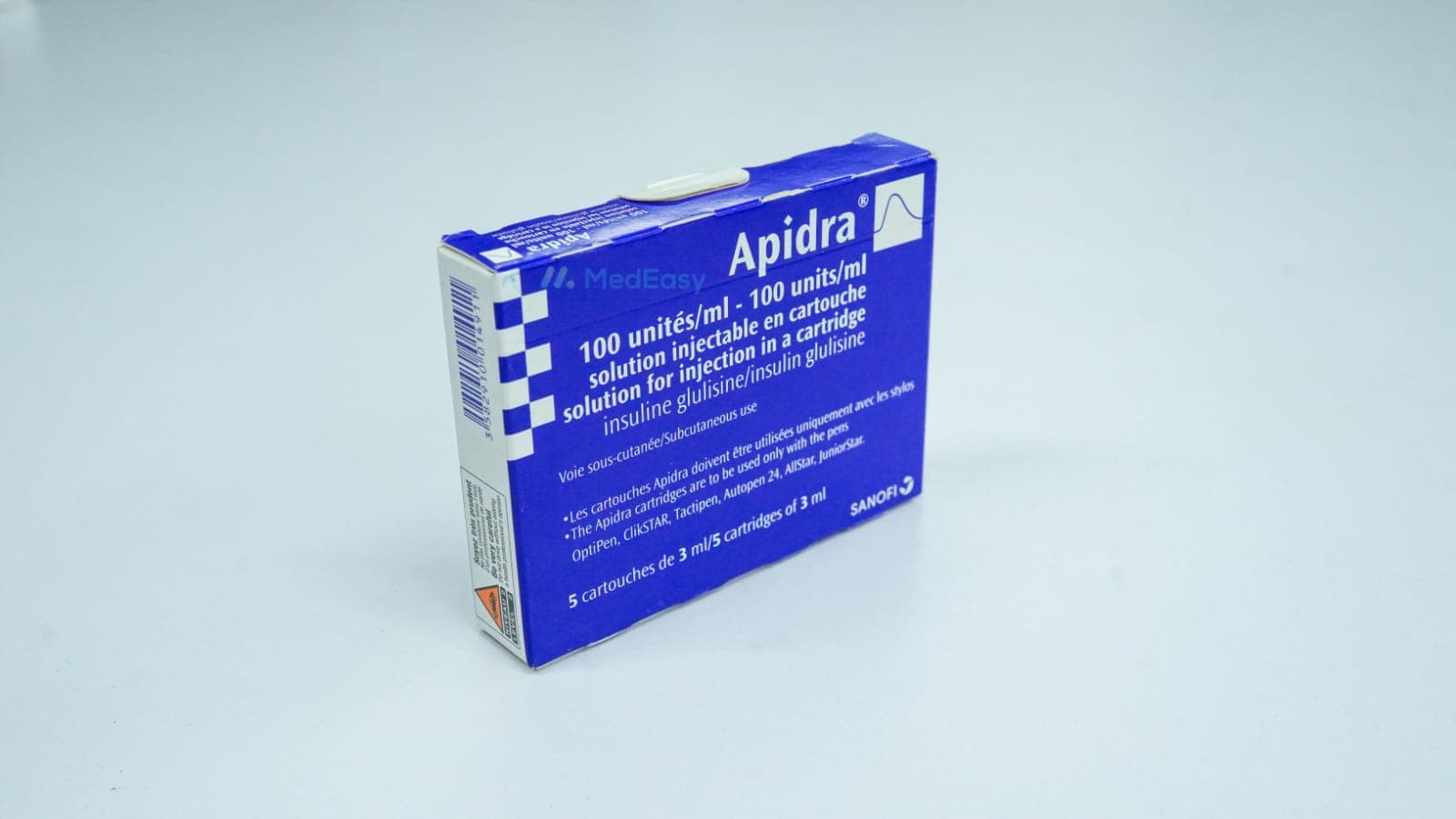
Apidra Penfill 100IU/ml Penfill is available on MedEasy for ৳900.60 per Piece, with home delivery anywhere in Bangladesh. It is manufactured by Synovia Pharma PLC. Its generic name is Insulin Glulisine.
- Pack sizes
- Piece, 5's pack
- Prescription
- Required. Upload a valid doctor's prescription at checkout; a MedEasy pharmacist verifies it before dispatch.
- Delivery
- Home delivery across Bangladesh. Same-day delivery in Dhaka, Chattogram, Sylhet and Bogura city areas; 2-3 days elsewhere.
- Payment
- Cash on delivery, bKash, cards and mobile banking.
- Brand
- Apidra Penfill
- Generic name
- Insulin Glulisine
- Manufacturer
- Synovia Pharma PLC
- Form & strength
- Penfill 100IU/ml
- Availability
- In stock
- Authenticity
- Sourced from licensed suppliers and the manufacturer's authorised distributors in Bangladesh.

Medicine overview
Indications of Apidra Penfill
Apidra Penfill is a rapid-acting human insulin analog indicated to improve glycemic control in adults and pediatric patients with diabetes mellitus.
- Type 1 diabetes mellitus: Established, FDA-approved use as mealtime (bolus) insulin, given in combination with a longer-acting or intermediate-acting (basal) insulin as part of a basal-bolus regimen.
- Type 2 diabetes mellitus: Established, FDA-approved use as mealtime insulin, either alone or in combination with oral antidiabetic medicines or basal insulin, when diet, exercise, and other agents do not achieve adequate glycemic control.
- Continuous subcutaneous insulin infusion (insulin pump): Approved for use in external insulin pumps in adults as an alternative to multiple daily injections.
Apidra Penfill is not a substitute for basal insulin and must be used as part of a complete diabetes management plan individualized by a physician based on blood glucose monitoring.
Composition
Each mL of Insulin Glulisine injection contains 100 units (3.49 mg) of insulin glulisine, a recombinant human insulin analog produced by DNA technology in a non-pathogenic strain of Escherichia coli.
Description
Apidra Penfill is a rapid-acting, recombinant human insulin analog created by substituting asparagine at position B3 with lysine and lysine at position B29 with glutamic acid in the human insulin molecule. This modification reduces self-association of insulin molecules, allowing faster absorption from subcutaneous tissue compared with regular human insulin.
It is supplied as a clear, colorless, sterile aqueous solution for subcutaneous injection or use in an external insulin pump, and may be administered intravenously under close medical supervision in a healthcare setting.
Therapeutic Class
Apidra Penfill belongs to the therapeutic class of rapid-acting insulin analogs, a subclass of antidiabetic agents used for mealtime (prandial/bolus) glycemic control.
Pharmacology
Insulin Glulisine lowers blood glucose by binding to the insulin receptor on peripheral tissues, stimulating glucose uptake by skeletal muscle and adipose tissue, and inhibiting hepatic glucose output. It also inhibits lipolysis and proteolysis while enhancing protein synthesis.
Onset and Duration
| Parameter | Approximate Timing |
|---|---|
| Onset of action | 10-20 minutes |
| Peak effect | 30 minutes to 1.5 hours |
| Duration of action | Approximately 3-5 hours |
Due to two amino acid substitutions in the insulin molecule, Insulin Glulisine has reduced self-association, giving it a faster onset and shorter duration of action than regular human insulin.
Dosage & Administration of Apidra Penfill
The dose of Apidra Penfill must be individualized and determined by a physician based on the patient's metabolic needs, blood glucose monitoring results, and glycemic control goals. There is no fixed universal dose.
General Dosing Principles
- Administered subcutaneously within 15 minutes before a meal or within 20 minutes after starting a meal.
- Usually given as part of a basal-bolus regimen in combination with an intermediate- or long-acting insulin.
- May be given by continuous subcutaneous infusion using an external insulin pump (adults only).
- May be administered intravenously under medical supervision with close monitoring of blood glucose and potassium, typically in a hospital setting for management of severe hyperglycemia.
| Indication/Route | Dosing Notes |
|---|---|
| Type 1 or Type 2 diabetes (subcutaneous injection) | Individualized mealtime dose given close to the meal, combined with basal insulin |
| Insulin pump (adults) | Individualized basal and bolus rates programmed by the prescriber; do not dilute or mix with other insulins in the pump reservoir |
| Intravenous use | Only under direct medical supervision with frequent glucose monitoring, using appropriate infusion systems |
See Use in Special Populations for information on pediatric, renal, and hepatic dosing considerations.
Administration of Apidra Penfill
Apidra Penfill should be administered by subcutaneous injection into the abdominal wall, thigh, or upper arm, or by continuous subcutaneous infusion via an insulin pump. Injection sites should be rotated to reduce the risk of lipodystrophy.
- Inject within 15 minutes before or shortly (within 20 minutes) after starting a meal because of its rapid onset of action.
- Do not administer intravenously except under direct medical supervision with appropriate glucose monitoring.
- If mixing with NPH insulin for subcutaneous injection is specifically directed by the prescriber, draw Apidra Penfill into the syringe first and inject the mixture immediately after mixing.
- Do not mix Apidra Penfill with other insulins when used in an insulin pump or when given intravenously.
- Visually inspect the solution before use; it should be clear and colorless. Do not use if particulate matter or discoloration is seen.
Interaction of Apidra Penfill
Several medicines can alter the blood-glucose-lowering effect of Apidra Penfill, increasing the risk of hypoglycemia or hyperglycemia.
Medicines That May Increase Hypoglycemia Risk
Oral antidiabetic agents, ACE inhibitors, angiotensin II receptor blockers, disopyramide, fibrates, fluoxetine, monoamine oxidase inhibitors, pentoxifylline, propoxyphene, salicylates, somatostatin analogs (e.g., octreotide), and sulfonamide antibiotics may enhance the glucose-lowering effect of Apidra Penfill.
Medicines That May Decrease Effectiveness
Corticosteroids, danazol, diuretics, sympathomimetic agents, isoniazid, niacin, oral contraceptives, phenothiazines, atypical antipsychotics, protease inhibitors, somatropin, and thyroid hormones may reduce the blood-glucose-lowering effect of Apidra Penfill.
Masking of Hypoglycemia Symptoms
Beta-blockers, clonidine, and reserpine may blunt the warning signs of hypoglycemia during treatment with Apidra Penfill.
Alcohol may potentiate or prolong the hypoglycemic effect of Apidra Penfill. Always inform your physician of all medicines and supplements being used.
Contraindications
Insulin Glulisine is contraindicated in:
- Patients with known hypersensitivity to insulin glulisine or any excipient of the formulation.
- During episodes of hypoglycemia (active low blood sugar).
Side Effects of Apidra Penfill
The most common and most serious adverse effect of Apidra Penfill is hypoglycemia, which can be severe and, in rare cases, life-threatening.
Common Side Effects
- Hypoglycemia (low blood sugar): sweating, shakiness, palpitations, hunger, confusion, headache
- Injection-site reactions: redness, swelling, itching, or pain
- Lipodystrophy (thickening or pitting of fat tissue) with repeated injection at the same site
- Weight gain
- Peripheral edema, particularly when starting insulin therapy or intensifying control
Less Common but Serious
- Hypersensitivity/allergic reactions, including rare systemic reactions such as generalized rash, angioedema, bronchospasm, hypotension, or shock
- Hypokalemia (low blood potassium)
See Precautions and Warnings and Overdose Effects for more on managing hypoglycemia related to Apidra Penfill.
Pregnancy & Lactation
Apidra Penfill should be used during pregnancy only if clearly needed, with the potential benefit justifying the potential risk to the fetus; a physician should be consulted before use. Good glycemic control before and during pregnancy is important for both mother and baby, and insulin requirements often change during pregnancy and the postpartum period, requiring closer monitoring and dose adjustment.
It is not known whether Apidra Penfill is excreted in human milk in clinically significant amounts; however, insulin is generally considered compatible with breastfeeding when medically indicated. Breastfeeding mothers using Apidra Penfill may need adjustments in insulin dose and diet, and should do so under medical supervision.
Precautions & Warnings
Hypoglycemia is the most common and most serious risk with Apidra Penfill and can occur with dose errors, delayed or missed meals, unplanned exercise, alcohol use, or changes in insulin sensitivity. Patients should be trained to recognize and manage hypoglycemia.
Key Precautions
- Never share an Apidra Penfill pen or syringe between patients, even if the needle is changed.
- Because of its rapid onset, inject Apidra Penfill close to a meal (within 15 minutes before or shortly after starting to eat); do not inject and then delay eating.
- Do not mix Apidra Penfill with other insulins in an insulin pump reservoir or for intravenous administration.
- If mixing with NPH insulin in the same syringe for injection is specifically directed by the prescriber, draw up Apidra Penfill first and inject the mixture immediately.
- Any change of insulin brand, type, or strength should be made only under medical supervision.
- Concurrent illness, changes in diet, renal or hepatic impairment, and certain medicines can alter insulin requirements - see Interaction and Use in Special Populations.
- Thiazolidinediones used together with insulin, including Apidra Penfill, may increase the risk of fluid retention and heart failure, particularly in patients with pre-existing cardiac disease.
Overdose Effects of Apidra Penfill
Overdose of Apidra Penfill can cause severe hypoglycemia, which may present as confusion, seizures, loss of consciousness, or, in rare cases, be life-threatening.
- Mild hypoglycemia can often be treated promptly with oral glucose or a sugar-containing food or drink.
- Severe hypoglycemia with unconsciousness or inability to swallow requires immediate medical attention - contact emergency services or a poison control center right away; glucagon injection or intravenous glucose administered by a trained caregiver or healthcare professional may be needed.
- Severe or prolonged hypoglycemic episodes may also require monitoring of blood potassium levels.
Do not attempt to manage a severe overdose of Apidra Penfill at home without professional guidance.
Storage Conditions
Unopened Apidra Penfill vials, cartridges, or pens should be stored in a refrigerator (2°C to 8°C); do not freeze, and discard if it has been frozen.
Once in use, Apidra Penfill may be kept at room temperature (below 25-30°C, as specified on the product label) away from direct heat and light, and should be discarded after the period stated on the package (commonly 28 days), even if some solution remains. Keep out of reach of children.
Use In Special Populations
Pediatric Use
Apidra Penfill safety and efficacy for subcutaneous injection have been established in pediatric patients aged 4 years and older with diabetes mellitus. Use in an insulin pump has not been established in pediatric patients. See Pediatric Uses for details.
Elderly
Limited data are available in patients over 65 years of age. Insulin requirements may be lower in elderly patients due to reduced renal function; dosing of Apidra Penfill should be conservative, with careful monitoring for hypoglycemia.
Renal Impairment
Insulin clearance may be reduced in renal impairment, potentially decreasing insulin requirements for Apidra Penfill; closer blood glucose monitoring and dose adjustment are recommended.
Hepatic Impairment
Insulin requirements may be reduced in hepatic impairment because of decreased capacity for gluconeogenesis and insulin metabolism; monitor blood glucose closely and adjust the Apidra Penfill dose as needed.
Duration Of Treatment
Apidra Penfill is typically used long-term/lifelong as part of ongoing diabetes management, since diabetes mellitus is a chronic condition. Duration and regimen are determined by the treating physician based on glycemic control, and treatment should not be stopped without medical advice.
Drug Classes
Insulin Glulisine is classified as a rapid-acting insulin analog, within the broader drug class of insulins and antidiabetic agents.
Mode Of Action
Insulin Glulisine works by binding to insulin receptors on target cells, activating downstream signaling that promotes glucose uptake into skeletal muscle and fat cells and suppresses hepatic glucose production. Two amino acid modifications compared with human insulin (replacement of asparagine with lysine at position B3, and lysine with glutamic acid at position B29) reduce molecular self-association, allowing faster absorption from subcutaneous tissue and a more rapid onset of glucose-lowering action than regular human insulin.
Pregnancy
C
Pediatric Uses
The safety and efficacy of Apidra Penfill given by subcutaneous injection have been established in pediatric patients 4 years of age and older with diabetes mellitus, with a similar safety and effectiveness profile to that seen in adults.
- Safety and efficacy of Apidra Penfill in children younger than 4 years have not been established.
- Use of Apidra Penfill in an external insulin pump has not been established in pediatric patients of any age.
- Dosing must be individualized by a pediatric specialist based on body weight, meal patterns, and blood glucose monitoring; children may be more susceptible to hypoglycemia and require close supervision by caregivers.
Frequently Asked Questions
Q: What is Apidra Penfill 100IU/ml Penfill used for?
A: Apidra Penfill 100IU/ml Penfill is a rapid-acting insulin used to control high blood sugar (mealtime/bolus dosing) in adults and children (4 years and older) with type 1 or type 2 diabetes mellitus, usually alongside a longer-acting basal insulin.
Q: When should I inject Apidra Penfill 100IU/ml Penfill?
A: Because it acts quickly, Apidra Penfill 100IU/ml Penfill should be injected within 15 minutes before a meal or within 20 minutes after starting to eat, exactly as directed by your physician.
Q: What is the most serious side effect of Apidra Penfill 100IU/ml Penfill?
A: The most serious and most common risk with Apidra Penfill 100IU/ml Penfill is hypoglycemia (low blood sugar), which can cause sweating, shakiness, confusion, seizures, or loss of consciousness if severe. Always carry a fast-acting source of sugar and know the warning signs.
Q: Can Apidra Penfill 100IU/ml Penfill be mixed with other insulins?
A: Apidra Penfill 100IU/ml Penfill may be mixed with NPH insulin in the same syringe for injection only if specifically directed by your doctor, and the mixture must be injected immediately. It should never be mixed with other insulins in an insulin pump or when given intravenously.
Q: Is Apidra Penfill 100IU/ml Penfill safe during pregnancy or breastfeeding?
A: Apidra Penfill 100IU/ml Penfill should be used in pregnancy only if clearly needed, as advised by a physician, since insulin requirements often change during pregnancy. It may also be used while breastfeeding under medical supervision, with adjustments to dose and diet as needed.
Q: What should I do if I take too much Apidra Penfill 100IU/ml Penfill?
A: If you suspect an overdose of Apidra Penfill 100IU/ml Penfill, treat mild low blood sugar with a fast-acting sugar source immediately; for severe symptoms such as confusion or unconsciousness, seek emergency medical attention right away. Never adjust your Apidra Penfill 100IU/ml Penfill regimen without consulting your physician.
Disclaimer
The information provided is accurate to the best of our knowledge, but it does not replace professional medical advice. We cannot guarantee its completeness or accuracy, and the absence of specific information about a drug should not be taken as an endorsement. We are not responsible for any consequences arising from this information, so please consult a healthcare professional for any concerns or questions.