
10% Off
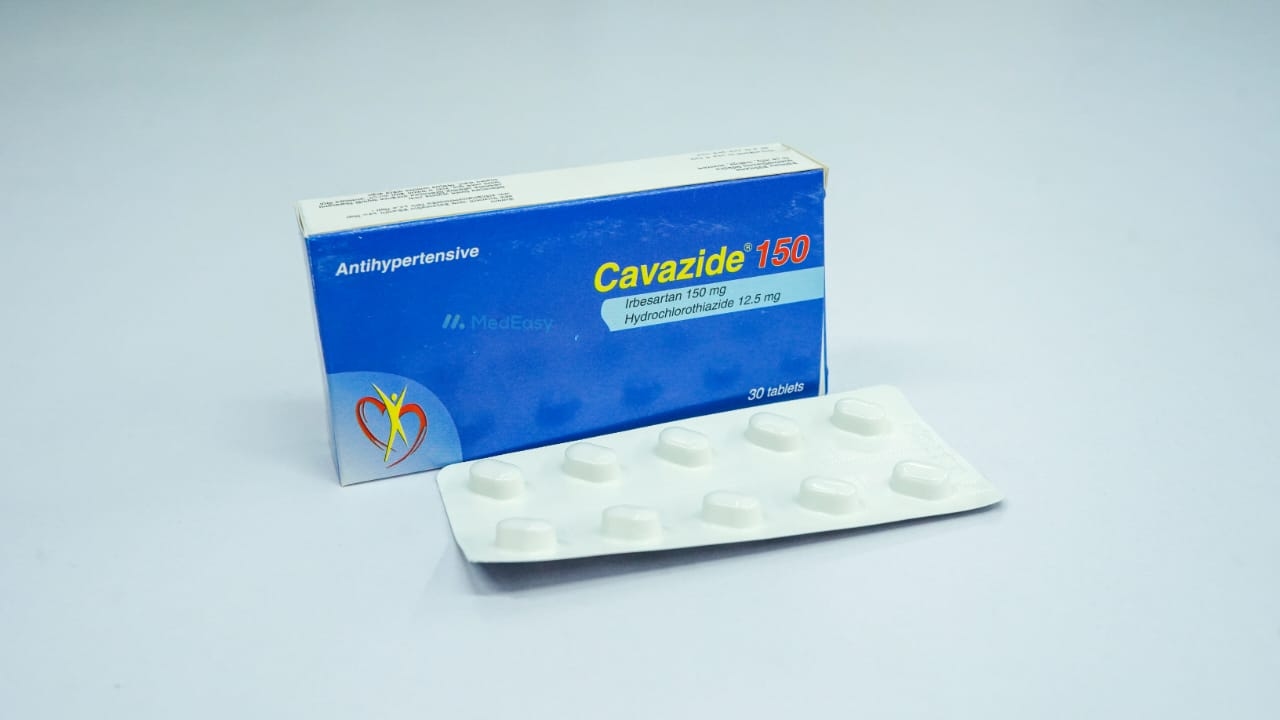
Cavazide150 mg+12.
Unimed Unihealth MFG. Ltd.
৳108.00
Add to cart


Arbitan Plus is a fixed-dose combination of an angiotensin II receptor blocker (ARB) and a thiazide diuretic, indicated for the following:
Arbitan Plus lowers blood pressure but has not been specifically studied for reduction of cardiovascular morbidity and mortality; such benefits are inferred from the individual components used in other trials.
Each tablet of Irbesartan + Hydrochlorothiazide contains two active ingredients:
Common combination strengths include 150 mg/12.5 mg, 300 mg/12.5 mg, and 300 mg/25 mg tablets.
Arbitan Plus is an oral fixed-dose combination antihypertensive medicine that pairs irbesartan, an angiotensin II receptor blocker (ARB), with hydrochlorothiazide, a thiazide-type diuretic. The two agents work through complementary mechanisms to produce a greater blood-pressure-lowering effect than either drug alone.
Arbitan Plus is used once daily as add-on or combination therapy for hypertension that is not adequately controlled by a single agent.
Arbitan Plus belongs to the therapeutic class of combination antihypertensive agents, specifically an Angiotensin II Receptor Blocker (ARB) combined with a Thiazide Diuretic.
Irbesartan + Hydrochlorothiazide combines two agents with complementary antihypertensive mechanisms:
Irbesartan selectively blocks the binding of angiotensin II to the AT1 receptor found in vascular smooth muscle and the adrenal gland. This blocks the vasoconstrictor and aldosterone-secreting effects of angiotensin II, resulting in vasodilation and reduced blood pressure, without affecting the bradykinin pathway.
Hydrochlorothiazide inhibits sodium and chloride reabsorption in the distal convoluted tubule of the nephron, increasing excretion of sodium, chloride, and water, and secondarily promoting potassium and magnesium excretion. The resulting reduction in plasma volume contributes to the antihypertensive effect.
Used together, the two components produce an additive reduction in blood pressure; hydrochlorothiazide-induced activation of the renin-angiotensin system is blunted by irbesartan, which also helps offset thiazide-induced hypokalemia to some degree.
| Step | Dose | Notes |
|---|---|---|
| Initial (if not controlled on monotherapy) | 150 mg/12.5 mg once daily | May be started as initial combination in patients likely to need multiple drugs |
| Titration | Up to 300 mg/12.5 mg once daily | If blood pressure remains uncontrolled after 2-4 weeks |
| Maximum | 300 mg/25 mg once daily | Maximum recommended dose |
The full antihypertensive effect is generally seen within 2-4 weeks of starting or adjusting the dose. Arbitan Plus may be taken with or without food, at approximately the same time each day.
Arbitan Plus is not recommended in patients with severe renal impairment (creatinine clearance below approximately 30 mL/min); thiazide diuretics may be ineffective in this setting and loop diuretics are usually preferred.
No dosage adjustment of Arbitan Plus is generally required in mild-to-moderate hepatic impairment; thiazides should be used with caution in hepatic impairment because minor fluid and electrolyte changes may precipitate hepatic coma.
No initial dosage adjustment is generally required in elderly patients, though they may be more sensitive to blood-pressure-lowering and volume effects.
Arbitan Plus is taken orally, once daily, with or without food. Swallow the tablet whole with a glass of water. Try to take it at the same time each day to maintain consistent blood pressure control. Do not stop taking Arbitan Plus suddenly without consulting a physician.
Arbitan Plus has the following well-documented clinically significant interactions:
Irbesartan + Hydrochlorothiazide is contraindicated in the following situations:
Most people tolerate Arbitan Plus well. Reported side effects include:
Seek urgent medical attention for signs of angioedema, severe dizziness/fainting, or eye pain with vision changes.
Arbitan Plus is contraindicated during pregnancy. Drugs that act directly on the renin-angiotensin system, such as the irbesartan component, can cause injury and even death to the developing fetus when used in the second and third trimesters, including fetal renal failure, oligohydramnios, hypotension, skull hypoplasia, and death. If pregnancy is detected, Arbitan Plus should be discontinued as soon as possible and the patient switched to an alternative antihypertensive as advised by her physician.
It is not known whether irbesartan is excreted in human breast milk; hydrochlorothiazide is excreted into breast milk in small amounts. Because of the potential for adverse effects on the nursing infant, a decision should be made whether to discontinue breastfeeding or discontinue Arbitan Plus, taking into account the importance of the drug to the mother; consult a physician before use while breastfeeding.
Boxed warning: Arbitan Plus can cause fetal injury and death when used during pregnancy; discontinue as soon as pregnancy is detected (see Pregnancy and Lactation).
Patients with volume or salt depletion (e.g., from prior diuretic therapy, vomiting, diarrhea, or restricted salt intake) may experience symptomatic hypotension after starting Arbitan Plus; correct volume depletion before initiating therapy or start under close medical supervision.
Use with caution in patients with renal artery stenosis (unilateral or bilateral), as changes in renal function including acute renal failure may occur. Monitor renal function periodically, particularly in patients with pre-existing kidney disease.
Arbitan Plus can cause hyperkalemia (from the irbesartan component) or hypokalemia and hyponatremia (from the hydrochlorothiazide component); the net effect on serum potassium varies between patients and should be monitored periodically, especially in the elderly, in renal impairment, and in diabetics.
Thiazide therapy may worsen glycemic control in diabetic patients and may precipitate gout attacks in patients with a history of gout or hyperuricemia by raising serum uric acid.
Use thiazides with caution in patients with hepatic impairment, as minor alterations in fluid and electrolyte balance may precipitate hepatic coma.
Thiazides may cause photosensitivity, and can rarely cause acute angle-closure glaucoma or acute transient myopia requiring prompt discontinuation and medical attention. Lithium should generally not be co-administered (see Interactions).
Overdose with Arbitan Plus may cause pronounced hypotension, dizziness, and dehydration or electrolyte imbalance from the diuretic component, and tachycardia or bradycardia. There is no specific antidote.
If overdose is suspected, seek immediate medical attention or contact a poison control center/emergency services right away. Management is supportive, generally involving monitoring of vital signs and fluid/electrolyte status; do not attempt home treatment.
Store at room temperature (below 30°C), away from light and moisture. Keep out of reach of children.
Contraindicated; see Pregnancy and Lactation.
Use only if clearly needed, weighing benefit against potential infant risk; see Pregnancy and Lactation.
Safety and efficacy of Arbitan Plus have not been established in children. It is generally not recommended for use in the pediatric population.
No dosage adjustment is generally required based on age alone, but elderly patients may be more susceptible to hypotension and electrolyte disturbances; use with routine monitoring.
Not recommended in severe renal impairment (creatinine clearance below approximately 30 mL/min); see Dosage and Administration.
Use with caution; see Dosage and Administration and Precautions and Warnings.
Arbitan Plus is generally used long-term for ongoing blood pressure control, as hypertension is a chronic condition. Duration of therapy is determined by the prescribing physician based on blood pressure response and tolerability; Arbitan Plus should not be stopped abruptly without medical advice.
Irbesartan + Hydrochlorothiazide is classified as a combination of an Angiotensin II Receptor Blocker (ARB) and a Thiazide Diuretic, used together as an antihypertensive.
Irbesartan + Hydrochlorothiazide combines two complementary mechanisms of blood pressure lowering:
The combination provides an additive antihypertensive effect greater than either agent alone.
Category D (as classified for drugs acting on the renin-angiotensin system, per legacy FDA pregnancy categories) - evidence of human fetal risk; contraindicated in pregnancy.
Safety and efficacy of Arbitan Plus have not been established in pediatric patients. It is not recommended for use in children and adolescents due to insufficient clinical data.
Q: What is Arbitan Plus 150 mg+12.5 mg Tablet used for?
A: Arbitan Plus 150 mg+12.5 mg Tablet is a combination medicine used to treat high blood pressure (hypertension) in adults who are not adequately controlled on a single blood-pressure medicine, or who are expected to need more than one medicine to reach their target blood pressure.
Q: Can I take Arbitan Plus 150 mg+12.5 mg Tablet during pregnancy?
A: No. Arbitan Plus 150 mg+12.5 mg Tablet is contraindicated during pregnancy. Drugs like the irbesartan component that act on the renin-angiotensin system can cause serious injury or death to the developing baby, especially in the second and third trimesters. If you become pregnant while taking Arbitan Plus 150 mg+12.5 mg Tablet, stop the medicine and contact your doctor immediately.
Q: Can I take Arbitan Plus 150 mg+12.5 mg Tablet while breastfeeding?
A: Hydrochlorothiazide passes into breast milk in small amounts, and it is not known whether irbesartan does. Arbitan Plus 150 mg+12.5 mg Tablet should be used while breastfeeding only if your doctor decides it is clearly needed, weighing the benefit to you against any potential risk to your baby.
Q: What are the common side effects of Arbitan Plus 150 mg+12.5 mg Tablet?
A: Common side effects include dizziness, fatigue, headache, musculoskeletal pain, and mild changes in kidney function tests or electrolyte levels. Most side effects are mild, but you should seek urgent care for swelling of the face/lips/tongue, severe dizziness, or fainting.
Q: What happens if I take too much Arbitan Plus 150 mg+12.5 mg Tablet?
A: An overdose can cause pronounced low blood pressure, dizziness, dehydration, and changes in heart rate. If you suspect an overdose, seek immediate medical attention or contact a poison control center right away; do not try to treat it at home.
Q: Can I stop taking Arbitan Plus 150 mg+12.5 mg Tablet on my own?
A: No. Arbitan Plus 150 mg+12.5 mg Tablet is used for long-term control of high blood pressure and should not be stopped suddenly without talking to your physician, as this may cause your blood pressure to rise again.
Disclaimer
The information provided is accurate to the best of our knowledge, but it does not replace professional medical advice. We cannot guarantee its completeness or accuracy, and the absence of specific information about a drug should not be taken as an endorsement. We are not responsible for any consequences arising from this information, so please consult a healthcare professional for any concerns or questions.
