7% Off
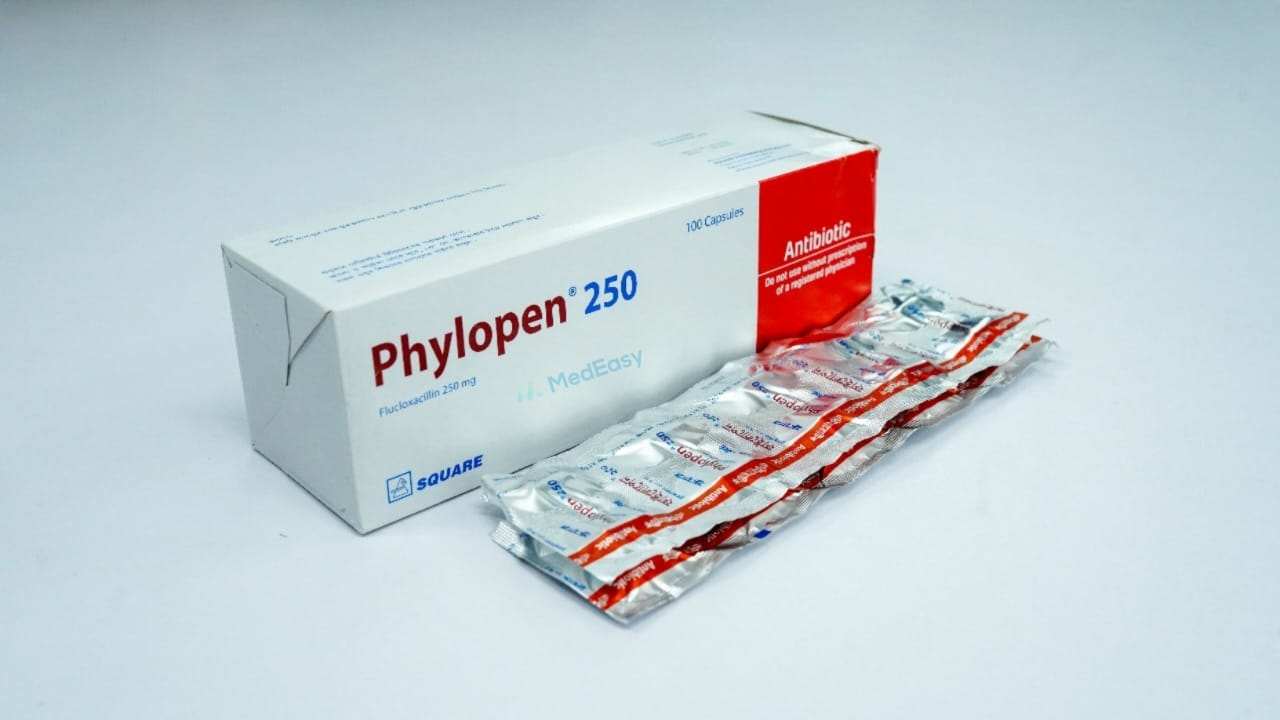
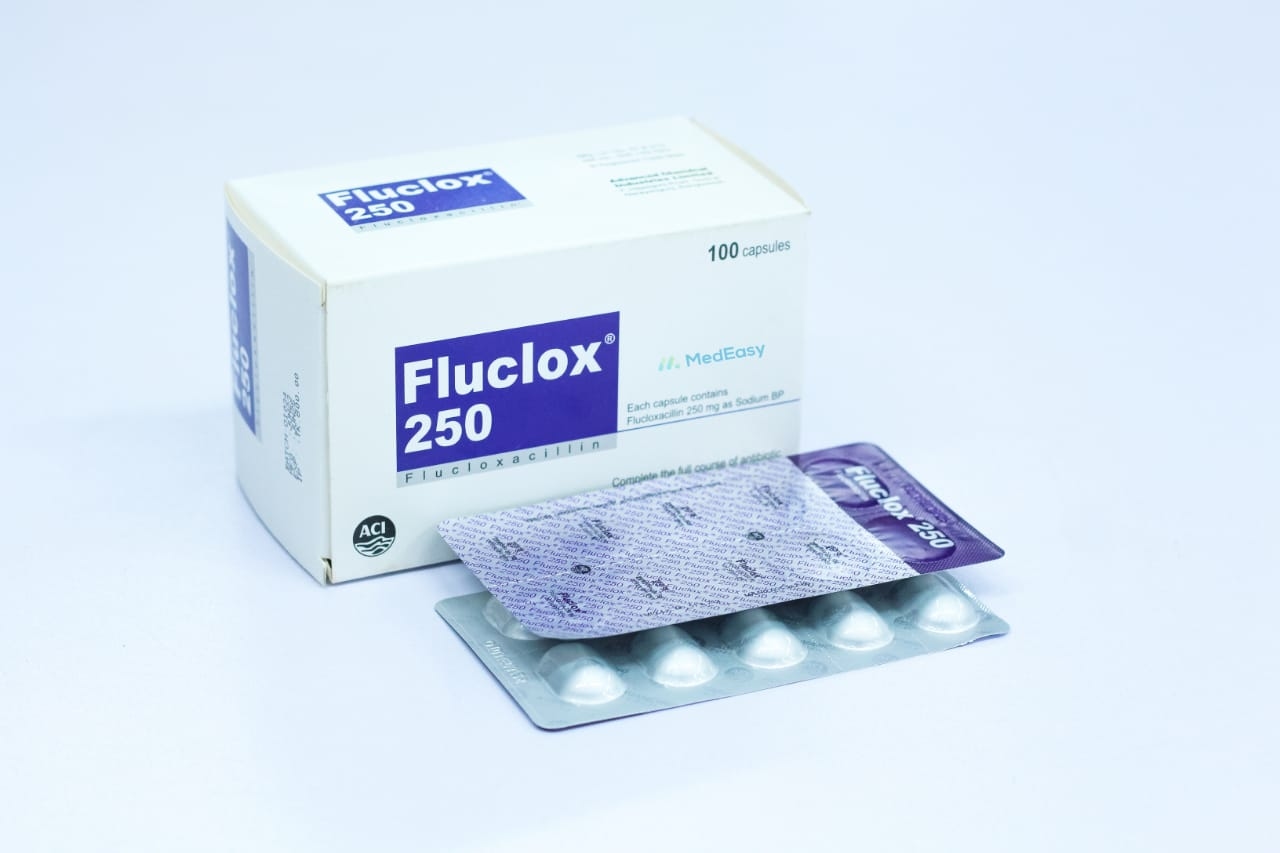
Fluclox250 mg
ACI Limited
৳74.40
Add to cart


Auxil is a narrow-spectrum, penicillinase-resistant penicillin antibiotic used to treat infections caused by susceptible Gram-positive bacteria, particularly penicillinase-producing strains of Staphylococcus aureus.
Auxil is not active against methicillin-resistant Staphylococcus aureus (MRSA) and should not be relied upon when MRSA is suspected or confirmed.
Each formulation of Flucloxacillin Sodium contains flucloxacillin (as the sodium salt) as the active pharmaceutical ingredient. It is manufactured as oral capsules (commonly 250 mg and 500 mg), oral suspension, and sterile powder for injection (commonly 250 mg and 500 mg per vial) for intramuscular or intravenous use, along with standard pharmaceutical excipients appropriate to each dosage form.
Auxil is a semi-synthetic, isoxazolyl-penicillin antibiotic belonging to the penicillinase-resistant penicillin subclass. Its bulky side chain protects the beta-lactam ring from hydrolysis by staphylococcal penicillinase (a beta-lactamase), making it effective against penicillin-resistant, methicillin-susceptible strains of Staphylococcus aureus as well as many streptococci. Auxil is widely used for skin, soft tissue, bone, joint, and respiratory infections and is available in oral and injectable forms.
Penicillinase-resistant Penicillin (Narrow-spectrum Beta-lactam Antibiotic, Isoxazolyl Penicillin)
Flucloxacillin Sodium exerts a bactericidal effect by binding to penicillin-binding proteins (PBPs) on the bacterial cell membrane, inhibiting the transpeptidation step of peptidoglycan synthesis. This weakens the bacterial cell wall, leading to cell lysis and death, particularly in actively dividing bacteria.
Unlike benzylpenicillin, the bulky isoxazolyl side chain of Flucloxacillin Sodium sterically hinders hydrolysis by staphylococcal penicillinase, allowing it to remain active against penicillinase-producing, methicillin-susceptible Staphylococcus aureus. It has relatively narrow activity against Gram-negative organisms.
Pharmacokinetics: Flucloxacillin Sodium is acid-stable and absorbed orally, though absorption is reduced by food, so oral doses are best taken on an empty stomach. It is highly protein-bound (roughly 95%), achieves therapeutic concentrations in most tissues, and is primarily eliminated renally, with a smaller portion undergoing hepatic metabolism and biliary excretion. Its elimination half-life is short (approximately 1 hour), necessitating frequent dosing.
Dosage of Auxil should be individualized according to the severity and site of infection, patient age, and renal/hepatic function. The following are general guidelines; the prescribing physician's instructions should always be followed.
| Indication | Adult Dose | Pediatric Dose |
|---|---|---|
| Mild-to-moderate skin/soft tissue or respiratory infection (oral) | 250-500 mg four times daily | 2-10 years: half the adult dose; under 2 years: one-quarter the adult dose, four times daily |
| Moderate-to-severe infection (IM/IV) | 250 mg-1 g four times daily | Weight-based dosing per pediatric guidance; specialist input advised |
| Osteomyelitis, endocarditis, or other severe/deep-seated infection | Up to 8 g daily in divided doses (IV, six- to eight-hourly), often combined with other antibiotics | Specialist-guided, weight-based high-dose regimen |
| Surgical prophylaxis | As directed by the surgical/anesthesia team, typically at induction and for a limited postoperative period | Not routinely used; specialist decision |
Renal impairment: In severe renal impairment (creatinine clearance below 10 mL/min), dose reduction or extension of the dosing interval should be considered.
Important: Take Auxil exactly as prescribed by your physician; do not stop, extend, skip doses, or share this medicine with others without medical advice, even if symptoms improve before the course is finished.
Auxil capsules and oral suspension should be taken on an empty stomach, at least 1 hour before or 2 hours after meals, with a full glass of water, since food reduces absorption. Oral suspension should be shaken well before use and measured with the supplied measuring device.
Injectable Auxil may be given by intramuscular injection, slow intravenous injection, or intravenous infusion, and must be prepared and administered by a qualified healthcare professional under appropriate aseptic conditions.
Probenecid: Reduces renal tubular secretion of Auxil, increasing and prolonging its blood levels.
Methotrexate: Auxil may reduce renal clearance of methotrexate, increasing the risk of methotrexate toxicity; concurrent use requires monitoring.
Warfarin and other oral anticoagulants: Penicillins including Auxil may enhance or reduce anticoagulant effect; INR should be monitored more closely when starting or stopping therapy.
Oral contraceptives: Antibiotics including Auxil may theoretically reduce the efficacy of combined oral contraceptives; additional contraceptive precautions may be advised during and shortly after treatment.
Paracetamol (acetaminophen), especially high-dose or prolonged use: Concurrent use with Auxil has been associated with a rare but serious high anion gap metabolic acidosis, particularly in patients with risk factors such as renal impairment, sepsis, or malnutrition; see Precautions and Warnings.
Flucloxacillin Sodium is contraindicated in:
Common side effects of Auxil include:
Less common but clinically important effects include hypersensitivity reactions, cholestatic jaundice and hepatitis (see Precautions and Warnings), interstitial nephritis, and antibiotic-associated (Clostridioides difficile) colitis. Blood count changes such as eosinophilia, leukopenia, or thrombocytopenia have rarely been reported.
Pregnancy: Auxil has traditionally been assigned to pregnancy category B, and adequate, well-controlled human studies are limited. It should be used during pregnancy only if clearly needed, and only after the potential benefit to the mother has been weighed against the potential risk to the fetus; a physician should be consulted before use.
Lactation: Auxil is excreted in small amounts in breast milk. Caution should be exercised when administering Auxil to a breastfeeding mother, as it may rarely cause sensitization, diarrhea, or oral thrush (candidiasis) in the infant. A physician should be consulted before use during breastfeeding.
Cholestatic jaundice and hepatitis: Auxil has been specifically associated with cholestatic jaundice and hepatitis, a recognized risk of this particular agent. Onset can be delayed, occurring even several weeks after treatment has been stopped, and the risk increases with age (particularly in patients over 55 years), male sex, and treatment courses longer than 2 weeks. Rare fatalities have been reported. Patients should be advised to seek medical attention promptly if jaundice, dark urine, pale stools, or unexplained itching develop, even after stopping the medicine.
Hypersensitivity reactions: Serious and occasionally fatal hypersensitivity (including anaphylactic) reactions have occurred with Auxil. Patients with a history of allergy to penicillins, cephalosporins, or other allergens are at greater risk; the drug should be discontinued and emergency treatment given if a hypersensitivity reaction occurs.
Clostridioides difficile-associated diarrhea: As with other antibiotics, Auxil may permit overgrowth of C. difficile, ranging from mild diarrhea to severe colitis; this should be considered in patients who develop diarrhea during or after treatment.
Hypokalemia: High-dose Auxil, particularly by injection, has been associated with potentially serious low blood potassium levels; electrolyte monitoring is advised with prolonged high-dose therapy.
Hepatic and renal impairment: Use with caution in patients with hepatic dysfunction; dose reduction or extended dosing intervals should be considered in severe renal impairment (creatinine clearance below 10 mL/min).
Antibiotic stewardship: Take Auxil exactly as prescribed by your physician; do not stop, extend, skip doses, or share this medicine with others without medical advice.
Overdose with Auxil typically causes gastrointestinal symptoms such as nausea, vomiting, and diarrhea. Very high doses, particularly in patients with renal impairment, may rarely cause neuromuscular excitability or seizures. Auxil is not effectively removed from the circulation by hemodialysis.
If an overdose is suspected, seek immediate medical attention or contact a poison control center; treatment is supportive and symptomatic, and should be managed by a healthcare professional.
Store below 25°C in a dry place, protected from light and moisture. Keep out of reach of children. Do not use after the expiry date.
Renal impairment: Dose reduction or extended dosing interval is recommended in severe renal impairment (creatinine clearance below 10 mL/min); Auxil is not significantly removed by hemodialysis.
Hepatic impairment: Use with caution; Auxil carries a specific risk of cholestatic jaundice/hepatitis (see Precautions and Warnings), so liver function should be monitored, especially with prolonged courses.
Elderly: Older patients (particularly over 55 years) are at higher risk of Auxil-associated cholestatic jaundice; use the lowest effective dose and duration.
Children: See Pediatric Uses.
Pregnancy and breastfeeding: See Pregnancy and Lactation.
Duration of Auxil therapy depends on the site and severity of infection: typically 5-7 days for uncomplicated skin and soft tissue infections, up to 10-14 days for respiratory infections, and 4-6 weeks (sometimes longer) for osteomyelitis or infective endocarditis, guided by clinical response and specialist advice. Patients should complete the full course as prescribed and not stop Auxil early even if symptoms improve, unless advised by their physician.
For the injectable powder formulation, Auxil for injection should be reconstituted by a healthcare professional using Water for Injection or an appropriate compatible diluent, following the volume and concentration instructions on the product label. For intramuscular injection, the vial is typically reconstituted with a small volume of Water for Injection; for intravenous injection or infusion, it is reconstituted and then further diluted per institutional protocol. The reconstituted solution should be used promptly and any unused portion discarded, as advised by the manufacturer's instructions.
Penicillinase-resistant penicillin; Isoxazolyl penicillin; Beta-lactam antibiotic
Flucloxacillin Sodium is bactericidal, acting by binding to penicillin-binding proteins (PBPs) on the bacterial cell wall and inhibiting the final transpeptidation (cross-linking) step of peptidoglycan synthesis. This disrupts cell wall integrity, causing bacterial lysis and death, particularly during active bacterial growth. Its isoxazolyl side chain confers stability against hydrolysis by staphylococcal penicillinase, allowing Flucloxacillin Sodium to remain active against penicillinase-producing, methicillin-susceptible strains of Staphylococcus aureus that would otherwise inactivate benzylpenicillin.
B
Auxil is used in children for susceptible staphylococcal and streptococcal infections, with doses adjusted by age and body weight under medical supervision: children 2-10 years typically receive half the adult dose, and children under 2 years typically receive one-quarter the adult dose, given in divided doses. Safety and efficacy in neonates and very young infants have not been as extensively established, and use in this group should be guided by a pediatric specialist. As in adults, Auxil should be given exactly as prescribed and the full course completed.
Q: What is Auxil 250 mg Capsule used for?
A: Auxil 250 mg Capsule is an antibiotic used to treat infections caused by susceptible staphylococcal and streptococcal bacteria, including skin and soft tissue infections, bone and joint infections, and certain respiratory infections. It is not effective against MRSA.
Q: Can I stop taking Auxil 250 mg Capsule once I feel better?
A: No. You should take Auxil 250 mg Capsule exactly as prescribed by your physician and complete the full course; do not stop, extend, skip doses, or share this medicine with others without medical advice, even if your symptoms improve early.
Q: Is Auxil 250 mg Capsule safe during pregnancy and breastfeeding?
A: Auxil 250 mg Capsule should be used during pregnancy only if clearly needed, when the potential benefit outweighs the potential risk to the fetus; it passes into breast milk in small amounts, so a physician should be consulted before use during breastfeeding.
Q: What warning signs should I watch for while taking Auxil 250 mg Capsule?
A: Seek medical attention promptly if you develop yellowing of the skin or eyes, dark urine, pale stools, or persistent itching, as Auxil 250 mg Capsule is specifically associated with a risk of cholestatic jaundice/hepatitis that can occur even weeks after stopping treatment. Also seek urgent care for signs of a severe allergic reaction (swelling, difficulty breathing, widespread rash).
Q: Can Auxil 250 mg Capsule be taken with food?
A: It is best to take Auxil 250 mg Capsule capsules or oral suspension on an empty stomach, at least 1 hour before or 2 hours after meals, because food can reduce its absorption.
Q: What should I do if I miss a dose or take too much Auxil 250 mg Capsule?
A: If you miss a dose, take it as soon as you remember unless it is almost time for the next dose; do not double the dose. If you suspect an overdose of Auxil 250 mg Capsule, seek immediate medical attention or contact a poison control center.
Disclaimer
The information provided is accurate to the best of our knowledge, but it does not replace professional medical advice. We cannot guarantee its completeness or accuracy, and the absence of specific information about a drug should not be taken as an endorsement. We are not responsible for any consequences arising from this information, so please consult a healthcare professional for any concerns or questions.