10% Off
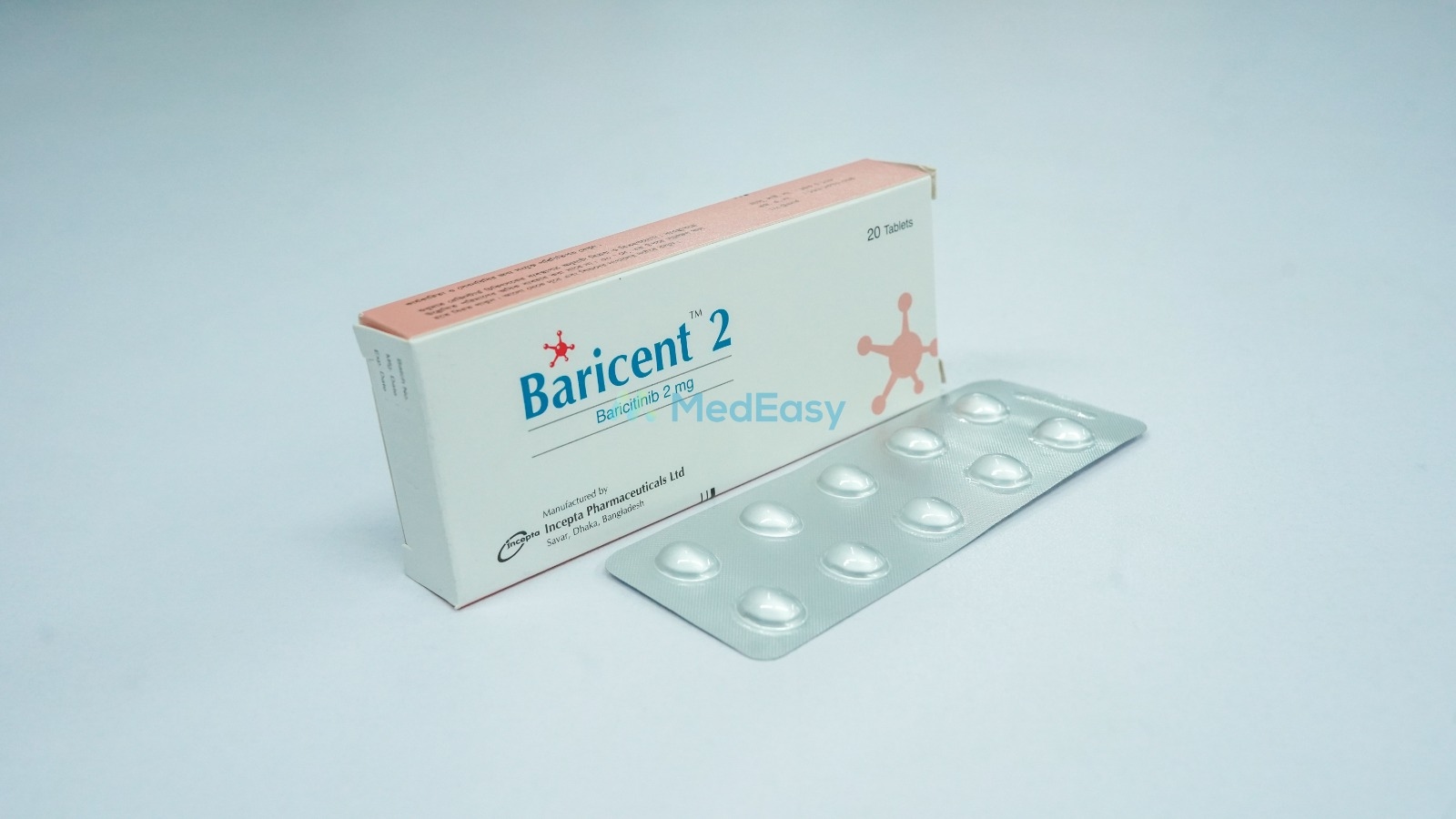
Baritor2 mg
Square Pharmaceuticals PLC.
৳225.00
Add to cart
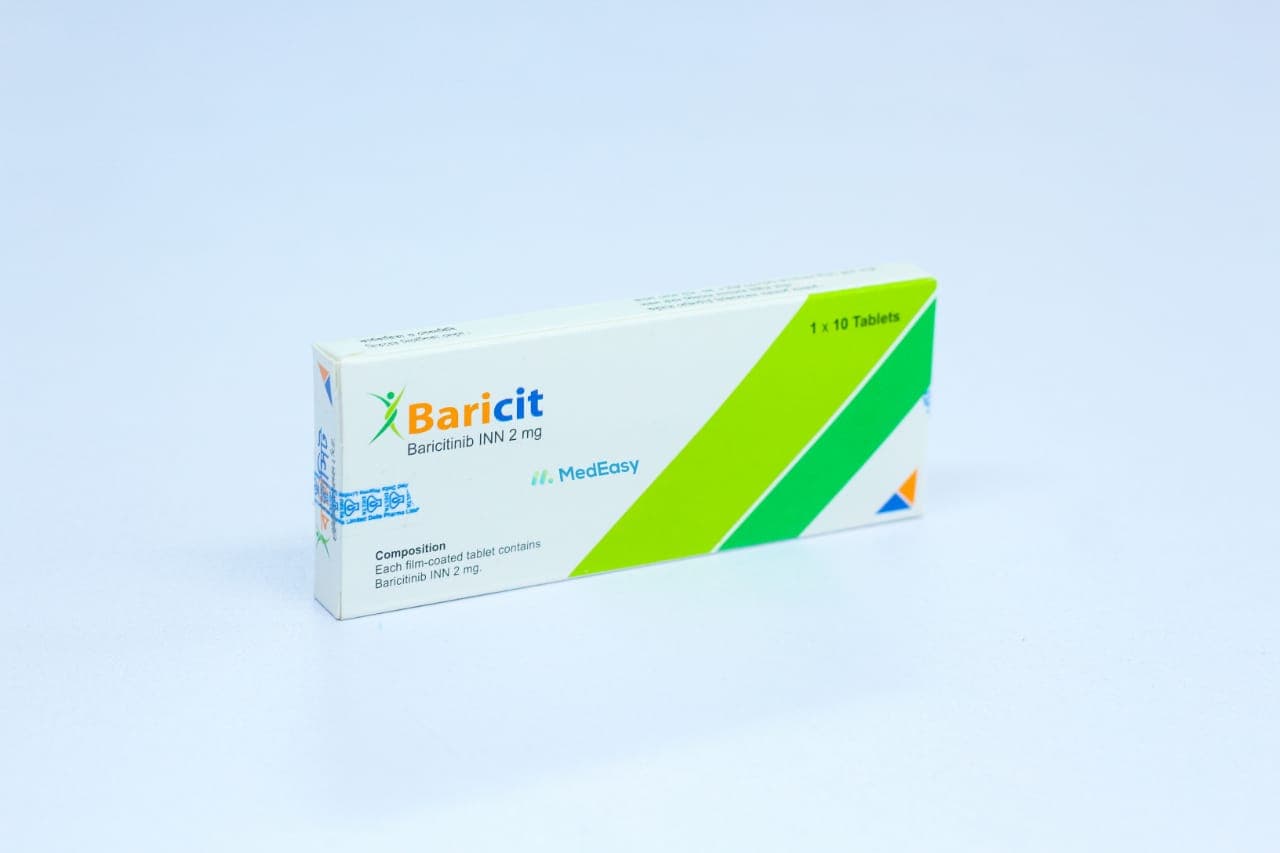

Baricit is a targeted synthetic disease-modifying antirheumatic drug (Janus kinase inhibitor) with the following evidence-graded uses:
Baricit should not be combined with other JAK inhibitors, biologic DMARDs, or other potent immunosuppressants such as azathioprine or cyclosporine.
Each film-coated tablet contains Baricitinib INN 2 mg or 4 mg. Baricitinib is also available as 1 mg tablets in some markets for renal-adjusted dosing. Tablets are available in Bangladesh in 2 mg and 4 mg strengths.
Baricit is an orally administered, small-molecule Janus kinase (JAK) inhibitor. It selectively and reversibly inhibits JAK1 and JAK2, enzymes that mediate intracellular signaling for a number of cytokines involved in inflammatory and immune responses, including several interleukins and interferons implicated in rheumatoid arthritis, alopecia areata, atopic dermatitis and the hyperinflammatory response seen in severe COVID-19.
Baricit carries a boxed warning shared by the JAK inhibitor class for serious infections, mortality, malignancy, major adverse cardiovascular events, and thrombosis (see Precautions and Warnings).
Janus kinase (JAK) inhibitor; targeted synthetic disease-modifying antirheumatic drug (tsDMARD)
Baricitinib is a selective and reversible inhibitor of Janus kinase 1 (JAK1) and Janus kinase 2 (JAK2), with lower potency against JAK3 and tyrosine kinase 2 (TYK2). JAK enzymes transduce intracellular signals from cytokine and growth-factor receptors on the cell membrane, activating STAT (signal transducer and activator of transcription) proteins that influence hematopoiesis and immune-cell function.
By inhibiting JAK1/JAK2-dependent signaling of cytokines such as interleukin-6, interleukin-15, and various interferons, Baricitinib reduces the inflammatory cascade responsible for joint inflammation in rheumatoid arthritis, hair-follicle immune attack in alopecia areata, skin inflammation in atopic dermatitis, and the cytokine-driven lung injury seen in severe COVID-19.
Pharmacokinetics: Baricitinib is rapidly absorbed after oral administration (peak plasma concentration in about 1 hour), has an elimination half-life of approximately 12 hours, and is primarily eliminated renally (about 75% of the dose), with the remainder cleared via CYP3A4-mediated hepatic metabolism. This is why dose adjustment is required in renal impairment.
| Population | Dose |
|---|---|
| Adults, normal renal function | 2 mg orally once daily, alone or with methotrexate/other DMARDs |
| eGFR 30–60 mL/min/1.73m² | 1 mg once daily |
| eGFR <30 mL/min/1.73m² | Not recommended |
Adults: 2 mg once daily; may be increased to 4 mg once daily if response is inadequate. Once an adequate response is achieved, consider reducing to the lowest effective dose (2 mg once daily).
4 mg once daily for up to 14 days or until hospital discharge, whichever comes first, in combination with standard supportive care. Dose is reduced to 1–2 mg once daily depending on the degree of renal impairment (see Use in Special Populations).
Baricit tablets are taken orally, with or without food, at approximately the same time each day. Swallow the tablet whole. If a dose is missed, it should be taken as soon as remembered unless the next scheduled dose is due soon, in which case the missed dose should be skipped — do not double the dose.
Take exactly as prescribed by your physician; do not stop, increase, skip doses, or share this medicine with others without medical advice.
Baricit is administered orally as a film-coated tablet, once daily, with or without food, swallowed whole with water. It should be taken at a consistent time each day. Tablets should not be crushed, split, or chewed unless specifically advised by a physician or pharmacist. Continue taking it exactly as prescribed and do not discontinue abruptly without medical advice.
Baricitinib is contraindicated in patients with:
Baricit carries a boxed warning for serious infections, increased mortality, malignancy, major adverse cardiovascular events (MACE), and thrombosis — see Precautions and Warnings for details.
Pregnancy: Baricit should be strictly avoided during pregnancy. Animal reproduction studies showed embryo-fetal toxicity, including skeletal malformations, at clinically relevant exposures. There is insufficient human data to establish safety. Baricit should be used in pregnancy only if clearly needed and if the potential benefit justifies the potential risk to the fetus, and only under close physician supervision. Women of reproductive potential are advised to use effective contraception during treatment and for at least one week after the final dose.
Lactation: It is not known whether Baricit passes into human breast milk, but it is present in the milk of lactating animals. Because of the potential for serious adverse reactions in a breastfed infant, breastfeeding is not recommended during treatment and for at least 4 days after the final dose. Consult a physician before breastfeeding.
Because of these risks, Baricit should generally be reserved for patients with an inadequate response or intolerance to one or more TNF antagonists, and a careful individual risk-benefit assessment is required, especially in patients over 50 years with cardiovascular risk factors, current or past smokers, and those with a history of malignancy or thrombosis.
There is limited clinical experience with Baricit overdose. In case of a suspected overdose, seek immediate medical attention or contact a poison control center / emergency services. Management should include monitoring for signs and symptoms of adverse reactions (such as infection, unusual bleeding, or cardiovascular symptoms), and supportive care as clinically indicated. Since Baricit is predominantly renally eliminated, hemodialysis may have limited additional benefit; treatment decisions should be made by a physician based on the clinical situation. Do not attempt to manage a suspected overdose at home.
Store at room temperature (below 30°C), away from light and moisture. Keep out of reach of children.
Baricit is primarily cleared renally, so dose reduction is required in moderate renal impairment (eGFR 30–60 mL/min/1.73m²); use is generally not recommended in severe renal impairment (eGFR <30 mL/min/1.73m²) or in patients on dialysis, as safety and adequate dosing have not been established.
No dose adjustment is needed in mild-to-moderate hepatic impairment. Baricit has not been studied in severe hepatic impairment and is not recommended in this population.
Patients over 65 years of age, and particularly those over 75 years, may be at higher risk of serious infection and should be dosed with caution after individualized risk-benefit assessment, especially where additional cardiovascular risk factors are present.
Safety and efficacy of Baricit have not been established in pediatric patients; it is not currently approved for use in children.
The duration of Baricit therapy depends on the indication and clinical response. For rheumatoid arthritis and alopecia areata, treatment is generally long-term and continued as long as benefit is observed and no contraindicating adverse effects develop; response should be reassessed periodically by the treating physician, and if no meaningful improvement is seen after an adequate trial period, discontinuation should be considered. For hospitalized COVID-19, Baricit is used for a defined short course of up to 14 days or until hospital discharge, whichever occurs first. Do not extend or shorten the course without physician guidance.
Janus kinase (JAK) inhibitors (JAKinibs); targeted synthetic disease-modifying antirheumatic drugs (tsDMARDs)
Baricitinib selectively and reversibly inhibits Janus kinase 1 (JAK1) and Janus kinase 2 (JAK2). These intracellular enzymes are required for signal transduction from multiple cytokine and growth-factor receptors that use the JAK-STAT pathway. By blocking JAK1/JAK2 activity, Baricitinib reduces phosphorylation and activation of STAT proteins, thereby dampening the downstream inflammatory gene expression driven by cytokines such as interleukin-6 and various interferons — the pathway implicated in the joint inflammation of rheumatoid arthritis, the autoimmune hair-follicle attack of alopecia areata, and the hyperinflammatory cytokine response seen in severe COVID-19.
The safety and efficacy of Baricit have not been established in pediatric patients for any indication. Baricit is not currently approved for use in children and adolescents, and no pediatric dosing regimen has been established. Use in this population should only occur under specialist supervision in the rare circumstance a physician determines it necessary, outside routine practice.
Q: What is Baricit 2 mg Tablet used for?
A: Baricit 2 mg Tablet is a Janus kinase (JAK) inhibitor used mainly to treat moderately to severely active rheumatoid arthritis in adults who have not responded well to other treatments, and severe alopecia areata. It is also used in hospitalized adults with COVID-19 who need supplemental oxygen, and in some countries it is approved for moderate-to-severe atopic dermatitis.
Q: How should I take Baricit 2 mg Tablet?
A: Baricit 2 mg Tablet is taken by mouth, usually once daily, with or without food, at about the same time each day. Take it exactly as your physician prescribes and do not stop or change the dose on your own.
Q: What are the most serious risks of Baricit 2 mg Tablet?
A: Baricit 2 mg Tablet carries a boxed warning for serious infections (including tuberculosis reactivation), increased risk of death, cancer (including lymphoma), major heart problems such as heart attack and stroke, and blood clots. Your physician will weigh these risks against the benefits before prescribing it, especially if you are over 50 or have heart disease risk factors.
Q: Can I take Baricit 2 mg Tablet during pregnancy or while breastfeeding?
A: Baricit 2 mg Tablet should be strictly avoided during pregnancy because it may harm the developing baby, based on animal studies; effective contraception is recommended during treatment and for at least a week after stopping. Breastfeeding is not recommended during treatment and for at least 4 days after the last dose. Always consult your physician if you are pregnant, planning pregnancy, or breastfeeding.
Q: Who should not take Baricit 2 mg Tablet?
A: Baricit 2 mg Tablet should not be used by anyone with a known allergy to it, or by anyone with active tuberculosis or another active, serious infection. Your physician will screen you for tuberculosis and hepatitis before starting treatment.
Q: What if I miss a dose or take too much Baricit 2 mg Tablet?
A: If you miss a dose, take it as soon as you remember unless it is almost time for the next dose — do not double up. If you or someone else has taken too much Baricit 2 mg Tablet, seek immediate medical attention or contact emergency services / poison control right away.
Disclaimer
The information provided is accurate to the best of our knowledge, but it does not replace professional medical advice. We cannot guarantee its completeness or accuracy, and the absence of specific information about a drug should not be taken as an endorsement. We are not responsible for any consequences arising from this information, so please consult a healthcare professional for any concerns or questions.