8% Off
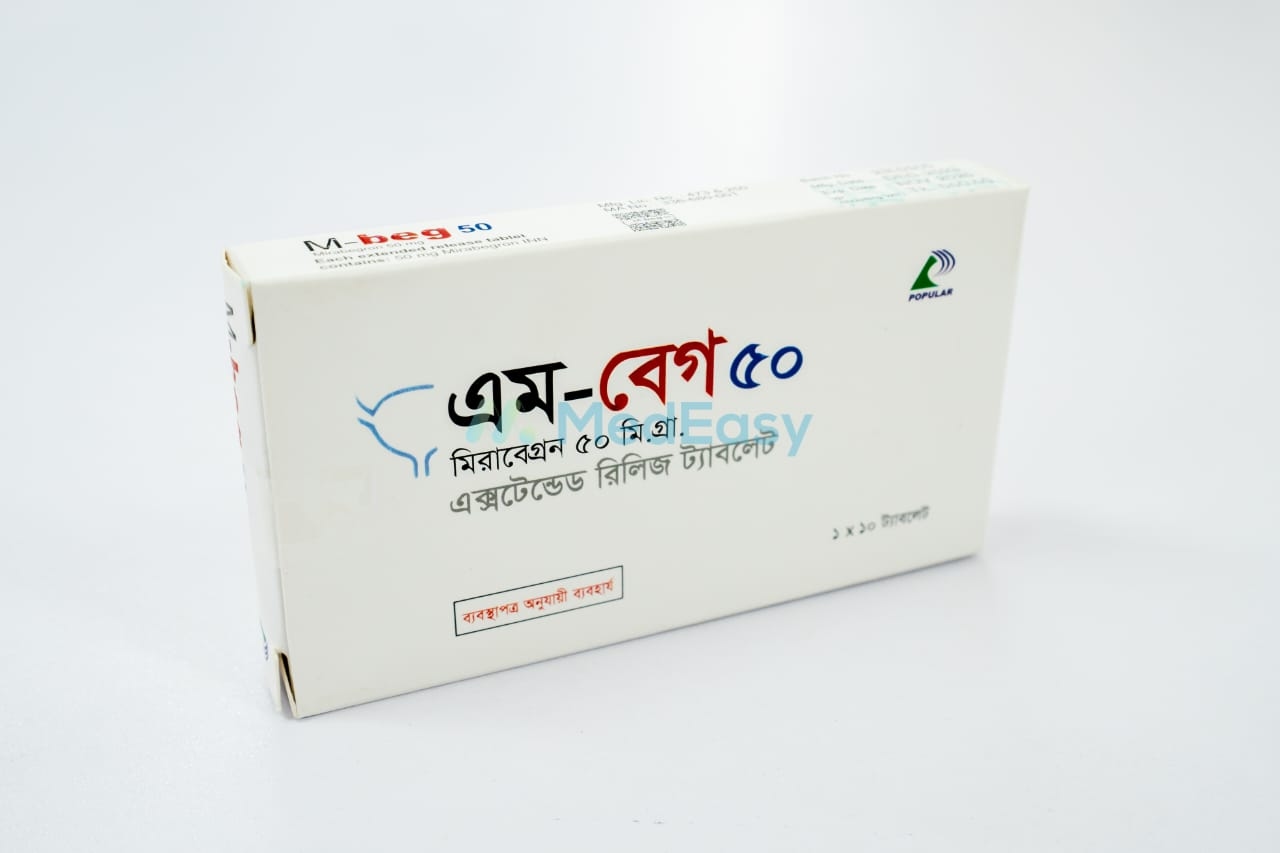
M-beg50 mg
Popular Pharmaceuticals Ltd.
৳506.00
Add to cart

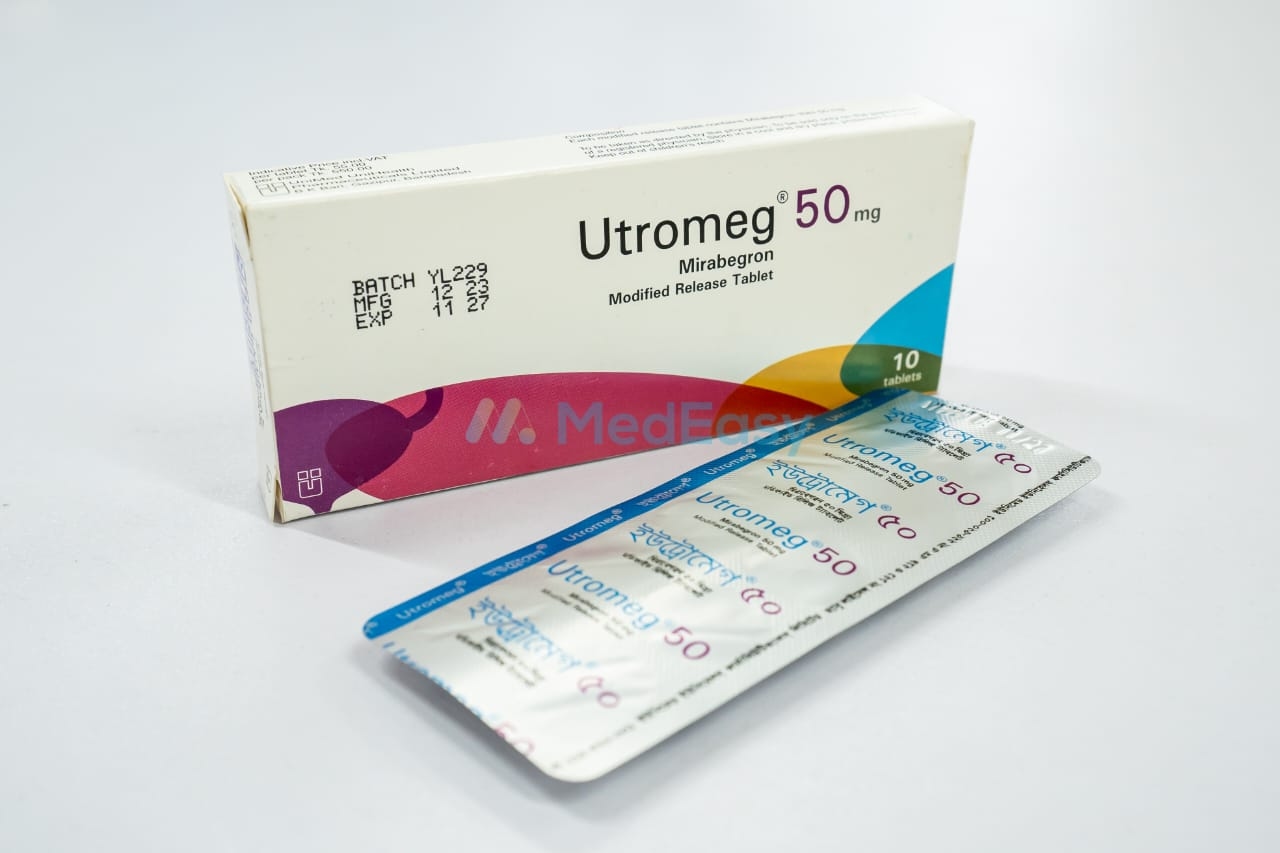
Betmira ER 50 mg Tablet is available on MedEasy for ৳506.00 per 10's pack, with home delivery anywhere in Bangladesh. It is manufactured by Healthcare Pharmaceuticals Ltd. Its generic name is Mirabegron.

Betmira ER is not approved for treatment of overactive bladder in pediatric patients (its pediatric approval is limited to neurogenic detrusor overactivity) and is not indicated for stress urinary incontinence.
Each tablet of Mirabegron extended-release formulation typically contains Mirabegron as the active pharmaceutical ingredient, along with excipients that permit controlled/extended release of the drug. Oral suspension granule formulations of Mirabegron are also available for patients unable to swallow tablets. Exact strengths and excipients vary by manufacturer/brand.
Betmira ER is a selective beta-3 adrenergic receptor agonist indicated for the treatment of overactive bladder and, in pediatric patients, neurogenic detrusor overactivity. It represents a mechanistically distinct alternative to the anticholinergic (antimuscarinic) class of drugs traditionally used for overactive bladder, and is often chosen for patients who cannot tolerate anticholinergic side effects such as dry mouth and constipation.
Betmira ER is administered orally, once daily, as an extended-release tablet or oral suspension, and works by relaxing the detrusor (bladder) smooth muscle during the bladder-filling phase, thereby increasing bladder capacity.
Beta-3 adrenergic receptor agonist; urinary antispasmodic / overactive bladder agent.
Mirabegron is a selective agonist of the beta-3 adrenergic receptor, which is the predominant beta-adrenoceptor subtype expressed in human detrusor smooth muscle. Activation of beta-3 receptors by Mirabegron stimulates adenylate cyclase, increasing intracellular cyclic AMP, which produces relaxation of the detrusor muscle during the storage (filling) phase of the micturition cycle without affecting normal voiding contractions. This mechanism increases bladder capacity and reduces episodes of urgency, frequency, and urge incontinence, and is distinct from the antimuscarinic mechanism used by other overactive bladder drugs.
Pharmacokinetics: Mirabegron is absorbed after oral administration with peak plasma concentrations reached in approximately 3.5 hours; absolute bioavailability increases with dose. It is extensively distributed and approximately 71% protein-bound. Metabolism occurs via multiple pathways including CYP3A4- and CYP2D6-mediated oxidation, amide hydrolysis, and glucuronidation; no single pathway predominates. Mirabegron is also a moderate inhibitor of CYP2D6. Elimination occurs via both renal and hepatic routes, with an elimination half-life of approximately 50 hours.
| Step | Dose |
|---|---|
| Starting dose | 25 mg orally once daily, with or without food |
| Dose increase | May increase to 50 mg once daily after 4–8 weeks, based on individual efficacy and tolerability |
Extended-release tablets should be swallowed whole with liquid and should not be chewed, divided, or crushed.
| Body weight | Dosing |
|---|---|
| 11 kg to <22 kg | Oral suspension granules, weight-based starting and maximum dose per prescriber guidance |
| 22 kg to <35 kg | Oral suspension granules, weight-based starting and maximum dose per prescriber guidance |
| ≥35 kg | Extended-release tablet or oral suspension granules, starting at the lowest approved dose with possible increase after 4–8 weeks |
Pediatric dosing of Betmira ER must be individualized and supervised by a physician experienced in managing neurogenic detrusor overactivity, generally alongside clean intermittent catheterization.
| Impairment | Recommendation |
|---|---|
| Renal, eGFR 30–89 mL/min/1.73m² | No dose adjustment required |
| Renal, eGFR 15–29 mL/min/1.73m² | Maximum 25 mg once daily |
| Renal, eGFR <15 mL/min/1.73m² or end-stage renal disease | Use of Betmira ER is not recommended |
| Hepatic, mild (Child-Pugh A) | No dose adjustment required |
| Hepatic, moderate (Child-Pugh B) | Maximum 25 mg once daily |
| Hepatic, severe (Child-Pugh C) | Use of Betmira ER is not recommended |
Take Betmira ER exactly as prescribed by your physician; do not increase the dose on your own, and inform your physician of any missed doses.
Betmira ER extended-release tablets should be taken orally, once daily, with or without food, swallowed whole with liquid — do not chew, divide, or crush the tablet. The oral suspension (granules) should be prepared and administered per the manufacturer's instructions, generally with food.
Betmira ER is a moderate inhibitor of the CYP2D6 enzyme. Co-administration with drugs that are CYP2D6 substrates, particularly those with a narrow therapeutic index, can increase their plasma concentrations and requires caution and dose adjustment/monitoring. Examples include certain tricyclic antidepressants (e.g., desipramine, imipramine), some antipsychotics (e.g., thioridazine), and some beta-blockers (e.g., metoprolol).
Co-administration of Betmira ER with digoxin increases digoxin exposure. When starting Betmira ER in a patient already taking digoxin, the lowest dose of digoxin should be used initially, with serum digoxin concentrations monitored and the digoxin dose titrated as needed.
Concurrent use of Betmira ER with anticholinergic medications for overactive bladder (e.g., solifenacin) is an approved combination but increases the risk of urinary retention; see Precautions and Warnings.
Betmira ER has shown minimal effect on the pharmacodynamics of warfarin in single-dose studies; data with repeated dosing are limited, so monitoring is reasonable when initiating combination therapy.
Mirabegron is contraindicated in patients with known hypersensitivity to Mirabegron or any component of the formulation.
The following side effects have been reported with Betmira ER in clinical trials.
There are no adequate and well-controlled studies of Betmira ER in pregnant women, and available data are insufficient to establish a drug-associated risk of major birth defects or miscarriage. Animal reproduction studies have shown skeletal and cardiac findings at systemic exposures well above the human therapeutic exposure. Betmira ER should be used during pregnancy only if clearly needed and if the potential benefit justifies the potential risk to the fetus; a physician should be consulted before use.
There is no information on the presence of Betmira ER in human milk or its effects on the breastfed infant or on milk production; drug-related material has been detected in the milk of lactating animals. The developmental and health benefits of breastfeeding should be weighed against the mother's clinical need for Betmira ER and any potential adverse effects on the breastfed child. Consult a physician before use while breastfeeding.
Betmira ER can increase blood pressure. It is not recommended for use in patients with severe uncontrolled hypertension (blood pressure ≥180/110 mmHg). Blood pressure should be measured at baseline and periodically during treatment, particularly in patients with pre-existing hypertension. This effect has also been observed in pediatric patients, in whom larger blood pressure increases have been reported, especially in children under 12 years of age.
Urinary retention has been reported in patients taking Betmira ER, particularly in patients with bladder outlet obstruction and in patients taking anticholinergic medications for overactive bladder concurrently with Betmira ER. Use Betmira ER with caution in patients with clinically significant bladder outlet obstruction and monitor for signs and symptoms of urinary retention, especially when used together with an anticholinergic OAB agent.
Angioedema of the face, lips, tongue, and/or larynx has been reported with Betmira ER, sometimes occurring after the first dose but also after multiple doses. If involvement of the tongue, hypopharynx, or larynx occurs, Betmira ER should be discontinued immediately and appropriate emergency therapy instituted.
Betmira ER requires dose adjustment in moderate renal or hepatic impairment and is not recommended in severe renal impairment (eGFR <15 mL/min/1.73m² or end-stage renal disease) or severe hepatic impairment (Child-Pugh C). See Dosage and Administration for details.
The highest single dose of Betmira ER studied in clinical trials (400 mg in healthy volunteers) was associated with palpitations and increases in heart rate, and higher doses could be expected to cause exaggerated increases in heart rate and blood pressure. In case of suspected overdose of Betmira ER, seek immediate medical attention or contact a poison control center. Management should be symptomatic and supportive, with monitoring of pulse rate, blood pressure, and ECG until the patient is stable.
Store at room temperature (below 30°C), away from light and moisture. Keep out of reach of children.
No dose adjustment of Betmira ER is needed in mild-to-moderate renal impairment (eGFR 30–89 mL/min/1.73m²); maximum 25 mg daily in eGFR 15–29 mL/min/1.73m²; not recommended in eGFR <15 mL/min/1.73m² or end-stage renal disease. See Dosage and Administration.
No dose adjustment needed in mild hepatic impairment (Child-Pugh A); maximum 25 mg daily in moderate impairment (Child-Pugh B); not recommended in severe hepatic impairment (Child-Pugh C).
No overall differences in safety or efficacy of Betmira ER were observed between elderly and younger adult patients in clinical trials, though greater sensitivity in some older individuals cannot be ruled out; use with routine monitoring of blood pressure.
Betmira ER is approved for neurogenic detrusor overactivity in children aged 3 years and older, with weight-based dosing. Safety and efficacy have not been established in children under 3 years of age, and Betmira ER is not approved for overactive bladder in the pediatric population.
The duration of treatment with Betmira ER should be individualized by the treating physician based on symptom response. Clinical response is typically assessed after 4–8 weeks, at which point the dose may be increased if tolerated and needed, or continued long-term for chronic overactive bladder symptom control. Periodic reassessment of continued need and blood pressure monitoring is recommended.
Beta-3 adrenergic receptor agonists; agents for urinary frequency and incontinence.
Mirabegron selectively stimulates beta-3 adrenergic receptors on detrusor smooth muscle, activating adenylate cyclase and increasing intracellular cyclic AMP, which relaxes the bladder during the filling/storage phase and increases bladder capacity, without impairing normal voiding.
Betmira ER is approved for the treatment of neurogenic detrusor overactivity in pediatric patients 3 years of age and older, weighing at least 11 kg (oral suspension granules) or at least 35 kg (extended-release tablets or granules), typically used together with clean intermittent catheterization. Dosing is weight-based and must be individualized by the treating physician. Safety and effectiveness of Betmira ER have not been established in children younger than 3 years, and Betmira ER is not approved for overactive bladder in children. Blood pressure increases have been observed more prominently in pediatric patients, especially those under 12 years, and periodic blood pressure monitoring is recommended.
Q: What is Betmira ER 50 mg Tablet used for?
A: Betmira ER 50 mg Tablet is used to treat overactive bladder (OAB) in adults, including symptoms of urgency, frequency, and urge urinary incontinence. In children aged 3 years and older, Betmira ER 50 mg Tablet is used to treat neurogenic detrusor overactivity, usually alongside clean intermittent catheterization.
Q: How is Betmira ER 50 mg Tablet different from other overactive bladder medicines?
A: Unlike anticholinergic (antimuscarinic) drugs commonly used for overactive bladder, Betmira ER 50 mg Tablet works through a different mechanism — it stimulates beta-3 adrenergic receptors to relax the bladder muscle — so it may cause less dry mouth and constipation, though it carries its own risks such as increased blood pressure.
Q: Can Betmira ER 50 mg Tablet raise blood pressure?
A: Yes, Betmira ER 50 mg Tablet can increase blood pressure and is not recommended in patients with severe uncontrolled hypertension (blood pressure ≥180/110 mmHg). Blood pressure should be checked before starting and periodically during treatment with Betmira ER 50 mg Tablet, especially in patients with a history of high blood pressure.
Q: Is Betmira ER 50 mg Tablet safe during pregnancy or breastfeeding?
A: Safety data for Betmira ER 50 mg Tablet in human pregnancy and breastfeeding are limited. Betmira ER 50 mg Tablet should be used during pregnancy or lactation only if clearly needed and the potential benefit justifies the potential risk; always consult a physician before using Betmira ER 50 mg Tablet in these situations.
Q: What should I tell my doctor before starting Betmira ER 50 mg Tablet?
A: Tell your doctor if you have high blood pressure, kidney or liver problems, difficulty emptying your bladder, or if you are taking other medicines for overactive bladder or drugs affected by CYP2D6 (such as certain antidepressants, antipsychotics, or beta-blockers), since Betmira ER 50 mg Tablet can interact with these.
Q: What if I miss a dose or take too much Betmira ER 50 mg Tablet?
A: If you miss a dose of Betmira ER 50 mg Tablet, take your next dose at the regular time; do not double the dose. If you suspect an overdose of Betmira ER 50 mg Tablet, seek immediate medical attention or contact a poison control center, as an overdose can cause palpitations and a fast heart rate.
Disclaimer
The information provided is accurate to the best of our knowledge, but it does not replace professional medical advice. We cannot guarantee its completeness or accuracy, and the absence of specific information about a drug should not be taken as an endorsement. We are not responsible for any consequences arising from this information, so please consult a healthcare professional for any concerns or questions.