
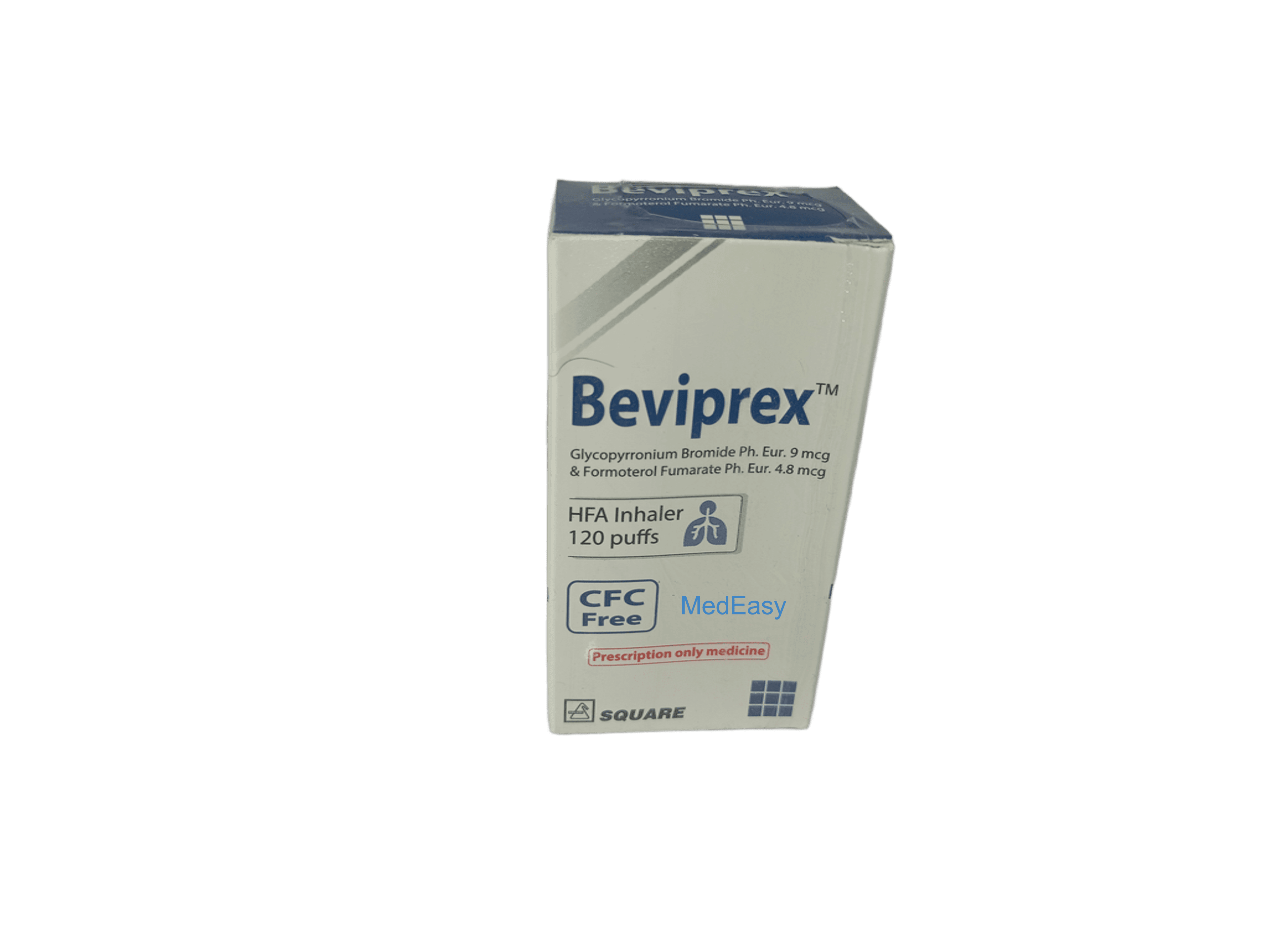
Beviprex(9 mcg+4.8 mcg)/puff

Medicine overview
Indications of Beviprex
Approved Indication
Beviprex is indicated for the long-term, twice-daily maintenance bronchodilator treatment of airflow obstruction in adult patients with chronic obstructive pulmonary disease (COPD), including chronic bronchitis and/or emphysema. It helps reduce exacerbations of COPD symptoms and improves lung function over time.
Not Indicated For
- Beviprex is not indicated for the relief of acute bronchospasm or as a rescue inhaler for sudden breathing difficulty. A fast-acting (short-acting) bronchodilator should be used for acute symptoms.
- Beviprex is not indicated for asthma; its safety and efficacy in asthma have not been established, and combination LAMA/LABA products of this type are not recommended as monotherapy in asthma.
Beviprex combines a long-acting muscarinic antagonist (LAMA) and a long-acting beta-2 agonist (LABA) and is used only as maintenance therapy, not as an as-needed treatment.
Composition
Glycopyrronium Bromide + Formoterol Fumarate is a fixed-dose combination inhalation product containing two active bronchodilator components in each actuation/dose:
- Glycopyrronium Bromide — a long-acting muscarinic antagonist (LAMA)
- Formoterol Fumarate — a long-acting beta-2 adrenergic agonist (LABA)
Exact strength per actuation and inhaler device (metered-dose inhaler or dry powder inhaler) varies by manufacturer and local product registration; refer to the specific product pack insert for the labeled strength.
Description
Beviprex is a combination inhaled medicine used to treat chronic obstructive pulmonary disease (COPD). It brings together two complementary classes of long-acting bronchodilators — a muscarinic antagonist and a beta-2 agonist — in a single inhaler device to provide sustained relief of airflow obstruction and reduce the frequency of COPD exacerbations when used regularly, twice daily, as a maintenance therapy.
Beviprex is not a reliever medicine and should not be used for sudden shortness of breath; patients should be prescribed a separate short-acting bronchodilator for acute symptoms.
Therapeutic Class
Beviprex belongs to the therapeutic class of combination long-acting bronchodilators for COPD, specifically a long-acting muscarinic antagonist (LAMA) combined with a long-acting beta-2 agonist (LABA), delivered by inhalation.
Pharmacology
Mechanism
Glycopyrronium Bromide + Formoterol Fumarate combines two bronchodilator mechanisms that act on different receptors in the airway smooth muscle:
- Glycopyrronium Bromide (LAMA): blocks acetylcholine's action at M3 muscarinic receptors on airway smooth muscle, reducing cholinergically-mediated bronchoconstriction and producing sustained bronchodilation.
- Formoterol Fumarate (LABA): stimulates beta-2 adrenergic receptors in airway smooth muscle, increasing intracellular cyclic AMP and causing relaxation of bronchial smooth muscle; formoterol has a relatively rapid onset and long (approximately 12-hour) duration of action.
The two mechanisms act synergistically, producing greater and more sustained bronchodilation than either component alone, which is the pharmacologic rationale for combining them in Glycopyrronium Bromide + Formoterol Fumarate.
Dosage & Administration of Beviprex
Adult Dose (COPD Maintenance)
| Indication | Typical Adult Dose |
|---|---|
| Long-term maintenance treatment of COPD | The labeled number of inhalations (as specified on the product pack) taken twice daily, approximately 12 hours apart, at the same times each day. Do not exceed the prescribed number of inhalations or dosing frequency. |
Pediatric Dose
Beviprex is not indicated for use in children; safety and efficacy in the pediatric population have not been established.
Renal/Hepatic Impairment
No well-established dose adjustment has been defined for renal or hepatic impairment; Beviprex should be used with caution in patients with severe hepatic or renal impairment, with clinical monitoring.
Administration of Beviprex
How to Use
- Beviprex is for oral inhalation only and must not be swallowed or injected.
- Shake the inhaler well before use if it is a metered-dose inhaler (pressurized aerosol); follow the device-specific priming instructions before first use and after periods of non-use.
- Use at the same two times each day, approximately 12 hours apart, to maintain steady drug levels.
- Rinse the mouth with water after use (do not swallow) to reduce the risk of local irritation.
- Do not use with a spacer unless specifically instructed, and do not exceed the prescribed number of inhalations per dose.
- Clean the inhaler mouthpiece as instructed in the product leaflet to prevent blockage.
Interaction of Beviprex
Clinically Significant Interactions
- Other anticholinergic (antimuscarinic) medicines: Concomitant use with other anticholinergic-containing drugs is not recommended, as it may increase anticholinergic adverse effects (e.g. dry mouth, urinary retention, constipation).
- Other adrenergic (sympathomimetic) agents: Co-administration with other long- or short-acting beta-agonists or other adrenergic drugs may potentiate cardiovascular side effects of Beviprex and should generally be avoided.
- Beta-blockers (including eye drops): May reduce the bronchodilating effect of the formoterol component of Beviprex and can also produce severe bronchospasm in some patients with airway disease; use with caution, and cardioselective beta-blockers should be considered if a beta-blocker is required.
- Non-potassium-sparing diuretics (e.g. loop and thiazide diuretics): The ECG and hypokalemic effects of the beta-agonist component may be worsened by concomitant diuretic use; monitor serum potassium.
- MAO inhibitors, tricyclic antidepressants, and drugs that prolong the QT interval: May potentiate the effect of formoterol on the cardiovascular system; use with caution.
Contraindications
Glycopyrronium Bromide + Formoterol Fumarate is contraindicated in patients with a known hypersensitivity to glycopyrronium, formoterol, or any excipient of the specific formulated product (including, for certain dry powder inhaler formulations, hypersensitivity to milk proteins where lactose is used as an excipient).
Side Effects of Beviprex
Common Side Effects
- Nasopharyngitis (common cold symptoms), upper respiratory tract infection
- Cough
- Headache
- Dry mouth
- Back pain, urinary tract infection
- Tremor, nervousness, muscle cramps (beta-agonist effects)
Less Common but Serious Side Effects
- Paradoxical bronchospasm (immediate worsening of wheeze after dosing)
- Cardiovascular effects: increased heart rate, palpitations, elevated blood pressure, ECG changes
- Worsening of narrow-angle glaucoma (eye pain, blurred vision, halos around lights)
- Urinary retention, especially in patients with bladder outflow obstruction
- Hypokalemia and hyperglycemia (beta-agonist metabolic effects)
Pregnancy & Lactation
Pregnancy: There are limited human data on the use of Beviprex in pregnancy. Beviprex should be used during pregnancy only if the potential benefit to the mother justifies the potential risk to the fetus, and only under a physician's advice.
Lactation: It is not known whether the components of Beviprex pass into human breast milk. Because many drugs are excreted in breast milk, caution is advised; a decision should be made whether to discontinue breastfeeding or discontinue the drug, considering the benefit of the drug to the mother, and only after consulting a physician.
Precautions & Warnings
Not for Acute Symptoms
Beviprex is a maintenance treatment only and must not be used to treat acute, sudden episodes of breathlessness or wheeze; a separate short-acting rescue bronchodilator should always be available.
Paradoxical Bronchospasm
As with other inhaled bronchodilators, Beviprex may produce paradoxical bronchospasm that can be life-threatening. If this occurs, discontinue Beviprex immediately and institute alternative therapy.
Cardiovascular Effects
The formoterol component of Beviprex can produce clinically significant cardiovascular effects, including increased heart rate, blood pressure, and ECG changes (e.g. QTc interval prolongation). Use with caution in patients with cardiovascular disease, especially coronary insufficiency, cardiac arrhythmias, and hypertension.
Anticholinergic Effects
Due to its anticholinergic (glycopyrronium) component, Beviprex should be used with caution in patients with narrow-angle glaucoma and in patients with urinary retention or bladder outflow obstruction, as it may worsen these conditions.
Do Not Exceed Prescribed Dose
Beviprex should not be used more frequently, or at a higher dose, than prescribed, as this increases the risk of cardiovascular and other adverse effects without added benefit.
Other Cautions
Use with caution in patients with convulsive disorders, thyrotoxicosis, and diabetes mellitus, as beta-agonists can worsen these conditions.
Overdose Effects of Beviprex
Overdose of Beviprex may exaggerate its known bronchodilator effects, potentially causing seizures, angina, hypertension or hypotension, tachycardia with rates up to 200 beats/minute, arrhythmias, nervousness, headache, tremor, dry mouth, palpitations, nausea, dizziness, fatigue, malaise, hypokalemia, hyperglycemia, and metabolic acidosis. Anticholinergic effects such as blurred vision, dry mouth, and urinary retention may also be exaggerated.
If overdose of Beviprex is suspected, seek immediate medical attention or contact emergency services/a poison control center. Treatment is generally supportive, with cardiac monitoring; do not attempt specific home treatment for a suspected overdose.
Storage Conditions
Store at room temperature (below 30°C), away from direct sunlight, heat, and moisture. Do not puncture, break, or burn the inhaler canister, even when it appears empty, as it may still contain propellant under pressure. Keep out of reach and sight of children.
Use In Special Populations
Elderly
No overall differences in safety or effectiveness of Beviprex have been observed between elderly patients and younger adults, but elderly patients with cardiovascular disease should be monitored closely given the beta-agonist component's cardiovascular effects.
Renal Impairment
Beviprex has not been extensively studied in severe renal impairment; use with caution and clinical monitoring, as active drug components are partly renally eliminated.
Hepatic Impairment
Beviprex has not been extensively studied in severe hepatic impairment; use with caution.
Pediatric Population
Safety and efficacy of Beviprex in patients under 18 years of age have not been established; see Pediatric Uses.
Duration Of Treatment
Beviprex is intended for long-term, ongoing maintenance treatment of COPD and is typically continued indefinitely as part of chronic disease management, as advised by the prescribing physician. It should be taken continuously, twice daily, even when the patient feels well, since stopping treatment may lead to worsening of COPD symptoms. Treatment duration and continued need should be reviewed periodically by the physician.
Drug Classes
Long-Acting Muscarinic Antagonist (LAMA) + Long-Acting Beta-2 Agonist (LABA); Combination Inhaled Bronchodilator for COPD
Mode Of Action
Glycopyrronium Bromide + Formoterol Fumarate acts through two complementary bronchodilator mechanisms: the glycopyrronium component blocks M3 muscarinic acetylcholine receptors on airway smooth muscle to reduce cholinergic bronchoconstriction, while the formoterol component stimulates beta-2 adrenergic receptors to increase cyclic AMP and relax airway smooth muscle. Together, these mechanisms produce more effective and sustained bronchodilation over approximately 12 hours than either mechanism alone.
Pediatric Uses
Beviprex is not indicated for use in the pediatric population. Its safety and efficacy in patients younger than 18 years of age have not been established, and it should not be prescribed to children or adolescents outside of a clinical trial setting.
Frequently Asked Questions
Q: What is Beviprex (9 mcg+4.8 mcg)/puff Inhaler used for?
A: Beviprex (9 mcg+4.8 mcg)/puff Inhaler is used for the long-term, twice-daily maintenance treatment of chronic obstructive pulmonary disease (COPD) to reduce airflow obstruction and exacerbations. It is not for treating sudden breathing attacks.
Q: Can I use Beviprex (9 mcg+4.8 mcg)/puff Inhaler for a sudden asthma attack or sudden shortness of breath?
A: No. Beviprex (9 mcg+4.8 mcg)/puff Inhaler is not indicated for asthma and must not be used to relieve acute, sudden symptoms. A separate fast-acting rescue inhaler should be used for acute breathlessness, and you should seek medical attention if symptoms do not improve.
Q: How often should I take Beviprex (9 mcg+4.8 mcg)/puff Inhaler?
A: Beviprex (9 mcg+4.8 mcg)/puff Inhaler is typically taken as the prescribed number of inhalations twice daily, about 12 hours apart, at the same times each day. Do not take extra doses or use it more often than prescribed.
Q: What are the most important side effects of Beviprex (9 mcg+4.8 mcg)/puff Inhaler I should watch for?
A: Watch for worsening breathing immediately after a dose (paradoxical bronchospasm), fast or irregular heartbeat, chest pain, eye pain or visual disturbance (which may indicate worsening glaucoma), and difficulty passing urine. Seek medical attention promptly if these occur.
Q: Is Beviprex (9 mcg+4.8 mcg)/puff Inhaler safe during pregnancy or breastfeeding?
A: Data are limited. Beviprex (9 mcg+4.8 mcg)/puff Inhaler should be used in pregnancy only if the potential benefit justifies the potential risk to the fetus, and a physician should be consulted before use during breastfeeding as well.
Q: What should I do if I think I have taken too much Beviprex (9 mcg+4.8 mcg)/puff Inhaler?
A: If you suspect an overdose of Beviprex (9 mcg+4.8 mcg)/puff Inhaler, seek immediate medical attention or contact emergency services or a poison control center. Do not attempt to treat an overdose at home.
Disclaimer
The information provided is accurate to the best of our knowledge, but it does not replace professional medical advice. We cannot guarantee its completeness or accuracy, and the absence of specific information about a drug should not be taken as an endorsement. We are not responsible for any consequences arising from this information, so please consult a healthcare professional for any concerns or questions.
