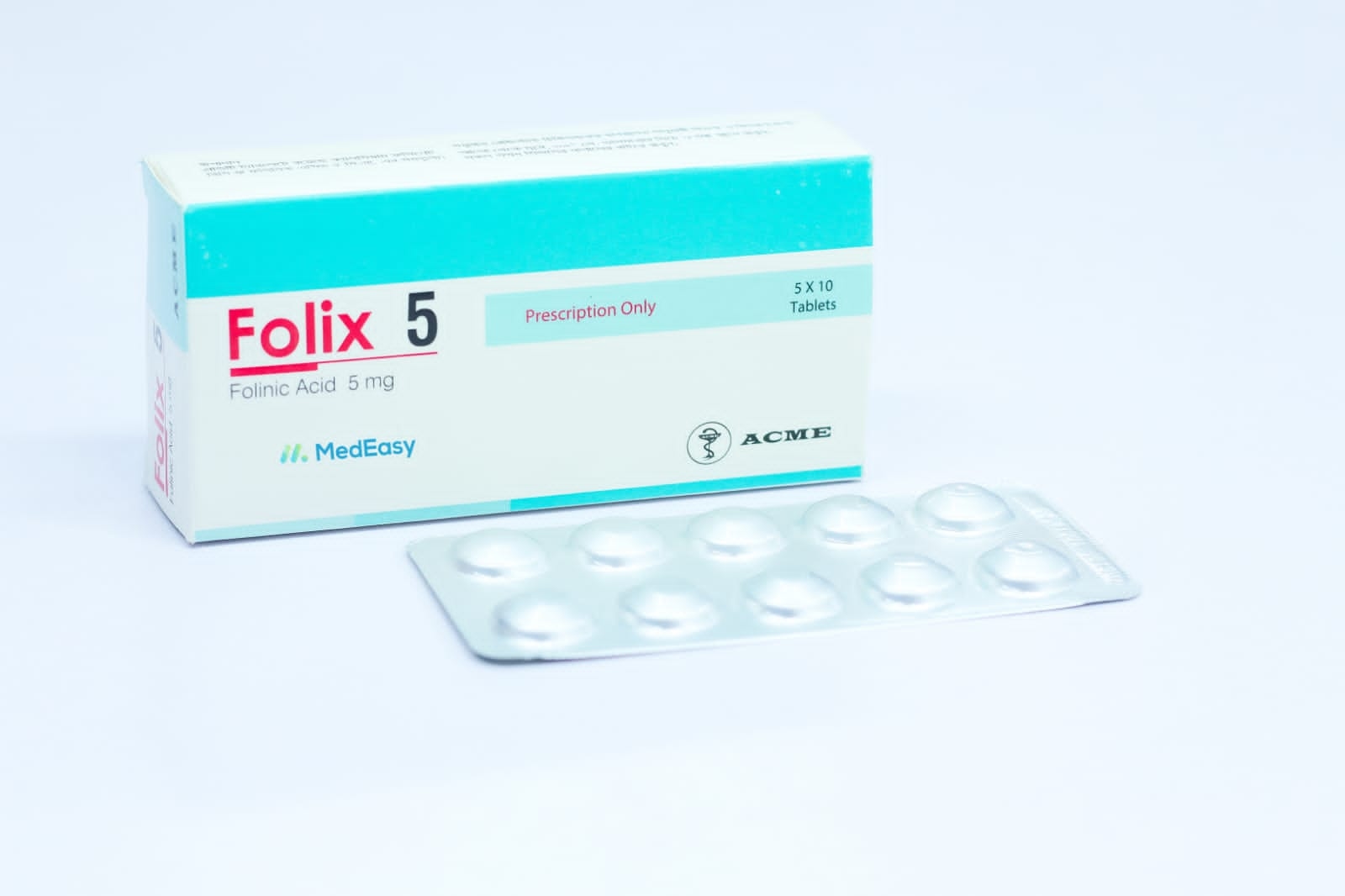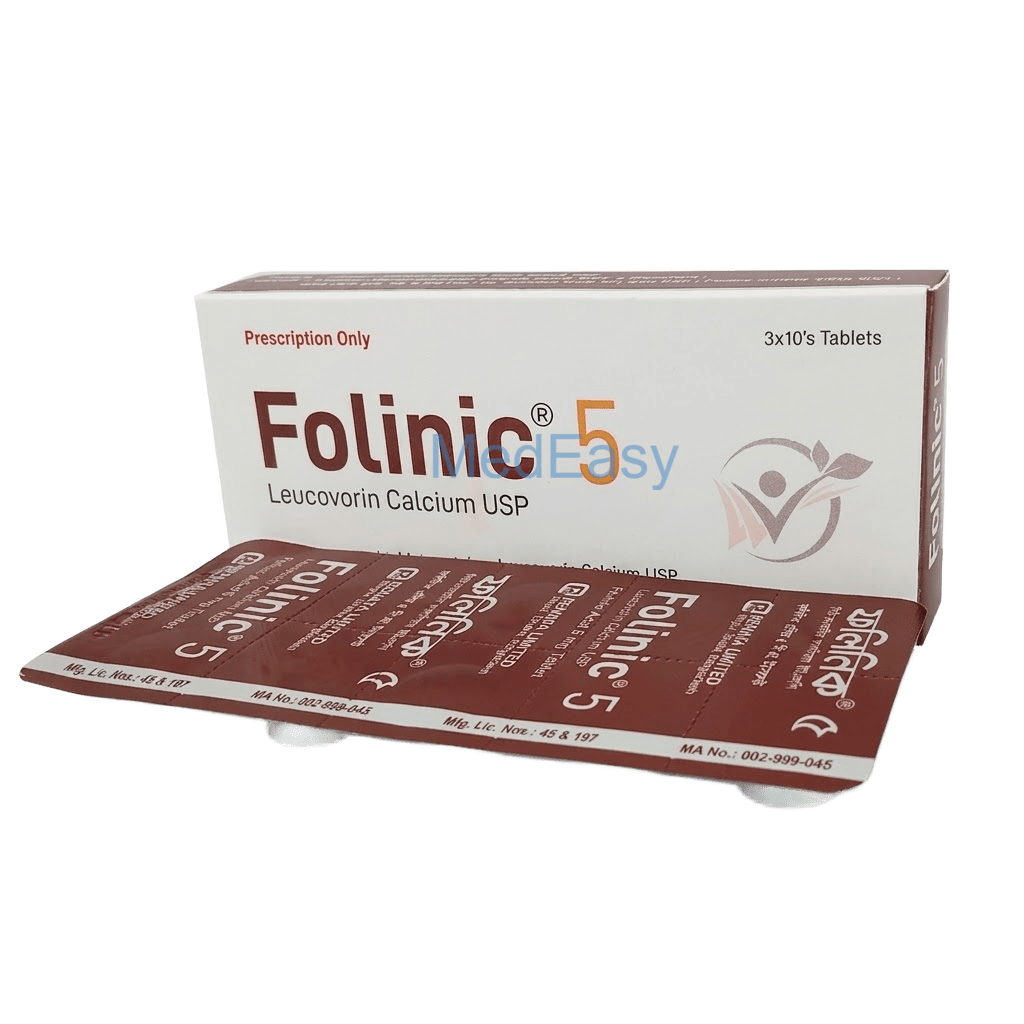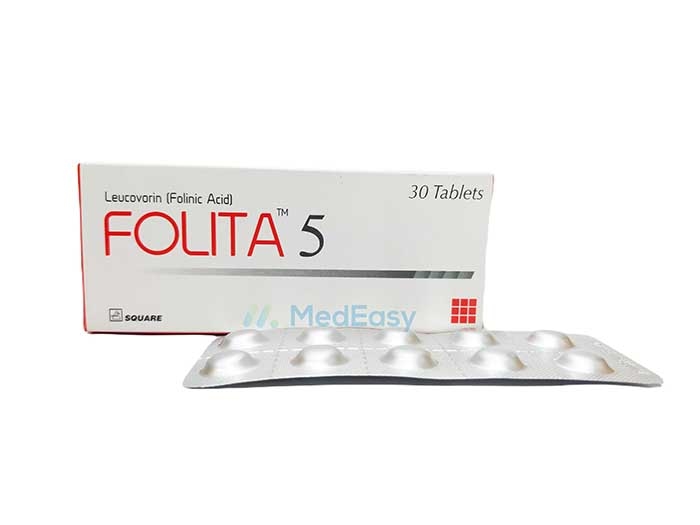
8% Off
Folita5 mg
Square Pharmaceuticals PLC.
৳82.80
Add to cart
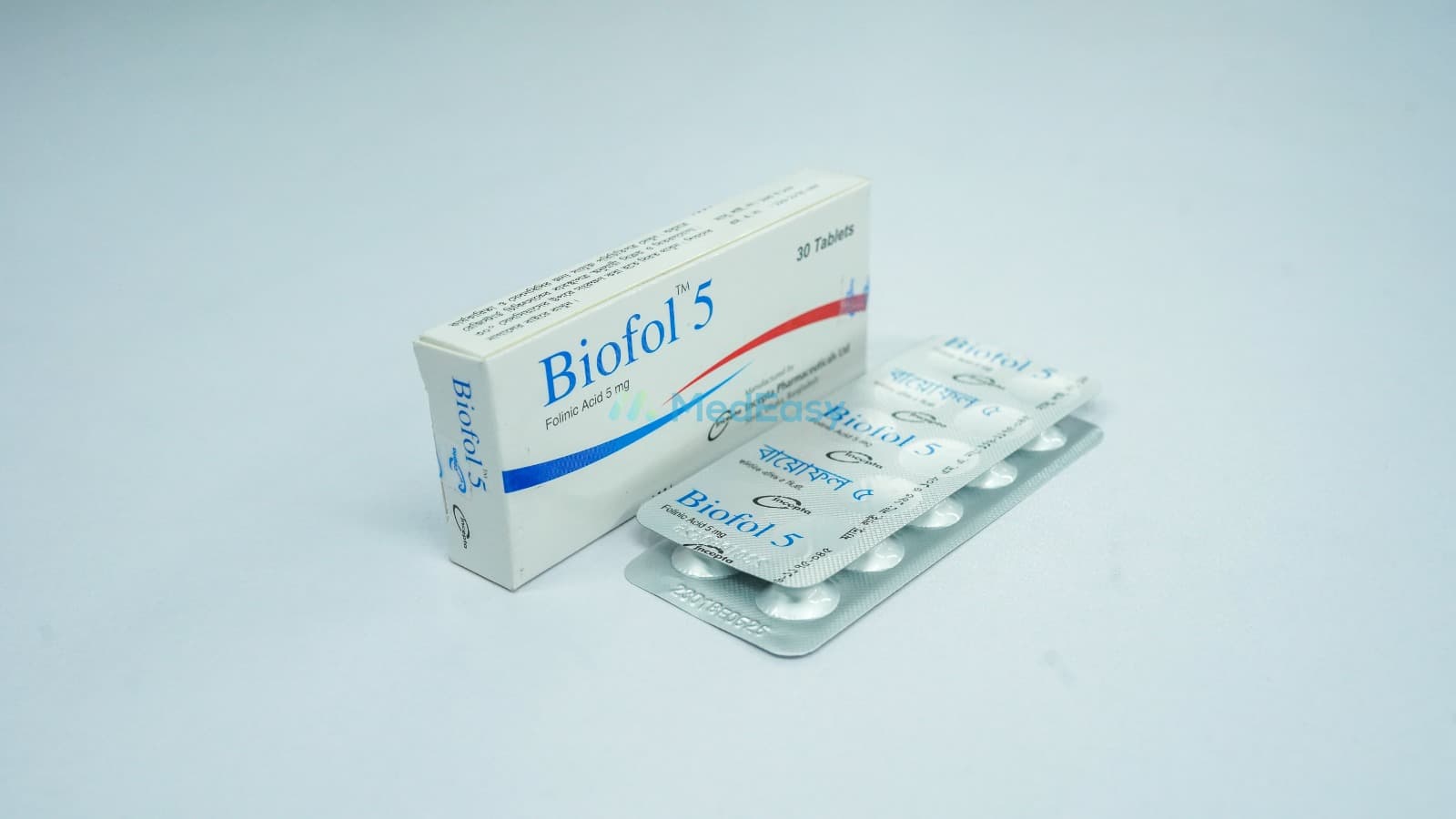
Biofol 5 mg Tablet is available on MedEasy for ৳81.00 per 10's Strip, with home delivery anywhere in Bangladesh. It is manufactured by Incepta Pharmaceuticals Ltd. Its generic name is Calcium Folinate [Folinic Acid].

Biofol (leucovorin, a reduced folate) is indicated for the following uses, classified by strength of evidence:
Biofol is not effective, and must not be used, as a treatment for pernicious anemia or other vitamin B12-deficiency anemias (see Contraindications).
Each formulation of Calcium Folinate [Folinic Acid] contains folinic acid (as its calcium salt, calcium leucovorin) as the active ingredient. Calcium Folinate [Folinic Acid] is available as a lyophilized powder for injection/infusion (to be reconstituted before use) and, in some markets, as oral tablets. Strength is typically expressed as the folinic acid (leucovorin) content per vial or tablet — common presentations include 3 mg/mL, 10 mg/mL, 15 mg, 25 mg, and 50 mg strengths; exact strengths and pack sizes vary by manufacturer. Please refer to the product label for the exact composition of the specific brand dispensed.
Biofol, also known as leucovorin calcium, is the calcium salt of folinic acid, a biologically active, reduced form of folic acid (vitamin B9). Unlike folic acid, Biofol does not require enzymatic reduction by dihydrofolate reductase (DHFR) to become metabolically active, which allows it to bypass the metabolic block caused by folate antagonists such as methotrexate.
Biofol is used clinically in two broad contexts: as a "rescue" agent to protect normal cells from the toxicity of high-dose methotrexate and other folate antagonists, and as a biochemical modulator that enhances the antitumor activity of 5-fluorouracil in colorectal cancer chemotherapy. It is also used to treat megaloblastic anemia due to folate deficiency when oral folic acid cannot be used.
Biofol belongs to the therapeutic class of folate analogs / reduced folates, and is also classified as a chemotherapy adjunct (biochemical modulator) and an antidote to folic acid antagonists (e.g., methotrexate toxicity).
Calcium Folinate [Folinic Acid] (folinic acid) is a reduced, fully-active form of folic acid (5-formyltetrahydrofolate). Because it is already in the reduced form, it does not need to be converted by the enzyme dihydrofolate reductase (DHFR) before it can participate in one-carbon transfer reactions required for the synthesis of purines and pyrimidines (essential building blocks of DNA and RNA).
Methotrexate and other folate antagonists work by inhibiting DHFR, which blocks the normal cell's ability to regenerate active reduced folates and thereby halts DNA synthesis. Because Calcium Folinate [Folinic Acid] does not require DHFR for activation, administering it after high-dose methotrexate allows normal (non-cancerous) cells to bypass the DHFR blockade and resume DNA synthesis, "rescuing" them from methotrexate toxicity, while — with correct timing per protocol — tumor cells remain more susceptible to the antitumor effect of methotrexate.
Calcium Folinate [Folinic Acid] increases the intracellular pool of reduced folate cofactor, which stabilizes the binding of the active 5-FU metabolite (fluorodeoxyuridine monophosphate, FdUMP) to the enzyme thymidylate synthase. This more stable, prolonged enzyme inhibition enhances the cytotoxic and antitumor effect of 5-FU.
Pharmacokinetics: Folinic acid is well absorbed after oral or parenteral administration and is rapidly converted in the liver and intestinal mucosa to its active metabolites, principally 5-methyltetrahydrofolate. Peak plasma levels are reached faster after intravenous administration than after oral or intramuscular dosing. It is primarily eliminated via the kidneys.
Dosing of Biofol is highly indication-specific and must always follow the treating physician's protocol; the following is general reference information, not a substitute for individualized medical guidance.
| Indication | Typical Adult Dosing |
|---|---|
| Methotrexate rescue after high-dose methotrexate | Usually 15 mg (approx. 10 mg/m²) by mouth, intramuscularly, or intravenously every 6 hours, beginning approximately 24 hours after the start of the methotrexate infusion, and continued (with dose/frequency adjusted per serum methotrexate level) until the methotrexate level falls below the threshold specified in the treatment protocol (commonly less than 0.05–0.1 micromol/L). Exact timing is protocol- and hospital-specific. |
| Folic acid antagonist overdosage (e.g., methotrexate, trimethoprim, pyrimethamine) | As soon as possible, generally starting at approximately 10 mg/m² by mouth, intramuscularly, or intravenously, then every 6 hours until the serum methotrexate (or antifolate) level falls to a safe threshold; dose is adjusted upward if methotrexate elimination is delayed. |
| Megaloblastic anemia due to folate deficiency (when oral folic acid is not appropriate) | Up to 1 mg per day, intramuscularly, until the clinical situation permits switching to oral folic acid. |
| Adjunct to 5-fluorouracil in advanced colorectal cancer | Given as part of established combination regimens, for example 200 mg/m² or 20 mg/m² by slow intravenous injection, followed by 5-fluorouracil, on a schedule (commonly daily for 5 days, repeated in cycles) determined by the treating oncologist. Regimen and dose vary by protocol. |
Biofol is administered by the intravenous, intramuscular, or oral route depending on the formulation and clinical situation. Biofol must never be administered intrathecally — intrathecal administration has caused fatalities. When given intravenously, the rate of administration should not exceed the maximum recommended rate (due to the calcium content of the injection) as specified in the product label. See Reconstitution for preparation of the injectable powder form.
Biofol may be given by intravenous injection/infusion, intramuscular injection, or by mouth, depending on the formulation and clinical indication. The injectable powder must be reconstituted before use (see Reconstitution). Oral tablets should be swallowed as directed; if vomiting is likely or oral intake is unreliable, the parenteral route is preferred. Biofol must never be given by the intrathecal (spinal) route — this has resulted in serious neurological injury and death. Intravenous administration should not exceed the maximum infusion rate specified in the product label because of its calcium content.
Biofol has the following clinically significant drug interactions:
Calcium Folinate [Folinic Acid] is contraindicated in:
When used alone, Biofol is generally well tolerated. Reported side effects include:
When Biofol is combined with 5-fluorouracil chemotherapy, the following adverse effects are more frequent and can be more severe (these are largely attributable to enhanced 5-FU toxicity, not to Biofol alone):
Patients should seek prompt medical attention for signs of a severe allergic reaction, severe diarrhea, mouth sores, unusual bleeding/bruising, fever, or signs of infection during combination chemotherapy.
Pregnancy: Folate itself is important and generally considered safe/beneficial in pregnancy at ordinary physiologic doses. However, the medically supervised, often high-dose uses of Biofol discussed here (methotrexate rescue, colorectal cancer chemotherapy adjunct, antifolate-overdose treatment) are typically used in the context of serious underlying illness. Biofol should be used in pregnancy only if clearly needed and if the potential benefit justifies the potential risk to the fetus; use only under the guidance and supervision of a physician, with individualized risk-benefit assessment.
Lactation: It is not established whether Biofol is excreted into human breast milk. Caution is advised, and a physician should be consulted to weigh the benefits of treatment against any potential risk to the breastfeeding infant before use during breastfeeding.
Route of administration: Biofol must never be given by the intrathecal (spinal) route — intrathecal administration has caused fatal or serious neurological reactions. It should be given only by the oral, intramuscular, or intravenous route as directed.
Rate of intravenous administration: Because of its calcium content, intravenous Biofol should not be injected faster than the maximum rate specified in the product label, to avoid calcium-related adverse effects.
Timing in methotrexate rescue: The timing and dose of Biofol relative to high-dose methotrexate is critical and must strictly follow the treating oncologist's protocol; delayed or inadequate rescue increases the risk of severe methotrexate toxicity, while incorrect timing can reduce methotrexate's antitumor effect. Serum methotrexate level monitoring is required to guide dosing when used for this purpose.
Do not confuse with vitamin B12 deficiency treatment: Biofol must not be used to treat megaloblastic anemia unless vitamin B12 deficiency has been excluded first (see Contraindications), as it can mask the blood picture of B12 deficiency while neurological damage progresses.
5-Fluorouracil combination: Biofol increases the toxicity as well as the efficacy of 5-fluorouracil; elderly or debilitated patients receiving this combination are at increased risk of severe gastrointestinal toxicity and require close clinical monitoring, with dose modification or discontinuation of 5-FU if severe toxicity occurs.
Does not treat methotrexate nephrotoxicity: Biofol rescue does not prevent or reverse methotrexate-induced kidney injury; adequate hydration and urine alkalinization, as directed by the treating physician, remain important parts of high-dose methotrexate protocols.
Specific data on Biofol overdose are limited. Excessive doses of Biofol may reduce or nullify the intended chemotherapeutic (antitumor) effect of folic acid antagonists such as methotrexate when these are used together in cancer treatment, potentially compromising cancer therapy. If an overdose of Biofol is suspected, or if there are any concerning symptoms after administration, seek immediate medical attention or contact a poison control center/emergency services. Management is supportive and should be directed by a physician; there is no specific home treatment for overdose.
Storage requirements vary by formulation and manufacturer — always follow the instructions on the product label. Lyophilized powder for injection is commonly stored at room temperature (below 25-30°C) before reconstitution, protected from light, while some brands require refrigeration (2-8°C), protected from light; oral tablets are typically stored at room temperature (below 30°C), protected from light and moisture. Once reconstituted or diluted, use the solution within the time specified by the manufacturer and protect it from light. Keep out of reach of children.
Pediatric use: Biofol is used in pediatric patients as part of established chemotherapy protocols (for example, methotrexate rescue in osteosarcoma), with dosing calculated by body surface area under the supervision of a pediatric oncologist. Formal safety and efficacy data outside of these specific, protocol-directed oncology uses have not been established, and pediatric use for indications such as megaloblastic anemia should be individualized and physician-directed.
Elderly patients: No specific dose adjustment of Biofol itself is generally required based on age alone; however, elderly and debilitated patients receiving Biofol in combination with 5-fluorouracil chemotherapy are at increased risk of severe gastrointestinal toxicity and should be monitored closely.
Renal impairment: Patients with reduced kidney function are at higher risk of delayed methotrexate elimination and methotrexate toxicity; when Biofol is used for methotrexate rescue in such patients, more intensive monitoring of serum methotrexate levels and prolonged or higher-dose rescue may be required, as directed by the treating physician. No well-established formal dose adjustment of Biofol itself for renal impairment has been established outside this context.
Hepatic impairment: No well-established specific dose adjustment for hepatic impairment has been defined; use with appropriate clinical caution and physician oversight.
The duration of Biofol treatment depends on the indication: for methotrexate rescue, it is typically given for a short, defined course (several doses over 1–3 days or longer) until serum methotrexate falls to a safe level as determined by monitoring; for folic acid antagonist overdose, treatment continues until the antifolate level is cleared to a safe threshold; for megaloblastic anemia, treatment continues until oral folic acid therapy becomes feasible or the deficiency resolves; and as an adjunct to 5-fluorouracil in colorectal cancer, it is given in repeated cycles alongside chemotherapy for as long as the oncology treatment protocol specifies. The exact duration must be determined by the treating physician based on clinical response and monitoring.
The lyophilized powder for injection form of Biofol requires reconstitution before use. It is typically reconstituted with Sterile Water for Injection (preservative-free) or Bacteriostatic Water for Injection, according to the specific product's instructions; preservative-free diluent should be used for neonates and infants. The reconstituted solution should be inspected visually for particulate matter and discoloration before use, and any unused reconstituted solution should be discarded within the time period stated on the product label (as it may not contain a preservative). Always follow the reconstitution and dilution instructions provided in the specific product's package insert, as concentration and diluent volume vary by manufacturer and strength.
Folate analog / reduced folate; chemotherapy adjunct (biochemical modulator); antidote to folic acid antagonists
Calcium Folinate [Folinic Acid] (folinic acid) is the pre-reduced, metabolically active form of folate. Because it does not require conversion by dihydrofolate reductase (DHFR) — the enzyme blocked by methotrexate and other folate antagonists — it can directly supply the reduced folate cofactors needed for purine and thymidylate synthesis. This allows normal cells to continue DNA synthesis despite DHFR blockade ("rescue"). When combined with 5-fluorouracil, Calcium Folinate [Folinic Acid] increases intracellular reduced folate levels, stabilizing the inhibitory complex between the 5-FU metabolite FdUMP and thymidylate synthase, which enhances and prolongs 5-FU's antitumor cytotoxic effect.
Category C (FDA legacy pregnancy category)
Biofol is used in pediatric oncology, principally as part of high-dose methotrexate protocols (for example, in osteosarcoma), where it is given as "rescue" therapy dosed by body surface area and timed precisely according to the treatment protocol, under the direct supervision of a pediatric oncologist. It may also be used to manage accidental folate-antagonist overdose in children. Outside of these specific, protocol-directed oncology and antidote uses, safety and efficacy of Biofol in children have not been formally established, and any pediatric use should be individualized and physician-directed.
Q: What is Biofol 5 mg Tablet used for?
A: Biofol 5 mg Tablet is mainly used to protect the body's normal cells during high-dose methotrexate cancer treatment ('rescue' therapy), to treat accidental overdose of folic acid antagonist drugs, to enhance the effect of 5-fluorouracil chemotherapy in colorectal cancer, and to treat megaloblastic anemia due to folate deficiency when oral folic acid cannot be used.
Q: Is Biofol 5 mg Tablet the same as folic acid?
A: No. Biofol 5 mg Tablet (folinic acid) is a reduced, already-active form of folate, whereas folic acid must be converted in the body through several steps, including a step blocked by methotrexate, before it becomes active. This is why Biofol 5 mg Tablet, not ordinary folic acid, is used to rescue cells from methotrexate toxicity.
Q: Can Biofol 5 mg Tablet be used to treat pernicious anemia or vitamin B12 deficiency?
A: No. Biofol 5 mg Tablet is contraindicated in pernicious anemia and other vitamin B12-deficiency anemias. It can improve the blood picture while allowing the neurological damage caused by B12 deficiency to progress unnoticed. A physician must rule out vitamin B12 deficiency before treating any megaloblastic anemia with Biofol 5 mg Tablet.
Q: Is it safe to use Biofol 5 mg Tablet during pregnancy or breastfeeding?
A: Biofol 5 mg Tablet should be used during pregnancy only if clearly needed and if the potential benefit outweighs the potential risk to the fetus, as judged by a physician. It is not established whether Biofol 5 mg Tablet passes into breast milk, so a doctor should be consulted before use while breastfeeding. Do not start or stop Biofol 5 mg Tablet in pregnancy or while breastfeeding without medical advice.
Q: What are the common side effects of Biofol 5 mg Tablet?
A: Used alone, Biofol 5 mg Tablet is generally well tolerated, with rare allergic reactions such as hives or, rarely, anaphylaxis. When combined with 5-fluorouracil chemotherapy, side effects such as nausea, diarrhea, mouth sores (stomatitis), and low white blood cell counts are more common because Biofol 5 mg Tablet intensifies the effects of 5-fluorouracil.
Q: Can Biofol 5 mg Tablet be given by any injection route?
A: No. Biofol 5 mg Tablet can be given by mouth, by intramuscular injection, or by intravenous injection/infusion as directed by a physician, but it must never be given by the intrathecal (spinal) route, as this has caused fatal reactions. Intravenous doses must also not be injected faster than the recommended rate.
Disclaimer
The information provided is accurate to the best of our knowledge, but it does not replace professional medical advice. We cannot guarantee its completeness or accuracy, and the absence of specific information about a drug should not be taken as an endorsement. We are not responsible for any consequences arising from this information, so please consult a healthcare professional for any concerns or questions.