
10% Off
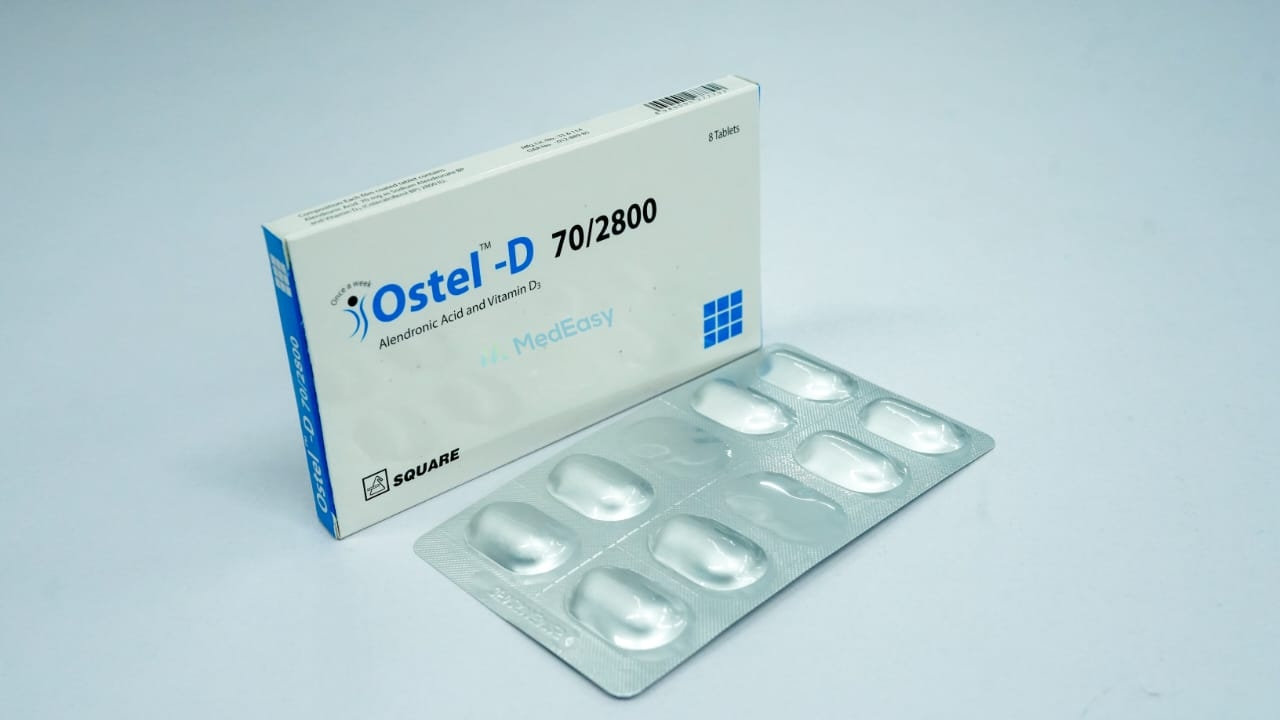
Ostel-D70 mg+2800
Square Pharmaceuticals PLC.
৳217.44
Add to cart

Bonemass D is indicated for the following established uses:
Limitation of use: Bonemass D should not be used as the sole therapy for correcting vitamin D deficiency; it is intended to provide a maintenance dose of vitamin D3 alongside the anti-resorptive effect of alendronic acid, not to treat established deficiency states, which require separate, higher-dose vitamin D repletion.
This fixed-dose combination is generally prescribed once weekly maintenance dosing after adequate calcium and vitamin D status has been confirmed, and is not intended as first-line therapy in patients whose baseline calcium or vitamin D levels have not been assessed.
Each tablet of Alendronic Acid + Vitamin D3 typically contains Alendronic acid (as alendronate sodium) 70 mg combined with Vitamin D3 (cholecalciferol) 2800 IU or 5600 IU, formulated for once-weekly oral administration. Strength combinations may vary slightly by manufacturer; always check the product label for the exact composition dispensed.
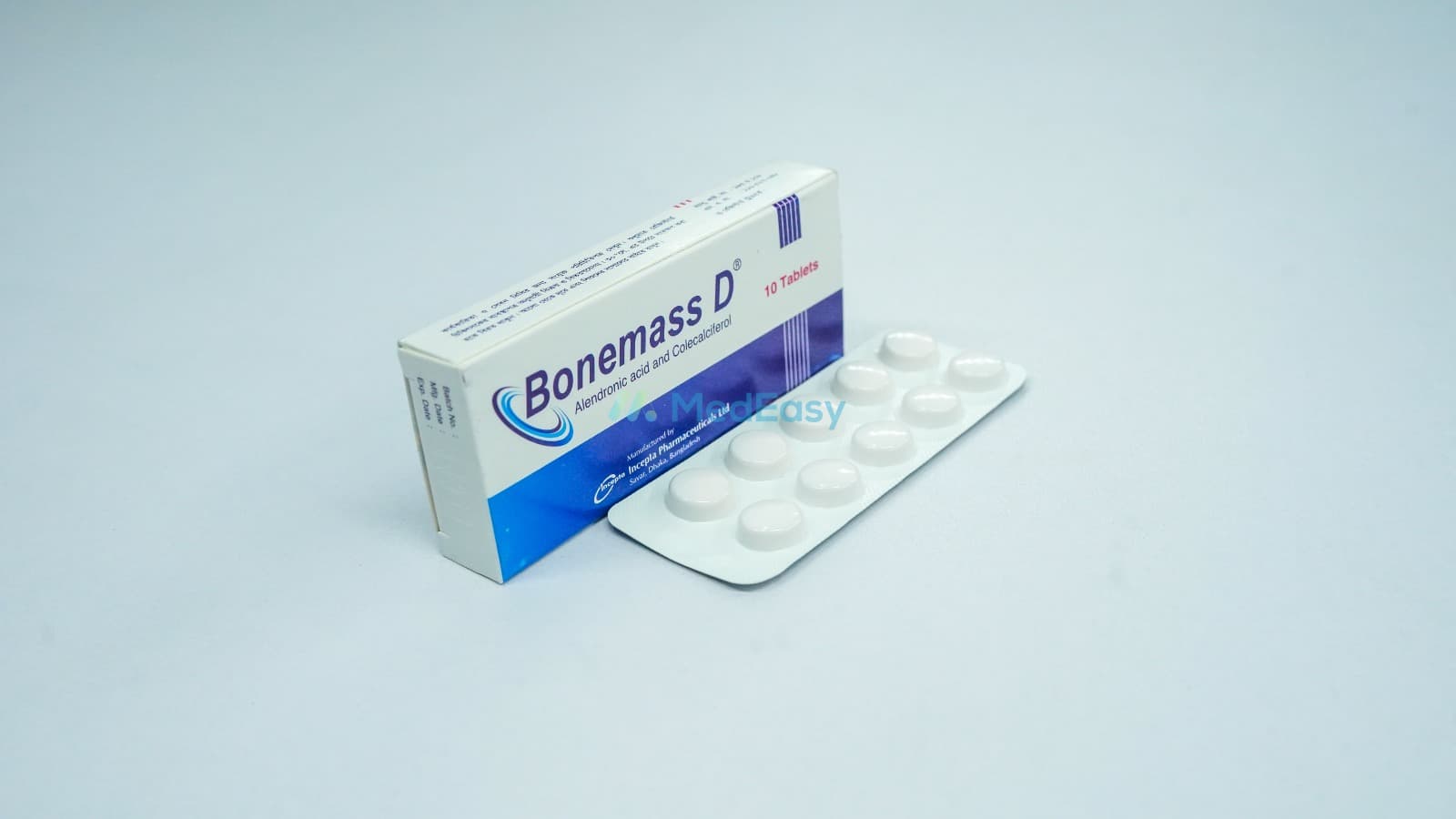
Bonemass D is a fixed-dose combination product used in the management of osteoporosis. It combines alendronic acid, a nitrogen-containing bisphosphonate that slows bone loss, with vitamin D3 (cholecalciferol), which supports intestinal calcium absorption and bone mineralization. The combination is designed for once-weekly dosing to improve adherence in patients who require both anti-resorptive therapy and vitamin D supplementation.
Bonemass D is taken orally on an empty stomach, first thing in the morning, with plain water, well before any other food, beverage, or medication.
Bonemass D belongs to the therapeutic class of bisphosphonates combined with vitamin D analogues, used in bone metabolism disorders. Alendronic acid is a nitrogen-containing bisphosphonate (anti-resorptive agent), and vitamin D3 is a fat-soluble vitamin/calcium-homeostasis agent.
Alendronic Acid + Vitamin D3 combines two complementary mechanisms:
Oral bioavailability of the alendronic acid component is low (further reduced by food, calcium, and antacids), which is why Alendronic Acid + Vitamin D3 must be taken on a strictly empty stomach.
| Indication | Recommended Dose |
|---|---|
| Osteoporosis in postmenopausal women | One tablet (alendronic acid 70 mg with vitamin D3 2800 IU or 5600 IU) orally once weekly, on the same day each week |
| Osteoporosis in men (to increase bone mass) | One tablet (alendronic acid 70 mg with vitamin D3 2800 IU or 5600 IU) orally once weekly, on the same day each week |
Bonemass D must be taken exactly as follows to ensure absorption and reduce the risk of esophageal irritation:
Bonemass D must be swallowed whole with a full glass of plain water, first thing in the morning, at least 30 minutes before any food, drink, or other oral medication. The patient must remain upright (sitting or standing) for at least 30 minutes afterward and must not lie down. See Dosage and Administration for the complete instructions.
Clinically significant interactions with Bonemass D include:
Alendronic Acid + Vitamin D3 is contraindicated in the following conditions:
Common side effects of Bonemass D include:
Less common but serious effects include severe esophageal reactions (esophagitis, esophageal ulcer or erosion), osteonecrosis of the jaw, and atypical femur fractures - see Precautions and Warnings for details. Hypersensitivity reactions (rash, angioedema, and rarely severe skin reactions) have also been reported.
Bonemass D is generally not indicated in premenopausal women, including during pregnancy. Available human data are insufficient to establish fetal safety; the drug is retained in bone for a prolonged period and released slowly over time, so exposure could theoretically extend beyond the treatment period. If pregnancy occurs or is planned, Bonemass D should be discontinued, and it should be used only if clearly needed and the potential benefit justifies the potential risk to the fetus; consult a physician.
It is not known whether alendronic acid is excreted in human breast milk. Because of the potential for serious adverse reactions in a nursing infant, a decision should be made whether to discontinue breastfeeding or discontinue the drug, taking into account the importance of therapy to the mother; consult a physician before use during breastfeeding.
Important precautions when using Bonemass D:
Overdose of Bonemass D may cause hypocalcemia, hypophosphatemia, upper gastrointestinal symptoms (upset stomach, heartburn, esophagitis, gastritis, or ulcer), and signs of vitamin D toxicity such as nausea, vomiting, weakness, and hypercalcemia. No specific antidote exists. Milk or antacids may be given to bind alendronic acid, but vomiting should not be induced and the patient should remain fully upright. In case of suspected overdose, seek immediate medical attention or contact a poison control center right away.
Store at room temperature (below 30°C), away from light and moisture. Keep out of reach of children.
Elderly: No dosage adjustment is required based on age alone; renal function should be assessed, as many elderly patients have reduced creatinine clearance.
Renal impairment: No dosage adjustment needed for mild-to-moderate impairment; not recommended when creatinine clearance is below 35 mL/min due to lack of safety/efficacy data.
Hepatic impairment: No specific dosage adjustment studies are available; use with routine caution.
Pediatric patients: Not indicated for use in children; safety and efficacy have not been established in this population.
Duration of therapy with Bonemass D is individualized based on fracture risk, bone mineral density response, and clinical judgment. Long-term use (typically beyond 3-5 years) should be periodically reassessed by the prescribing physician, since the optimal duration has not been definitively established and the risk of atypical femur fractures may increase with prolonged use. Do not stop or extend treatment without consulting your physician.
Alendronic Acid + Vitamin D3 falls under the drug classes: Bisphosphonates (anti-resorptive bone agents) and Vitamin D analogues/supplements.
The alendronic acid component of Alendronic Acid + Vitamin D3 binds to bone mineral and inhibits osteoclast activity, reducing bone resorption and allowing bone-forming activity to gradually increase bone mass. The vitamin D3 component is converted to its active metabolite, which enhances intestinal calcium absorption and supports normal bone mineralization, complementing the anti-resorptive action of alendronic acid.
Category C
Bonemass D is not indicated for use in pediatric patients. Safety and efficacy in children and adolescents have not been established, and this combination should not be prescribed in this age group.
Q: What is Bonemass D 70 mg+2800 IU Tablet used for?
A: Bonemass D 70 mg+2800 IU Tablet is used to treat osteoporosis in postmenopausal women and to increase bone mass in men with osteoporosis. It should not be used alone to treat vitamin D deficiency.
Q: How should I take Bonemass D 70 mg+2800 IU Tablet?
A: Take Bonemass D 70 mg+2800 IU Tablet once weekly, first thing in the morning, on an empty stomach, with a full glass of plain water only. Remain fully upright and avoid food, drink, or other medicines for at least 30 minutes afterward, and do not lie down during that time.
Q: Who should not take Bonemass D 70 mg+2800 IU Tablet?
A: It should not be used by people with known hypersensitivity to the ingredients, esophageal abnormalities that delay emptying (such as stricture or achalasia), inability to stand or sit upright for 30 minutes, uncorrected hypocalcemia, hypervitaminosis D, or severe kidney impairment (creatinine clearance below 35 mL/min).
Q: Can Bonemass D 70 mg+2800 IU Tablet affect my jaw or bones?
A: Rarely, osteonecrosis of the jaw and atypical femur fractures have been reported, particularly with long-term use or invasive dental procedures during treatment. Maintain good oral hygiene, inform your dentist you are taking this medicine, and report any new hip, thigh, or groin pain to your doctor promptly.
Q: Is Bonemass D 70 mg+2800 IU Tablet safe during pregnancy or breastfeeding?
A: It is generally not recommended during pregnancy, as it is retained in bone and released slowly over time, and safety data are insufficient. It should be used only if clearly needed and the potential benefit justifies the potential risk; consult a physician regarding pregnancy or breastfeeding before use.
Q: What happens if I miss a dose?
A: If you miss a dose of Bonemass D 70 mg+2800 IU Tablet, take it the next morning after you remember. Do not take two doses on the same day - simply resume your normal once-weekly schedule.
Disclaimer
The information provided is accurate to the best of our knowledge, but it does not replace professional medical advice. We cannot guarantee its completeness or accuracy, and the absence of specific information about a drug should not be taken as an endorsement. We are not responsible for any consequences arising from this information, so please consult a healthcare professional for any concerns or questions.
