
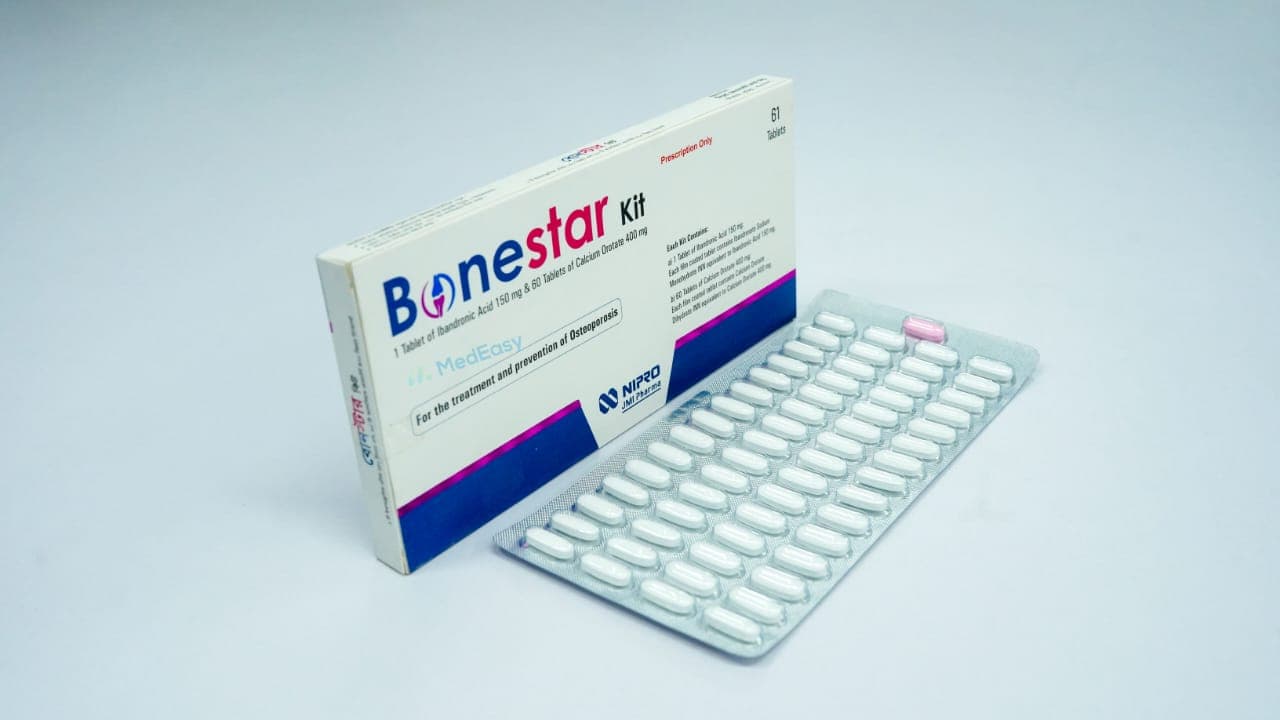

Medicine overview
Indications of BoneStar Kit
BoneStar Kit is a fixed-dose combination of a nitrogen-containing bisphosphonate (ibandronic acid) and a calcium salt (calcium orotate), used mainly in the management of osteoporosis.
Established / Guideline-Supported Uses
- Treatment of postmenopausal osteoporosis – to reduce the risk of vertebral fractures. This is the core, well-established indication for the ibandronic acid component; the calcium orotate component is included to help meet the recommended daily calcium intake needed to support bisphosphonate therapy and healthy bone mineralization.
- Prevention of postmenopausal osteoporosis in women at increased risk of bone loss (e.g., early menopause, low bone mineral density on screening).
Adjunct / Combination-Dependent Uses
- As part of a broader osteoporosis management plan that also includes weight-bearing exercise, adequate vitamin D intake, and fall-prevention measures — BoneStar Kit is not a substitute for these lifestyle measures.
- Used to help correct or prevent calcium deficiency in patients on long-term bisphosphonate therapy, where the calcium orotate component supplements dietary calcium intake.
Off-Label Use
Some clinicians use ibandronic acid off-label for glucocorticoid-induced osteoporosis or osteoporosis in men, but BoneStar Kit as a fixed combination product does not have a formally labeled indication for these uses; such use should only be under specialist supervision.
Composition
Ibandronic Acid and Calcium Orotate is a combination medicine containing two active ingredients:
- Ibandronic Acid (usually formulated as ibandronate sodium) – a third-generation nitrogen-containing bisphosphonate.
- Calcium Orotate – a calcium salt of orotic acid used as a source of elemental calcium.
Exact strengths vary by manufacturer and brand; always check the product label/pack insert of the specific brand of Ibandronic Acid and Calcium Orotate dispensed for the precise amount of each ingredient per tablet.
Description
BoneStar Kit combines the anti-resorptive action of a bisphosphonate with a supplemental source of calcium in a single product. Ibandronic acid binds to bone mineral and inhibits osteoclast-mediated bone resorption, slowing bone loss and helping to preserve or increase bone mineral density over time. Calcium orotate provides elemental calcium, which is required as a substrate for bone mineralization and to prevent bisphosphonate-associated hypocalcemia.
BoneStar Kit is intended for long-term use under medical supervision as part of an overall osteoporosis treatment strategy, and is not intended for acute pain relief or emergency use.
Therapeutic Class
BoneStar Kit belongs to the therapeutic class of Bisphosphonates (bone resorption inhibitors) combined with a calcium supplement. It is classified under drugs used for the management of osteoporosis and disorders of bone mineral metabolism.
Pharmacology
Ibandronic Acid and Calcium Orotate works through the complementary actions of its two components:
Ibandronic Acid
Ibandronic acid is a nitrogen-containing bisphosphonate that binds avidly to hydroxyapatite crystals on bone surfaces, particularly at sites of active bone remodeling. It is selectively taken up by osteoclasts, where it inhibits farnesyl pyrophosphate synthase, a key enzyme in the mevalonate pathway. This disrupts osteoclast cytoskeletal organization and function, leading to osteoclast inactivation and apoptosis, which reduces bone resorption and turnover. Over time this results in a net increase in bone mineral density and reduced fracture risk.
Calcium Orotate
Calcium orotate dissociates to release elemental calcium and orotate. The calcium ions are absorbed in the intestine and become available for bone mineralization, neuromuscular function, and other calcium-dependent physiological processes, helping to offset the reduction in serum calcium that can occur with potent antiresorptive therapy.
Dosage & Administration of BoneStar Kit
Adult Dose
| Indication | Typical Regimen |
|---|---|
| Treatment/prevention of postmenopausal osteoporosis | One oral dose as prescribed on the product label, typically taken once monthly on the same date each month (regimen varies by brand/strength of BoneStar Kit — follow the specific product's instructions). |
Pediatric Dose
Not established. BoneStar Kit is not indicated for use in children or adolescents; safety and efficacy in this population have not been demonstrated.
Renal Impairment
No dose adjustment is generally required in mild-to-moderate renal impairment. BoneStar Kit should not be used in patients with severe renal impairment (creatinine clearance below approximately 30–35 mL/min), as bisphosphonate clearance is reduced and toxicity risk increases (see Contraindications).
Hepatic Impairment
No specific dose adjustment is established; use with routine clinical caution as no dedicated studies exist for the ibandronic acid component in hepatic impairment.
Administration Instructions
Take BoneStar Kit first thing in the morning, at least 30–60 minutes before the first food, drink (other than plain water), or other oral medication of the day. Swallow the tablet whole with a full glass (180–240 mL) of plain water while sitting or standing upright; do not lie down for at least 60 minutes after taking the dose. Do not chew, crush, or suck the tablet.
Administration of BoneStar Kit
BoneStar Kit must be taken exactly as instructed to reduce the risk of esophageal irritation and to ensure adequate absorption:
- Take on an empty stomach, first thing in the morning, with a full glass of plain (not mineral or carbonated) water.
- Do not take with coffee, tea, juice, milk, or mineral water, as this reduces absorption of the ibandronic acid component.
- Remain fully upright (sitting or standing) for at least 60 minutes after taking the dose, and until after the first food of the day.
- Do not chew or crush the tablet; swallow it whole.
- If a dose is missed, take it the next morning as usual (unless the next scheduled dose is close) — do not double the dose. Consult a physician or pharmacist about the exact missed-dose instructions for the specific dosing schedule prescribed.
Interaction of BoneStar Kit
BoneStar Kit is associated with the following clinically significant interactions:
- Calcium, magnesium, aluminum, or iron-containing products (antacids, mineral supplements): These multivalent cations bind to ibandronic acid in the gut and markedly reduce its absorption. Other oral medications should be taken at least 60 minutes after BoneStar Kit, and calcium/mineral supplements or antacids should be separated in time from dosing of BoneStar Kit as advised by the physician or pharmacist.
- NSAIDs and aspirin: Concomitant use may increase the risk of gastrointestinal irritation; use with caution, particularly in patients with a history of GI disease.
- Other oral bisphosphonates or bone-active agents: Avoid concurrent use of additional bisphosphonates or other potent antiresorptive agents unless specifically directed by a physician, due to overlapping toxicity (e.g., hypocalcemia, jaw osteonecrosis risk).
- Aminoglycosides: Concomitant use may increase the risk of hypocalcemia, since both bisphosphonates and aminoglycosides can lower serum calcium.
Contraindications
Ibandronic Acid and Calcium Orotate is contraindicated in the following situations (true absolute contraindications):
- Known hypersensitivity to ibandronic acid, calcium orotate, other bisphosphonates, or any excipient of the product.
- Hypocalcemia — must be corrected before starting Ibandronic Acid and Calcium Orotate.
- Inability to stand or sit upright for at least 60 minutes.
- Severe renal impairment (creatinine clearance typically below 30–35 mL/min, depending on the specific product).
- Esophageal abnormalities that delay esophageal emptying, such as stricture or achalasia.
Side Effects of BoneStar Kit
Side effects reported with BoneStar Kit include:
Common
- Musculoskeletal pain (back pain, myalgia, arthralgia)
- Gastrointestinal upset (dyspepsia, nausea, diarrhea, constipation, abdominal pain)
- Headache
- Flu-like symptoms (fever, chills, myalgia) — more common after initial doses, especially with intravenous bisphosphonate formulations
Less Common / Serious (seek medical attention)
- Esophagitis, esophageal ulceration, or esophageal irritation (chest pain, difficulty or pain on swallowing, new/worsening heartburn)
- Symptoms of hypocalcemia (muscle cramps, spasms, numbness/tingling around the mouth or in fingers)
- Osteonecrosis of the jaw (jaw pain, swelling, non-healing sores in the mouth) — rare, see Precautions and Warnings
- Atypical femur fractures (new or unusual thigh/groin pain) — rare, see Precautions and Warnings
- Severe allergic reactions (rash, swelling, difficulty breathing)
Pregnancy & Lactation
BoneStar Kit is not recommended for use in pregnancy. Bisphosphonates are retained in bone for long periods and may be released slowly over months to years; the effects of this on a developing fetus, including from a prior pregnancy, are not fully known. BoneStar Kit should be used in pregnancy only if clearly needed and the potential benefit justifies the potential risk to the fetus, and only after specialist consultation, since osteoporosis treatment is rarely urgent enough to justify use in this population.
It is not known whether the components of BoneStar Kit pass into breast milk. Because of the potential for adverse effects in a nursing infant, a decision should be made whether to discontinue breastfeeding or discontinue BoneStar Kit, taking into account the importance of the drug to the mother. Consult a physician before use during breastfeeding.
Precautions & Warnings
Before and during treatment with BoneStar Kit, the following precautions apply:
- Osteonecrosis of the jaw (ONJ): Has been reported, primarily in cancer patients receiving intravenous bisphosphonates, but also rarely in patients treated for osteoporosis. A dental examination is recommended before starting treatment in patients with risk factors (e.g., planned invasive dental procedures, poor oral hygiene). Maintain good oral hygiene during treatment.
- Atypical femur fractures: Long-term bisphosphonate use has been associated with rare atypical subtrochanteric and femoral shaft fractures. Report new thigh, hip, or groin pain promptly; periodic re-evaluation of the need for continued therapy is recommended.
- Esophageal and upper GI reactions: Esophagitis, esophageal ulcers, and esophageal erosions have been reported. Use with caution in patients with active upper GI problems (e.g., Barrett's esophagus, dysphagia, gastritis, duodenitis, ulcers). Follow administration instructions strictly to minimize this risk.
- Correct hypocalcemia and ensure adequate calcium and vitamin D intake before and during treatment; monitor serum calcium periodically, especially in patients at risk of calcium disturbances.
- Renal function: Use with caution in mild-to-moderate renal impairment; contraindicated in severe renal impairment (see Contraindications).
- Use with caution in patients with a history of esophageal motility disorders even if not formally contraindicated.
Overdose Effects of BoneStar Kit
Overdose with BoneStar Kit may cause hypocalcemia, hypophosphatemia, upper gastrointestinal irritation (esophagitis, gastritis, ulceration), and, in severe cases, effects related to excess calcium intake. There is no specific antidote for bisphosphonate overdose.
If overdose is suspected, seek immediate medical attention or contact emergency services/a poison control center. Milk or antacids may be given to bind the ibandronic acid component if the overdose was oral and recent, but the patient should remain upright and vomiting should not be induced due to the risk of esophageal irritation. Do not attempt to manage a suspected overdose at home without medical guidance.
Storage Conditions
Store at room temperature (below 30°C), away from light and moisture. Keep out of reach of children.
Use In Special Populations
Elderly: No overall dose adjustment is required based on age alone; use with the same precautions as in younger adults, with attention to renal function and calcium status.
Renal impairment: Caution in mild-to-moderate impairment; contraindicated in severe impairment (see Contraindications).
Hepatic impairment: No specific dosing recommendations established; use with routine caution.
Pediatric patients: Not recommended; safety and efficacy have not been established in children and adolescents (see Pediatric Uses).
Pregnancy and lactation: See Pregnancy and Lactation section.
Duration Of Treatment
BoneStar Kit is generally used long-term for osteoporosis management, with treatment duration individualized based on fracture risk, bone mineral density response, and tolerability. Because of the long skeletal retention of bisphosphonates, physicians may periodically reassess the ongoing need for therapy (e.g., after 3–5 years of treatment in lower-risk patients), sometimes referred to as a "bisphosphonate holiday." Do not stop or restart treatment without consulting the prescribing physician.
Drug Classes
Ibandronic Acid and Calcium Orotate is a combination of two drug classes: Bisphosphonate (nitrogen-containing, third-generation) — the ibandronic acid component — and Calcium supplement (calcium salt of orotic acid) — the calcium orotate component.
Mode Of Action
Ibandronic Acid and Calcium Orotate acts through inhibition of osteoclast-mediated bone resorption (via the ibandronic acid component's effect on the mevalonate pathway within osteoclasts) combined with supplemental elemental calcium (via the calcium orotate component) to support bone mineralization and offset treatment-related calcium demand. Together these actions help slow bone loss, increase bone mineral density, and reduce fracture risk in osteoporosis.
Pregnancy
C
Pediatric Uses
The safety and efficacy of BoneStar Kit in children and adolescents have not been established. BoneStar Kit is not recommended for use in pediatric patients, and it should not be used in this age group outside of specialist clinical settings (e.g., specific pediatric bone disease protocols under expert supervision), if at all.
Frequently Asked Questions
Q: What is BoneStar Kit 150 mg+ 400 mg Tablet used for?
A: BoneStar Kit 150 mg+ 400 mg Tablet is used mainly for the treatment and prevention of postmenopausal osteoporosis. It combines a bisphosphonate that slows bone loss with a calcium supplement that supports bone mineralization.
Q: How should I take BoneStar Kit 150 mg+ 400 mg Tablet?
A: Take BoneStar Kit 150 mg+ 400 mg Tablet first thing in the morning on an empty stomach with a full glass of plain water, then remain upright (sitting or standing) for at least 60 minutes and avoid food or other drinks until after this period. Do not chew or crush the tablet.
Q: Can I take BoneStar Kit 150 mg+ 400 mg Tablet with my calcium or antacid tablets?
A: No — calcium, antacids, and mineral supplements should not be taken at the same time as BoneStar Kit 150 mg+ 400 mg Tablet because they reduce its absorption. Separate the timing as advised by your physician or pharmacist.
Q: Who should not take BoneStar Kit 150 mg+ 400 mg Tablet?
A: BoneStar Kit 150 mg+ 400 mg Tablet should not be used by people with known hypersensitivity to its ingredients, uncorrected hypocalcemia, inability to sit or stand upright for at least 60 minutes, severe kidney impairment, or esophageal problems that delay esophageal emptying (such as stricture or achalasia).
Q: Is BoneStar Kit 150 mg+ 400 mg Tablet safe during pregnancy or breastfeeding?
A: BoneStar Kit 150 mg+ 400 mg Tablet is not generally recommended in pregnancy or breastfeeding because bisphosphonates remain in bone for a long time and their effects on a fetus or nursing infant are not fully known. Use only if clearly needed, and only after consulting a physician.
Q: What are the serious side effects I should watch for?
A: Seek medical attention for chest pain or pain/difficulty swallowing (possible esophageal irritation), unusual thigh or groin pain (possible atypical fracture), jaw pain or non-healing mouth sores (possible osteonecrosis of the jaw), or symptoms of low calcium such as muscle cramps or tingling.
Disclaimer
The information provided is accurate to the best of our knowledge, but it does not replace professional medical advice. We cannot guarantee its completeness or accuracy, and the absence of specific information about a drug should not be taken as an endorsement. We are not responsible for any consequences arising from this information, so please consult a healthcare professional for any concerns or questions.
