8% Off
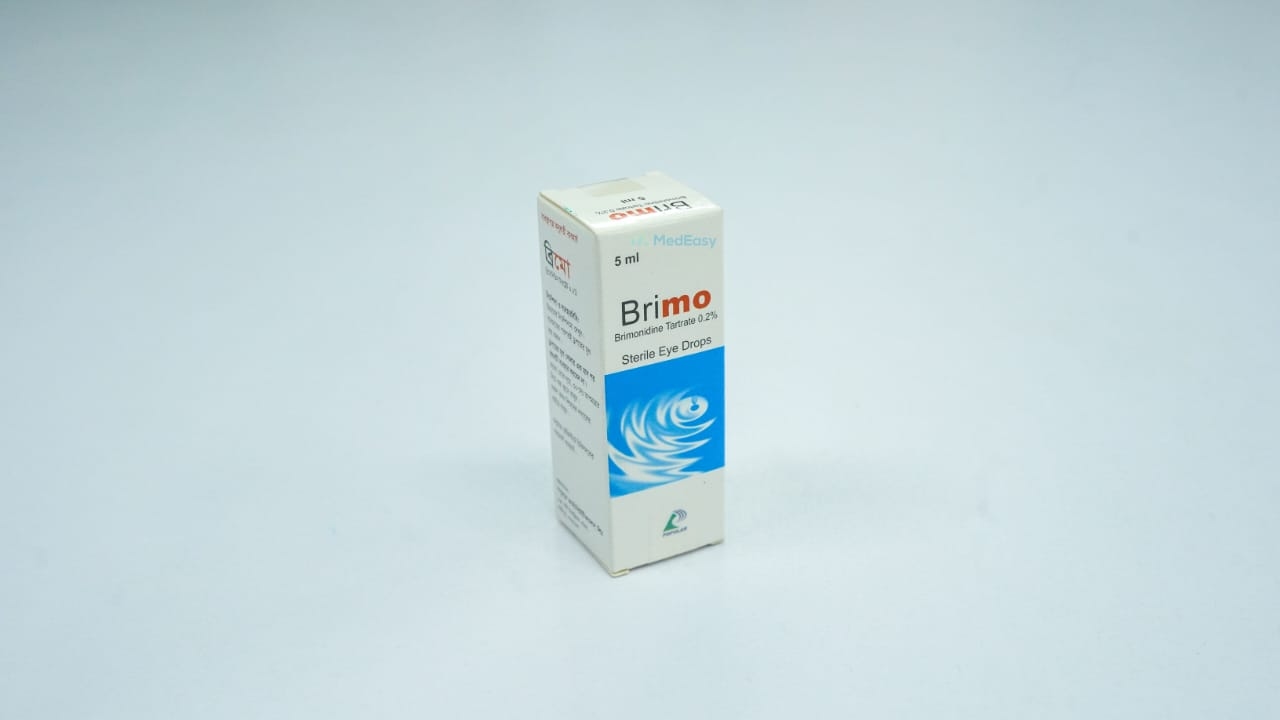
Brimo0.2%
Popular Pharmaceuticals Ltd.
৳73.88
Add to cart
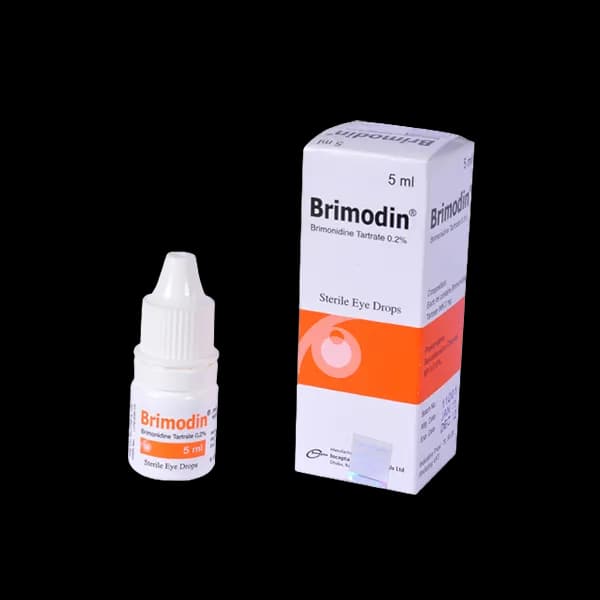
Brimodin 0.2% Ophthalmic Solution is available on MedEasy for ৳72.00 per 5 ml drop, with home delivery anywhere in Bangladesh. It is manufactured by Incepta Pharmaceuticals Ltd. Its generic name is Brimonidine Tartrate.

Brimodin is a selective alpha-2 adrenergic agonist used in two distinct formulations for different, FDA-approved indications:
Brimodin ophthalmic solution is commonly used as an adjunct to other IOP-lowering agents (e.g. beta-blockers, prostaglandin analogues) when a single agent does not achieve adequate pressure control, and is available in fixed-dose combination products with timolol or brimonidine/brinzolamide for this purpose.
Brimodin ophthalmic solution is sometimes used off-label short-term to reduce conjunctival hyperemia (redness) prior to certain ophthalmic procedures, but this is not an FDA-labeled indication.
Brimodin is a highly selective alpha-2 adrenergic receptor agonist. In ophthalmic use it reduces intraocular pressure by decreasing aqueous humor production and increasing uveoscleral outflow. In dermatologic use, its alpha-2 agonist activity produces direct vasoconstriction of dilated facial blood vessels, temporarily reducing the visible redness (erythema) associated with rosacea.
Brimodin is not a cure for glaucoma or rosacea; it manages the underlying pressure or visible redness and requires continued, regular use as directed by a physician.
Brimonidine Tartrate is a relatively selective alpha-2 adrenoceptor agonist with minimal effect on cardiovascular and pulmonary parameters at recommended doses.
Stimulation of alpha-2 receptors in the ciliary body reduces aqueous humor formation, and stimulation of receptors involved in uveoscleral drainage increases outflow, both lowering intraocular pressure. Onset of IOP reduction occurs within about 1 hour, with peak effect at 2 hours.
Topical alpha-2 agonism on dermal vascular smooth muscle produces direct vasoconstriction of dilated cutaneous vessels, reducing visible erythema; effect typically begins within 30 minutes and lasts up to 12 hours.
| Population | Dose |
|---|---|
| Adults | One drop of Brimodin ophthalmic solution in the affected eye(s) three times daily, approximately every 8 hours. |
| Children ≥2 years | Same dosing as adults, with caution (see Use in Special Populations); not recommended under 2 years. |
Apply a pea-sized amount of Brimodin gel once daily in a thin layer to cover the entire face (forehead, chin, nose, each cheek), avoiding eyes, lips, and mucous membranes. Wash hands immediately after application.
Apply or instill the missed dose as soon as remembered; if near the next scheduled dose, skip the missed dose and resume the regular schedule. Do not double the dose.
Ophthalmic solution is instilled directly into the conjunctival sac of the affected eye(s); if using other ophthalmic products, space administration at least 5-10 minutes apart. Topical gel is applied thinly and evenly to clean, dry facial skin once daily; do not apply to broken or irritated skin, and avoid contact with eyes and mucous membranes.
Brimodin has the following well-established, clinically significant interactions:
Brimonidine Tartrate is contraindicated in:
Common: ocular hyperemia (redness), burning or stinging on instillation, blurred vision, foreign body sensation, itching, dry mouth, headache, drowsiness, and allergic conjunctivitis. Less common: eye allergy, eyelid swelling, and (rarely) systemic effects such as fatigue or dizziness.
Common: erythema, flushing, skin irritation, burning or stinging sensation, contact dermatitis, and pruritus at the application site.
Most reactions to Brimodin are mild to moderate and localized; patients should report severe or persistent reactions to their physician.
Brimodin has not been adequately studied in pregnant women. Animal reproduction studies have not shown clear evidence of fetal harm, but human data are limited. Brimodin should be used during pregnancy only if the potential benefit justifies the potential risk to the fetus; consult a physician before use.
It is not known whether Brimodin is excreted in human breast milk. Because many drugs are excreted in breast milk and systemic absorption can occur (particularly with ophthalmic use in infants), caution is advised and a physician should be consulted before using Brimodin while breastfeeding.
Brimodin should be used with caution in patients with:
Brimodin ophthalmic solution may cause drowsiness or blurred vision; patients should use caution when driving or operating machinery. Contact lenses should be removed before instillation and may be reinserted 15 minutes later. Keep the container tightly closed and avoid contaminating the tip. For the topical gel, avoid application to broken, irritated, or eczematous skin, and avoid contact with eyes and mucous membranes. Rebound erythema may occasionally occur after discontinuing the gel. See Contraindications for absolute restrictions and Use in Special Populations for pediatric risk.
Store at room temperature (below 30°C), away from light and moisture. Keep the bottle/tube tightly closed and out of reach of children.
Brimodin is contraindicated in children under 2 years of age due to risk of serious CNS depression. In children aged 2 years and older, safety and efficacy have been evaluated for ophthalmic use, but caution is advised due to lower body weight increasing systemic exposure risk; the topical gel's safety and efficacy in children under 18 years have not been established.
No specific dose adjustment is required for Brimodin in elderly patients, though age-related cardiovascular changes warrant routine clinical monitoring.
Limited data are available; use Brimodin with caution and monitor patients with significant renal or hepatic impairment.
Alpha-2 adrenergic agonist
Category B
Q: What is Brimodin 0.2% Ophthalmic Solution used for?
A: Brimodin 0.2% Ophthalmic Solution ophthalmic solution is used to lower elevated eye pressure in open-angle glaucoma or ocular hypertension, while the topical gel formulation of Brimodin 0.2% Ophthalmic Solution is used to reduce persistent facial redness caused by rosacea.
Q: How often should I use Brimodin 0.2% Ophthalmic Solution eye drops?
A: The typical dose of Brimodin 0.2% Ophthalmic Solution ophthalmic solution is one drop in the affected eye(s) three times a day, about every 8 hours, unless your physician has instructed otherwise.
Q: Can children use Brimodin 0.2% Ophthalmic Solution?
A: Brimodin 0.2% Ophthalmic Solution is contraindicated in children under 2 years old because it can cause serious central nervous system depression such as slowed breathing, low blood pressure, low body temperature, and excessive sleepiness in young children. Use in older children requires physician supervision.
Q: Is Brimodin 0.2% Ophthalmic Solution safe during pregnancy?
A: Brimodin 0.2% Ophthalmic Solution has not been well studied in pregnant women. It should only be used during pregnancy if your physician determines that the potential benefit justifies the potential risk to the baby; always consult your physician before use.
Q: What should I do if I accidentally swallow Brimodin 0.2% Ophthalmic Solution?
A: Accidental ingestion of Brimodin 0.2% Ophthalmic Solution, especially by a child, can be serious and cause severe drowsiness, slowed breathing, or low blood pressure. Seek immediate medical attention or contact emergency services/poison control right away rather than treating it at home.
Q: Can I use Brimodin 0.2% Ophthalmic Solution with other eye drops or medicines?
A: Brimodin 0.2% Ophthalmic Solution should not be used with monoamine oxidase inhibitors (MAOIs). It can also add to the sedating effects of alcohol and other CNS depressants and may enhance blood-pressure-lowering medicines. Tell your physician about all medicines you take before starting Brimodin 0.2% Ophthalmic Solution.
Disclaimer
The information provided is accurate to the best of our knowledge, but it does not replace professional medical advice. We cannot guarantee its completeness or accuracy, and the absence of specific information about a drug should not be taken as an endorsement. We are not responsible for any consequences arising from this information, so please consult a healthcare professional for any concerns or questions.