
10% Off
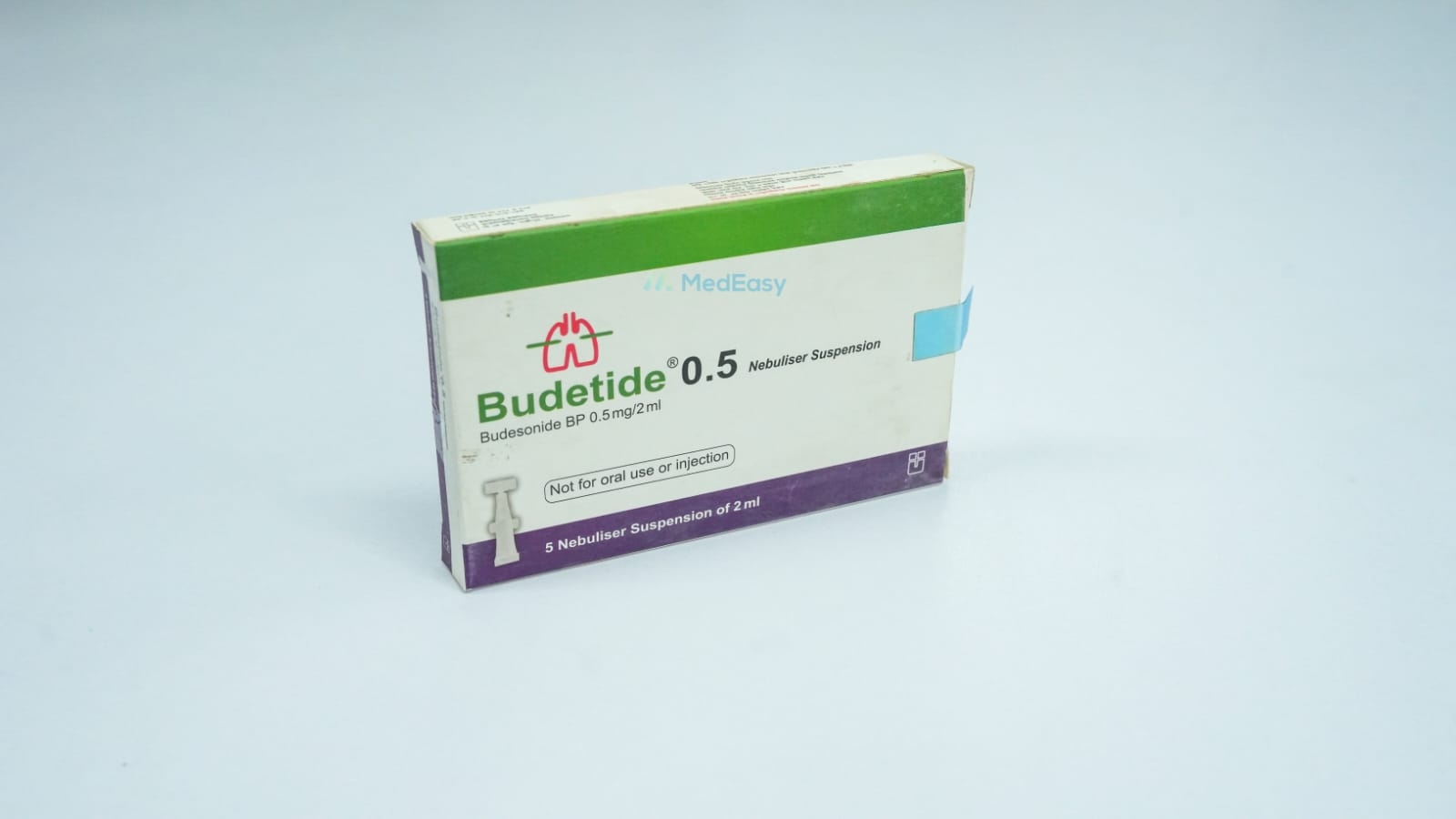
Budetide0.5 mg/2 m
Unimed Unihealth MFG. Ltd.
৳36.00
Add to cart
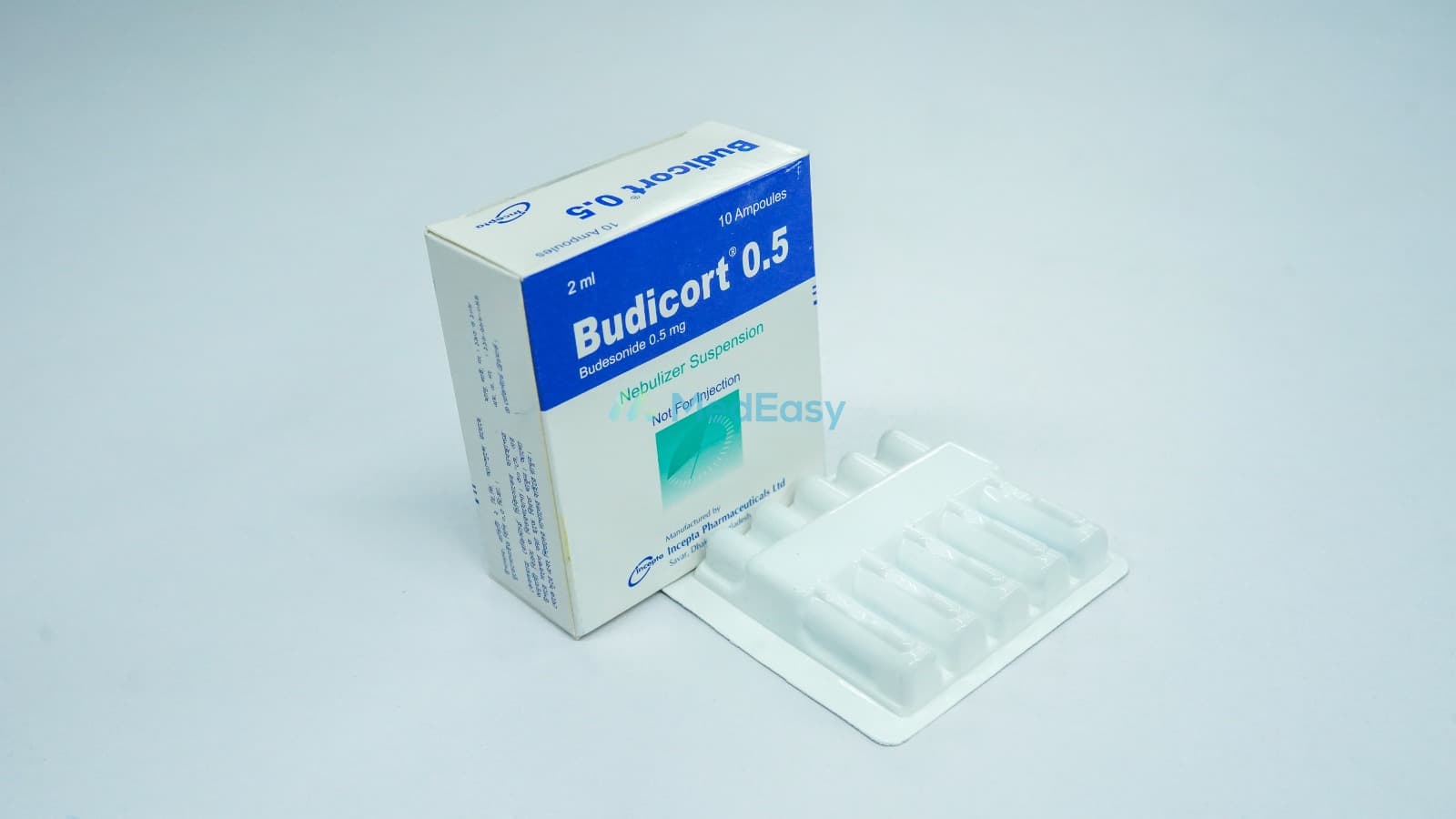

Budicort is a corticosteroid used in different formulations for several distinct conditions:
The specific formulation (inhaler, nebulizer suspension, nasal spray, oral capsule/tablet, or rectal foam) determines which indication applies; formulations are not interchangeable.
Each formulation contains Budesonide as the active ingredient, micronized for topical/local delivery:
Inactive ingredients vary by manufacturer and formulation (propellants, lactose, polymers for controlled release, preservatives in multidose nasal/nebulizer products).
Budicort is a synthetic, non-halogenated corticosteroid with potent local anti-inflammatory activity and low systemic bioavailability relative to older corticosteroids, largely due to extensive first-pass hepatic metabolism (primarily via CYP3A4) of any absorbed drug.
It is formulated for site-specific delivery: as an inhaled aerosol/powder or nebulized suspension for the lungs, as a nasal spray for the nasal mucosa, and as oral capsules/tablets or rectal foam engineered for targeted release in the distal small bowel and colon in inflammatory bowel disease. This targeted delivery is intended to maximize local anti-inflammatory effect while minimizing the systemic corticosteroid exposure and side effects associated with conventional oral or parenteral steroids.
Corticosteroid (glucocorticoid); Budicort belongs to the class of inhaled/intranasal/gut-targeted-release corticosteroids used for local anti-inflammatory therapy.
Budesonide is a glucocorticoid that binds to the intracellular glucocorticoid receptor, translocates to the nucleus, and modulates gene transcription, resulting in decreased production of pro-inflammatory mediators (cytokines, chemokines, prostaglandins, leukotrienes) and reduced recruitment and activation of inflammatory cells (eosinophils, mast cells, macrophages, lymphocytes).
In the airways, this reduces bronchial hyperresponsiveness and mucosal inflammation over time (it does not provide immediate bronchodilation). In the nasal mucosa, it reduces the inflammatory response responsible for allergic rhinitis symptoms. In the gut-targeted oral formulations, Budesonide is released in the ileum/proximal colon (pH- or time-dependent release systems) to act locally on bowel mucosal inflammation.
Pharmacokinetics: Budesonide undergoes extensive first-pass hepatic metabolism via CYP3A4 (approximately 90% for the oral controlled-release capsule), giving it lower systemic bioavailability than conventional oral corticosteroids such as prednisolone, though systemic absorption and adrenal suppression are still possible, especially with higher doses, prolonged use, or concomitant strong CYP3A4 inhibitors.
Dosage of Budicort is specific to the formulation and indication; dose from one formulation cannot be substituted for another.
| Indication / Form | Adult Dose | Pediatric Dose |
|---|---|---|
| Asthma maintenance (inhaled dry powder inhaler) | 180–720 mcg twice daily depending on severity and prior therapy | Age 6 years and older: 180–360 mcg twice daily as directed by physician |
| Asthma maintenance (nebulizer suspension) | Not typically used in adults; formulation is pediatric-focused | Age 12 months–8 years: 0.25–1 mg total daily dose, given once or in two divided doses via jet nebulizer |
| Allergic rhinitis (nasal spray) | 1–4 sprays (32–256 mcg total) per nostril once daily depending on product strength | Age 6 years and older: 1–2 sprays per nostril once daily; use lowest effective dose |
| Crohn's disease, induction (oral controlled ileal-release capsule) | 9 mg once daily in the morning for up to 8 weeks | Safety and efficacy not established in children |
| Crohn's disease, maintenance | 6 mg once daily for up to 3 months | Safety and efficacy not established in children |
| Ulcerative colitis, induction (oral extended-release tablet) | 9 mg once daily in the morning for up to 8 weeks | Safety and efficacy not established in children |
| Ulcerative colitis (rectal foam) | 2 mg per actuation, one actuation rectally twice daily for 2 weeks, then once daily for 4 weeks | Safety and efficacy not established in children |
Administration: Inhaled forms should be used at regular intervals, not as needed for acute symptoms; patients should rinse the mouth with water after each inhalation to reduce the risk of oral candidiasis. Nasal spray should be shaken (if suspension) and sprayed into each nostril while breathing gently inward, avoiding the nasal septum. Oral capsules/tablets should be swallowed whole with water and not crushed, chewed, or opened, as this destroys the controlled-release mechanism. Rectal foam is administered per the product's applicator instructions, generally at bedtime and after a bowel movement when possible.
No renal dose adjustment is well established. In hepatic impairment, systemic exposure to Budicort may increase due to reduced first-pass metabolism; dose reduction and close monitoring are recommended in moderate-to-severe hepatic impairment.
Budicort inhaler/nebulizer: for oral inhalation only; rinse mouth after use. Nasal spray: for intranasal use only; prime before first use and after periods of non-use. Oral capsules/tablets: swallow whole, do not crush or chew, generally taken in the morning with or without food as directed. Rectal foam: for rectal administration only, following the manufacturer's applicator instructions. Do not use any Budicort formulation by a route other than that for which it is manufactured.
Strong CYP3A4 inhibitors (e.g., ketoconazole, itraconazole, ritonavir and other HIV protease inhibitors, clarithromycin) significantly increase systemic exposure to Budicort by inhibiting its hepatic first-pass metabolism, raising the risk of systemic corticosteroid effects including adrenal suppression and Cushingoid features. Concomitant use should generally be avoided; if unavoidable, the interval between administration should be as long as possible and the patient monitored closely.
Grapefruit juice can similarly inhibit CYP3A4 metabolism of oral Budicort and increase systemic exposure; patients on oral Budicort for Crohn's disease/ulcerative colitis should avoid grapefruit and grapefruit juice.
Other corticosteroids or systemic immunosuppressants used concurrently may have additive effects on adrenal suppression and infection risk; concomitant use should be supervised by a physician.
Budesonide is contraindicated in:
Side effects of Budicort vary by formulation:
Budicort should be used during pregnancy only if clearly needed and if the potential benefit justifies the potential risk to the fetus; use the lowest effective dose for the shortest necessary duration and consult a physician. Inhaled and intranasal corticosteroids are generally considered to carry lower systemic risk than conventional oral corticosteroids, but this does not eliminate the need for caution.
Budicort is excreted in breast milk in small amounts. Breastfeeding is generally considered compatible with recommended doses of inhaled or intranasal Budicort, but a physician should be consulted before use during lactation, particularly for oral or higher-dose formulations, and the infant should be monitored for any signs of corticosteroid effect.
Not for acute symptom relief: the inhaled form of Budicort is a maintenance medicine and does not relieve an acute asthma attack; patients must have a separate rescue bronchodilator available.
Infection risk: use with caution in patients with active or latent tuberculosis, untreated fungal/bacterial/viral respiratory infections, or ocular herpes simplex, as corticosteroids can mask or worsen these conditions (see Contraindications for untreated infections).
Adrenal suppression: although designed for local/targeted delivery with lower systemic absorption, Budicort can suppress the hypothalamic-pituitary-adrenal (HPA) axis, particularly at higher doses, with prolonged use, in patients switching from systemic corticosteroids, or with concomitant strong CYP3A4 inhibitors. Do not stop long-term oral Budicort therapy abruptly; dose should be tapered under physician supervision.
Growth monitoring: growth of children and adolescents on long-term corticosteroid therapy of any form should be monitored routinely.
Immunosuppression: patients on Budicort, especially at higher doses, may have reduced ability to fight infections; avoid exposure to chickenpox or measles in non-immune patients and seek medical advice if exposed.
Acute overdose with Budicort is unlikely to cause immediate life-threatening effects given its local delivery and rapid hepatic metabolism, but chronic overuse or excessive dosing can lead to systemic corticosteroid effects including adrenal suppression and Cushingoid features. If an overdose is suspected or a large accidental ingestion occurs (especially in a child), seek immediate medical attention or contact a poison control center/emergency services right away. Do not attempt to manage a suspected overdose at home without professional guidance.
Store at room temperature (below 30°C), away from light and moisture. Do not freeze inhalers or nasal spray. Keep the container tightly closed and out of reach of children.
Hepatic impairment: Budicort undergoes extensive first-pass hepatic metabolism; patients with moderate-to-severe hepatic impairment may have increased systemic exposure and should be monitored for corticosteroid effects, with dose reduction considered.
Renal impairment: no specific dose adjustment is well established; use with routine clinical monitoring.
Elderly: no formulation-specific dose adjustment is established for elderly patients, but they should be monitored for corticosteroid-related adverse effects, including bone density concerns with long-term use.
Pediatric use: see Pediatric Uses section below for approved age ranges and dosing by formulation.
For asthma and allergic rhinitis, Budicort is used as ongoing maintenance therapy for as long as the physician determines it is needed to control symptoms, with periodic reassessment of the lowest effective dose. For Crohn's disease and ulcerative colitis induction, oral Budicort is typically used for up to 8 weeks; maintenance therapy (Crohn's disease) is generally limited to up to 3 months due to diminishing benefit and increasing risk of systemic corticosteroid effects with more prolonged use. Treatment duration should always be determined by the prescribing physician based on response and tolerability.
Corticosteroids; Inhaled corticosteroids (ICS); Intranasal corticosteroids; Gut-targeted-release oral corticosteroids
Budesonide acts as a potent agonist at the glucocorticoid receptor. After binding, the receptor complex translocates to the cell nucleus and alters transcription of genes involved in inflammation — it upregulates anti-inflammatory proteins (e.g., lipocortin-1, which inhibits phospholipase A2 and reduces eicosanoid production) and downregulates pro-inflammatory cytokines, chemokines, and adhesion molecules. This results in reduced recruitment and activity of eosinophils, mast cells, macrophages, and T-lymphocytes at the site of application (airway, nasal mucosa, or gut mucosa), decreasing local inflammation, edema, and mucus hypersecretion.
C (legacy FDA pregnancy category, per original prescribing information; formal letter categories have since been phased out of current US labeling in favor of narrative risk summaries)
Inhaled Budicort (asthma): approved for maintenance treatment in children as young as 6 years for the dry powder inhaler and as young as 12 months (nebulizer suspension) under physician supervision.
Intranasal Budicort (allergic rhinitis): approved for children 6 years of age and older; safety and efficacy in children younger than 6 years have not been established.
Oral Budicort (Crohn's disease/ulcerative colitis): safety and efficacy in pediatric patients have not been established; use in children should be individualized and supervised by a specialist.
Long-term use of any corticosteroid formulation in children warrants monitoring of growth velocity, as corticosteroids may cause a reduction in growth rate.
Q: What is Budicort 0.5 mg/2 ml Nebuliser Suspension used for?
A: Budicort 0.5 mg/2 ml Nebuliser Suspension is a corticosteroid used, depending on the formulation, for maintenance treatment of asthma (inhaled), relief of allergic rhinitis symptoms (nasal spray), and induction/maintenance of remission in Crohn's disease and ulcerative colitis (oral capsules/tablets or rectal foam).
Q: Can I use inhaled Budicort 0.5 mg/2 ml Nebuliser Suspension to stop an asthma attack that has already started?
A: No. Inhaled Budicort 0.5 mg/2 ml Nebuliser Suspension is a maintenance (preventive) medicine and does not work quickly enough to relieve an acute asthma attack. You should keep a separate fast-acting rescue inhaler on hand for sudden symptoms, and seek medical attention if an attack does not respond to your rescue inhaler.
Q: Why do I need to rinse my mouth after using inhaled Budicort 0.5 mg/2 ml Nebuliser Suspension?
A: Rinsing the mouth with water and spitting it out after each dose of inhaled Budicort 0.5 mg/2 ml Nebuliser Suspension significantly reduces the risk of developing oral thrush (candidiasis) and hoarseness, which are among the most common side effects of inhaled corticosteroids.
Q: Is Budicort 0.5 mg/2 ml Nebuliser Suspension safe during pregnancy?
A: Budicort 0.5 mg/2 ml Nebuliser Suspension should be used in pregnancy only if clearly needed, at the lowest effective dose, because the potential benefit must be weighed against the potential risk to the fetus. Inhaled and intranasal forms are generally considered lower systemic risk than conventional oral steroids, but you should always consult your physician before using Budicort 0.5 mg/2 ml Nebuliser Suspension while pregnant.
Q: Can I stop taking oral Budicort 0.5 mg/2 ml Nebuliser Suspension for Crohn's disease or ulcerative colitis suddenly?
A: No. If you have been taking oral Budicort 0.5 mg/2 ml Nebuliser Suspension for a prolonged period, stopping it suddenly can be unsafe because your body's own cortisol production may be suppressed (adrenal suppression). Your physician will guide you on tapering the dose gradually if treatment needs to stop.
Q: What should I do if too much Budicort 0.5 mg/2 ml Nebuliser Suspension is taken accidentally?
A: Seek immediate medical attention or contact a poison control center/emergency services right away, especially if a child has accidentally taken Budicort 0.5 mg/2 ml Nebuliser Suspension. Chronic overuse can lead to corticosteroid side effects such as adrenal suppression and Cushingoid features, so do not exceed the prescribed dose without medical advice.
Disclaimer
The information provided is accurate to the best of our knowledge, but it does not replace professional medical advice. We cannot guarantee its completeness or accuracy, and the absence of specific information about a drug should not be taken as an endorsement. We are not responsible for any consequences arising from this information, so please consult a healthcare professional for any concerns or questions.

