
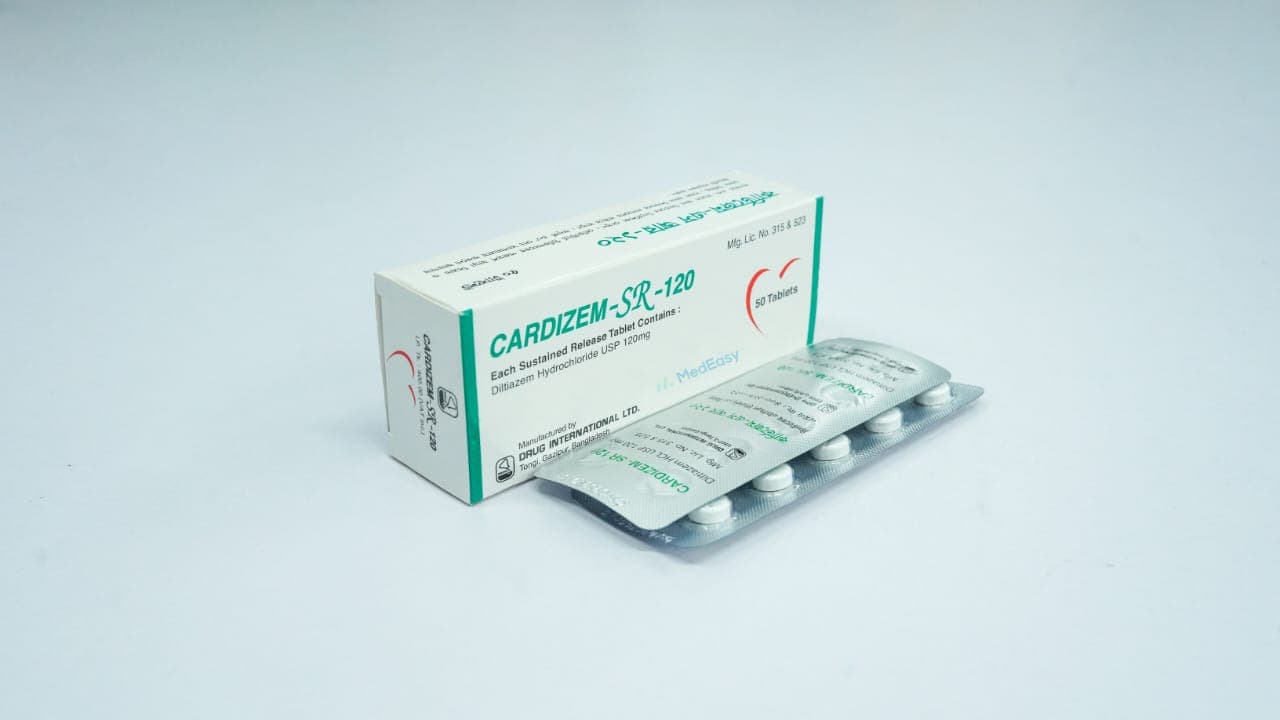
Key facts
Cardizem-SR 120 mg Tablet is available on MedEasy for ৳73.60 per 10's Strip, with home delivery anywhere in Bangladesh. It is manufactured by Drug International Ltd. Its generic name is Diltiazem Hydrochloride.
- Pack sizes
- 10's Strip, 50's pack
- Prescription
- Required. Upload a valid doctor's prescription at checkout; a MedEasy pharmacist verifies it before dispatch.
- Delivery
- Home delivery across Bangladesh. Same-day delivery in Dhaka, Chattogram, Sylhet and Bogura city areas; 2-3 days elsewhere.
- Payment
- Cash on delivery, bKash, cards and mobile banking.
- Brand
- Cardizem-SR
- Generic name
- Diltiazem Hydrochloride
- Manufacturer
- Drug International Ltd.
- Form & strength
- Tablet 120 mg
- Availability
- In stock
- Authenticity
- Sourced from licensed suppliers and the manufacturer's authorised distributors in Bangladesh.

Medicine overview
Indications of Cardizem-SR
Cardizem-SR is a non-dihydropyridine calcium channel blocker indicated for the following conditions, classified by strength of evidence:
Established / FDA-approved uses
- Hypertension: Extended-release formulations of Cardizem-SR are indicated for the management of hypertension, alone or in combination with other antihypertensive agents.
- Chronic stable angina pectoris: Cardizem-SR is indicated for the management of chronic stable angina.
- Vasospastic (Prinzmetal's) angina: Cardizem-SR is indicated for the management of angina due to coronary artery spasm.
- Rate control in atrial fibrillation/atrial flutter: Intravenous Cardizem-SR is indicated for temporary control of rapid ventricular rate in atrial fibrillation or atrial flutter; oral Cardizem-SR is used for chronic rate control once the patient is stabilized.
Guideline-supported / adjunct uses
- As an adjunct to conventional antianginal therapy (e.g. nitrates) when a single agent does not provide adequate symptom control.
Use of Cardizem-SR should always be individualized and guided by a physician's assessment.
Composition
Each tablet/capsule of Diltiazem Hydrochloride contains diltiazem hydrochloride as the active pharmaceutical ingredient. Diltiazem Hydrochloride is available in several dosage forms and strengths, including immediate-release tablets (30 mg, 60 mg), sustained-release/extended-release tablets or capsules (90 mg, 120 mg, 180 mg, 240 mg, 300 mg), and an intravenous injection form for hospital use. Exact strengths and available brands vary by market; consult the product label for the specific formulation dispensed.
Description
Cardizem-SR is a non-dihydropyridine calcium channel blocker belonging to the benzothiazepine class. It works by inhibiting the influx of calcium ions into cardiac and vascular smooth muscle cells, resulting in coronary and peripheral vasodilation, reduced myocardial oxygen demand, and slowed conduction through the sinoatrial (SA) and atrioventricular (AV) nodes.
Cardizem-SR is widely used in the long-term management of hypertension and chronic angina, and for controlling fast heart rates associated with atrial fibrillation or atrial flutter. It is available as immediate-release and extended/sustained-release oral formulations, as well as an intravenous formulation for acute in-hospital rate control.
Therapeutic Class
Cardizem-SR belongs to the following therapeutic classes:
- Calcium channel blocker (non-dihydropyridine, benzothiazepine derivative)
- Antianginal agent
- Antihypertensive agent
- Antiarrhythmic agent (used for rate control, not classified among the traditional Vaughan-Williams antiarrhythmic classes but functionally a Class IV antiarrhythmic)
Pharmacology
Mechanism of action: Diltiazem Hydrochloride inhibits the transmembrane influx of calcium ions during depolarization of cardiac and vascular smooth muscle. This produces:
- Vasodilation: Relaxation of coronary and peripheral vascular smooth muscle, reducing peripheral vascular resistance and increasing coronary blood flow.
- Reduced myocardial oxygen demand: Through afterload reduction and mild negative inotropy.
- Slowed AV/SA nodal conduction: Diltiazem Hydrochloride slows conduction through the SA and AV nodes, decreasing ventricular response rate in atrial fibrillation/flutter and terminating re-entrant supraventricular tachycardias involving the AV node.
Pharmacokinetics: Diltiazem Hydrochloride is well absorbed orally, with peak plasma concentrations reached within 30 minutes to a few hours depending on formulation (immediate- vs extended-release). It undergoes extensive first-pass hepatic metabolism (primarily via CYP3A4) to form active and inactive metabolites, is highly protein-bound (approximately 70-80%), and is eliminated mainly via biliary/fecal excretion with a smaller renal component. Elimination half-life is approximately 3.5-9 hours for immediate-release forms, longer for extended-release formulations.
Dosage & Administration of Cardizem-SR
Dosage of Cardizem-SR must be individualized based on indication, formulation, and patient response. General guidance is summarized below; the prescriber's instructions and product labeling should always be followed.
| Indication | Typical adult dosing |
|---|---|
| Hypertension (extended-release) | Initial 120-180 mg once daily, titrated over 2 weeks as needed; usual maintenance range 120-360 mg once daily (maximum per product labeling, commonly up to 360-540 mg/day depending on formulation). |
| Chronic stable angina (immediate-release) | 30 mg four times daily before meals and at bedtime, titrated over 1-2 days to a usual range of 180-360 mg/day in divided doses. |
| Chronic stable/vasospastic angina (extended-release) | 120-180 mg once daily, titrated to a usual maintenance dose of 120-320 mg once daily. |
| Atrial fibrillation/flutter - acute rate control (IV, hospital setting only) | Initial IV bolus followed by continuous infusion as determined by the treating physician, with continuous cardiac monitoring; not for home/self-administration. |
| Atrial fibrillation/flutter - chronic rate control (oral) | Individualized oral dosing, generally similar to angina/hypertension dosing ranges, guided by heart rate response. |
Renal/hepatic impairment
Cardizem-SR is extensively metabolized by the liver; patients with hepatic impairment should be started at the lower end of the dosing range with careful titration and monitoring. Dose adjustment based on renal impairment alone is not well established, but caution and clinical monitoring are advised.
Elderly patients
Elderly patients may show reduced clearance of Cardizem-SR; a lower starting dose with careful titration is recommended.
Administration of Cardizem-SR
Oral Cardizem-SR tablets/capsules should be swallowed whole with water. Extended/sustained-release formulations must not be crushed, chewed, or split, as this can cause rapid release of the drug and increase the risk of adverse effects. Cardizem-SR may be taken with or without food, but should be taken consistently the same way each day. Intravenous Cardizem-SR is administered only in a hospital or clinical setting under continuous cardiac monitoring by trained healthcare professionals.
Interaction of Cardizem-SR
Cardizem-SR has several clinically significant drug interactions:
- Beta-blockers: Concomitant use, especially intravenous beta-blockers with intravenous Cardizem-SR, can cause additive bradycardia, AV block, and depressed cardiac contractility; this combination is contraindicated for IV-IV use and requires caution otherwise.
- Digoxin: Cardizem-SR can increase serum digoxin concentrations; monitoring of digoxin levels is recommended.
- CYP3A4 substrates: Cardizem-SR is a moderate inhibitor of CYP3A4 and can increase plasma levels of drugs metabolized by this enzyme, including certain statins (e.g. simvastatin, lovastatin), cyclosporine, midazolam and other benzodiazepines, and some other drugs; dose adjustment or avoidance of the interacting drug may be required.
- Other antihypertensive or negative chronotropic agents: Additive hypotensive or bradycardic effects may occur with other blood-pressure-lowering drugs.
- Grapefruit juice: May increase plasma concentrations of Cardizem-SR; avoid concurrent consumption.
- CYP3A4 inducers (e.g. rifampin): May reduce the effectiveness of Cardizem-SR by increasing its metabolism.
Contraindications
Diltiazem Hydrochloride is contraindicated in patients with:
- Known hypersensitivity to diltiazem or any component of the formulation.
- Sick sinus syndrome, except in patients with a functioning artificial pacemaker.
- Second- or third-degree AV block, except in patients with a functioning artificial pacemaker.
- Severe hypotension.
- Acute myocardial infarction with pulmonary congestion documented on examination or X-ray.
- Concomitant use of intravenous beta-blockers with intravenous Diltiazem Hydrochloride (close in time), due to the risk of severe bradycardia and AV block.
- Wolff-Parkinson-White syndrome or short PR interval syndrome with atrial fibrillation/flutter and an accessory bypass tract, due to the risk of accelerated ventricular rate.
Side Effects of Cardizem-SR
Common and serious side effects reported with Cardizem-SR include:
Common
- Peripheral edema (swelling of the ankles/legs)
- Headache
- Dizziness or lightheadedness
- Bradycardia (slow heart rate)
- Constipation
- Flushing
- Nausea
Less common but serious
- Hypotension
- AV block (including first-, second-, or third-degree)
- Worsening of heart failure symptoms
- Elevated liver enzymes / rare hepatic injury
- Skin reactions, including rare severe reactions
Patients should seek prompt medical attention for symptoms such as fainting, severe dizziness, very slow heartbeat, or signs of an allergic reaction.
Pregnancy & Lactation
Pregnancy: There are no adequate and well-controlled studies of Cardizem-SR in pregnant women. Cardizem-SR should be used during pregnancy only if the potential benefit to the mother clearly justifies the potential risk to the fetus. A physician should be consulted before use in pregnancy.
Lactation: Cardizem-SR is excreted into human breast milk. Because of the potential for adverse effects in nursing infants, a decision should be made whether to discontinue breastfeeding or discontinue Cardizem-SR, taking into account the importance of the drug to the mother, and only under medical supervision.
Precautions & Warnings
The following precautions apply to the use of Cardizem-SR:
- Cardiac conduction abnormalities: Cardizem-SR slows AV nodal conduction and may rarely cause first-, second-, or third-degree AV block or symptomatic bradycardia; use with caution in patients with pre-existing conduction abnormalities.
- Heart failure: Use with caution in patients with impaired left ventricular function due to the drug's negative inotropic effect.
- Hypotension: May cause symptomatic low blood pressure, particularly when combined with other antihypertensive drugs.
- Hepatic impairment: Cardizem-SR is extensively metabolized in the liver; use with caution and reduced starting dose in hepatic impairment, with monitoring of liver function periodically.
- Renal impairment: Use with caution; clinical monitoring is advised.
- Acute alcohol intoxication and abrupt discontinuation: Avoid abrupt discontinuation; dose should be tapered under medical supervision where feasible.
- Skin reactions: Discontinue if a dermatologic reaction occurs and persists.
See Contraindications for absolute restrictions on the use of Cardizem-SR.
Overdose Effects of Cardizem-SR
Overdose of Cardizem-SR can cause severe hypotension, marked bradycardia, AV block, and cardiogenic shock, which may be life-threatening. In case of suspected overdose, seek immediate emergency medical attention or contact a poison control center right away. Do not attempt to manage an overdose at home. Hospital-based supportive care (cardiac monitoring, and treatment directed at hemodynamic and rhythm abnormalities as determined by treating physicians) is required.
Storage Conditions
Store at room temperature (below 30°C), away from light and moisture. Keep out of reach of children.
Use In Special Populations
Pediatric use: Safety and efficacy of Cardizem-SR in pediatric patients have not been established. Use in children is generally not recommended outside of specialist supervision.
Elderly: Elderly patients may have reduced clearance of Cardizem-SR and may be more sensitive to its hypotensive and bradycardic effects; a lower starting dose with careful titration and monitoring is recommended.
Hepatic/renal impairment: See Dosage and Administration and Precautions and Warnings for dose adjustment guidance.
Duration Of Treatment
Cardizem-SR is typically used as a long-term, ongoing therapy for chronic conditions such as hypertension and chronic stable angina, with duration determined by the treating physician based on response and tolerability. For acute intravenous use in atrial fibrillation/flutter rate control, treatment duration is short-term and limited to the hospital setting until the patient is transitioned to oral therapy or the arrhythmia is otherwise managed. Patients should not stop Cardizem-SR abruptly without consulting their physician.
Drug Classes
Calcium channel blocker (non-dihydropyridine); Antianginal agent; Antihypertensive agent; Antiarrhythmic (rate-control) agent
Mode Of Action
Diltiazem Hydrochloride blocks the influx of calcium ions through voltage-gated L-type calcium channels in cardiac and vascular smooth muscle cells. This relaxes vascular smooth muscle (producing coronary and peripheral vasodilation), reduces myocardial contractility and oxygen demand, and slows conduction through the SA and AV nodes, thereby reducing heart rate and controlling ventricular response in supraventricular tachyarrhythmias.
Pregnancy
C
Pediatric Uses
The safety and efficacy of Cardizem-SR in pediatric patients have not been established. Cardizem-SR is generally not recommended for use in children outside of specialist cardiology guidance, and should only be considered when no suitable alternative exists and under close medical supervision.
Frequently Asked Questions
Q: What is Cardizem-SR 120 mg Tablet used for?
A: Cardizem-SR 120 mg Tablet is used to treat high blood pressure (hypertension), chronic stable and vasospastic (Prinzmetal's) angina, and to control fast heart rates in atrial fibrillation or atrial flutter.
Q: How should I take Cardizem-SR 120 mg Tablet?
A: Take Cardizem-SR 120 mg Tablet exactly as prescribed by your physician, at the same time each day, with or without food. Swallow extended/sustained-release tablets or capsules whole - do not crush, chew, or split them.
Q: Can I stop taking Cardizem-SR 120 mg Tablet suddenly?
A: No. Do not stop Cardizem-SR 120 mg Tablet abruptly without consulting your physician, as this may lead to worsening of your underlying heart condition. Any dose changes should be made gradually under medical supervision.
Q: What are the common side effects of Cardizem-SR 120 mg Tablet?
A: Common side effects include swelling of the ankles or legs, headache, dizziness, slow heart rate, constipation, and flushing. Contact your doctor if these are severe or persistent, or if you experience fainting, very slow heartbeat, or signs of an allergic reaction.
Q: Who should not take Cardizem-SR 120 mg Tablet?
A: Cardizem-SR 120 mg Tablet should not be used by people with known hypersensitivity to it, sick sinus syndrome or significant AV block (without a pacemaker), severe low blood pressure, acute heart attack with lung congestion, or by those receiving intravenous beta-blockers concurrently. It is also contraindicated in Wolff-Parkinson-White syndrome with atrial fibrillation.
Q: Is Cardizem-SR 120 mg Tablet safe during pregnancy or breastfeeding?
A: Cardizem-SR 120 mg Tablet should be used in pregnancy only if clearly needed, as there are no adequate controlled studies and potential fetal risk cannot be ruled out. Cardizem-SR 120 mg Tablet passes into breast milk, so breastfeeding mothers should consult their physician about whether to continue breastfeeding or continue the medicine.
Disclaimer
The information provided is accurate to the best of our knowledge, but it does not replace professional medical advice. We cannot guarantee its completeness or accuracy, and the absence of specific information about a drug should not be taken as an endorsement. We are not responsible for any consequences arising from this information, so please consult a healthcare professional for any concerns or questions.