10% Off
Bislol Max2.5 mg+5 m
Opsonin Pharma Ltd.
৳100.80
Add to cart
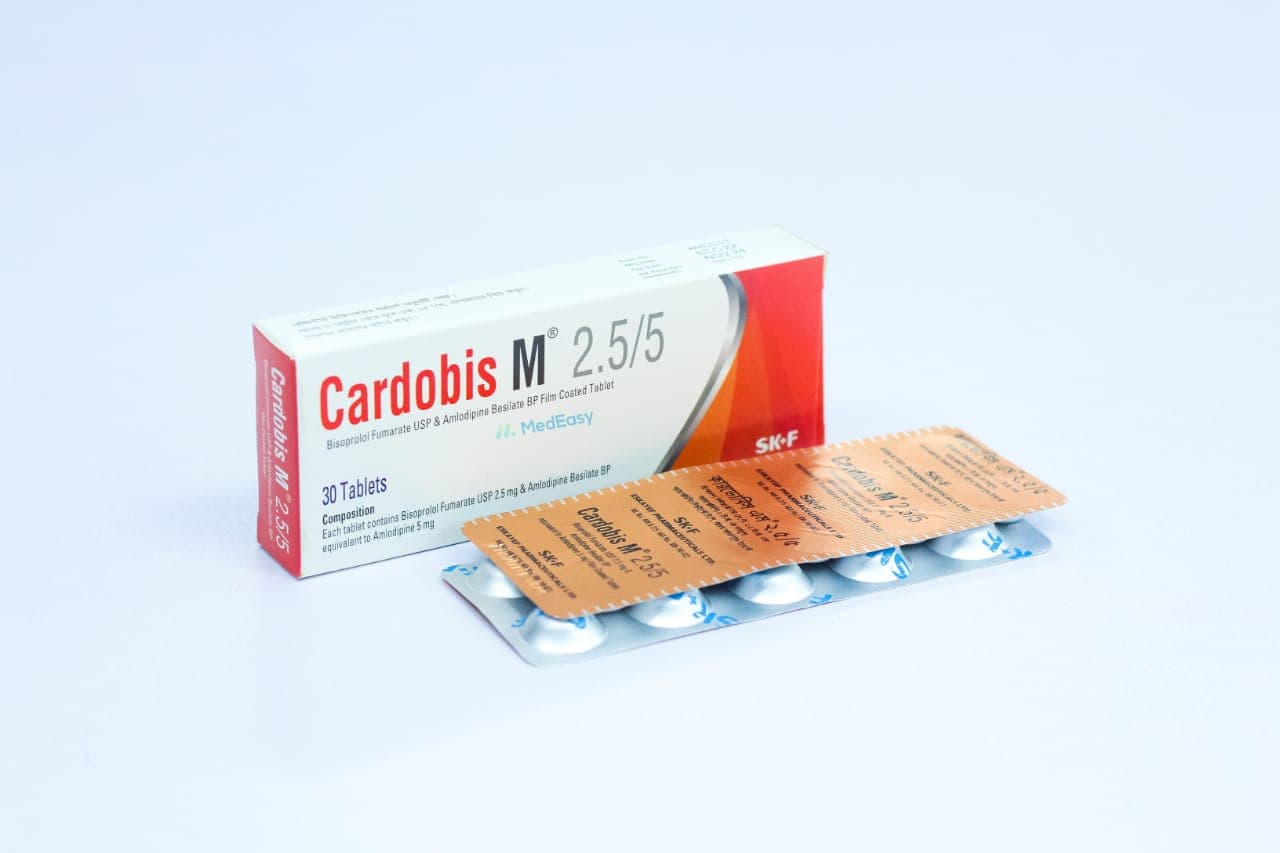
Cardobis M 2.5 mg+5 mg Tablet is available on MedEasy for ৳63.00 per 10's Strip, with home delivery anywhere in Bangladesh. It is manufactured by Eskayef Bangladesh Ltd. Its generic name is Bisoprolol Fumarate + Amlodipine.

Cardobis M is a fixed-dose combination antihypertensive indicated for:
Use of Cardobis M should be individualized by a physician based on blood pressure response and tolerability of each component.
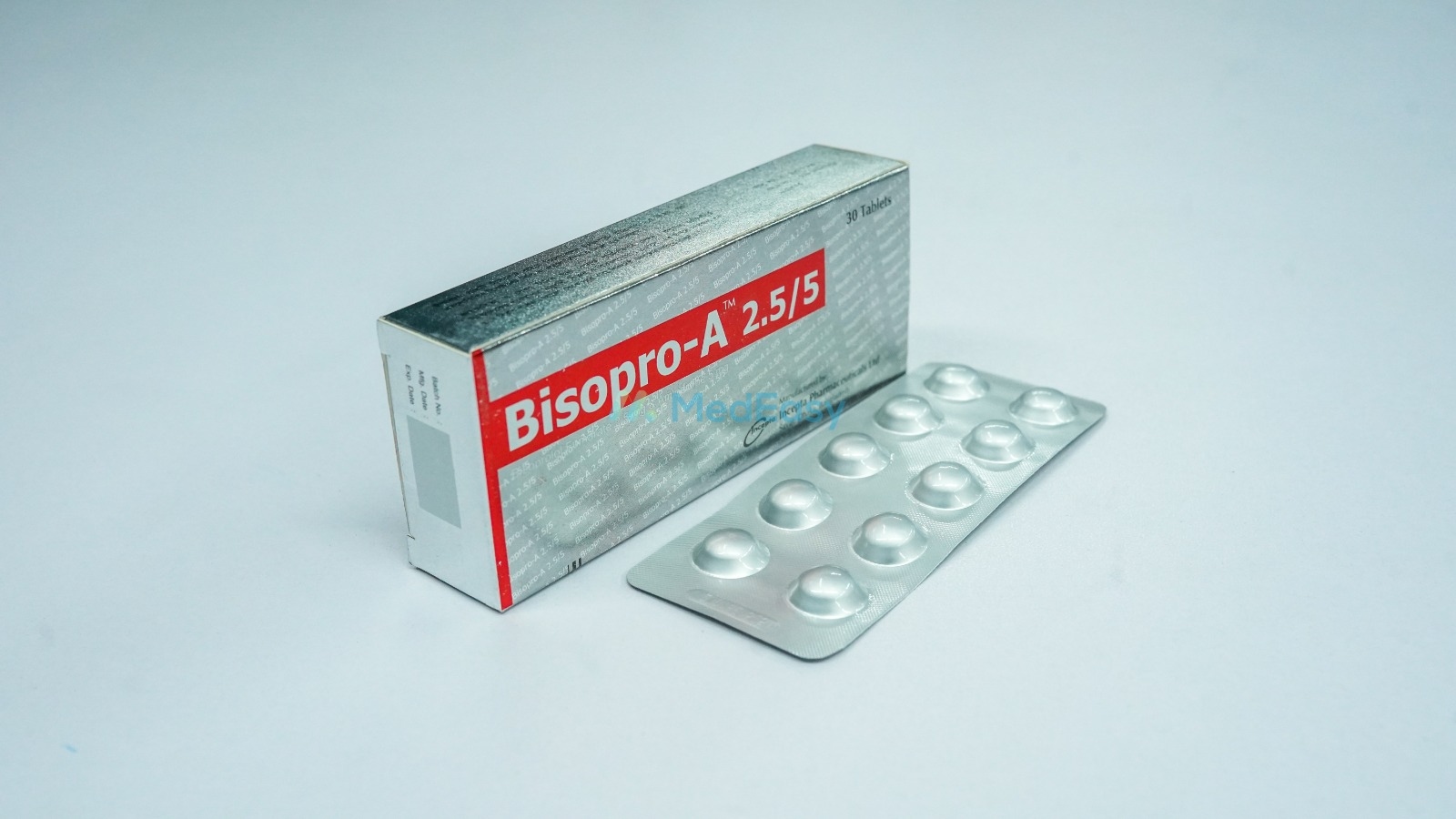
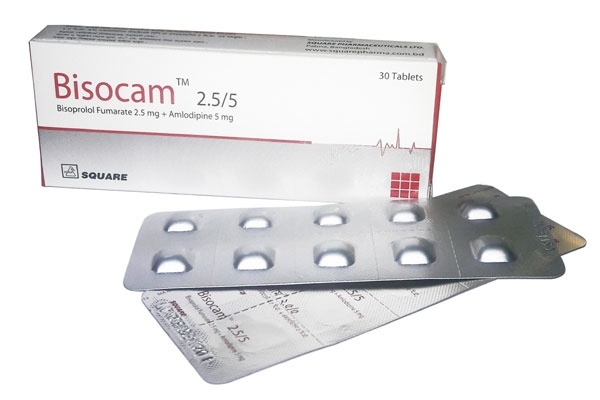
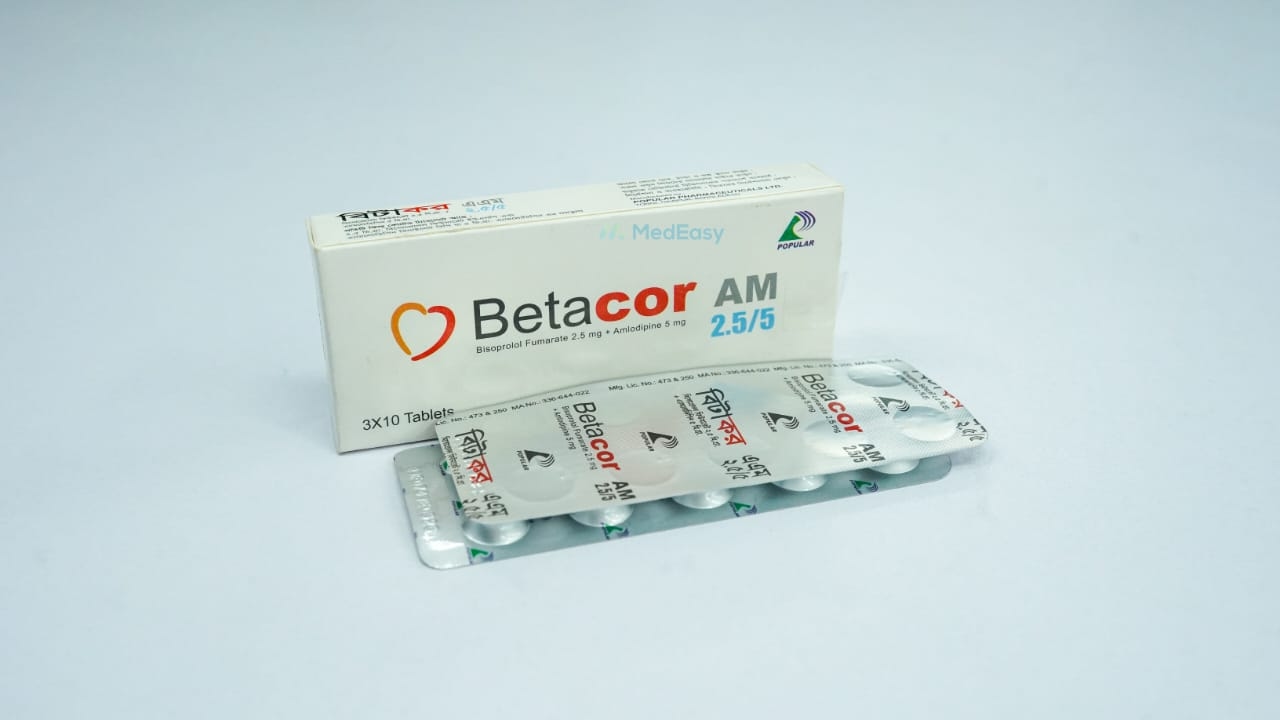
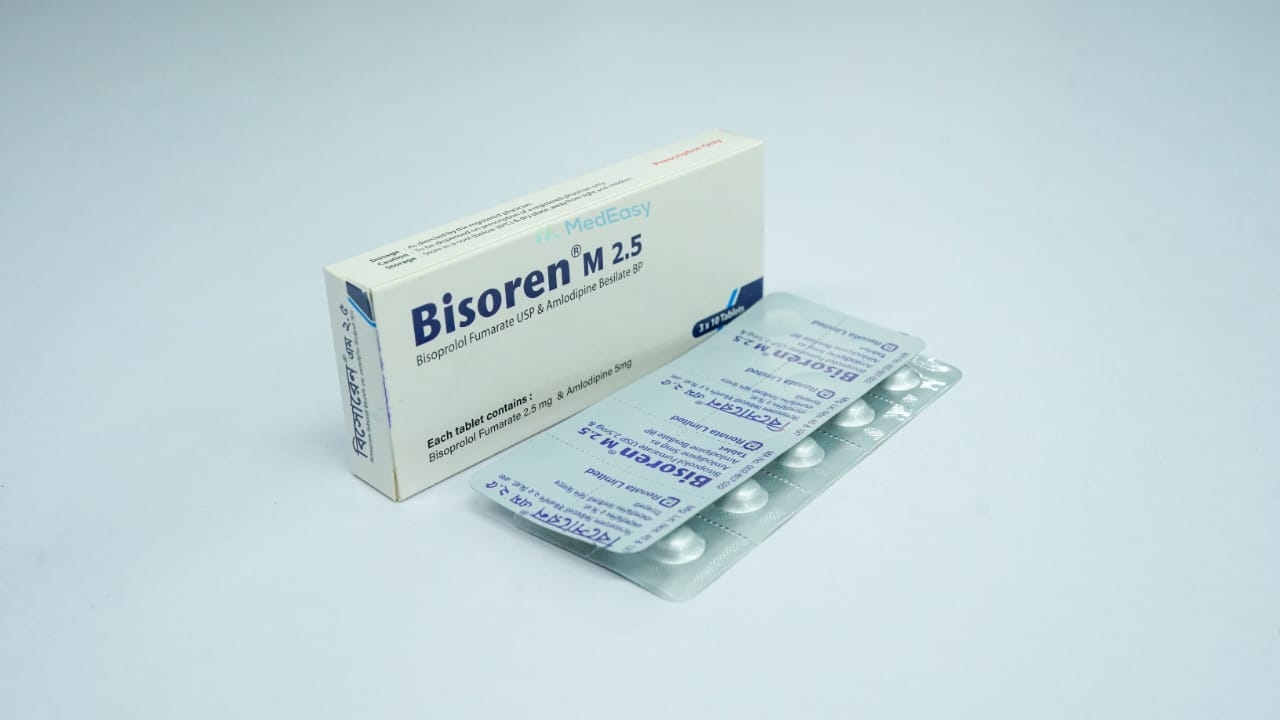
Each tablet of Bisoprolol Fumarate + Amlodipine contains bisoprolol fumarate (a beta-1 selective adrenergic blocking agent) and amlodipine (as amlodipine besylate/besilate, a dihydropyridine calcium channel blocker) in fixed-dose strengths such as 5 mg/5 mg or 5 mg/10 mg, depending on the manufacturer's formulation. Exact strength combinations vary by brand; refer to the specific product label for the strength dispensed.
Cardobis M is a fixed-dose combination oral tablet that brings together two complementary classes of antihypertensive medicine in a single dosage form. Bisoprolol fumarate is a cardioselective beta-1 adrenergic receptor blocker, and amlodipine is a long-acting dihydropyridine calcium channel blocker. Combining agents from these two different classes allows blood pressure to be controlled through two distinct mechanisms, often achieving better blood pressure control than increasing the dose of either single agent. Cardobis M is taken once daily and is intended for long-term management of hypertension under regular medical supervision.
Cardobis M belongs to the therapeutic class of combination antihypertensive agents, specifically a cardioselective beta-1 blocker combined with a dihydropyridine calcium channel blocker. It is classified under fixed-dose combination antihypertensives used for the management of essential hypertension.
Bisoprolol Fumarate + Amlodipine combines two agents with complementary but distinct mechanisms of blood pressure lowering.
Bisoprolol is a highly beta-1 selective adrenergic receptor blocker. At therapeutic doses it competitively blocks beta-1 receptors predominantly in cardiac tissue, reducing heart rate, myocardial contractility, and cardiac output, and suppressing renin release from the kidney. These effects lower blood pressure and reduce myocardial oxygen demand.
Amlodipine is a long-acting dihydropyridine calcium channel blocker. It inhibits transmembrane calcium ion influx into vascular smooth muscle and cardiac muscle by blocking L-type calcium channels, producing relaxation of vascular smooth muscle (predominantly arterial) and a reduction in peripheral vascular resistance, with a gradual onset of action and a long plasma half-life allowing once-daily dosing.
Pharmacokinetically, both components are well absorbed orally; bisoprolol reaches peak plasma concentration in 2-4 hours with an elimination half-life of about 9-12 hours, while amlodipine reaches peak plasma concentration in 6-12 hours with an elimination half-life of approximately 30-50 hours. Bisoprolol is eliminated by combined renal and hepatic routes, while amlodipine is extensively metabolized in the liver.
The usual starting dose of Cardobis M is one tablet of the lowest available strength taken once daily by mouth, with or without food. Dose may be titrated by the physician based on individual response, up to a maximum combined dose typically not exceeding bisoprolol 10 mg/amlodipine 10 mg daily.
| Indication | Typical Adult Dose | Notes |
|---|---|---|
| Hypertension not controlled on monotherapy | 1 tablet once daily; strength individualized | Used as a substitute once individual component doses are matched and stable |
| Angina (adjunct, in hypertensive patients) | 1 tablet once daily as directed | Only when combination therapy with both drug classes is already clinically indicated |
Safety and efficacy of Cardobis M have not been established in children; it is not recommended for pediatric use.
No initial dose adjustment of the amlodipine component is generally required in renal impairment. The bisoprolol component requires caution and possible dose reduction in patients with significant renal impairment (creatinine clearance below 40 mL/min); a physician should individualize Cardobis M dosing.
Amlodipine clearance is reduced in hepatic impairment, and bisoprolol should also be used cautiously. Cardobis M should be initiated at the lowest strength in patients with hepatic impairment, under close medical supervision.
If a dose of Cardobis M is missed, it should be taken as soon as remembered unless it is nearly time for the next dose, in which case the missed dose should be skipped; doses should not be doubled.
Cardobis M is taken orally, once daily, at approximately the same time each day, with or without food. The tablet should be swallowed whole with a glass of water and should not be crushed or chewed unless a physician or pharmacist specifically advises otherwise. Blood pressure should be monitored regularly while taking Cardobis M. The beta-blocker component must never be stopped abruptly (see Precautions and Warnings); any change or discontinuation should be done gradually under medical supervision.
Cardobis M has clinically significant interactions with the following:
Always inform the physician or pharmacist of all other medicines being taken before starting Cardobis M.
Bisoprolol Fumarate + Amlodipine is contraindicated in patients with:
Side effects of Cardobis M arise from its two components.
Patients should seek prompt medical advice for severe dizziness, fainting, very slow heart rate, chest pain, or marked swelling while taking Cardobis M.
Pregnancy: Cardobis M should be used during pregnancy only if clearly needed and if the potential benefit to the mother justifies the potential risk to the fetus. Beta-blockers, including bisoprolol, can cause fetal/neonatal bradycardia, hypotension, and hypoglycemia if used in the third trimester; data on amlodipine in human pregnancy are limited. A physician should be consulted before use in pregnancy or if pregnancy is suspected while taking Cardobis M.
Lactation: Both bisoprolol and amlodipine pass into breast milk in small amounts. Cardobis M should be used during breastfeeding only under medical advice, weighing the benefits of treatment against possible effects on the nursing infant, with the infant monitored for signs of beta-blockade (poor feeding, lethargy, bradycardia) if used.
Do not stop abruptly: The bisoprolol component of Cardobis M must not be discontinued suddenly, particularly in patients with coronary artery disease, as abrupt withdrawal can precipitate rebound hypertension, worsening angina, myocardial infarction, or ventricular arrhythmias. Dose should be tapered gradually over 1-2 weeks under medical supervision.
Diabetes: The bisoprolol component may mask signs of hypoglycemia (tachycardia, tremor); blood glucose should be monitored more closely in diabetic patients on Cardobis M.
Heart failure/cardiac disease: Use with caution in patients with compensated heart failure, and avoid in decompensated failure (see Contraindications). Worsening heart failure signs should be reported promptly.
Peripheral vascular disease/Raynaud phenomenon: Beta-blockers can precipitate or aggravate symptoms of arterial insufficiency.
Bronchospastic disease (asthma/COPD): Even cardioselective beta-blockers such as the bisoprolol component can occasionally provoke bronchospasm; use with caution and only if no suitable alternative exists.
Thyrotoxicosis: Beta-blockade may mask signs of hyperthyroidism (e.g., tachycardia); abrupt withdrawal may precipitate thyroid storm.
Anesthesia/surgery: Inform the anesthesiologist that the patient is taking Cardobis M prior to any surgery, as continued beta-blockade affects the heart's ability to respond to reflex stimuli.
Severe hepatic impairment: Use with caution and at the lowest effective dose, with close monitoring, given reduced clearance of the amlodipine component.
Driving/operating machinery: Cardobis M may cause dizziness or fatigue; caution is advised, especially when starting treatment or increasing the dose.
Overdose with Cardobis M can cause severe hypotension, marked bradycardia, cardiac conduction disturbances (including heart block), cardiogenic shock, cardiac arrest, bronchospasm, and hypoglycemia. Excessive peripheral vasodilation from the amlodipine component may cause profound and prolonged hypotension. Any suspected overdose of Cardobis M is a medical emergency - seek immediate medical attention or contact a poison control center/emergency services right away. Management must be carried out in a hospital setting under close cardiac monitoring; do not attempt to treat an overdose at home.
Store at room temperature (below 30°C), away from light and moisture. Keep out of reach of children.
No overall dose adjustment is generally required in elderly patients, but they may be more sensitive to the blood-pressure-lowering and heart-rate-lowering effects of Cardobis M; start at the lowest dose and titrate slowly.
Use with caution; the bisoprolol component may need dose reduction in significant renal impairment. See Dosage and Administration.
Use with caution at the lowest starting dose; see Dosage and Administration.
Not recommended; safety and efficacy not established (see Pediatric Uses).
See Pregnancy and Lactation section.
Cardobis M is generally used long-term, often for months to years, as part of ongoing management of chronic hypertension. It should be continued for as long as the treating physician advises, with periodic review of blood pressure control and side effects. It should not be stopped abruptly without medical advice (see Precautions and Warnings).
Beta-1 selective adrenergic blocker (bisoprolol) combined with a dihydropyridine calcium channel blocker (amlodipine); combination antihypertensive.
Bisoprolol Fumarate + Amlodipine lowers blood pressure through two mechanisms acting together: bisoprolol selectively blocks cardiac beta-1 adrenergic receptors to reduce heart rate and cardiac output, while amlodipine blocks L-type calcium channels in vascular smooth muscle to produce arterial vasodilation and reduce peripheral resistance. The combined effect produces a greater antihypertensive response than either agent alone at comparable doses.
C
The safety and efficacy of Cardobis M have not been established in children and adolescents under 18 years of age. Use in this population is not recommended. Hypertension in children, when present, should be evaluated and managed by a pediatric specialist using age-appropriate, individually titrated therapy rather than fixed-dose adult combination products such as Cardobis M.
Q: What is Cardobis M 2.5 mg+5 mg Tablet used for?
A: Cardobis M 2.5 mg+5 mg Tablet is a combination medicine used to treat high blood pressure (hypertension), particularly when blood pressure is not adequately controlled with a single blood-pressure medicine alone. It may also be used as part of managing chronic stable angina in some hypertensive patients under a physician's guidance.
Q: How should I take Cardobis M 2.5 mg+5 mg Tablet?
A: Cardobis M 2.5 mg+5 mg Tablet is usually taken once daily by mouth, with or without food, at about the same time each day. Swallow the tablet whole with water. Do not change your dose or stop taking it without talking to your physician.
Q: Can I stop taking Cardobis M 2.5 mg+5 mg Tablet suddenly?
A: No. The beta-blocker component of Cardobis M 2.5 mg+5 mg Tablet should never be stopped abruptly, as this can cause a rebound rise in blood pressure, worsening chest pain, or heart rhythm problems, especially in people with heart disease. If treatment needs to be stopped, your physician will taper the dose gradually.
Q: Is Cardobis M 2.5 mg+5 mg Tablet safe during pregnancy or breastfeeding?
A: Cardobis M 2.5 mg+5 mg Tablet should be used in pregnancy only if clearly needed, since beta-blockers can affect the baby's heart rate and blood sugar, especially later in pregnancy. Small amounts pass into breast milk. Always consult your physician before using Cardobis M 2.5 mg+5 mg Tablet if you are pregnant, planning pregnancy, or breastfeeding.
Q: What are the common side effects of Cardobis M 2.5 mg+5 mg Tablet?
A: Common side effects include swelling of the ankles or feet, tiredness, dizziness, headache, flushing, and a slower-than-normal heart rate. Contact your physician if you notice severe dizziness, fainting, a very slow pulse, chest pain, or marked swelling.
Q: What should I do if I miss a dose or take too much Cardobis M 2.5 mg+5 mg Tablet?
A: If you miss a dose, take it as soon as you remember unless it is almost time for your next dose, in which case skip the missed dose - do not double up. If you or someone else has taken too much Cardobis M 2.5 mg+5 mg Tablet, this is a medical emergency: seek immediate medical attention or contact emergency services/poison control right away.
Disclaimer
The information provided is accurate to the best of our knowledge, but it does not replace professional medical advice. We cannot guarantee its completeness or accuracy, and the absence of specific information about a drug should not be taken as an endorsement. We are not responsible for any consequences arising from this information, so please consult a healthcare professional for any concerns or questions.