
8% Off
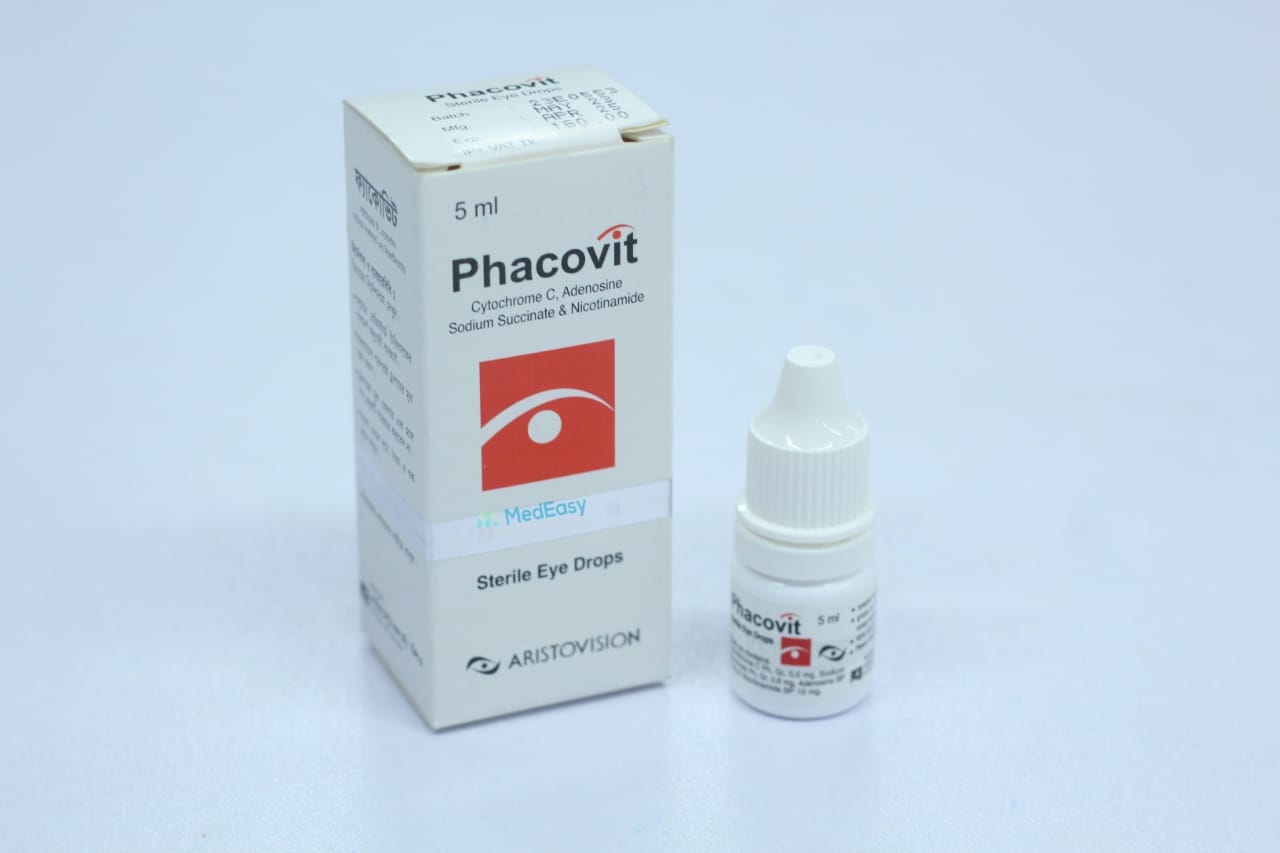
Phacovit
Aristopharma Ltd.
৳147.20
Add to cart


Catnil is a combination antihypoxant/metabolic-support preparation used mainly as an adjunctive treatment in conditions associated with tissue hypoxia and impaired cellular energy metabolism. It is not a first-line or curative therapy and does not replace standard emergency or disease-specific treatment.
Note: The evidence base for this specific four-component combination is limited and varies by region compared with conventional, guideline-directed therapies. It should be used only as directed by a physician and only as an adjunct, never as a substitute for standard emergency treatment of acute ischemic events.
Sodium Succinate + Cytochrome C + Adenosine + Nicotinamide is a fixed combination of four active substances that support cellular energy (mitochondrial) metabolism:
Exact strengths per ampoule/vial or dosage unit vary by manufacturer and formulation; always check the specific product label/pack insert for the precise composition of Sodium Succinate + Cytochrome C + Adenosine + Nicotinamide being dispensed.
Catnil is a multi-component metabolic/antihypoxant preparation, typically given by injection, that combines a Krebs-cycle intermediate (succinate), an electron-transport-chain protein (cytochrome C), a purine nucleoside (adenosine) and a vitamin B3 derivative (nicotinamide). Together, these components are intended to support cellular energy production and reduce oxidative stress in tissues exposed to hypoxia or ischemia. It is marketed in certain regions as adjunctive therapy for conditions involving tissue hypoxia, and is used alongside - never instead of - standard, guideline-directed treatment.
Catnil belongs to the Antihypoxant / Cellular Metabolic and Antioxidant Support Combination therapeutic class.
The components of Sodium Succinate + Cytochrome C + Adenosine + Nicotinamide act together to support mitochondrial energy metabolism under conditions of reduced oxygen supply:
The overall pharmacodynamic rationale is to enhance cellular tolerance to hypoxia/ischaemia and to limit oxidative injury; clinical outcome data for this specific four-component combination are more limited than for standard first-line therapies.
Detailed pharmacokinetic data (absorption, distribution, metabolism, elimination) for the fixed combination as a whole are not well characterised in international literature. Individual components (succinate, adenosine, nicotinamide) are endogenous or near-endogenous metabolites with short biological half-lives; cytochrome C, as a protein, is expected to be metabolised via proteolysis.
Catnil is used strictly as directed by a physician, as an adjunct to standard treatment. Because commercial strengths, ampoule/vial sizes and recommended regimens vary by manufacturer and country, the dose and duration must be individualised and taken from the specific product's approved labelling; the information below is a general framework only.
| Indication | Typical adult approach | Notes |
|---|---|---|
| Adjunct in acute cerebral ischaemia/hypoxic-toxic encephalopathy | Slow intravenous infusion, once daily, for a limited course (commonly around 10 days), as prescribed | Given alongside standard stroke/encephalopathy management, not as a replacement |
| Adjunct in chronic cerebrovascular insufficiency/recovery phase | Course-based intravenous or, where available, oral/other administration as licensed locally | Repeat courses only on physician advice |
See Dosage and Administration below for further detail.
Catnil is generally administered by slow intravenous infusion after dilution in a compatible infusion fluid (e.g., 0.9% sodium chloride or 5% dextrose), as specified on the product label; rapid intravenous injection (bolus) is generally avoided due to the risk of flushing, hypotension, and bradycardia related to the adenosine component.
Catnil has the following clinically relevant interactions, related mainly to its adenosine and nicotinamide components:
Tell your physician about all other medicines, supplements, and herbal products you are taking before starting Catnil.
Sodium Succinate + Cytochrome C + Adenosine + Nicotinamide is contraindicated in patients with known hypersensitivity to sodium succinate, cytochrome C, adenosine, nicotinamide, or any other component of the specific formulation being used.
Reported side effects of Catnil include:
Contact your physician promptly if you notice breathing difficulty, swelling of the face/throat, severe dizziness, chest pain, or a marked change in heart rate after receiving Catnil.
Data on the use of Catnil in human pregnancy and lactation are limited. As a precaution, it should be used in pregnancy only if clearly needed and if the potential benefit is judged by the treating physician to outweigh the potential risk to the fetus; it is not recommended for routine use in pregnancy. Similarly, use during breastfeeding should occur only on medical advice, weighing the benefit to the mother against any possible risk to the nursing infant, since it is not known whether the components (or their metabolites) pass into breast milk in clinically significant amounts. Always consult a physician before use in pregnancy or while breastfeeding.
Before using Catnil, discuss the following with your physician:
Specific data on overdose with Catnil are limited. Excessive dosing may be expected to increase the frequency/severity of known effects, particularly adenosine-related effects such as pronounced flushing, hypotension, bradycardia, or, rarely, significant atrioventricular conduction block, or hypersensitivity-type reactions related to cytochrome C. There is no specific antidote. If an overdose is suspected, stop the infusion/medicine immediately and seek immediate medical attention or contact a poison control centre/emergency services; treatment is supportive and symptomatic, with continuous monitoring of vital signs (heart rate, blood pressure, breathing) in a medical facility.
Store at room temperature (below 30°C), away from light and moisture. Keep out of reach of children. Do not use after the expiry date. Check the specific product pack for any additional storage instructions (e.g., some injectable formulations may require refrigeration or protection from freezing).
Renal impairment: use Catnil with caution; well-established dose-adjustment data are not available, so closer clinical monitoring is advised.
Hepatic impairment: use with caution given limited data; monitor clinically.
Elderly patients: may be more sensitive to cardiovascular effects (hypotension, bradycardia); start under close monitoring, especially if other cardiac medicines are being taken.
Children: safety and efficacy have not been established (see Pediatric Uses).
Pregnancy/breastfeeding: see Pregnancy and Lactation above.
Treatment with Catnil is typically given as a short, defined course (commonly around 7-10 days) as an adjunct during the acute or early recovery phase of the underlying condition, rather than as long-term/continuous therapy. Whether a repeat course is appropriate, and after what interval, should be decided by the treating physician based on clinical response; do not extend or repeat the course on your own.
Antihypoxants; Cellular metabolic/energy support agents; Antioxidant-supportive combinations
Sodium Succinate + Cytochrome C + Adenosine + Nicotinamide works by combining a Krebs-cycle substrate (succinate), a mitochondrial electron-transport-chain protein (cytochrome C), a nucleoside involved in cellular energy turnover (adenosine), and a NAD+/NADH precursor (nicotinamide) to support mitochondrial energy production and help reduce oxidative stress in tissue exposed to hypoxia or ischaemia.
The safety and efficacy of Catnil in children and adolescents have not been well established through controlled paediatric studies. It should generally not be used in children unless specifically directed and closely supervised by a paediatric specialist, who will weigh the potential benefit against the limited safety data in this age group.
Q: What is Catnil Ophthalmic Solution used for?
A: Catnil Ophthalmic Solution is used mainly as an add-on (adjunctive) treatment alongside standard care in conditions involving tissue hypoxia or ischaemia, such as acute cerebral ischaemic events or hypoxic/toxic encephalopathy, to support cellular energy metabolism. It is not a stand-alone or curative treatment.
Q: How is Catnil Ophthalmic Solution given?
A: It is usually given by slow intravenous infusion in a medically supervised setting, typically once daily for a short defined course. The exact dose, dilution, and duration depend on the specific product and must be decided by your physician.
Q: Who should not use Catnil Ophthalmic Solution?
A: People with a known hypersensitivity (allergy) to sodium succinate, cytochrome C, adenosine, nicotinamide, or any other ingredient in the specific formulation should not use it. Because cytochrome C is a protein of animal origin, there is a recognised risk of allergic or anaphylactoid reaction, so it should be given where such reactions can be promptly managed.
Q: Can Catnil Ophthalmic Solution be used during pregnancy or breastfeeding?
A: Data in pregnancy and breastfeeding are limited. It should be used in these situations only if a physician judges that the potential benefit outweighs the potential risk, and only under medical supervision - it is not recommended for routine use in pregnancy or lactation.
Q: What are the common side effects of Catnil Ophthalmic Solution?
A: Commonly reported effects include transient flushing/warmth, headache, mild nausea, injection-site discomfort, and transient changes in blood pressure or heart rate (mild hypotension or bradycardia) during infusion, mainly related to the adenosine component. Seek urgent medical attention for breathing difficulty, facial/throat swelling, severe dizziness, chest pain, or marked heart rate changes.
Q: What should I do if too much Catnil Ophthalmic Solution is given?
A: Stop the infusion/medicine and seek immediate medical attention or contact emergency services/a poison control centre. Treatment for overdose is supportive and symptomatic and should be carried out in a medical facility with monitoring of heart rate, blood pressure, and breathing.
Disclaimer
The information provided is accurate to the best of our knowledge, but it does not replace professional medical advice. We cannot guarantee its completeness or accuracy, and the absence of specific information about a drug should not be taken as an endorsement. We are not responsible for any consequences arising from this information, so please consult a healthcare professional for any concerns or questions.

