8% Off
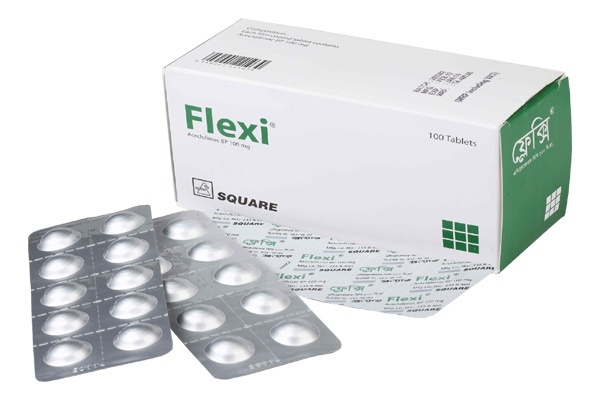
Flexi100 mg
Square Pharmaceuticals PLC.
৳64.40
Add to cart


Ceclofen is a non-steroidal anti-inflammatory drug (NSAID) used for the relief of pain and inflammation associated with the following established indications:
Ceclofen provides symptomatic relief of pain and inflammation; it does not alter the underlying course of the disease. It should be used at the lowest effective dose for the shortest duration consistent with the patient's treatment goals.
Each tablet contains Aceclofenac as the active pharmaceutical ingredient, commonly available as:
Tablets also contain standard pharmaceutical excipients (binders, fillers, coating agents) that do not have independent therapeutic activity.
Ceclofen is a phenylacetic acid derivative NSAID, structurally related to diclofenac. It is used to relieve pain, swelling, and stiffness caused by inflammatory and degenerative joint and musculoskeletal conditions. Ceclofen is rapidly and almost completely absorbed after oral administration and is extensively metabolized in the liver, partly to 4'-hydroxyCeclofen and to diclofenac.
Ceclofen is available in Bangladesh as conventional tablets (100 mg) and sustained/extended-release tablets (200 mg), marketed under various brand names.
Ceclofen belongs to the class of Non-Steroidal Anti-Inflammatory Drugs (NSAIDs), specifically the phenylacetic acid derivative subgroup (chemically related to diclofenac). It is classified as a non-selective cyclooxygenase (COX) inhibitor with analgesic, anti-inflammatory, and antipyretic properties.
Aceclofenac exerts its therapeutic effect by inhibiting the cyclooxygenase (COX-1 and COX-2) enzymes, which reduces the synthesis of prostaglandins — key mediators of pain, inflammation, and fever. Some data suggest Aceclofenac preferentially inhibits COX-2 over COX-1 relative to some other NSAIDs, and it may also modestly reduce interleukin-1 and inhibit synthesis of some cytokines involved in cartilage matrix degradation, though the clinical significance of this is not established.
Pharmacokinetics: Aceclofenac is rapidly and almost completely absorbed from the gastrointestinal tract after oral dosing, with peak plasma concentrations reached in 1.25–3 hours. It is highly protein bound (>99%) and undergoes extensive hepatic metabolism, primarily via CYP2C9, to 4'-hydroxyaceclofenac and other metabolites, including small amounts of diclofenac. The elimination half-life is approximately 4 hours, and it is excreted mainly in the urine as metabolites.
| Indication | Formulation | Typical Dose |
|---|---|---|
| Osteoarthritis, rheumatoid arthritis, ankylosing spondylitis, acute musculoskeletal pain | Conventional (immediate-release) tablet, 100 mg | One tablet (100 mg) twice daily, morning and evening |
| Same indications | Sustained/extended-release tablet, 200 mg | One tablet (200 mg) once daily |
Safety and efficacy of Ceclofen have not been established in children (typically under 18 years, with some labeling specifying under 6 years); Ceclofen is generally not recommended for pediatric use. See Use in Special Populations.
Ceclofen should be used with caution and at the lowest effective dose in patients with mild renal or hepatic impairment; it should be avoided in patients with severe renal or hepatic impairment (see Precautions and Warnings).
Ceclofen tablets should be swallowed whole with water, preferably with or after food to reduce gastrointestinal irritation. Sustained/extended-release tablets must not be crushed or chewed.
Ceclofen tablets should be taken orally, swallowed whole with a glass of water, preferably with or immediately after meals to minimize gastrointestinal discomfort. Sustained-release/extended-release tablets should not be crushed, split, or chewed, as this may alter the release profile of the drug.
Ceclofen has the following well-recognized, clinically significant drug interactions:
Aceclofenac is contraindicated in patients with:
Most side effects of Ceclofen are mild and reversible on discontinuation. Commonly reported effects include:
Serious but rare reactions include severe skin reactions (Stevens-Johnson syndrome, toxic epidermal necrolysis), severe hepatotoxicity, and cardiovascular thrombotic events (myocardial infarction, stroke) as seen with NSAIDs as a class. Patients should seek prompt medical attention for signs of GI bleeding (black stools, vomiting blood), unexplained rash, jaundice, or chest pain/shortness of breath.
Ceclofen should be avoided during pregnancy, particularly in the third trimester, when NSAIDs are contraindicated due to the risk of premature closure of the fetal ductus arteriosus, oligohydramnios, and potential fetal renal impairment. In early pregnancy, Ceclofen should be used only if clearly needed, at the lowest effective dose for the shortest duration, and only after the potential benefit to the mother has been weighed against potential risk to the fetus; consult a physician before use.
It is not established whether Ceclofen is excreted in human breast milk. Because of the potential for adverse effects on the nursing infant, Ceclofen should be avoided during breastfeeding unless a physician determines the benefit outweighs the risk.
Cardiovascular risk: Like other NSAIDs, Ceclofen may be associated with an increased risk of serious cardiovascular thrombotic events, including myocardial infarction and stroke, which can be fatal. This risk may increase with duration of use and in patients with pre-existing cardiovascular disease or risk factors; use the lowest effective dose for the shortest duration.
Gastrointestinal risk: NSAIDs including Ceclofen carry a risk of serious gastrointestinal adverse events including bleeding, ulceration, and perforation of the stomach or intestines, which can occur at any time and without warning symptoms. Elderly patients and those with a history of peptic ulcer disease are at greater risk.
Renal effects: Use with caution in patients with renal impairment, heart failure, hepatic impairment, or in volume-depleted patients (e.g. from diuretic use), as NSAIDs can reduce renal blood flow and precipitate acute kidney injury.
Hepatic effects: Rare cases of hepatotoxicity (elevated liver enzymes, hepatitis) have been reported; discontinue if signs of liver dysfunction develop.
Fluid retention and hypertension: Ceclofen can cause fluid retention and edema and may worsen hypertension or heart failure control.
Hematologic effects: May inhibit platelet aggregation; use with caution in patients with bleeding disorders or those on anticoagulant therapy.
Skin reactions: Serious skin reactions, some fatal, can occur without warning; discontinue at first appearance of skin rash or hypersensitivity signs.
Driving/machinery: Patients experiencing dizziness or drowsiness should avoid driving or operating machinery.
Ceclofen should be used with caution in elderly patients, who are more susceptible to adverse effects (see Use in Special Populations).
Symptoms of Ceclofen overdose may include nausea, vomiting, abdominal pain, gastrointestinal bleeding, drowsiness, dizziness, and, in severe cases, hypotension, respiratory depression, or renal impairment. There is no specific antidote for Ceclofen overdose.
In case of suspected overdose, seek immediate medical attention or contact a poison control center/emergency services right away. Treatment is supportive and symptomatic; management may include gastric decontamination if performed soon after ingestion and supportive care per treating physician's judgment. Do not attempt to manage an overdose at home.
Store at room temperature (below 30°C), away from light and moisture. Keep out of reach of children.
Ceclofen should be avoided during pregnancy, especially in the third trimester (see Pregnancy and Lactation).
Ceclofen should be avoided during breastfeeding unless clearly necessary (see Pregnancy and Lactation).
Safety and efficacy of Ceclofen have not been established in children; it is generally not recommended for use in this population.
Elderly patients are at increased risk of NSAID-related gastrointestinal, renal, and cardiovascular adverse effects. Ceclofen should be used at the lowest effective dose for the shortest duration necessary, with monitoring for adverse effects.
Use with caution in mild renal impairment; avoid in severe renal impairment.
Use with caution and at reduced dose in mild-to-moderate hepatic impairment; avoid in severe hepatic impairment.
Ceclofen should be used at the lowest effective dose for the shortest duration consistent with individual treatment goals, as determined by the prescribing physician. For acute musculoskeletal pain, short courses of a few days to two weeks are typical, while chronic conditions such as osteoarthritis or rheumatoid arthritis may require longer-term use under regular medical review to monitor for adverse effects.
Non-Steroidal Anti-Inflammatory Drug (NSAID) – Phenylacetic acid derivative
Aceclofenac inhibits cyclooxygenase (COX-1 and COX-2) enzymes, blocking the conversion of arachidonic acid to prostaglandins, thromboxanes, and other prostanoids. By reducing prostaglandin synthesis at sites of tissue injury and inflammation, Aceclofenac decreases pain, swelling, and inflammation. It may also modestly suppress the production of certain cytokines (e.g. interleukin-1) implicated in cartilage degradation, contributing to its anti-inflammatory action in joint disease.
The safety and efficacy of Ceclofen have not been established in pediatric patients. Ceclofen is generally not recommended for use in children and adolescents under 18 years of age, and specifically is not recommended in children under 6 years of age per manufacturer labeling, due to lack of adequate safety and efficacy data in this population. Alternative, better-studied analgesic/anti-inflammatory options should be considered for pediatric patients, under physician guidance.
Q: What is Ceclofen 100 mg Tablet used for?
A: Ceclofen 100 mg Tablet is a non-steroidal anti-inflammatory drug (NSAID) used to relieve pain, swelling, and stiffness in conditions such as osteoarthritis, rheumatoid arthritis, ankylosing spondylitis, and acute musculoskeletal pain (e.g. low back pain, sprains, post-traumatic pain).
Q: How should I take Ceclofen 100 mg Tablet?
A: Ceclofen 100 mg Tablet is usually taken as a 100 mg tablet twice daily or a 200 mg sustained/extended-release tablet once daily, swallowed whole with water, preferably with or after food. Follow your physician's specific instructions and do not exceed the prescribed dose.
Q: Can Ceclofen 100 mg Tablet be taken during pregnancy?
A: Ceclofen 100 mg Tablet should be avoided during pregnancy, especially in the third trimester, because NSAIDs can cause premature closure of a blood vessel in the fetal heart (ductus arteriosus) and other complications. In early pregnancy, it should only be used if clearly needed and if your physician determines the benefit outweighs the potential risk to the fetus. Always consult your physician before taking Ceclofen 100 mg Tablet if you are pregnant or planning pregnancy.
Q: What are the common side effects of Ceclofen 100 mg Tablet?
A: The most common side effects of Ceclofen 100 mg Tablet are gastrointestinal symptoms (indigestion, abdominal pain, nausea), headache, dizziness, and skin rash. Serious but rare effects include gastrointestinal bleeding/ulcers, liver problems, and cardiovascular events (heart attack or stroke), which are class effects of NSAIDs. Seek medical attention if you notice black stools, vomiting blood, severe abdominal pain, yellowing of skin/eyes, or chest pain.
Q: Who should not take Ceclofen 100 mg Tablet?
A: Ceclofen 100 mg Tablet should not be taken by people with a known allergy to Ceclofen 100 mg Tablet or other NSAIDs/aspirin (including those who have had asthma, hives, or breathing problems triggered by NSAIDs/aspirin), those with active stomach ulcers or gastrointestinal bleeding, patients with severe heart failure, and women in the third trimester of pregnancy.
Q: Can Ceclofen 100 mg Tablet be taken with other medicines?
A: Ceclofen 100 mg Tablet can interact with blood thinners (e.g. warfarin), lithium, digoxin, methotrexate, diuretics, and blood pressure medicines, potentially increasing side effects or reducing effectiveness of those drugs. Always tell your physician or pharmacist about all medicines you are taking before starting Ceclofen 100 mg Tablet.
Disclaimer
The information provided is accurate to the best of our knowledge, but it does not replace professional medical advice. We cannot guarantee its completeness or accuracy, and the absence of specific information about a drug should not be taken as an endorsement. We are not responsible for any consequences arising from this information, so please consult a healthcare professional for any concerns or questions.