10% Off
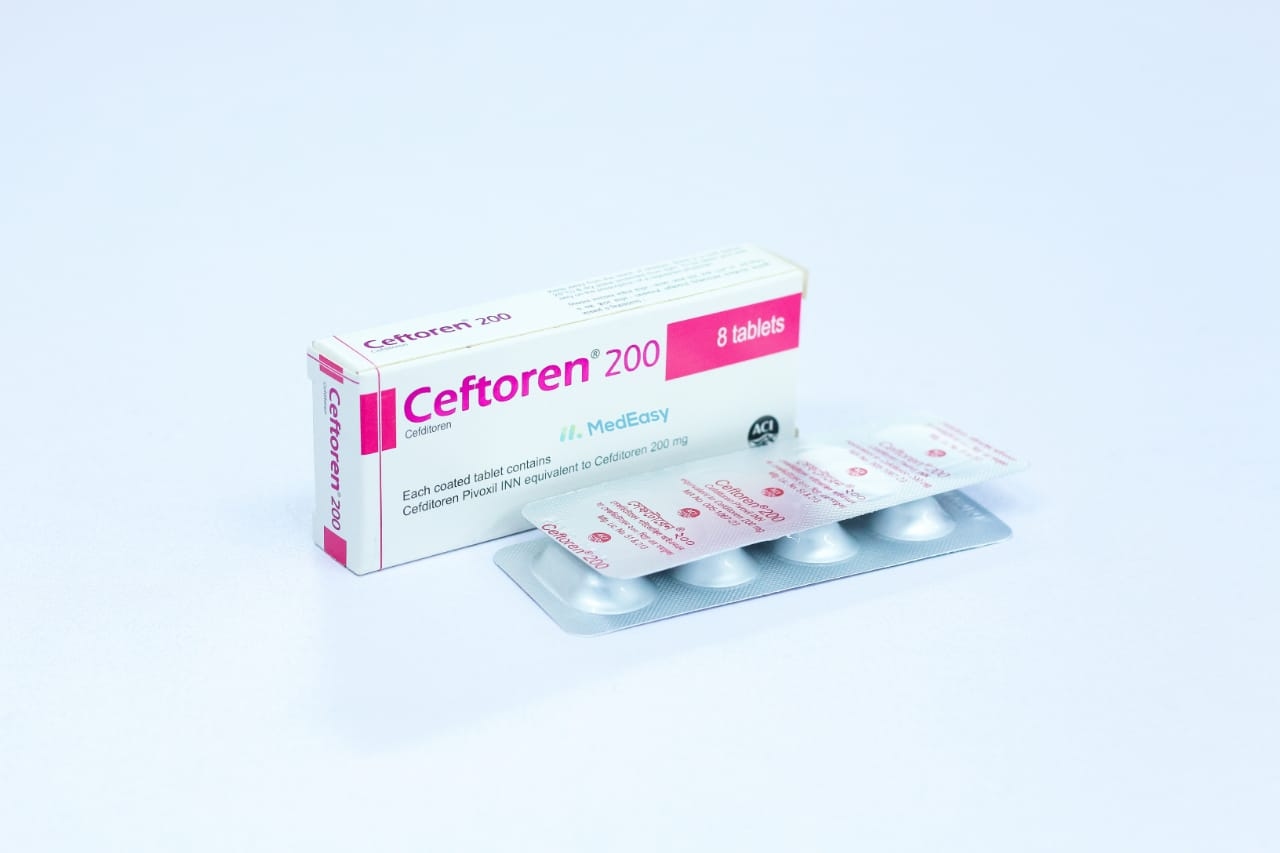
Cefditor200 mg
Orion Pharma Ltd.
৳135.41
Add to cart


Cefdiren is a third-generation oral cephalosporin antibiotic. Its approved and evidence-supported indications include:
Cefdiren is not effective against methicillin-resistant Staphylococcus aureus (MRSA) or atypical respiratory pathogens (e.g., Mycoplasma, Chlamydophila), and should be reserved for infections due to confirmed or strongly suspected susceptible bacteria to reduce the risk of resistance.
Each film-coated tablet contains Cefditoren pivoxil, a prodrug ester of cefditoren, equivalent to 200 mg or 400 mg of cefditoren base. The pivoxil ester is hydrolyzed during absorption, releasing pivalic acid, which can affect carnitine levels (see Precautions and Warnings). Tablets also contain excipients that may include sodium caseinate, a milk protein.
Cefdiren is a third-generation (extended-spectrum) oral cephalosporin antibiotic administered as the prodrug Cefdiren pivoxil. It is bactericidal, acting by inhibiting bacterial cell wall synthesis. Cefdiren has activity against a range of Gram-positive and Gram-negative organisms commonly implicated in respiratory tract and skin infections, and is formulated as an oral film-coated tablet for outpatient treatment of susceptible bacterial infections.
Cefdiren belongs to the class of third-generation cephalosporin antibiotics (oral extended-spectrum cephalosporins), within the broader beta-lactam antibiotic class.
Cefditoren exerts its antibacterial effect by binding to penicillin-binding proteins (PBPs), which are essential enzymes involved in the synthesis of the bacterial cell wall. This binding inhibits the final transpeptidation step of peptidoglycan synthesis, leading to cell wall instability and bacterial lysis, making Cefditoren bactericidal.
Cefditoren is administered as the inactive prodrug cefditoren pivoxil, which is hydrolyzed by esterases in the intestinal mucosa during absorption to release active cefditoren and pivalate. Absorption is enhanced by food, so Cefditoren should be taken with meals. It is minimally metabolized, is largely excreted unchanged by the kidneys, and does not significantly inhibit or induce cytochrome P450 enzymes.
| Indication | Dose | Duration |
|---|---|---|
| Community-acquired pneumonia | 400 mg twice daily | 14 days |
| Acute bacterial exacerbation of chronic bronchitis | 400 mg twice daily | 10 days |
| Pharyngitis/tonsillitis | 200 mg twice daily | 10 days |
| Uncomplicated skin/skin-structure infections | 200 mg twice daily | 10 days |
| Creatinine Clearance | Dose Adjustment |
|---|---|
| ≥50 mL/min | No adjustment necessary |
| 30–49 mL/min | Maximum 200 mg twice daily |
| <30 mL/min | 200 mg once daily |
| Hemodialysis | 200 mg once daily on dialysis days, administered after dialysis |
No dosage adjustment is generally required in hepatic impairment, as Cefdiren is primarily renally eliminated; use with caution in severe hepatic disease.
Cefdiren should be taken with meals to improve absorption and reduce gastrointestinal upset. Tablets should be swallowed whole and not crushed or chewed. Take Cefdiren exactly as prescribed by your physician; do not stop, extend, skip doses, or share this medicine with others without medical advice, even if symptoms improve before the course is finished.
Cefdiren tablets should be taken orally with food to enhance absorption. Swallow tablets whole with water; do not crush or chew. Doses should be spaced evenly (approximately every 12 hours) and the full prescribed course completed.
Cefdiren has the following clinically significant drug interactions:
Cefdiren does not significantly interact with oral contraceptives or warfarin based on available data, but routine monitoring is still advisable when combining with anticoagulants.
Cefditoren is contraindicated in patients with:
Common side effects of Cefdiren (occurring in more than 1% of patients) include:
Less common but clinically important effects include:
Patients should seek medical attention promptly for severe or persistent diarrhea, signs of allergic reaction, or unusual bruising/bleeding while taking Cefdiren.
Pregnancy: Animal reproduction studies with Cefdiren have not shown evidence of harm to the fetus; however, adequate and well-controlled studies in pregnant women are lacking. Cefdiren should be used during pregnancy only if clearly needed and if the potential benefit justifies the potential risk to the fetus. Consult a physician before use during pregnancy.
Lactation: It is not known whether Cefdiren is excreted in human breast milk. Because many cephalosporins are excreted in breast milk in small amounts, caution is advised and a physician should be consulted before using Cefdiren while breastfeeding, weighing the benefits of treatment against potential effects on the nursing infant (such as diarrhea or diaper rash from altered gut flora).
Prolonged or repeated use of Cefdiren can substantially reduce serum carnitine levels (reported reductions of up to 60% with extended dosing), because the pivalate moiety released during absorption is conjugated with carnitine and excreted. Cefdiren is therefore not recommended for prolonged courses of therapy, and should be used cautiously, with monitoring where feasible, in patients with pre-existing carnitine deficiency risk factors.
Patients with a history of penicillin allergy may have partial cross-reactivity with Cefdiren and other cephalosporins; use with caution and monitor closely in such patients. Discontinue immediately if signs of a severe allergic reaction occur.
Cefdiren, like other broad-spectrum antibiotics, can permit overgrowth of C. difficile. Evaluate patients who develop diarrhea during or after treatment.
Dose adjustment of Cefdiren is required in moderate-to-severe renal impairment (see Dosage and Administration).
Take Cefdiren exactly as prescribed by your physician; do not stop, extend, skip doses, or share this medicine with others without medical advice. Using Cefdiren for viral infections (e.g., common cold) or misuse can promote drug-resistant bacteria.
Information on Cefdiren overdose in humans is limited. Manifestations of overdose may include exaggerated side effects such as nausea, vomiting, diarrhea, or abdominal pain. In case of suspected overdose of Cefdiren, seek immediate medical attention or contact a poison control center. Treatment is supportive and symptomatic; Cefdiren can be removed by hemodialysis if clinically necessary. Do not attempt home treatment for a suspected overdose.
Store at room temperature (below 30°C), away from light and moisture, in a tightly closed, light-resistant container. Keep Cefdiren out of reach of children.
Pediatric use: The safety and efficacy of Cefdiren in children under 12 years of age have not been established; it is approved for use in adults and adolescents 12 years and older.
Geriatric use: No overall differences in safety or effectiveness of Cefdiren have been observed between elderly and younger patients, but elderly patients are more likely to have reduced renal function, so renal status should be assessed and dosing adjusted accordingly.
Renal impairment: Dose reduction of Cefdiren is required based on creatinine clearance (see Dosage and Administration).
Hepatic impairment: No specific dose adjustment established; use with caution.
Carnitine deficiency risk groups: Patients with known or suspected carnitine deficiency or inborn errors of metabolism should not use Cefdiren (see Contraindications).
Duration of treatment with Cefdiren depends on the indication: 14 days for community-acquired pneumonia, 10 days for acute bacterial exacerbation of chronic bronchitis, pharyngitis/tonsillitis, and skin/skin-structure infections. The full course should be completed as prescribed, even if symptoms improve earlier, and courses should not be extended beyond what is prescribed due to the risk of carnitine depletion with prolonged use.
Third-generation (extended-spectrum) oral cephalosporin antibiotic; beta-lactam antibiotic class.
Cefditoren inhibits bacterial cell wall synthesis by binding to penicillin-binding proteins (PBPs), disrupting the transpeptidation cross-linking of peptidoglycan chains. This weakens the bacterial cell wall, causing osmotic instability and bacterial cell lysis, resulting in a bactericidal effect.
B
The safety and efficacy of Cefdiren have not been established in pediatric patients younger than 12 years. In adolescents 12 years of age and older, Cefdiren is dosed the same as in adults (200–400 mg twice daily depending on indication). Cefdiren should not be used in children with known or suspected carnitine deficiency or inborn errors of metabolism.
Q: What is Cefdiren 200 mg Tablet used for?
A: Cefdiren 200 mg Tablet is an oral antibiotic used to treat certain bacterial infections, including community-acquired pneumonia, acute exacerbations of chronic bronchitis, strep throat/tonsillitis, and uncomplicated skin infections, when caused by susceptible bacteria.
Q: How should I take Cefdiren 200 mg Tablet?
A: Cefdiren 200 mg Tablet should be taken with food, exactly as prescribed by your physician, at evenly spaced intervals (usually twice daily). Complete the full course even if you feel better before finishing it; do not stop, extend, skip doses, or share Cefdiren 200 mg Tablet with others without medical advice.
Q: Can I take Cefdiren 200 mg Tablet if I am allergic to penicillin?
A: Patients with a penicillin allergy may have partial cross-reactivity with Cefdiren 200 mg Tablet and other cephalosporins. Inform your physician about any penicillin allergy before starting Cefdiren 200 mg Tablet, so they can weigh the risks and monitor you closely if it is prescribed.
Q: Is Cefdiren 200 mg Tablet safe during pregnancy or breastfeeding?
A: Cefdiren 200 mg Tablet should be used during pregnancy only if clearly needed, since adequate human studies are lacking, though animal studies have not shown fetal harm. It is not known if Cefdiren 200 mg Tablet passes into breast milk in humans; consult your physician before use while pregnant or breastfeeding so they can weigh the benefits against potential risks.
Q: Why can't I use Cefdiren 200 mg Tablet for a long time?
A: Prolonged or repeated use of Cefdiren 200 mg Tablet can significantly lower carnitine levels in the blood, because a byproduct released as the drug is absorbed binds to carnitine and is excreted. For this reason, Cefdiren 200 mg Tablet is not recommended for extended courses of treatment, and it is contraindicated in people with existing carnitine deficiency.
Q: What should I do if I miss a dose or overdose on Cefdiren 200 mg Tablet?
A: If you miss a dose of Cefdiren 200 mg Tablet, take it as soon as you remember unless it is almost time for the next dose. If you suspect an overdose of Cefdiren 200 mg Tablet, seek immediate medical attention or contact a poison control center rather than attempting home treatment.
Disclaimer
The information provided is accurate to the best of our knowledge, but it does not replace professional medical advice. We cannot guarantee its completeness or accuracy, and the absence of specific information about a drug should not be taken as an endorsement. We are not responsible for any consequences arising from this information, so please consult a healthcare professional for any concerns or questions.