
10% Off
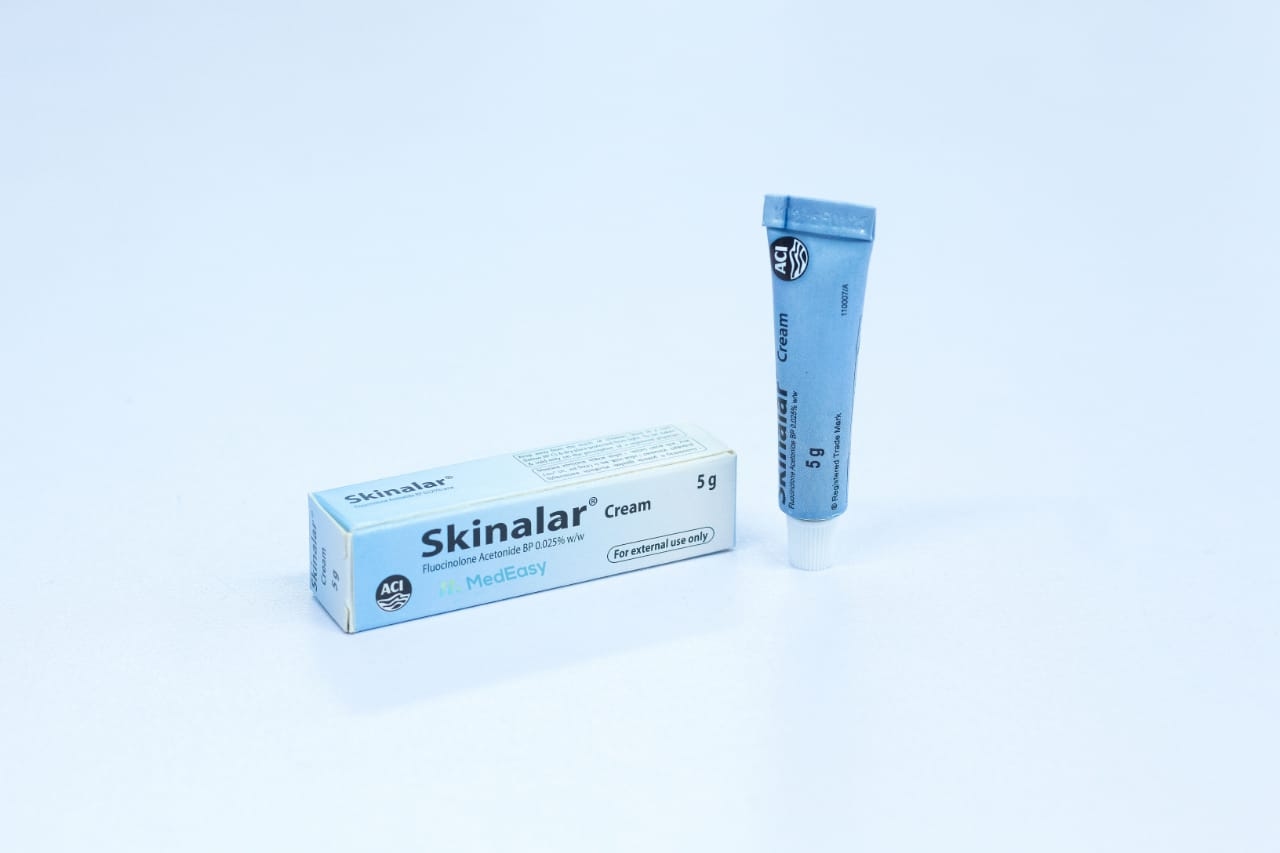
Skinalar0.025%
ACI Limited
৳34.31
Add to cart


Cinoderm is a synthetic corticosteroid formulated in several different dosage forms, each approved for specific, non-interchangeable indications.
The specific formulation of Cinoderm prescribed depends entirely on the condition being treated; the different dosage forms are not interchangeable.
Fluocinolone Acetonide is available in multiple strengths and dosage forms depending on the intended route of administration:
Each pack/tube/bottle/implant contains Fluocinolone Acetonide as the sole active corticosteroid ingredient, along with formulation-specific inactive/excipient ingredients appropriate to the dosage form.
Cinoderm is a synthetic fluorinated corticosteroid with anti-inflammatory, antipruritic, and vasoconstrictive properties. It is classified as a low-to-medium potency topical corticosteroid depending on concentration and vehicle, and is also formulated as an otic solution for ear conditions and as a sustained-release intravitreal implant for chronic eye inflammation.
By suppressing the release of inflammatory mediators at the site of application, Cinoderm reduces redness, swelling, itching, and discomfort associated with corticosteroid-responsive conditions of the skin, ear, and eye.
Cinoderm belongs to the therapeutic class of topical, otic, and ophthalmic corticosteroids (synthetic glucocorticoids). Depending on formulation and vehicle, topical preparations of Cinoderm are generally classified as low- to medium-potency corticosteroids.
Fluocinolone Acetonide exerts its therapeutic effect through binding to intracellular glucocorticoid receptors, which translocate to the nucleus and modulate gene transcription.
Systemic absorption of Fluocinolone Acetonide after topical or otic application is generally low but can increase with use on large body surface areas, broken skin, occlusive dressings, or prolonged use, particularly in children.
Dosing of Cinoderm is specific to the dosage form and indication. It should always be used exactly as prescribed by a physician.
| Population | Dose |
|---|---|
| Adults | 5 drops instilled into the affected ear 2-3 times daily |
| Children | 3 drops instilled into the affected ear 2-3 times daily, under physician guidance |
No renal or hepatic dose adjustment is established for topical, otic, or intravitreal Cinoderm, as systemic exposure is generally minimal; however, physicians should still exercise caution with extensive or prolonged use.
Topical forms: Wash and dry hands before and after application. Apply a thin film of Cinoderm cream, ointment, or oil only to the affected skin area; gently rub in. Avoid contact with eyes, mouth, and mucous membranes. Do not cover treated skin with airtight/occlusive dressings unless specifically directed by a physician, as this increases systemic absorption.
Otic solution: Warm the bottle in the hand briefly before use. Tilt the head to the side, instill the prescribed number of drops into the ear canal, and keep the head tilted (or place a cotton plug) for a few minutes to allow the solution to remain in contact with the ear canal.
Intravitreal implant: Administered exclusively by an ophthalmologist in a clinical/surgical setting under aseptic technique; not self-administered by patients.
Because systemic absorption of topical and otic Cinoderm is generally low, clinically significant drug interactions are uncommon. However, the following are recognized:
Fluocinolone Acetonide is contraindicated in patients with known hypersensitivity to Fluocinolone Acetonide, any other corticosteroid, or any component of the specific formulation being used.
The intravitreal implant form of Fluocinolone Acetonide is additionally contraindicated in patients with active or suspected ocular or periocular infection, including most viral diseases of the cornea and conjunctiva, mycobacterial infections, and fungal diseases of ocular structures.
Side effects of Cinoderm vary by dosage form.
Patients should report persistent or severe side effects of Cinoderm to their physician promptly.
Pregnancy: There are no adequate and well-controlled studies of Cinoderm in pregnant women. Topical corticosteroids can be systemically absorbed and, in animal studies, corticosteroids have shown teratogenic potential when administered systemically at relatively low doses. Cinoderm should be used during pregnancy only if the potential benefit justifies the potential risk to the fetus, and only under medical supervision; avoid use over large areas, for prolonged periods, or with occlusive dressings.
Lactation: It is not known whether topical or otic administration of Cinoderm results in sufficient systemic absorption to produce detectable quantities in human milk. Caution should be exercised when Cinoderm is used by a nursing mother, and application to the chest/breast area should be avoided to prevent inadvertent infant ingestion. Consult a physician before use during breastfeeding.
HPA-axis suppression: Cinoderm can be absorbed systemically in sufficient amounts to produce reversible hypothalamic-pituitary-adrenal (HPA) axis suppression, especially with use over large surface areas, prolonged use, occlusive dressings, or in children.
Masking of infection: Topical and otic Cinoderm should not be used on skin or ear conditions with untreated bacterial, viral, or fungal infection, as corticosteroids may mask clinical signs and allow the infection to worsen. If infection develops, discontinue use and institute appropriate antimicrobial therapy.
Local skin effects: Prolonged or extensive topical use may cause skin atrophy, striae, telangiectasia, and delayed wound healing. Avoid application to the face, groin, or axillae for prolonged periods unless directed by a physician.
Ocular effects (intravitreal implant): Regular ophthalmic monitoring is required to detect cataract formation/progression and elevated intraocular pressure, both of which are common with the intravitreal implant form of Cinoderm and may require medical or surgical management.
Avoid eye contact with topical and otic formulations of Cinoderm, as they are not intended for ophthalmic use. See Contraindications for hypersensitivity information.
Acute overdose with topical or otic Cinoderm is unlikely to cause serious harm; however, excessive or prolonged use over large body surface areas can result in systemic absorption sufficient to produce signs of hypercortisolism (Cushingoid features) or HPA-axis suppression. If overdose or accidental ingestion is suspected, or if the intravitreal implant form of Cinoderm is associated with unexpected severe ocular symptoms, seek immediate medical attention or contact a poison control center/emergency services. Do not attempt home treatment for suspected overdose.
Store Cinoderm at room temperature (below 30°C), away from light and moisture. Keep out of reach of children. Do not freeze. Keep containers tightly closed when not in use.
No specific dose adjustment of Cinoderm is established, as systemic exposure from topical, otic, or intravitreal use is generally minimal.
No specific dose adjustment of Cinoderm is established for hepatic impairment; systemic exposure is generally minimal.
No overall differences in safety or effectiveness of Cinoderm have been established between elderly and younger patients; use with usual caution.
See Pediatric Uses for detailed information; children are more susceptible to HPA-axis suppression and Cushingoid effects with topical Cinoderm.
Duration of treatment with Cinoderm depends on the formulation and condition:
Fluocinolone Acetonide belongs to the following drug classes:
Fluocinolone Acetonide binds to glucocorticoid receptors, inducing anti-inflammatory proteins (such as lipocortin-1) and suppressing pro-inflammatory mediators, resulting in reduced inflammation, vasoconstriction, and decreased immune cell activity at the site of application. See Pharmacology for full mechanistic detail.
C
Safety and effectiveness of Cinoderm in pediatric patients have been established for certain topical and otic formulations, but children are generally more susceptible than adults to HPA-axis suppression and Cushingoid effects when using topical corticosteroids, because of a larger skin surface-area-to-body-weight ratio.
Q: What is Cinoderm 0.025% Cream used for?
A: Cinoderm 0.025% Cream is a corticosteroid used in different formulations: topical creams/ointments/oils for inflammatory skin conditions like eczema and psoriasis, an otic solution for chronic ear inflammation, and intravitreal implants for chronic non-infectious uveitis and diabetic macular edema.
Q: Can I use Cinoderm 0.025% Cream on my face?
A: Cinoderm 0.025% Cream should only be applied to the face under a physician's specific direction, and typically only for short courses, because facial skin is thinner and more prone to side effects such as skin atrophy and telangiectasia.
Q: Is Cinoderm 0.025% Cream safe during pregnancy?
A: Cinoderm 0.025% Cream has not been adequately studied in pregnant women. It should be used during pregnancy only if the potential benefit justifies the potential risk to the fetus, and only under a physician's supervision, avoiding large areas or prolonged use.
Q: Can children use Cinoderm 0.025% Cream?
A: Certain topical and otic formulations of Cinoderm 0.025% Cream may be used in children under physician supervision, but children are more prone to HPA-axis suppression and Cushingoid side effects, so the lowest effective strength should be used for the shortest necessary duration, avoiding occlusive dressings.
Q: What should I avoid while using Cinoderm 0.025% Cream?
A: Avoid contact of topical or otic Cinoderm 0.025% Cream with the eyes, avoid covering treated skin with airtight dressings unless instructed, and avoid using it on untreated skin infections, as it may mask or worsen infection. Always use Cinoderm 0.025% Cream exactly as prescribed by your physician.
Q: What if I miss a dose or use too much Cinoderm 0.025% Cream?
A: If a dose is missed, apply/use it as soon as remembered unless it is nearly time for the next dose. If you suspect an overdose or excessive systemic absorption of Cinoderm 0.025% Cream, or notice unusual symptoms, seek immediate medical attention or contact a poison control center.
Disclaimer
The information provided is accurate to the best of our knowledge, but it does not replace professional medical advice. We cannot guarantee its completeness or accuracy, and the absence of specific information about a drug should not be taken as an endorsement. We are not responsible for any consequences arising from this information, so please consult a healthcare professional for any concerns or questions.
