10% Off
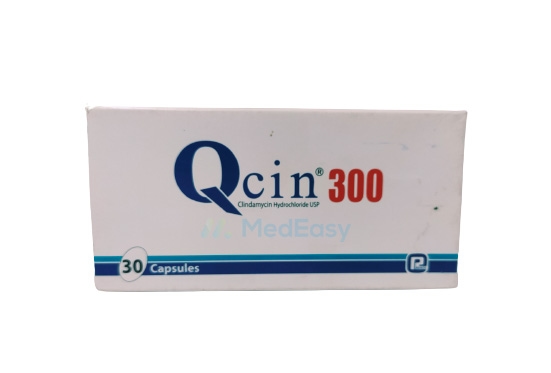
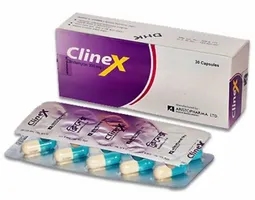
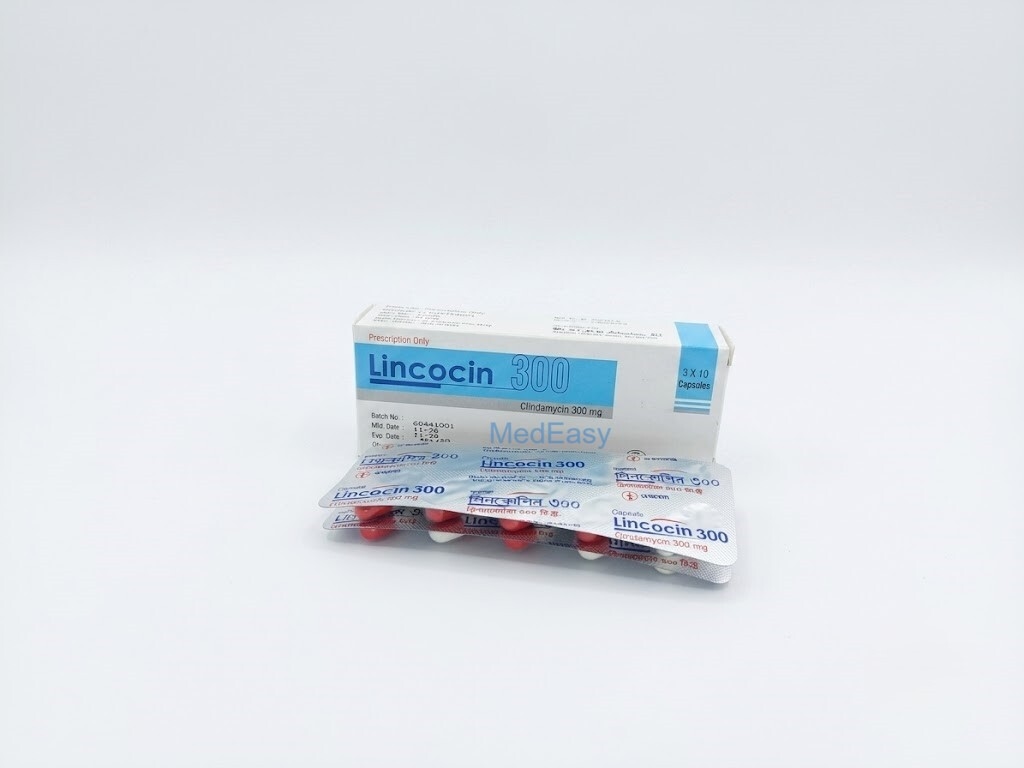
Lincocin300 mg
ACME Laboratories Ltd.
৳135.36
Add to cart


Clinacyn is a lincosamide antibiotic used to treat infections caused by susceptible anaerobic bacteria and certain gram-positive aerobic bacteria. Indications are classified below by strength of evidence.
Clinacyn is not effective for meningitis because it does not adequately cross the blood-brain barrier, and it should not be used for non-bacterial infections such as the common cold.
Clindamycin [Oral/Injection] is available as clindamycin hydrochloride capsules for oral use (commonly 75 mg, 150 mg, and 300 mg strengths) and as clindamycin phosphate solution for injection (commonly equivalent to 150 mg/mL of clindamycin base, supplied in ampoules/vials for intravenous or intramuscular administration).
Clinacyn is a semi-synthetic lincosamide antibiotic derived from lincomycin. It is active against many anaerobic bacteria and a range of gram-positive aerobic cocci. It is available in both oral (capsule) and injectable (IV/IM) formulations, allowing flexible use across mild-to-severe infections, including step-down therapy from injectable to oral administration as a patient improves.
Lincosamide antibiotic
Clindamycin [Oral/Injection] inhibits bacterial protein synthesis by binding to the 50S ribosomal subunit, blocking peptide chain elongation. Depending on the organism, drug concentration, and site of infection, its action may be bacteriostatic or bactericidal. It has no clinically useful activity against most gram-negative aerobic bacteria.
After oral administration, clindamycin hydrochloride is well absorbed, and absorption is not significantly affected by food. After intramuscular or intravenous administration, the clindamycin phosphate prodrug is rapidly hydrolyzed to active clindamycin. The drug distributes widely into most body tissues and fluids, including bone, but does not achieve therapeutic concentrations in cerebrospinal fluid. It is metabolized in the liver and excreted primarily via bile and urine.
Dosage of Clinacyn should be individualized according to the severity of infection, the causative organism, and patient factors such as age, weight, and renal/hepatic function.
| Severity | Dose |
|---|---|
| Moderate/serious infections | 150–300 mg every 6 hours |
| More severe infections | 300–450 mg every 6 hours |
| Severity | Dose |
|---|---|
| Serious infections | 600–1200 mg/day in 2–4 equally divided doses |
| More severe infections | 1200–2700 mg/day in 2–4 equally divided doses, under close monitoring |
| Age group | Dose |
|---|---|
| Neonates (<1 month) | 15–20 mg/kg/day IV/IM in 3–4 equally divided doses |
| 1 month–16 years (IV/IM, serious infections) | 20–40 mg/kg/day in 3–4 equally divided doses |
| Oral (weighing >10 kg) | Approximately 8–25 mg/kg/day in 3–4 divided doses, depending on severity |
Oral capsules should be swallowed whole with a full glass of water to reduce the risk of esophageal irritation. Injectable Clinacyn must be diluted and given by slow intravenous infusion (not exceeding 30 mg/minute) or by deep intramuscular injection (no more than 600 mg per injection site); it must never be given as a rapid IV bolus.
Clinacyn should be taken exactly as prescribed by your physician; do not stop, extend, skip doses, or share this medicine with others without medical advice, as inappropriate use can promote antibiotic resistance and increases the risk of C. difficile-associated diarrhea (see Precautions and Warnings).
Oral capsules should be swallowed whole with a full glass of water and may be taken with or without food; avoid lying down immediately after a dose. Injectable Clinacyn (clindamycin phosphate) must be diluted and administered by slow intravenous infusion over at least 10–60 minutes (not exceeding 30 mg/minute) or by deep intramuscular injection of no more than 600 mg per injection site; it must not be given as a rapid intravenous bolus.
Clinacyn has the following well-documented, clinically significant interactions:
Clindamycin [Oral/Injection] is contraindicated in patients with known hypersensitivity to clindamycin, lincomycin, or any component of the formulation.
Common side effects of Clinacyn include:
Less common but serious effects include severe hypersensitivity reactions (including anaphylaxis, Stevens-Johnson syndrome, toxic epidermal necrolysis), hepatotoxicity, and Clostridioides difficile-associated diarrhea/colitis — see Precautions and Warnings for full details and warning signs that require urgent medical attention.
Pregnancy: Available human data have not shown an increased risk of major birth defects when Clinacyn is used in the second or third trimester; data on first-trimester use are more limited. As with any medicine in pregnancy, Clinacyn should be used only if clearly needed and if the potential benefit justifies the potential risk to the fetus; always consult a physician before use in pregnancy.
Lactation: Clindamycin passes into breast milk. Breastfed infants should be monitored for possible effects on the gastrointestinal flora, such as diarrhea or candidiasis. A physician should weigh the benefits of breastfeeding against the mother's need for Clinacyn and any potential effects on the infant.
Clinacyn, like nearly all antibacterial agents, has been associated with Clostridioides difficile-associated diarrhea (CDAD), ranging in severity from mild diarrhea to fatal pseudomembranous colitis. CDAD can occur during treatment or as late as several weeks after the last dose. Seek prompt medical attention for severe, persistent, or bloody diarrhea, or abdominal cramping/fever occurring during or after treatment, as this may require discontinuing Clinacyn and starting specific antimicrobial therapy directed against C. difficile.
Severe hypersensitivity reactions, including anaphylaxis and severe skin reactions (e.g., Stevens-Johnson syndrome, toxic epidermal necrolysis, drug reaction with eosinophilia and systemic symptoms), have been reported. Discontinue Clinacyn immediately if a hypersensitivity or severe skin reaction occurs and seek medical attention.
Hepatotoxicity (rarely including jaundice and abnormal liver function tests) has been reported; periodic liver and kidney function tests are recommended during prolonged therapy or in patients with hepatic/renal impairment. Cases of acute kidney injury have also been reported.
Antibiotic stewardship: Take Clinacyn exactly as prescribed by your physician; do not stop, extend, skip doses, or share this medicine with others without medical advice.
There is no specific antidote for Clinacyn overdose, and hemodialysis and peritoneal dialysis are not effective in removing the drug from the blood. If an overdose is suspected, seek immediate medical attention or contact a poison control center; treatment is supportive and symptomatic.
Store at room temperature (below 30°C), away from light and moisture. Keep out of reach of children. Do not freeze the injection solution.
No dosage adjustment is generally required in renal impairment, since Clinacyn is largely metabolized hepatically; however, caution and monitoring are advised in severe renal impairment (see Precautions and Warnings).
Use with caution; consider dose adjustment or extended dosing intervals in severe hepatic impairment, and monitor liver function during prolonged use.
No specific dose adjustment is required based on age alone, but elderly patients may be more susceptible to severe diarrhea/CDAD (see Precautions and Warnings) and should be monitored closely.
See Pregnancy and Lactation section.
See Pediatric Uses section.
The duration of treatment with Clinacyn depends on the type and severity of infection and is determined by the prescribing physician; typical courses range from 7 to 14 days, though certain infections (e.g., bone and joint infections) may require several weeks of therapy. Patients should complete the full prescribed course even if symptoms improve early, to reduce the risk of relapse and antibiotic resistance.
Lincosamides
Clindamycin [Oral/Injection] binds reversibly to the 23S ribosomal RNA of the 50S ribosomal subunit of susceptible bacteria, inhibiting bacterial protein synthesis by blocking peptide bond formation and interfering with translocation of peptidyl-tRNA. This action is bacteriostatic or bactericidal depending on the organism and the drug concentration achieved at the site of infection.
B
Clinacyn may be used in pediatric patients, including neonates, with dosing based on age and body weight:
Safety and efficacy of specific dosing regimens have not been established for all pediatric age groups and indications; pediatric dosing of Clinacyn should always be individualized and supervised by a physician.
Q: What is Clinacyn 300 mg Capsule used for?
A: Clinacyn 300 mg Capsule is an antibiotic used to treat serious infections caused by susceptible anaerobic and certain gram-positive bacteria, including skin and soft tissue infections, bone and joint infections, intra-abdominal and gynecologic infections, and as an alternative in penicillin-allergic patients for specific indications such as dental infection prophylaxis.
Q: Can I stop taking Clinacyn 300 mg Capsule once I feel better?
A: No. You should take Clinacyn 300 mg Capsule exactly as prescribed by your physician and complete the full course, even if you feel better before finishing it. Stopping early can allow the infection to return and contributes to antibiotic resistance.
Q: What is the most serious side effect of Clinacyn 300 mg Capsule?
A: The most serious risk is Clostridioides difficile-associated diarrhea (CDAD), which can range from mild diarrhea to severe, life-threatening colitis and can occur during treatment or even weeks after stopping Clinacyn 300 mg Capsule. Seek immediate medical attention if you develop severe, persistent, or bloody diarrhea.
Q: Is Clinacyn 300 mg Capsule safe during pregnancy and breastfeeding?
A: Clinacyn 300 mg Capsule should be used during pregnancy only if clearly needed and if the benefit justifies the potential risk to the fetus. It does pass into breast milk, so breastfed infants should be monitored for gastrointestinal effects. Always consult your physician before use during pregnancy or breastfeeding.
Q: Can children receive Clinacyn 300 mg Capsule?
A: Yes, Clinacyn 300 mg Capsule can be used in children, including neonates, with the dose calculated based on body weight and adjusted by the treating physician according to the severity of infection.
Q: What should I do if I miss a dose of Clinacyn 300 mg Capsule?
A: Take the missed dose as soon as you remember, unless it is almost time for your next dose, in which case skip the missed dose and continue your regular schedule. Do not double the dose. Do not skip doses or stop Clinacyn 300 mg Capsule without consulting your physician, as this can reduce its effectiveness and promote antibiotic resistance.
Disclaimer
The information provided is accurate to the best of our knowledge, but it does not replace professional medical advice. We cannot guarantee its completeness or accuracy, and the absence of specific information about a drug should not be taken as an endorsement. We are not responsible for any consequences arising from this information, so please consult a healthcare professional for any concerns or questions.