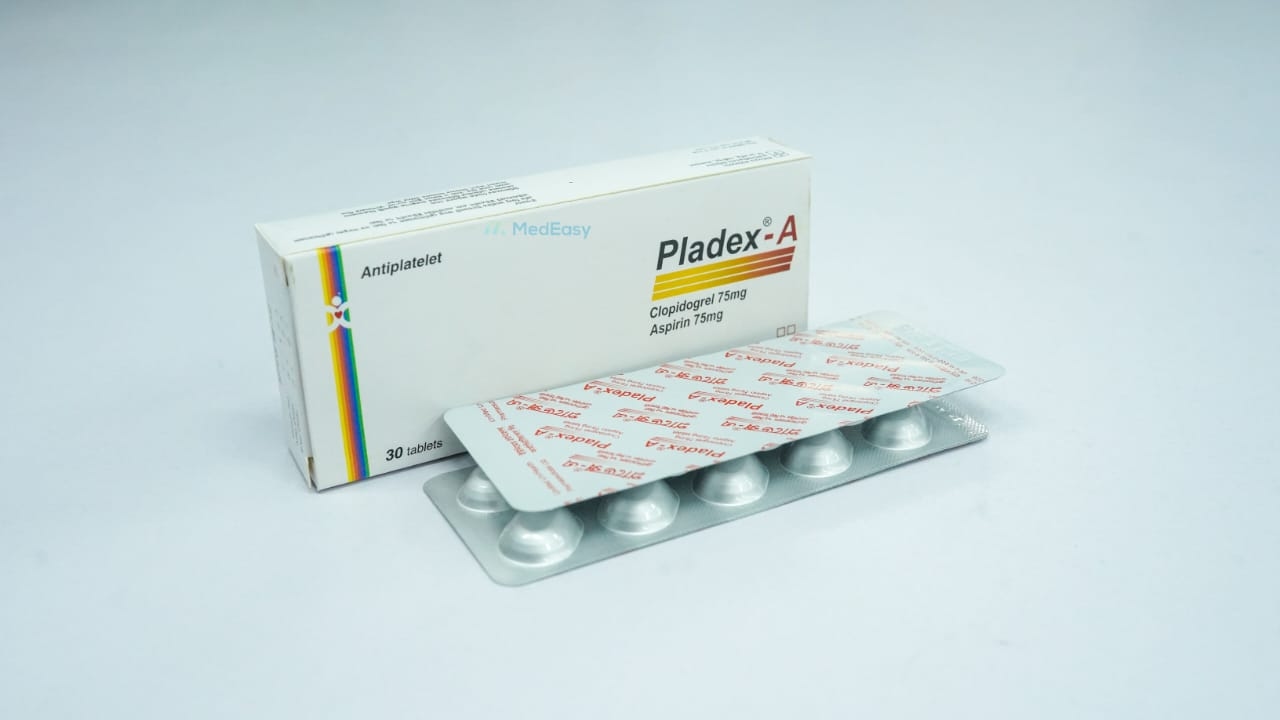
8% Off
Pladex-A75 mg+75 m
Unimed Unihealth MFG. Ltd.
৳115.00
Add to cart
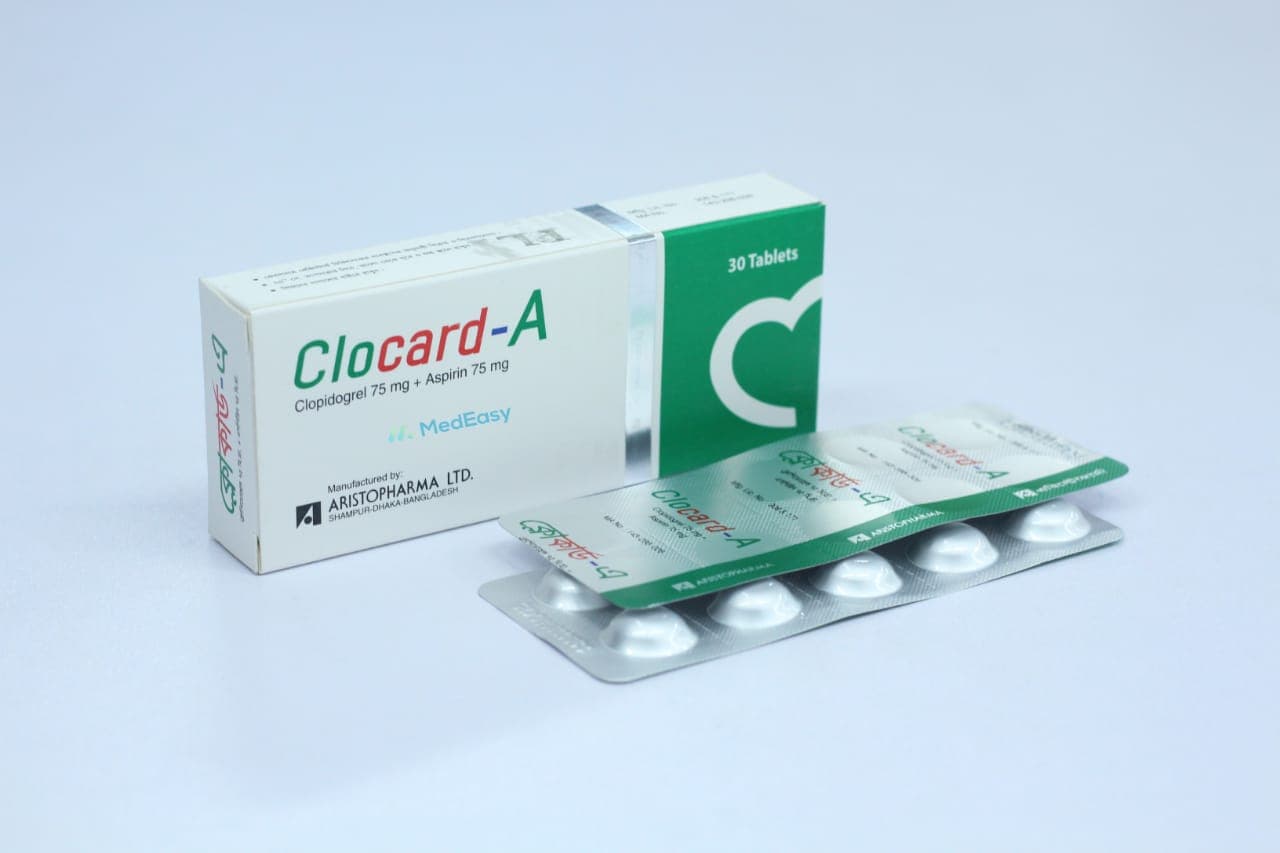
Clocard-A 75 mg+75 mg Tablet is available on MedEasy for ৳110.40 per 10's Strip, with home delivery anywhere in Bangladesh. It is manufactured by Aristopharma Ltd. Its generic name is Clopidogrel + Aspirin.

Clocard-A is a fixed-dose dual antiplatelet combination used to reduce the risk of serious cardiovascular events in patients at high thrombotic risk.
Clocard-A should only be used for the indication and duration specifically prescribed by a physician, since the two components carry different individual risk-benefit profiles that must be balanced for each patient.
Clopidogrel + Aspirin is available as a fixed-dose combination tablet, most commonly containing clopidogrel bisulfate equivalent to 75 mg clopidogrel base together with 75 mg aspirin. Other strength combinations (for example, clopidogrel 75 mg with aspirin 150 mg) may also be marketed; the exact strength of Clopidogrel + Aspirin prescribed should always be confirmed against the physician's prescription and the product label.
Clocard-A combines two antiplatelet medicines with complementary mechanisms of action into a single tablet, a strategy commonly known as dual antiplatelet therapy (DAPT). Clopidogrel is a thienopyridine prodrug that irreversibly blocks the P2Y12 adenosine diphosphate (ADP) receptor on platelets, while aspirin irreversibly inhibits platelet cyclooxygenase-1 (COX-1), reducing thromboxane A2 production. Together they provide more potent inhibition of platelet aggregation than either agent alone, which is why Clocard-A is widely used after heart attack, ischemic stroke, and coronary stent placement to prevent further clot-related events.
Clocard-A belongs to the antiplatelet agent class, specifically combining a P2Y12 receptor inhibitor (thienopyridine) with a cyclooxygenase (COX) inhibitor, and is used as part of dual antiplatelet therapy (DAPT).
Clopidogrel + Aspirin acts through two complementary antiplatelet mechanisms.
Because the two agents act on separate pathways, Clopidogrel + Aspirin produces a greater overall reduction in platelet aggregation than either component alone, which underlies its use in preventing stent thrombosis and recurrent atherothrombotic events.
The dose of Clocard-A must always follow the treating physician's specific instructions, as the loading and maintenance regimens differ by indication.
Acute coronary syndrome (unstable angina/NSTEMI or STEMI): Treatment is often initiated with a clopidogrel loading dose of 300 mg (sometimes 600 mg, per physician judgment) together with aspirin 162-325 mg on the first day, followed by maintenance dosing of clopidogrel 75 mg once daily plus aspirin 75-100 mg once daily.
Post-PCI/stent placement, recent MI, recent stroke, or established peripheral arterial disease: Maintenance dosing is typically clopidogrel 75 mg once daily plus aspirin 75-100 mg once daily, taken as directed.
Administration: Clocard-A is taken orally, once daily, with or without food, at approximately the same time each day, and the tablet should be swallowed whole with water. Missed doses should not be doubled up; the patient should take the next dose at the usual time and inform the physician.
Duration: The total duration of dual antiplatelet therapy with Clocard-A (commonly 6-12 months after stent placement, though this varies by stent type and individual bleeding/thrombotic risk) must be exactly as advised by the physician; see Duration of Treatment and Precautions and Warnings for the risks of stopping early.
Clocard-A is taken by mouth once daily, with or without food, swallowed whole with a full glass of water. It should be taken at the same time each day to maintain a consistent antiplatelet effect. Do not crush, chew, or split the tablet unless specifically instructed by the physician or pharmacist. See Dosage and Administration for indication-specific regimens.
Clocard-A has clinically important interactions that require caution:
Patients should tell their physician and pharmacist about all medicines, supplements, and herbal products being taken before starting or continuing Clocard-A.
Clopidogrel + Aspirin is contraindicated in:
Clopidogrel + Aspirin is also contraindicated in children and teenagers under 16 years of age who have or are recovering from chickenpox or influenza-like viral illness, because of the risk of Reye's syndrome associated with the aspirin component. Use in the third trimester of pregnancy should be avoided (see Pregnancy and Lactation).
The most common adverse effect of Clocard-A is increased bleeding tendency, ranging from minor to serious (see Precautions and Warnings for major bleeding risk). Other reported side effects include:
Less common but serious effects can include gastrointestinal bleeding, hematuria, and, rarely, thrombotic thrombocytopenic purpura (TTP) or severe hypersensitivity reactions such as angioedema. Any unusual bleeding, black or bloody stools, blood in urine, or signs of allergic reaction while taking Clocard-A should be reported to a physician immediately.
Pregnancy: Clocard-A should be used during the first and second trimesters of pregnancy only if the potential benefit clearly justifies the potential risk to the fetus, and only under close physician supervision. Clocard-A is contraindicated during the third trimester of pregnancy, as aspirin at this stage is associated with risks including premature closure of the fetal ductus arteriosus and increased bleeding risk around delivery.
Lactation: It is not well established whether clopidogrel or its metabolites pass into human breast milk, but aspirin does pass into breast milk. Because of the potential for adverse effects in the nursing infant, including bleeding risk and Reye's syndrome-type concerns, breastfeeding should generally be discontinued while taking Clocard-A, unless the physician advises otherwise after weighing the maternal need for therapy against infant risk.
Bleeding risk: Clocard-A increases the risk of bleeding, including serious and occasionally fatal gastrointestinal bleeding and intracranial hemorrhage, because both components inhibit platelet function. Patients should watch for unusual bruising, prolonged bleeding, black/bloody stools, or blood in urine or vomit, and seek prompt medical attention if these occur.
Do not stop without medical advice: Clocard-A must not be stopped or doses skipped without first consulting the prescribing physician. This is especially critical in patients who have recently received a coronary stent, because premature discontinuation of dual antiplatelet therapy substantially increases the risk of stent thrombosis, heart attack, and death. The full course of Clocard-A, including its exact duration, should be taken exactly as prescribed.
Before surgery or dental procedures: Patients should inform every treating doctor, dentist, or surgeon that they are taking Clocard-A, since it may need to be temporarily held before elective procedures with significant bleeding risk. Any interruption of Clocard-A before a procedure should be planned and timed only by the treating physician, and therapy should be resumed as soon as the physician advises.
CYP2C19 poor metabolizers: Patients with reduced CYP2C19 enzyme activity (more common in some Asian populations) may form less active metabolite from the clopidogrel component and could have a reduced antiplatelet response to Clocard-A; the physician may consider alternative therapy or testing in select high-risk patients.
Thrombotic thrombocytopenic purpura (TTP): A rare but serious and potentially fatal condition has been reported with clopidogrel-containing products, sometimes after short exposure, presenting with thrombocytopenia, hemolytic anemia, neurological symptoms, kidney impairment, and fever; this requires urgent medical evaluation.
Reye's syndrome: Because Clocard-A contains aspirin, it should not be given to children or teenagers with chickenpox, influenza, or other viral illnesses due to the risk of Reye's syndrome.
Hypersensitivity: Rash, angioedema, or other hypersensitivity/anaphylactoid reactions, including cross-reactivity between clopidogrel and other thienopyridines, have been reported.
Overdose of Clocard-A is a medical emergency. Excess clopidogrel prolongs bleeding time and increases the risk of bleeding complications; because its antiplatelet effect is irreversible, platelet transfusion may be needed to help restore normal clotting if serious bleeding occurs. Excess aspirin can cause symptoms ranging from tinnitus (ringing in the ears), headache, dizziness, nausea, and vomiting at lower overdose levels to more severe effects such as hyperventilation, fever, confusion, seizures, and metabolic acidosis at higher levels, and may require interventions including activated charcoal, intravenous fluids, or hemodialysis in severe cases. Anyone who has taken more than the prescribed dose of Clocard-A, or who shows signs of bleeding or salicylate toxicity, should seek immediate medical attention or contact emergency services/a poison control center without delay.
Store at room temperature (below 30°C), away from light and moisture. Keep out of reach of children.
Elderly: No specific dose adjustment of Clocard-A is generally required based on age alone, but elderly patients may have a higher baseline bleeding risk and should be monitored closely.
Renal impairment: Limited clinical experience is available in patients with severe renal impairment; Clocard-A should be used with caution and physician oversight in this group.
Hepatic impairment: Clocard-A should be used with caution in moderate hepatic disease and is contraindicated in severe hepatic impairment with bleeding tendency (see Contraindications).
Pediatric population: Safety and effectiveness of Clocard-A have not been well established in children; see Pediatric Uses.
Pregnancy and breastfeeding: See Pregnancy and Lactation for full detail.
The duration of treatment with Clocard-A is individualized and must be determined by the treating physician based on the indication, the type of coronary stent (if any), and the patient's bleeding versus clotting risk. For dual antiplatelet therapy after coronary stenting, treatment commonly continues for 6 to 12 months, though shorter or longer courses may be prescribed in specific circumstances. Patients must never stop Clocard-A early or extend treatment beyond the prescribed period without the physician's explicit instruction, since premature discontinuation—particularly soon after stent placement—carries a serious risk of stent thrombosis, heart attack, or death.
Clopidogrel + Aspirin is classified as an antiplatelet agent combination: a P2Y12 receptor inhibitor of the thienopyridine class (clopidogrel) combined with a cyclooxygenase (COX-1) inhibitor (aspirin), together forming a dual antiplatelet therapy (DAPT) regimen.
Clopidogrel + Aspirin works through two complementary, irreversible antiplatelet mechanisms: clopidogrel blocks the platelet P2Y12 ADP receptor, and aspirin inhibits platelet cyclooxygenase-1 to reduce thromboxane A2 production. Together these actions produce more effective inhibition of platelet aggregation than either drug alone (see Pharmacology for full mechanistic detail).
Category C (first and second trimester); use in the third trimester is contraindicated.
The safety and effectiveness of Clocard-A in children have not been well established, and its use in pediatric patients is generally not recommended except under specialist direction when the potential benefit is judged to clearly outweigh the risk. Clocard-A must not be given to children or teenagers under 16 years of age who have, or are recovering from, chickenpox, influenza, or other viral illness, because the aspirin component carries a risk of Reye's syndrome, a rare but potentially fatal condition affecting the liver and brain. Any decision to use Clocard-A in a child must be made and closely supervised by a pediatric specialist or cardiologist.
Q: What is Clocard-A 75 mg+75 mg Tablet used for?
A: Clocard-A 75 mg+75 mg Tablet is a dual antiplatelet combination used to reduce the risk of heart attack, stroke, and stent-related clotting in patients with acute coronary syndrome, a recent coronary stent, recent heart attack or stroke, or peripheral arterial disease, as directed by a physician.
Q: Can I stop taking Clocard-A 75 mg+75 mg Tablet once I feel better?
A: No. Clocard-A 75 mg+75 mg Tablet must not be stopped or have doses skipped without first consulting your physician. Stopping early, especially soon after a coronary stent, significantly increases the risk of stent thrombosis, heart attack, or death. Always complete the full course exactly as prescribed.
Q: Can I take an antacid like omeprazole with Clocard-A 75 mg+75 mg Tablet?
A: Strong acid-reducing drugs such as omeprazole and esomeprazole can reduce the antiplatelet effectiveness of Clocard-A 75 mg+75 mg Tablet and should generally be avoided. If you need stomach acid protection, ask your physician about alternatives such as pantoprazole, which has less interaction with Clocard-A 75 mg+75 mg Tablet.
Q: What should I do if I notice unusual bruising or bleeding while on Clocard-A 75 mg+75 mg Tablet?
A: Unusual bruising, prolonged bleeding, black or bloody stools, blood in urine, or vomiting blood while taking Clocard-A 75 mg+75 mg Tablet should be reported to your physician immediately or treated as a medical emergency, since bleeding is the main safety concern with this medicine.
Q: Is Clocard-A 75 mg+75 mg Tablet safe for children?
A: Clocard-A 75 mg+75 mg Tablet is generally not recommended for children and must never be given to children or teenagers under 16 with chickenpox, influenza, or other viral infections, due to the risk of Reye's syndrome from the aspirin component. Any pediatric use requires specialist supervision.
Q: Do I need to stop Clocard-A 75 mg+75 mg Tablet before surgery or a dental procedure?
A: Possibly. Tell every doctor, dentist, or surgeon that you take Clocard-A 75 mg+75 mg Tablet before any procedure. Whether and when to pause it is a decision only your prescribing physician should make, since stopping it incorrectly can increase clotting risk while continuing it can increase bleeding risk during the procedure.
Disclaimer
The information provided is accurate to the best of our knowledge, but it does not replace professional medical advice. We cannot guarantee its completeness or accuracy, and the absence of specific information about a drug should not be taken as an endorsement. We are not responsible for any consequences arising from this information, so please consult a healthcare professional for any concerns or questions.