
10% Off
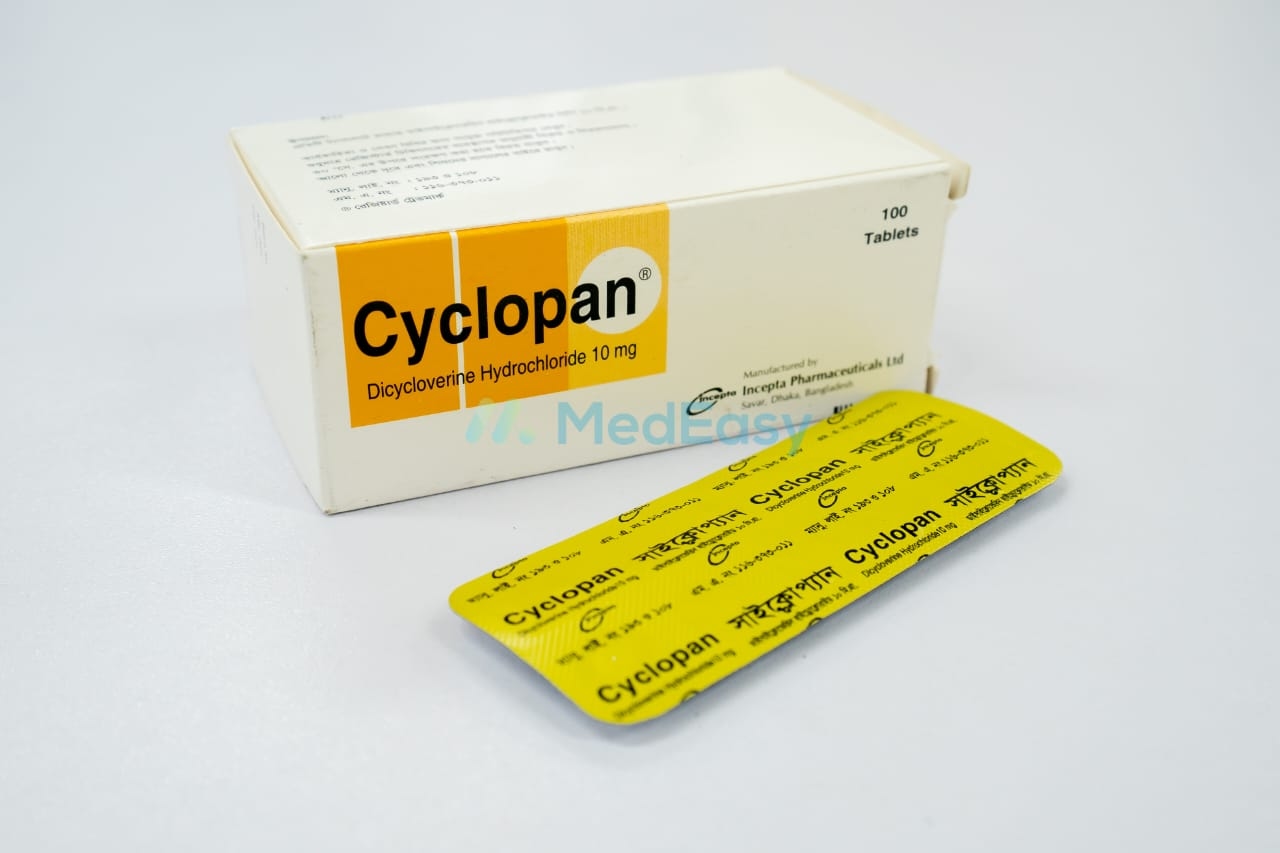
Cyclopan10 mg
Incepta Pharmaceuticals Ltd.
৳1.80
Add to cart
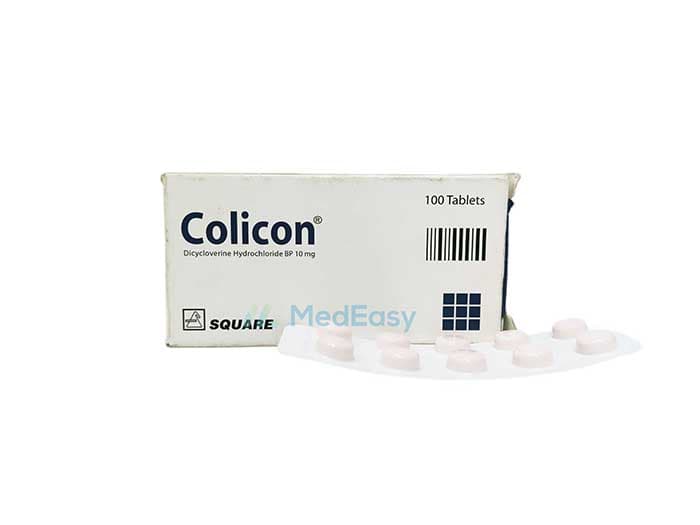

Colicon (also known by the synonym dicyclomine) is a synthetic anticholinergic (antimuscarinic) antispasmodic agent used to relieve smooth-muscle spasm of the gastrointestinal tract.
Colicon is not a first-line or curative treatment for IBS; it manages symptoms and is typically used alongside dietary and lifestyle measures.
Each tablet/capsule of Dicycloverine Hydrochloride generally contains Dicycloverine Hydrochloride 10 mg or 20 mg as the active ingredient. An oral syrup formulation (approximately 10 mg/5 mL) and an injectable formulation (10 mg/mL, for intramuscular use only) are also available in some markets. Exact strengths, inactive ingredients, and available dosage forms vary by manufacturer and country — check the product label of the specific brand dispensed.
Colicon is a synthetic tertiary amine antispasmodic and anticholinergic (antimuscarinic) agent chemically related to atropine, but with a different balance of anticholinergic and direct smooth-muscle relaxant (musculotropic) activity. It is a fine, white, crystalline, odorless powder that is freely soluble in water and alcohol.
Colicon is used clinically to reduce excessive contraction and spasm of gastrointestinal smooth muscle, providing symptomatic relief of cramping and colicky abdominal pain, most notably in irritable bowel syndrome.
Colicon belongs to the antispasmodic / anticholinergic (antimuscarinic) agents therapeutic class, specifically the gastrointestinal antispasmodic subgroup.
Dicycloverine Hydrochloride relieves smooth-muscle spasm through a dual mechanism:
| Regimen | Dose |
|---|---|
| Starting dose | 10–20 mg, 3–4 times daily |
| Titration (if tolerated, after about 1 week) | May be increased up to 40 mg, 4 times daily |
| Maximum | 80 mg/day; safety of doses above this for more than 2 weeks has not been established |
If symptoms are not controlled, or if side effects require doses below 80 mg/day, Colicon should be discontinued after about 2 weeks.
Up to 80 mg/day in divided doses, by deep intramuscular injection only. Colicon injection must never be given intravenously, as this can cause thrombosis or thrombophlebitis at the injection site. Injection is generally used only briefly, with a switch to oral therapy as soon as feasible.
Where locally labeled for infants/children over 6 months (e.g., for infantile colic), a low oral dose such as 5–10 mg 3 times daily has been used under direct physician supervision. Colicon is contraindicated under 6 months of age (see Contraindications) and safety/efficacy in the general pediatric population have not been established by regulatory authorities such as the FDA.
If a dose is missed, resume the normal dosing schedule at the next scheduled time; do not double the dose.
Colicon is substantially excreted by the kidney; use with caution and at the lower end of the dosing range in renal impairment, as toxic effects may be more likely. Use with caution in hepatic impairment as well, since this has not been formally studied.
Colicon has well-documented interactions with the following agents:
This is not an exhaustive list; inform the prescriber of all other medicines being taken before starting Colicon.
Dicycloverine Hydrochloride is contraindicated in patients with:
Side effects of Colicon are mainly anticholinergic in nature and are dose-related.
Report any severe or persistent side effect to a physician promptly.
Adequate and well-controlled studies of Colicon in pregnant women at recommended doses are lacking. Available epidemiologic data have not shown an increased risk of malformations with use during the first trimester, and animal reproduction studies at high multiples of the human dose have not shown fetal harm; however, this is not a guarantee of safety. Colicon should be used during pregnancy only if clearly needed, after the potential benefit has been weighed against the potential risk to the fetus, and only under medical advice.
Colicon is contraindicated in nursing mothers. It is excreted into breast milk and has been associated with serious adverse reactions, including breathing difficulty, in breastfed infants. Breastfeeding mothers should not use Colicon; a physician should be consulted about alternative therapy.
Use Colicon with caution in the following situations, in addition to the absolute contraindications listed separately:
Overdose of Colicon produces an anticholinergic toxicity picture, which may include headache, nausea and vomiting, blurred vision, dilated pupils, hot and dry flushed skin, dizziness, dry mouth, difficulty swallowing, central nervous system stimulation (restlessness, excitement) that can progress to CNS depression, convulsions, and neuromuscular blockade with respiratory paralysis in severe cases.
Suspected overdose is a medical emergency. Seek immediate medical attention or contact emergency services / a poison control center right away. Do not attempt to manage a suspected overdose at home. Hospital management may include supportive care, gastric decontamination, and, when indicated, treatment for anticholinergic toxicity under medical supervision.
Store at room temperature (below 30°C), away from light and moisture. Keep out of reach of children.
Colicon is contraindicated in infants under 6 months of age (see Contraindications). Safety and effectiveness in the general pediatric population have not been established by major regulatory authorities. In some countries, low-dose oral use is regionally labeled for infants over 6 months under direct physician supervision, but this should be approached cautiously and only when clearly needed.
Elderly patients are more susceptible to anticholinergic adverse effects, including confusion, urinary retention, and constipation. Use the lowest effective dose and monitor closely, particularly given the likelihood of reduced hepatic, renal, or cardiac function with age.
Colicon is substantially excreted by the kidney; use with caution in renal impairment, as toxic reactions may occur more readily.
Use with caution, as the effect of hepatic impairment on Colicon has not been formally studied.
Duration of Colicon therapy should be individualized based on symptom response. A therapeutic trial of about 1–2 weeks is typical; if there is no adequate response, or if side effects require reducing the dose below 80 mg/day within 2 weeks, Colicon should be discontinued and the diagnosis and treatment plan reassessed by a physician. Colicon is not intended for indefinite, unsupervised long-term use without periodic medical review.
Anticholinergics; Antispasmodics; Gastrointestinal antispasmodic agents
Dicycloverine Hydrochloride acts through a dual mechanism on gastrointestinal smooth muscle: (1) an anticholinergic (antimuscarinic) effect that competitively blocks acetylcholine at muscarinic receptors, reducing spasm and motility, and (2) a direct musculotropic (spasmolytic) effect on smooth muscle that is independent of its anticholinergic activity. Together these actions relax GI smooth muscle and relieve cramping/spasm.
B
Colicon is contraindicated in infants under 6 months of age due to a well-documented risk of serious respiratory symptoms (including apnea), seizures, and death in this age group. Safety and effectiveness in the broader pediatric population have not been established by the FDA. Where locally labeled for infantile colic in infants over 6 months, use should occur only under direct physician supervision, at the lowest effective dose, with close monitoring for anticholinergic effects. Parents/caregivers should never give Colicon to an infant without a physician's explicit instruction.
Q: What is Colicon 10 mg Tablet used for?
A: Colicon 10 mg Tablet is an antispasmodic (anticholinergic) medicine mainly used to relieve the cramping, spasm, and abdominal pain of irritable bowel syndrome (IBS) and other gastrointestinal spasm. It works by relaxing the smooth muscle of the gut.
Q: Can Colicon 10 mg Tablet be given to babies or infants?
A: No — Colicon 10 mg Tablet is contraindicated in infants under 6 months of age because it has been linked to serious breathing problems (including apnea), seizures, and death in this age group. In some countries it is labeled for infants over 6 months for infantile colic, but only under a physician's direct supervision. Never give Colicon 10 mg Tablet to an infant without a doctor's explicit instruction.
Q: Is Colicon 10 mg Tablet safe during pregnancy and breastfeeding?
A: Colicon 10 mg Tablet should be used in pregnancy only if clearly needed, after a doctor weighs the potential benefit against the potential risk to the baby, since well-controlled human studies are limited. Colicon 10 mg Tablet is contraindicated in breastfeeding mothers because it passes into breast milk and can cause serious reactions, including breathing difficulty, in the nursing infant.
Q: What are the common side effects of Colicon 10 mg Tablet?
A: The most common side effects of Colicon 10 mg Tablet are dry mouth, dizziness, drowsiness, blurred vision, nausea, weakness, and nervousness. These occur because the drug blocks a nerve signal (acetylcholine) throughout the body, not just in the gut.
Q: Who should not take Colicon 10 mg Tablet?
A: Colicon 10 mg Tablet should not be used by people with known hypersensitivity to it, infants under 6 months, nursing mothers, patients with myasthenia gravis, glaucoma (especially angle-closure glaucoma), significant urinary or gastrointestinal tract obstruction, severe ulcerative colitis, reflux esophagitis, or unstable cardiovascular status during acute bleeding.
Q: What should I do if I take too much Colicon 10 mg Tablet?
A: An overdose of Colicon 10 mg Tablet can cause symptoms such as blurred vision, flushed hot dry skin, rapid heartbeat, restlessness progressing to severe central nervous system depression, and in severe cases seizures or breathing paralysis. This is a medical emergency — seek immediate medical attention or contact emergency services / poison control right away rather than trying to manage it at home.
Disclaimer
The information provided is accurate to the best of our knowledge, but it does not replace professional medical advice. We cannot guarantee its completeness or accuracy, and the absence of specific information about a drug should not be taken as an endorsement. We are not responsible for any consequences arising from this information, so please consult a healthcare professional for any concerns or questions.

