

10% Off
Indula200 mcg
Renata Limited
৳13.50
Add to cart
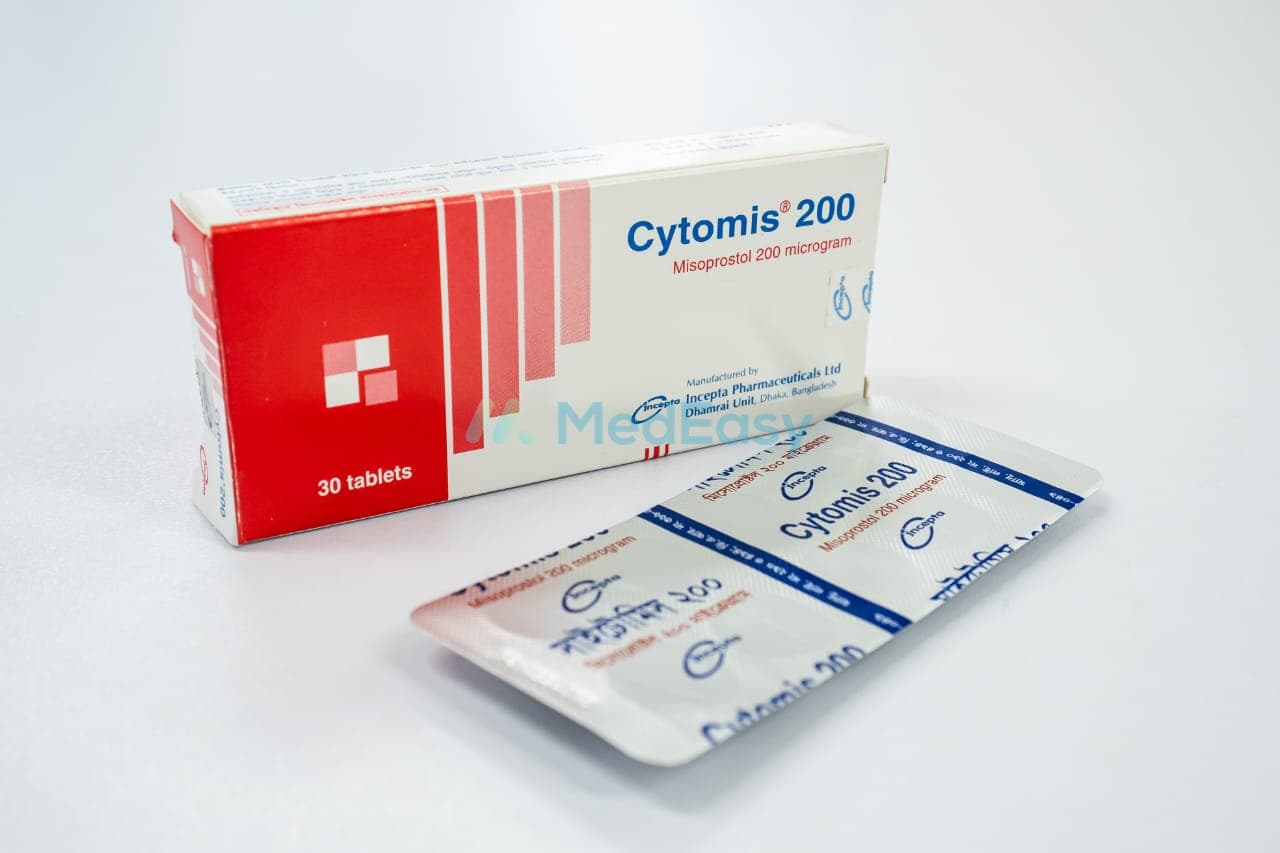

Cytomis is a synthetic prostaglandin E1 analog whose approved and guideline-supported uses differ by clinical setting. All obstetric use of Cytomis must occur under direct medical/hospital supervision.
Cytomis is used together with mifepristone (a combination regimen) for medical termination of early pregnancy, in accordance with local law and clinical guidelines; used alone, Cytomis is less effective for this purpose than the combination regimen.
Cervical priming/ripening before gynecologic procedures such as hysteroscopy or intrauterine device insertion is a recognized off-label use of Cytomis in some clinical settings.
Each tablet of Misoprostol contains Misoprostol as the active pharmaceutical ingredient. Misoprostol is available in strengths including 25 mcg, 100 mcg, 200 mcg, and 600 mcg tablets, along with standard pharmaceutical excipients.
Cytomis is a synthetic analog of prostaglandin E1 (PGE1). It has two distinct pharmacologic actions that underlie its clinical uses: it inhibits gastric acid secretion and increases production of protective mucus and bicarbonate in the stomach lining (its antiulcer effect), and it stimulates uterine smooth muscle contraction while softening and dilating the cervix (its uterotonic/cervical-ripening effect). Because of this second action, Cytomis is used both as a gastroprotective agent in patients taking NSAIDs and, in carefully selected obstetric situations under medical supervision, as an agent to induce labor, manage miscarriage, or prevent/treat postpartum hemorrhage.
Prostaglandin E1 (PGE1) analog — antiulcer / gastroprotective agent and uterotonic agent.
Misoprostol and its active metabolite (misoprostol acid) bind to prostaglandin EP2/EP3 receptors.
Misoprostol is rapidly absorbed after oral administration and de-esterified to its active free acid form; it is also absorbed vaginally, sublingually, and rectally, with different absorption/onset profiles by route. It is eliminated primarily via the kidneys, with a short elimination half-life.
Dosing of Cytomis is specific to the indication and must be directed by a physician; obstetric use requires hospital/clinical monitoring.
| Indication | Typical adult dosing |
|---|---|
| Prevention of NSAID-induced gastric ulcers | 200 mcg orally 4 times daily with food, taken for the duration of NSAID therapy; 100 mcg 4 times daily may be used if 200 mcg is not tolerated. |
| Labor induction / cervical ripening (hospital setting only) | Low-dose regimens such as 25 mcg vaginally every 3–6 hours, per institutional protocol; oral regimens are also used. Continuous fetal and uterine monitoring is required. |
| Prevention of postpartum hemorrhage | Typically 600 mcg administered orally as a single dose immediately after delivery, per WHO guidance, when other uterotonics are unavailable. |
| Treatment of postpartum hemorrhage | Higher single doses (e.g., 600–1000 mcg) by the oral, sublingual, or rectal route, per institutional protocol, as part of comprehensive PPH management. |
| Missed/incomplete miscarriage management; medical termination of pregnancy | Used in specific combination regimens (commonly with mifepristone) and specific doses/routes set by the treating physician in accordance with clinical guidelines and local law. |
Before starting Cytomis for the NSAID-ulcer-prevention indication, patients of reproductive potential must have a negative pregnancy test and be using effective contraception, because Cytomis is not to be used in pregnancy for that indication (see Contraindications and Precautions).
Cytomis tablets may be taken orally (swallowed with water, with food to reduce diarrhea, for the ulcer-prevention indication), or, for specific obstetric indications under clinical supervision, administered vaginally, sublingually, or rectally as directed by the treating physician. Do not split, crush, or alter the route of administration except as specifically instructed, since absorption and effect differ by route.
Clinically significant interactions with Cytomis are limited:
Misoprostol is contraindicated in:
The most common side effects of Cytomis involve the gastrointestinal tract and are generally dose-related:
When Cytomis is used for obstetric indications, additional effects related to its uterotonic action can occur, including uterine hyperstimulation (excessively frequent or prolonged contractions) and, rarely but seriously, uterine rupture — the risk of which is notably higher in women with a prior cesarean section or other uterine surgery (see Precautions and Warnings).
Cytomis has fundamentally different implications in pregnancy depending on why it is being used, and this distinction is critical:
Cytomis must NOT be used in pregnancy for this indication. It is an abortifacient and can cause miscarriage, premature labor, birth defects, or uterine rupture. Patients of reproductive potential must have a negative pregnancy test within 2 weeks before starting Cytomis for this indication and must use effective contraception throughout treatment; treatment should begin only on the second or third day of a normal menstrual period.
Cytomis is deliberately administered during pregnancy for these purposes, but strictly under direct medical/hospital supervision, with appropriate monitoring, because of risks including uterine hyperstimulation and uterine rupture (particularly with a prior cesarean scar). Use only exactly as directed by the treating physician.
Cytomis and its active acid metabolite are excreted in breast milk. Use during breastfeeding should occur only if clearly needed and under medical advice, since infant exposure and effects have not been fully characterized; a physician can advise on timing of breastfeeding relative to dosing if Cytomis is required.
Cytomis must not be used for prevention of NSAID-induced ulcers in pregnant women: it can cause abortion, premature birth, birth defects, or uterine rupture in this context. Women of reproductive potential prescribed Cytomis for this indication must have a documented negative pregnancy test before starting and must use effective contraception throughout treatment. Do not share Cytomis with anyone else.
When Cytomis is used for labor induction or other obstetric indications, there is a risk of uterine hyperstimulation and uterine rupture, which is substantially higher in women with a prior cesarean delivery or other uterine surgery; such use requires hospital-level monitoring of fetal heart rate and uterine activity and should only be undertaken by an experienced clinician.
Diarrhea associated with Cytomis can occasionally be severe; taking doses with food and avoiding magnesium-containing antacids can reduce this risk (see Interactions).
Cytomis should be used only under the direction of a physician; do not use for self-treatment of any condition, and do not use Cytomis obtained from unverified or informal sources.
Overdose of Cytomis may cause sedation, tremor, seizures, dyspnea, abdominal pain, diarrhea, fever, palpitations, hypotension, or bradycardia; in pregnant women, overdose can also provoke strong uterine contractions and uterine rupture. There is no specific antidote.
If overdose of Cytomis is suspected, seek immediate medical attention or contact emergency services / a poison control center right away. Do not attempt specific home treatment; management is supportive and should be provided by medical professionals.
Store at room temperature (below 30°C), away from light and moisture. Keep out of reach of children.
Renal impairment: No routine dose adjustment of Cytomis is required in patients with renal impairment, although clinical monitoring is advised.
Hepatic impairment: No specific dose adjustment has been established; use with routine clinical caution.
Elderly: No specific dose reduction is required based on age alone for the ulcer-prevention indication, but elderly patients are among those at highest risk for NSAID-induced ulcers and are a key target population for this use of Cytomis; monitor for diarrhea and dehydration.
Women of reproductive potential: Require a negative pregnancy test and effective contraception before starting Cytomis for the NSAID-ulcer-prevention indication (see Pregnancy and Lactation).
Pediatric patients: See Pediatric Uses.
For NSAID-induced ulcer prevention, Cytomis is generally continued for the entire course of NSAID therapy, as directed by the physician. For obstetric indications (labor induction, miscarriage management, PPH prevention/treatment), Cytomis is given as a short, defined course of doses under direct medical supervision, with duration determined by clinical response and monitoring rather than a fixed calendar period.
Prostaglandins (Prostaglandin E1 analogs)
Misoprostol binds prostaglandin EP2/EP3 receptors: on gastric parietal cells this suppresses acid secretion and boosts protective mucus/bicarbonate output (antiulcer effect); on uterine smooth muscle and cervical tissue it triggers contraction and promotes cervical softening/dilation (uterotonic/cervical-ripening effect).
X
Safety and efficacy of Cytomis for NSAID-induced ulcer prevention have not been established in children; pediatric NSAID-related gastroprotection is not a routine indication and pediatric use of Cytomis for this purpose is not recommended outside specialist guidance. Obstetric uses of Cytomis (e.g., pregnancy management) can apply to adolescent females who are pregnant, but only under direct specialist/hospital supervision, following the same precautions that apply to adult obstetric use.
Q: What is Cytomis 200 mcg Tablet used for?
A: Cytomis 200 mcg Tablet is used to prevent stomach ulcers caused by long-term NSAID use in high-risk patients, and, in hospital/specialist settings, for obstetric purposes such as labor induction, management of miscarriage, and prevention or treatment of postpartum hemorrhage. Always use Cytomis 200 mcg Tablet only as prescribed by your physician for the specific indication it was recommended for.
Q: Can I take Cytomis 200 mcg Tablet if I am pregnant?
A: It depends entirely on why it is being used. If Cytomis 200 mcg Tablet is being considered to prevent NSAID-induced ulcers, it must NOT be used in pregnancy — it can cause miscarriage, premature birth, birth defects, or uterine rupture. However, Cytomis 200 mcg Tablet is deliberately used during pregnancy for certain obstetric purposes (such as labor induction or miscarriage management) but only under direct medical supervision in a clinical setting. Never take Cytomis 200 mcg Tablet during pregnancy except exactly as directed by your physician.
Q: What are the common side effects of Cytomis 200 mcg Tablet?
A: The most common side effects of Cytomis 200 mcg Tablet are diarrhea, abdominal cramping/pain, nausea, and flatulence. Diarrhea is usually mild-to-moderate, tends to start early in treatment, and often improves within about a week; taking Cytomis 200 mcg Tablet with food can help reduce this.
Q: Can Cytomis 200 mcg Tablet be shared with someone else or used without a prescription?
A: No. Cytomis 200 mcg Tablet should never be shared with another person or used without a physician's direct guidance, especially because of the serious risks Cytomis 200 mcg Tablet carries in pregnancy and the need for individualized dosing depending on indication.
Q: Is Cytomis 200 mcg Tablet safe while breastfeeding?
A: Cytomis 200 mcg Tablet and its active metabolite pass into breast milk. It should only be used while breastfeeding if clearly needed and under a physician's advice, as infant safety data are limited; your doctor can advise on precautions if Cytomis 200 mcg Tablet is required during lactation.
Q: What should I do if I take too much Cytomis 200 mcg Tablet?
A: An overdose of Cytomis 200 mcg Tablet can cause symptoms such as sedation, tremor, abdominal pain, diarrhea, low blood pressure, or (in pregnancy) strong uterine contractions. Seek immediate medical attention or contact emergency services / a poison control center right away if an overdose of Cytomis 200 mcg Tablet is suspected — do not try to manage it at home.
Disclaimer
The information provided is accurate to the best of our knowledge, but it does not replace professional medical advice. We cannot guarantee its completeness or accuracy, and the absence of specific information about a drug should not be taken as an endorsement. We are not responsible for any consequences arising from this information, so please consult a healthcare professional for any concerns or questions.
