10% Off
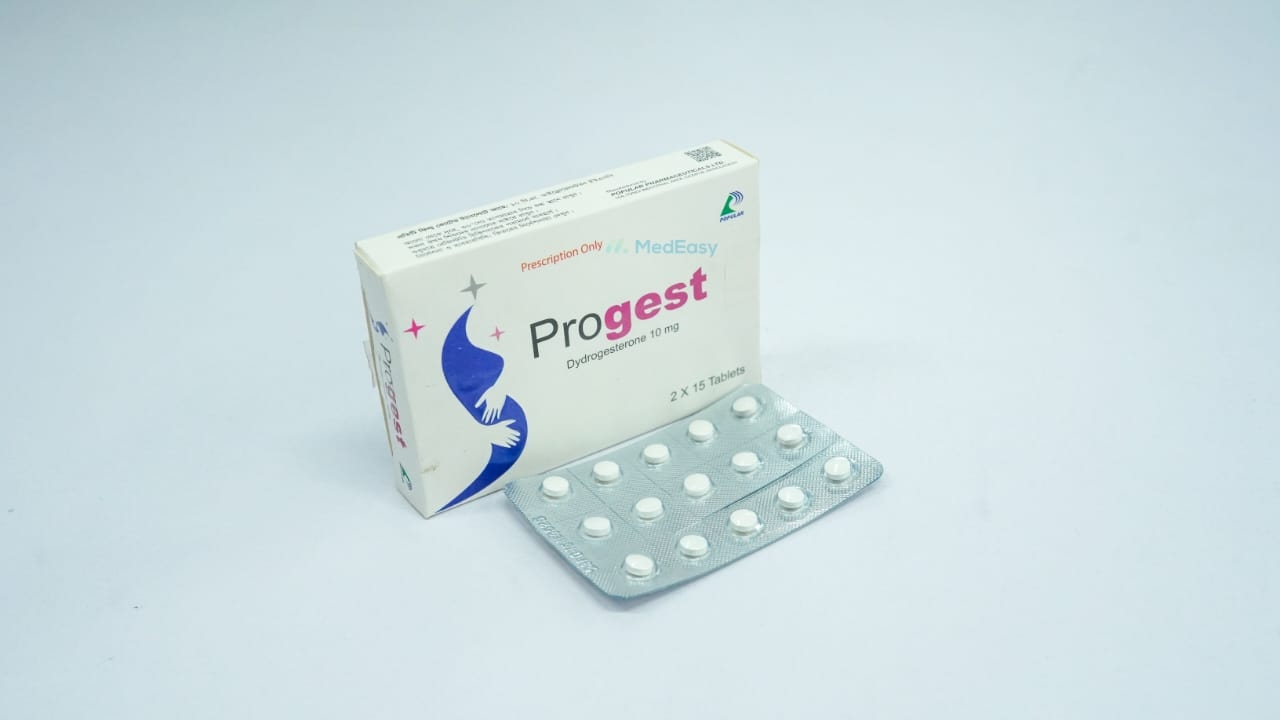
Progest10 mg
Popular Pharmaceuticals Ltd.
৳540.00
Add to cart
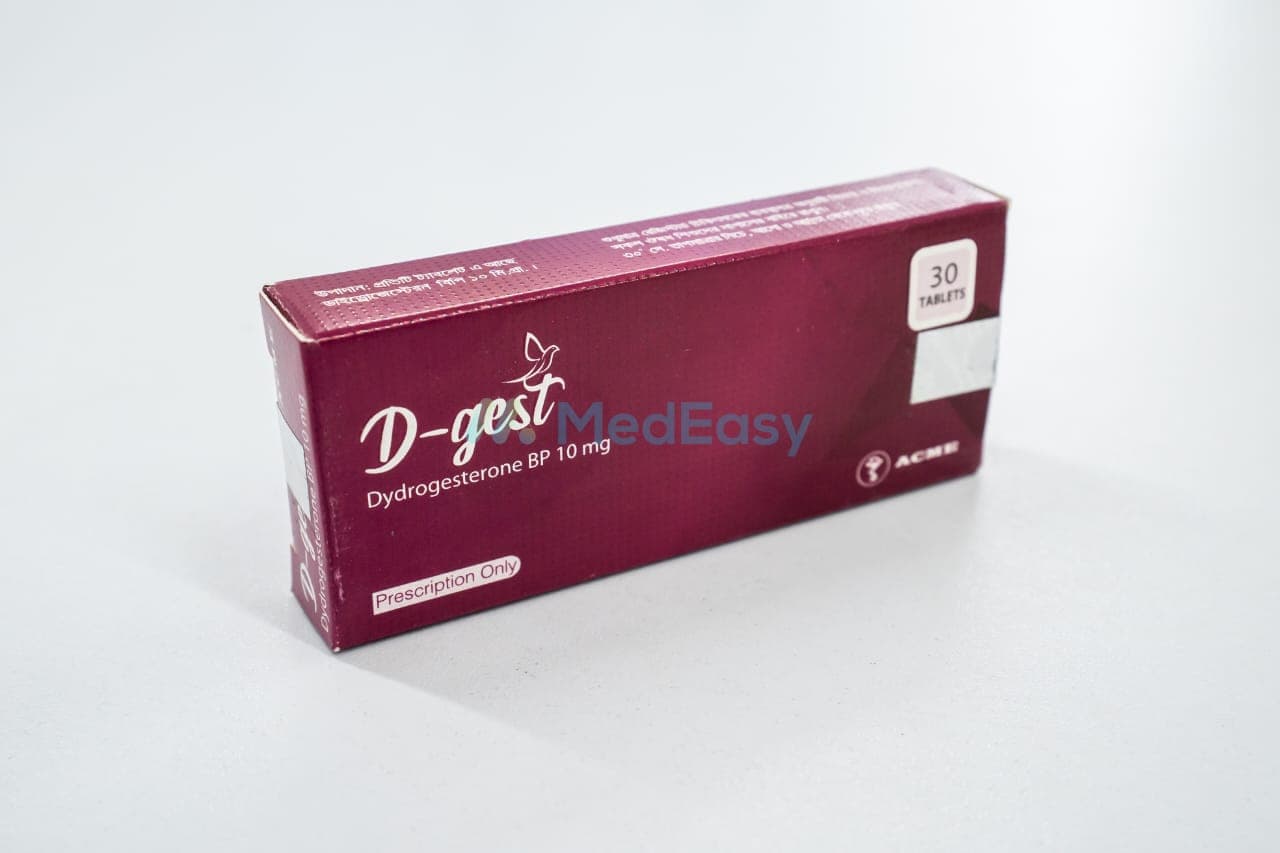
D-gest 10 mg Tablet is available on MedEasy for ৳362.70 per 10's Strip, with home delivery anywhere in Bangladesh. It is manufactured by ACME Laboratories Ltd. Its generic name is Dydrogesterone.

D-gest is a synthetic, orally active progestogen (a "retroprogesterone") used in a range of gynecological and obstetric conditions related to progesterone deficiency. Its indications can be grouped by strength of evidence and regulatory/guideline support as follows:
Note: D-gest is not approved by the US FDA and is not marketed in the United States; the uses above reflect labeling and guideline support in countries (including Bangladesh) where it is registered and prescribed. Any use should be individualized and supervised by a qualified physician.
Each film-coated tablet contains Dydrogesterone INN 10 mg as the active ingredient, along with pharmaceutically approved excipients. Dydrogesterone is also available in some markets as part of fixed-dose combination tablets with estradiol for hormone replacement therapy; such combination products carry separate composition and dosing information.
D-gest is a synthetic steroidal progestogen structurally very close to natural progesterone, differing by a reversal ("retro") of one ring configuration and an added double bond. This retro-configuration gives it high oral bioavailability and a progestogenic profile that closely mimics endogenous progesterone, while largely avoiding the estrogenic, androgenic, anabolic, corticoid and thermogenic (body-temperature-raising) effects seen with some other synthetic progestins.
D-gest is used clinically wherever a relative or absolute deficiency of natural progesterone contributes to a gynecological or early-pregnancy disorder, including threatened and recurrent miscarriage, dysfunctional uterine bleeding, secondary amenorrhea, endometriosis, premenstrual syndrome and as the progestogen component of hormone replacement therapy.
Progestogens — D-gest is classified as a retroprogesterone, a synthetic progestogen used in gynecology and obstetrics.
Dydrogesterone binds selectively and with high affinity to the progesterone receptor, producing a full progestational effect on estrogen-primed endometrium and myometrium, similar to endogenous progesterone. Unlike many synthetic progestins, it has little or no estrogenic, androgenic, anabolic, corticoid or thermogenic activity at recommended doses, and at these doses it does not consistently inhibit ovulation, which is why it can be used for luteal support without necessarily suppressing the woman's own cycle.
After oral administration, Dydrogesterone is rapidly and almost completely absorbed, undergoes extensive first-pass hepatic metabolism to its main active metabolite (20α-dihydrodydrogesterone, DHD), and is eliminated mainly via the kidneys with a plasma half-life of a few hours. Its high, predictable oral bioavailability is the main pharmacokinetic advantage over natural micronized progesterone.
The dose and duration of D-gest depend on the indication being treated and must be individualized by the prescribing physician. Representative adult dosing regimens used in practice are summarized below; local product labeling should be followed.
| Indication | Typical adult dose | Duration |
|---|---|---|
| Threatened miscarriage | 40 mg as a single dose, then 10 mg every 8 hours until symptoms resolve | Continue for about one week after symptoms subside; may be extended under specialist supervision |
| Recurrent (habitual) miscarriage | 10 mg twice daily | From before or early in pregnancy, continued up to around the 20th week under specialist supervision |
| Dysfunctional uterine bleeding (acute control) | 10 mg twice daily | 5–7 days |
| Dysfunctional uterine bleeding (prevention of recurrence) | 10 mg twice daily, days 11–25 of the cycle | Several cycles, reassessed periodically |
| Secondary amenorrhea | 10 mg twice daily, days 11–25 of the cycle, usually with an estrogen given days 1–25 | Several cycles |
| Endometriosis | 10 mg twice daily, continuously or from day 5–25 of the cycle | As directed, often several months |
| Premenstrual syndrome / dysmenorrhea | 10 mg twice daily, days 11–25 (PMS) or days 5–25 (dysmenorrhea) of the cycle | Several cycles |
| Infertility due to luteal insufficiency | 10 mg once daily, days 14–25 of the cycle | At least 6 consecutive cycles; continued into early pregnancy if conception occurs |
| Hormone replacement therapy (progestogen component) | 10 mg once daily for the last 12–14 days of the estrogen cycle (sequential regimen), or continuously as directed for continuous-combined regimens | As long as HRT is clinically indicated |
Tablets are taken orally, usually with water, with or without food, at approximately the same time(s) each day. See Administration for practical instructions and Use in Special Populations for hepatic/renal considerations.
D-gest tablets are for oral use only. Swallow the tablet whole with a glass of water. It may be taken with or without food. For indications dosed twice daily, doses should be spaced approximately 12 hours apart (or every 8 hours for the acute threatened-miscarriage regimen) and taken at consistent times each day to maintain steady hormone levels.
If a dose is missed, it should be taken as soon as remembered unless it is almost time for the next dose, in which case the missed dose should be skipped — do not double the dose. Do not stop treatment abruptly, particularly during pregnancy-related use, without consulting the prescribing physician.
D-gest is metabolized in the liver, mainly via CYP3A4-mediated pathways, so drugs that induce or inhibit this enzyme can alter its blood levels and effect:
Patients should inform their physician of all prescription, over-the-counter and herbal products they are taking before starting D-gest.
Dydrogesterone is contraindicated in patients with:
These are true absolute contraindications; additional cautions relevant to specific situations (such as history of thromboembolic disease or hepatic impairment) are discussed under Precautions and Warnings.
D-gest is generally well tolerated. Reported adverse effects include:
Patients should report persistent or severe side effects, unexpected vaginal bleeding, or signs of an allergic reaction to their physician promptly.
Pregnancy: D-gest has a specific, labeled use during pregnancy — for threatened miscarriage and for prevention of recurrent miscarriage — and is used for these indications under direct medical supervision, with the physician judging that the expected benefit outweighs any potential risk. Outside of these specific obstetric indications, D-gest should be used in pregnancy only if clearly needed and only on a physician's advice.
Lactation: It is not established whether D-gest or its metabolites pass into breast milk in clinically significant amounts. As a precaution, use during breastfeeding should occur only if considered necessary by the treating physician, who will weigh the benefit to the mother against any potential effect on the breastfed infant.
Before starting D-gest, patients should be evaluated for conditions that warrant closer monitoring:
D-gest does not act as a contraceptive; women who wish to avoid pregnancy should use an additional, reliable method unless D-gest is specifically being used to support a desired pregnancy.
Reported experience with acute overdose of D-gest is limited, and it is generally considered to have a wide margin of safety. Symptoms that might be expected with significant overdose include nausea, vomiting, drowsiness, and irregular vaginal bleeding.
There is no specific antidote. If an overdose is suspected, seek immediate medical attention or contact a poison control center; treatment is supportive and symptomatic, guided by a physician. Do not attempt specific home treatment for an overdose.
Store at room temperature (below 30°C), protected from light and moisture. Keep out of reach of children.
Hepatic impairment: D-gest is extensively metabolized by the liver; it should be used with caution in patients with hepatic impairment, and is not recommended in patients with severe liver disease or a history of certain rare hereditary hepatic conditions affecting bilirubin excretion, unless specifically advised by a physician.
Renal impairment: No formal dose adjustment has been established; limited data exist, so use with caution and physician supervision in significant renal impairment.
Elderly: D-gest is not indicated for use in postmenopausal women except as the progestogen component of hormone replacement therapy alongside an estrogen; it has no role in elderly men.
Children: Not indicated for use in premenarchal children; safety and efficacy have not been established in this population (see also Pediatric Uses).
Duration of treatment with D-gest varies widely by indication: a single acute episode of dysfunctional uterine bleeding may be treated for as little as 5–7 days, cyclical gynecological indications (endometriosis, secondary amenorrhea, PMS, luteal-phase support) are typically continued for several menstrual cycles with periodic physician review, and pregnancy-related indications (threatened or recurrent miscarriage) may be continued for one week after symptoms resolve up to as long as the 20th week of pregnancy under specialist supervision. When used in hormone replacement therapy, treatment continues for as long as HRT remains clinically indicated. The physician will determine the appropriate duration and reassess periodically.
Sex hormones and modulators of the genital system > Progestogens > Retroprogesterone derivatives
Dydrogesterone acts as a selective agonist at the progesterone receptor, reproducing the secretory transformation and other physiological effects that natural progesterone exerts on estrogen-primed endometrium, without significant activity at estrogen, androgen, mineralocorticoid or glucocorticoid receptors. This selectivity allows it to provide progestogenic support (for example, protecting the endometrium during estrogen therapy, or supporting the luteal phase and early pregnancy) while minimizing the androgenic and metabolic side effects associated with some other synthetic progestins.
D-gest is not indicated for use in premenarchal children, and safety and efficacy in this population have not been established. It is used in adolescent and adult women of reproductive age for the approved gynecological and obstetric indications, with dosing as for adults once menstrual cycles are established; treatment in adolescents should be initiated and supervised by a specialist physician.
Q: What is D-gest 10 mg Tablet used for?
A: D-gest 10 mg Tablet is a synthetic progestogen used to treat conditions caused by a lack of natural progesterone, including threatened and recurrent miscarriage, dysfunctional uterine bleeding, secondary amenorrhea, endometriosis, premenstrual syndrome, infertility due to luteal insufficiency, and as the progestogen component of hormone replacement therapy. Your physician will select the indication and regimen that applies to you.
Q: Is it safe to take D-gest 10 mg Tablet during pregnancy?
A: D-gest 10 mg Tablet has a specific, established use in pregnancy for threatened and recurrent miscarriage, and is prescribed for these situations under direct medical supervision when the expected benefit outweighs potential risk. For any other reason, it should be used in pregnancy only if clearly necessary and only on your doctor's advice — never start or continue it in pregnancy without medical guidance.
Q: Can I take D-gest 10 mg Tablet while breastfeeding?
A: It is not fully established whether D-gest 10 mg Tablet passes into breast milk in significant amounts. As a precaution, it should be used during breastfeeding only if your physician considers it necessary, after weighing the benefit to you against any possible effect on your baby.
Q: What are the common side effects of D-gest 10 mg Tablet?
A: The most commonly reported side effects of D-gest 10 mg Tablet are breast tenderness, headache, nausea, breakthrough bleeding or spotting between periods, and mood changes. These are usually mild; contact your physician if they are severe, persistent, or accompanied by unexpected vaginal bleeding.
Q: Who should not take D-gest 10 mg Tablet?
A: D-gest 10 mg Tablet should not be used by anyone with a known hypersensitivity to it or its ingredients, anyone with a known or suspected progestogen-dependent cancer (such as certain breast cancers) when used for non-pregnancy indications, or anyone with undiagnosed vaginal bleeding that has not yet been evaluated by a doctor.
Q: What should I do if I miss a dose or take too much D-gest 10 mg Tablet?
A: If you miss a dose of D-gest 10 mg Tablet, take it as soon as you remember unless it is almost time for your next dose — in that case skip the missed dose and continue your normal schedule; do not double up. If you or someone else has taken too much D-gest 10 mg Tablet, seek immediate medical attention or contact a poison control center rather than trying to manage it at home.
Disclaimer
The information provided is accurate to the best of our knowledge, but it does not replace professional medical advice. We cannot guarantee its completeness or accuracy, and the absence of specific information about a drug should not be taken as an endorsement. We are not responsible for any consequences arising from this information, so please consult a healthcare professional for any concerns or questions.