
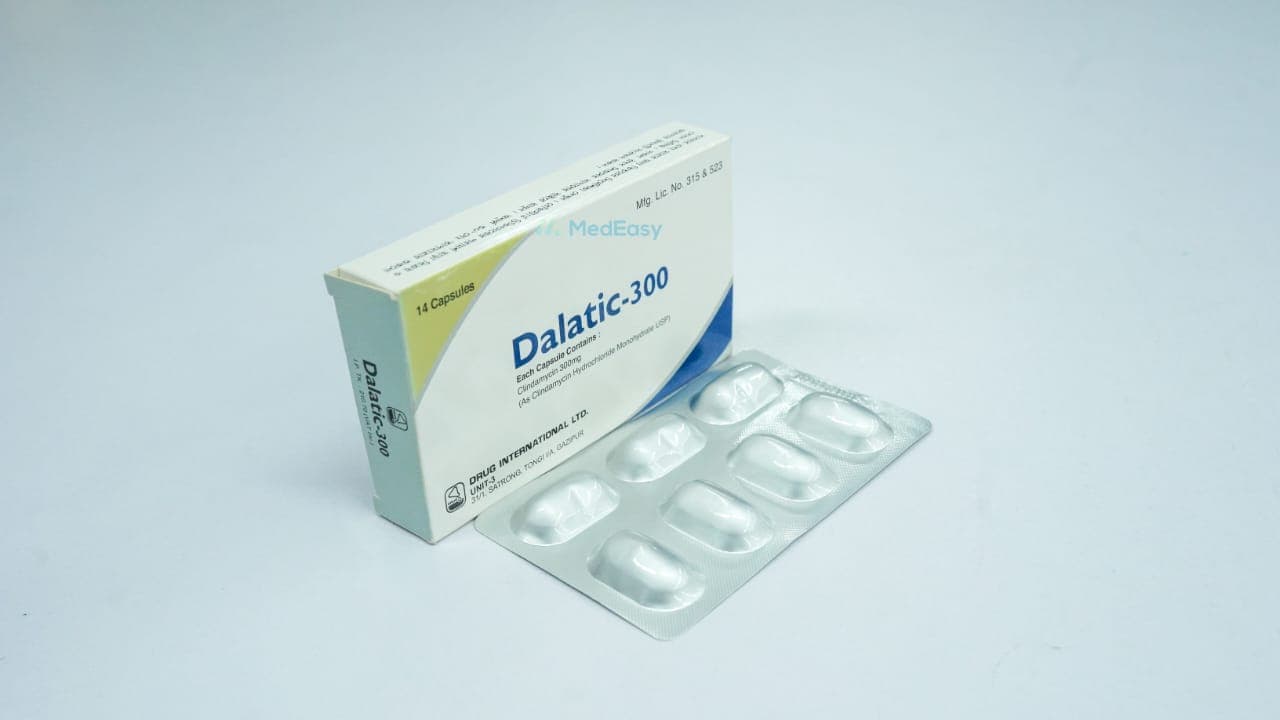

Medicine overview
Indications of Dalatic
Serious Anaerobic and Susceptible Gram-Positive Bacterial Infections
Dalatic is an established treatment, given orally or by injection, for serious infections caused by susceptible anaerobic bacteria and susceptible strains of streptococci, pneumococci, and staphylococci. Because of the risk of Clostridioides difficile-associated diarrhea (see Precautions and Warnings), Dalatic is generally reserved for patients who are allergic to penicillin, or for infections in which a penicillin is inappropriate or clinically inferior, including:
- Lower respiratory tract infections, including anaerobic lung abscess, aspiration pneumonia, and empyema
- Serious skin and soft-tissue infections, including some necrotizing soft-tissue infections (often as part of combination therapy)
- Septicemia caused by susceptible staphylococci, streptococci, and anaerobes
- Intra-abdominal infections, including peritonitis and intra-abdominal abscess caused by susceptible anaerobes (typically combined with an agent active against gram-negative aerobes)
- Female pelvic and genital tract infections, such as endometritis, pelvic cellulitis, and pelvic inflammatory disease caused by susceptible anaerobes (guideline-supported regimens typically combine Dalatic with another antibiotic, for example an aminoglycoside, to cover the full range of likely organisms)
Bone and Joint Infections
Dalatic is an established adjunct to surgical treatment for chronic bone and joint infections caused by susceptible staphylococci.
Malaria (Off-Label, Guideline-Supported Combination Use)
Dalatic is used off-label, always in combination with quinine, for the treatment of certain forms of malaria, including in pregnant women when other options are unsuitable; this is a guideline-recognized use but Dalatic is never used alone for malaria.
Toxoplasmosis and Pneumocystis Infections (Off-Label, Alternative Regimens)
Dalatic, generally combined with pyrimethamine, is used off-label as an alternative treatment for toxoplasmosis, including in patients who cannot tolerate sulfonamides. Dalatic combined with primaquine is also used off-label as an alternative regimen for Pneumocystis jirovecii pneumonia in patients unable to take first-line therapy.
Bacterial Vaginosis
Topical (vaginal) formulations of Dalatic are an established treatment for bacterial vaginosis.
Acne Vulgaris
Topical (skin) formulations of Dalatic are an established adjunctive treatment for moderate to severe acne vulgaris, generally used as part of a broader skin-care regimen rather than as monotherapy, and typically for a limited, periodically reassessed course.
Endocarditis Prophylaxis (Guideline-Supported Alternative)
Dalatic is a guideline-supported alternative for antibiotic prophylaxis against infective endocarditis in penicillin-allergic patients undergoing certain dental or invasive procedures, in patients at highest risk of adverse outcomes from endocarditis.
Important: Dalatic is not indicated for the treatment of meningitis, as it does not penetrate the cerebrospinal fluid in adequate concentrations.
Composition
Each capsule, tablet, oral solution, injection, or topical formulation contains Clindamycin USP in strengths and salt forms (such as hydrochloride, palmitate hydrochloride, or phosphate) that vary by product and dosage form, as determined by the manufacturer.
Description
Dalatic is a lincosamide-class antibiotic used to treat a range of serious infections caused by susceptible anaerobic bacteria and certain gram-positive organisms, and is also used topically for acne and bacterial vaginosis. Dalatic is available in oral (capsule, oral solution), injectable, and topical (gel, lotion, solution, foam, vaginal cream/suppository) formulations. Dalatic works by stopping susceptible bacteria from producing the proteins they need to grow and multiply. Dalatic carries a boxed warning for Clostridioides difficile-associated diarrhea, a risk that is more pronounced with Dalatic than with many other antibiotic classes, so Dalatic is generally reserved for infections where it is clearly needed and should always be taken exactly as prescribed by a qualified healthcare professional.
Therapeutic Class
Antibiotic (Lincosamide class)
Pharmacology
After oral administration, Clindamycin USP is well absorbed from the gastrointestinal tract, and absorption is not substantially affected by food. Clindamycin USP is widely distributed into most body tissues and fluids, including bone, but does not achieve therapeutic concentrations in the cerebrospinal fluid even with inflamed meninges, which is why Clindamycin USP is not used for meningitis. Clindamycin USP is highly protein-bound in plasma. Clindamycin USP is extensively metabolized in the liver, chiefly by the CYP3A4 and CYP3A5 enzymes, to active and inactive metabolites, and is eliminated mainly via bile and urine as metabolites, with only a small fraction excreted unchanged. The elimination half-life of Clindamycin USP is approximately 2 to 3 hours in adults with normal organ function, and is prolonged in patients with significant hepatic impairment.
Dosage & Administration of Dalatic
The dose, route, frequency, and duration of Dalatic vary considerably by indication, severity of infection, patient age and weight, and organ function, and must be determined by a qualified healthcare professional; a regimen used for one infection or dosage form is not necessarily appropriate for another. Take Dalatic exactly as prescribed by your physician; do not stop, extend, skip doses, or share Dalatic with others without medical advice, and complete the full prescribed course even if symptoms improve early.
Administration of Dalatic
- Swallow Dalatic capsules whole with a full glass of water, and remain upright (sitting or standing) for at least 10–15 minutes after taking Dalatic to reduce the risk of esophageal irritation.
- Dalatic oral solution should be measured with an accurate measuring device, not a household spoon.
- Injectable Dalatic is administered by a healthcare professional via intramuscular or slow intravenous infusion; rapid intravenous injection should be avoided.
- Topical Dalatic for acne should be applied to clean, dry skin as directed, avoiding contact with the eyes, mouth, and mucous membranes.
- Vaginal Dalatic should be inserted as directed, typically at bedtime, and use of Dalatic vaginal cream may weaken latex condoms and diaphragms during and for several days after treatment.
- Take Dalatic exactly as prescribed by your physician; do not stop, extend, skip doses, or share Dalatic with others without medical advice, and complete the full prescribed course even if symptoms improve early.
Interaction of Dalatic
- Neuromuscular blocking agents: Dalatic has intrinsic neuromuscular blocking properties and may enhance the action of other neuromuscular blocking agents used during anesthesia or surgery, increasing the risk of prolonged respiratory depression; anesthesia providers should be informed if a patient is taking Dalatic.
- Strong CYP3A4 inhibitors (e.g., certain azole antifungals, some HIV protease inhibitors): may increase plasma concentrations of Dalatic, potentially increasing the risk of side effects.
- Strong CYP3A4 inducers (e.g., rifampin): may reduce plasma concentrations of Dalatic, potentially reducing effectiveness.
- Erythromycin and other macrolide antibiotics: antagonism has been demonstrated in vitro between Dalatic and erythromycin due to competition for the same bacterial ribosomal binding site; concurrent use of Dalatic with erythromycin is generally avoided.
- Antiperistaltic/antidiarrheal agents (e.g., loperamide, diphenoxylate-atropine): should be avoided if diarrhea develops during treatment with Dalatic, as they can worsen Clostridioides difficile-associated diarrhea by prolonging retention of bacterial toxins in the colon; see Precautions and Warnings.
Contraindications
Clindamycin USP is contraindicated in patients with known hypersensitivity to Clindamycin USP (clindamycin) or to lincomycin.
Side Effects of Dalatic
Common Side Effects
- Diarrhea, nausea, vomiting, and abdominal pain or cramping
- Metallic taste (with intravenous administration)
- Skin rash
- Local irritation, dryness, redness, or peeling with topical use
- Local burning, itching, or irritation with vaginal use
- Pain, induration, or abscess formation at intramuscular injection sites; thrombophlebitis with intravenous use
Serious Side Effects (Seek Medical Attention)
- Severe, persistent, or bloody diarrhea, which may indicate Clostridioides difficile-associated diarrhea or pseudomembranous colitis — see Precautions and Warnings for details
- Signs of a severe allergic reaction, such as swelling of the face/throat, difficulty breathing, or widespread hives (possible anaphylaxis)
- Severe skin reactions such as blistering, peeling skin, or widespread rash (possible Stevens-Johnson syndrome or toxic epidermal necrolysis)
- Yellowing of the skin or eyes, dark urine, or unusual tiredness, which may indicate liver injury
- Signs of a blood disorder, such as unusual bruising, bleeding, sore throat, or fever (rare reports of agranulocytosis)
- Reduced kidney function or worsening kidney function markers
Pregnancy & Lactation
Pregnancy
Dalatic should be used during pregnancy only if clearly needed and if the potential benefit justifies the potential risk to the fetus. Available human data have not established a clear increased risk of major birth defects with systemic Dalatic, but data remain limited for some formulations and routes; a qualified healthcare professional should weigh the specific infection being treated against any theoretical risk before prescribing Dalatic in pregnancy.
Breastfeeding
Dalatic passes into human breast milk in small amounts. Because of the potential for effects on the infant's gastrointestinal flora (including diarrhea) and the theoretical possibility of sensitization, a decision to continue or discontinue breastfeeding during treatment with Dalatic should be made in consultation with a physician, weighing the importance of Dalatic to the mother against any risk to the infant; monitor breastfed infants for diarrhea, candidiasis (thrush/diaper rash), or blood in the stool.
Precautions & Warnings
- Boxed warning — Clostridioides difficile-associated diarrhea (CDAD): CDAD, including pseudomembranous colitis, has been reported with nearly all antibacterial agents, including Dalatic, and may range from mild diarrhea to life-threatening colitis; this risk is well-recognized as more pronounced with Dalatic than with many other antibiotic classes. Diarrhea can occur during treatment or even several weeks after Dalatic is stopped. Evaluate promptly if severe, persistent, or bloody diarrhea occurs. Avoid antiperistaltic/antidiarrheal agents if CDAD is suspected, as they can worsen the condition by prolonging toxin exposure in the colon.
- Take the full prescribed course: complete the entire course of Dalatic exactly as prescribed, even if symptoms improve early; do not stop, extend, skip doses, or share Dalatic with others without medical advice, as an antibiotic stewardship principle to reduce the risk of resistance and relapse.
- Hepatic impairment: Dalatic is extensively metabolized by the liver, and dose adjustment may be required in patients with significant hepatic impairment; periodic liver function monitoring is advised during prolonged therapy.
- Topical use — local skin effects: topical Dalatic for acne can cause local irritation, dryness, redness, or peeling of the skin. Because systemic absorption is much lower with topical use than with oral or injectable Dalatic, the risk of CDAD is correspondingly lower with topical use, though rare cases have been reported.
- Superinfection: prolonged systemic use of Dalatic may result in overgrowth of non-susceptible organisms, including fungi; monitor for new infections such as oral or vaginal candidiasis and report new symptoms to a healthcare professional.
- Severe hypersensitivity reactions: anaphylaxis and severe skin reactions have been reported; discontinue Dalatic immediately and seek urgent medical attention if signs of a severe allergic or skin reaction occur.
- Not for meningitis: Dalatic does not achieve adequate concentrations in cerebrospinal fluid and should not be used to treat meningitis.
Overdose Effects of Dalatic
There is limited clinical experience with acute overdose of Dalatic; reported effects would generally be expected to be an extension of known side effects, particularly gastrointestinal symptoms such as nausea, vomiting, and diarrhea. No specific antidote for Dalatic overdose is known, and Dalatic is not significantly removed by hemodialysis or peritoneal dialysis. If an overdose of Dalatic is suspected, seek immediate medical attention or contact a poison control center or emergency services; management is generally supportive and symptomatic, guided by a physician.
Storage Conditions
Store at room temperature (below 30°C), away from light and moisture. Refrigeration may be recommended for certain reconstituted oral solutions per the specific product label — follow the storage instructions on the product packaging. Keep out of reach of children.
Use In Special Populations
Children
Dalatic is used in pediatric patients for serious infections caused by susceptible organisms, with dosing based on body weight (see Dosage table); safety and efficacy of certain formulations and indications (for example, some topical products) have not been established in young children, and the product label for the specific formulation should be consulted.
Elderly
No routine dose adjustment of Dalatic is required for older adults on the basis of age alone, although antibiotic-associated colitis has been reported to occur more frequently and with greater severity in elderly patients; monitor closely for diarrhea.
Renal Impairment
Dosage adjustment of Dalatic is generally not necessary in renal impairment, as Dalatic is not significantly removed by hemodialysis or peritoneal dialysis.
Hepatic Impairment
Dalatic is extensively metabolized by the liver; the elimination half-life is prolonged in patients with significant hepatic impairment, and dose or interval adjustment along with periodic liver function monitoring may be needed. See Contraindications for the sole absolute contraindication.
Pregnant and Breastfeeding Women
See the Pregnancy and Lactation section above for detailed guidance on the use of Dalatic in this population.
Duration Of Treatment
The duration of treatment with Dalatic is set by the prescriber and depends on the indication, dosage form, and clinical response — for example, short courses of 3–7 days for vaginal bacterial vaginosis therapy, several days to weeks for serious systemic infections guided by clinical improvement, and periodically reassessed courses (often several weeks) for topical acne treatment. Patients should take Dalatic for exactly as long as prescribed and should not stop, extend, or repeat a course of Dalatic without medical advice.
Reconstitution
Certain oral solution formulations of Dalatic (granules for oral solution) require reconstitution with water by the pharmacist before dispensing, according to the specific product's package insert; once reconstituted, use within the period specified on the label and shake well before each use. Injectable Dalatic for intravenous infusion must be diluted in a compatible intravenous fluid per the product labeling before administration by a healthcare professional; concentrated Dalatic injection should not be given as a rapid IV bolus.
Drug Classes
Lincosamide antibiotic
Mode Of Action
Clindamycin USP is generally bacteriostatic, though it can be bactericidal against some organisms at higher concentrations. Clindamycin USP binds to the 50S ribosomal subunit of susceptible bacteria, inhibiting early chain elongation during protein synthesis by interfering with peptidyl transferase activity. This action is similar to that of macrolide antibiotics, which is why cross-resistance and antagonism can occur between Clindamycin USP and erythromycin. By blocking bacterial protein synthesis, Clindamycin USP halts bacterial growth and multiplication.
Pediatric Uses
Dalatic is used in pediatric patients for serious infections caused by susceptible anaerobic and gram-positive bacteria, with oral and injectable dosing calculated on a mg/kg/day basis divided into multiple daily doses (see the Dosage table). As with adults, Dalatic should be reserved for infections where it is clearly indicated, and the full prescribed course should always be completed. Safety and efficacy of specific topical or vaginal formulations of Dalatic have not been established in all pediatric age groups, and product labeling for the individual formulation should be consulted before use in children. Clostridioides difficile-associated diarrhea can occur in children treated with Dalatic, as in adults; caregivers should seek prompt medical evaluation for severe, persistent, or bloody diarrhea.
Frequently Asked Questions
Q: What is Dalatic 300 mg Capsule used for?
A: Dalatic 300 mg Capsule is a lincosamide antibiotic used to treat serious infections caused by susceptible anaerobic bacteria and certain gram-positive organisms, including certain respiratory tract, skin and soft-tissue, intra-abdominal, bone/joint, and female pelvic infections, usually in patients who cannot take penicillin or when penicillin is not appropriate. Topical forms of Dalatic 300 mg Capsule are also used for acne and bacterial vaginosis, and Dalatic 300 mg Capsule is used off-label in combination with other medicines for conditions such as malaria and toxoplasmosis. Dalatic 300 mg Capsule is not used for meningitis.
Q: What is the most important safety warning for Dalatic 300 mg Capsule?
A: Dalatic 300 mg Capsule carries a boxed warning for Clostridioides difficile-associated diarrhea (CDAD), which can range from mild diarrhea to life-threatening colitis and is more strongly associated with Dalatic 300 mg Capsule than with many other antibiotics. This can occur during treatment or even several weeks after stopping Dalatic 300 mg Capsule. Seek prompt medical attention for severe, persistent, or bloody diarrhea, and do not take antidiarrheal medicines without asking your doctor first, since they can make CDAD worse.
Q: How should I take Dalatic 300 mg Capsule?
A: Take Dalatic 300 mg Capsule exactly as prescribed by your physician, at the dose, frequency, and for the full duration directed — do not stop, extend, skip doses, or share Dalatic 300 mg Capsule with others without medical advice, even if you feel better before finishing the course. Oral capsules of Dalatic 300 mg Capsule should be swallowed with a full glass of water, and you should remain upright for a short time afterward. If you were prescribed a topical or vaginal form of Dalatic 300 mg Capsule, apply or insert it exactly as directed on the label.
Q: Is Dalatic 300 mg Capsule safe during pregnancy and breastfeeding?
A: Dalatic 300 mg Capsule should be used during pregnancy only if clearly needed, when the potential benefit justifies the potential risk to the fetus; discuss this with your doctor. Dalatic 300 mg Capsule passes into breast milk in small amounts, and a nursing infant should be monitored for diarrhea or thrush if the mother is taking Dalatic 300 mg Capsule; your doctor can help you weigh the benefits and risks of continuing to breastfeed.
Q: What are the common side effects of Dalatic 300 mg Capsule?
A: Common side effects of Dalatic 300 mg Capsule include diarrhea, nausea, vomiting, abdominal pain, and skin rash; a metallic taste can occur with the injectable form, and local irritation, dryness, or burning can occur with topical or vaginal use. Serious but less common effects include severe or bloody diarrhea (possible C. difficile-associated diarrhea), severe allergic reactions, severe skin reactions, and liver problems — seek medical attention promptly if these occur.
Q: Can Dalatic 300 mg Capsule be used to treat acne?
A: Yes. Topical formulations (gel, lotion, solution, or foam) of Dalatic 300 mg Capsule are an established adjunctive treatment for moderate to severe acne vulgaris, usually used as part of a broader skin-care regimen for a limited, periodically reassessed course rather than indefinitely. Local skin irritation, dryness, or peeling can occur, and systemic absorption — and therefore the risk of serious effects such as C. difficile-associated diarrhea — is much lower with topical Dalatic 300 mg Capsule than with oral or injectable Dalatic 300 mg Capsule.
Disclaimer
The information provided is accurate to the best of our knowledge, but it does not replace professional medical advice. We cannot guarantee its completeness or accuracy, and the absence of specific information about a drug should not be taken as an endorsement. We are not responsible for any consequences arising from this information, so please consult a healthcare professional for any concerns or questions.
