10% Off
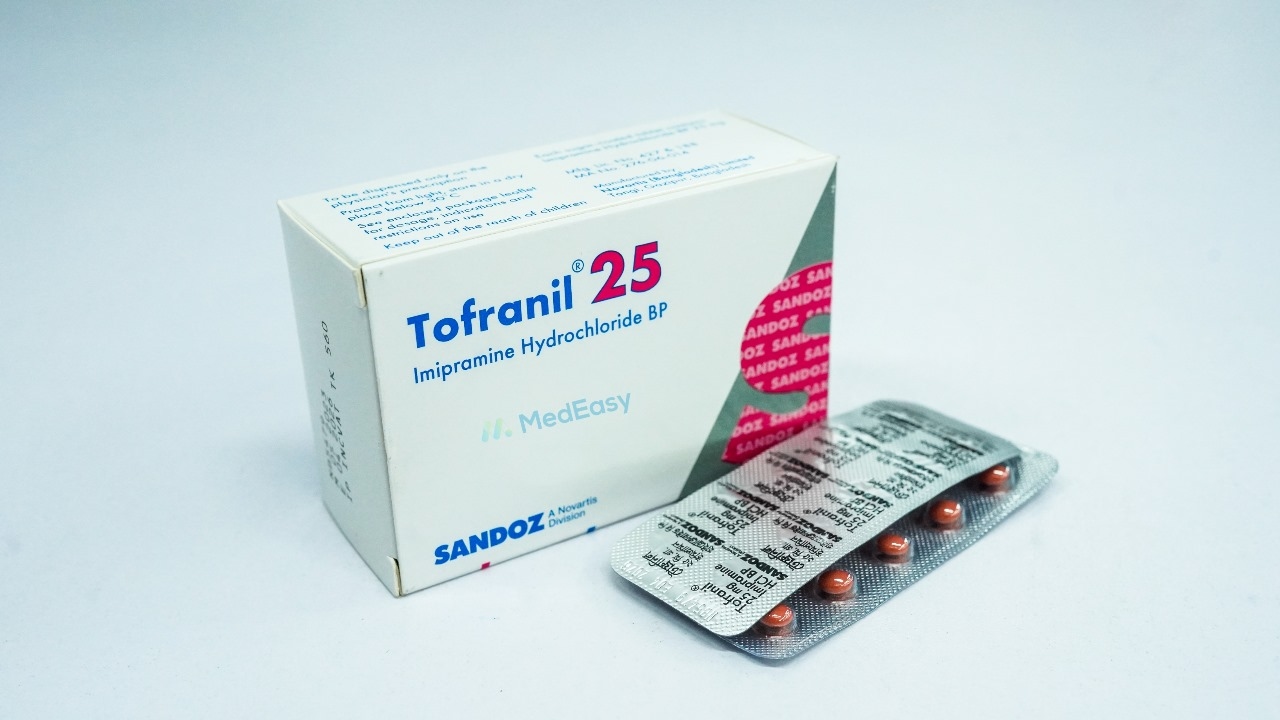
Tofranil25 mg
SANDOZ (A Novartis Division)
৳50.40
Add to cart
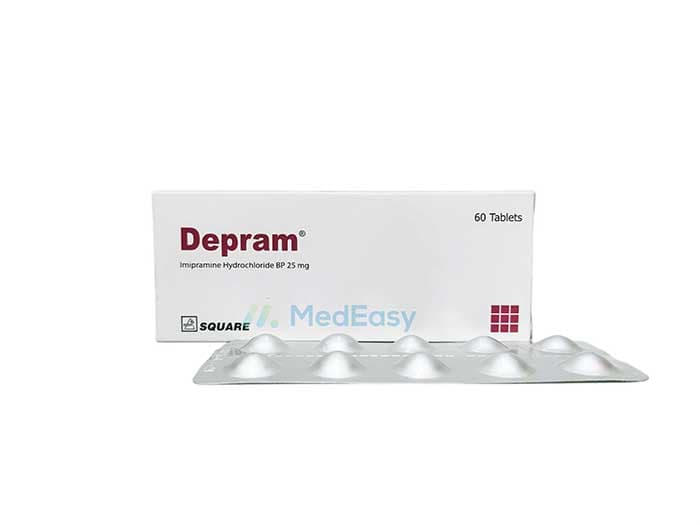
Depram 25 mg Tablet is available on MedEasy for ৳46.00 per 10's Strip, with home delivery anywhere in Bangladesh. It is manufactured by Square Pharmaceuticals PLC. Its generic name is Imipramine.

Depram is a tricyclic antidepressant (TCA) indicated for the following:
Depram and other antidepressants carry an FDA boxed warning for increased risk of suicidal thinking and behavior in children, adolescents, and young adults under 25 years of age, particularly during the early weeks of treatment or after dose changes. Close clinical monitoring is required.
Each tablet/capsule contains Imipramine (as hydrochloride or pamoate salt) as the active ingredient, along with pharmaceutically acceptable excipients such as binders, fillers, and coating agents.
Depram is a tricyclic antidepressant (TCA) first introduced in the late 1950s, one of the earliest agents in this class. It is available in immediate-release tablet form (hydrochloride salt) and, in some markets, as a sustained-release capsule (pamoate salt). Depram works primarily by inhibiting the reuptake of norepinephrine and serotonin in the central nervous system, thereby increasing their availability at nerve synapses and relieving depressive symptoms. It also has anticholinergic, antihistaminic, and alpha-adrenergic blocking properties, which account for many of its side effects.
Depram belongs to the tricyclic antidepressant (TCA) class of medications, specifically the dibenzazepine subgroup.
Imipramine is believed to act by inhibiting the neuronal reuptake of norepinephrine and serotonin at the presynaptic membrane, increasing their concentration in the synaptic cleft and enhancing neurotransmission. This mechanism is thought to underlie its antidepressant effect. Imipramine also exhibits significant anticholinergic (antimuscarinic), antihistaminic (H1), and alpha-1 adrenergic blocking activity, which contribute to its side-effect profile (dry mouth, sedation, orthostatic hypotension). The mechanism of benefit in nocturnal enuresis is not fully established but may involve anticholinergic bladder effects, altered sleep architecture, and mild antidiuretic activity. Imipramine is extensively metabolized in the liver via CYP2D6 and CYP1A2 to its active metabolite desipramine.
| Setting | Initial Dose | Usual/Maximum Dose |
|---|---|---|
| Outpatient | 75 mg/day in divided doses | Up to 150-200 mg/day; may be given as a single bedtime dose once stabilized |
| Hospitalized | 100-150 mg/day | May increase gradually up to 250-300 mg/day if response inadequate after 2 weeks |
Start at a lower dose of 25-50 mg/day; usual maximum around 100 mg/day, adjusted based on tolerability and response.
| Age | Typical Dose (at bedtime) |
|---|---|
| 6-11 years | 25 mg/day, may increase to 50 mg/day if needed after 1 week; not to exceed 2.5 mg/kg/day |
| 12 years and older | 25-75 mg/day at bedtime; not to exceed 2.5 mg/kg/day |
Treatment should be periodically reassessed; not intended as long-term therapy without re-evaluation. Depram should be tapered gradually rather than stopped abruptly to avoid discontinuation symptoms.
Use with caution and reduced dosing in patients with hepatic impairment, as Depram is extensively hepatically metabolized; specific validated dose adjustments are not well established, so close monitoring is advised.
Depram is taken orally, typically once daily at bedtime for maintenance therapy or in divided doses when starting treatment, with or without food. Tablets/capsules should be swallowed whole and not crushed or chewed unless specifically directed. Do not stop taking Depram suddenly; dose should be tapered gradually under physician supervision.
Depram has several clinically significant drug interactions:
Imipramine is contraindicated in the following situations:
Common side effects of Depram include:
Less common but serious effects include cardiac conduction abnormalities and arrhythmias, seizures, urinary retention, and increased risk of suicidal thinking/behavior in younger patients (see Precautions and Warnings). If severe or persistent side effects occur while taking Depram, contact a physician promptly.
Depram does not have a well-established formal safety profile in pregnancy. Clinical reports of congenital malformations have been associated with use, though a causal relationship has not been definitively established. Depram should be used during pregnancy only if the potential benefit justifies the potential risk to the fetus; a physician should be consulted before use. Neonates exposed to Depram late in the third trimester have developed withdrawal-like symptoms. Depram is excreted in breast milk, and nursing mothers are generally advised not to take it unless a physician determines the benefit outweighs the risk to the infant; alternative feeding or medication should be discussed with a healthcare provider.
Depram requires caution in the following situations:
Overdose with Depram is particularly dangerous and can be life-threatening, primarily due to cardiotoxicity. Symptoms may include cardiac arrhythmias, severe hypotension, seizures, and CNS depression progressing to coma. Other signs include tachycardia, widened QRS complex, and respiratory depression. If overdose of Depram is suspected, seek emergency medical attention or contact a poison control center immediately — do not wait for symptoms to appear. Children may be especially sensitive to acute overdose. Management requires hospital-based cardiac monitoring and supportive care; this should only be carried out by medical professionals.
Store at room temperature (below 30°C), away from light and moisture. Keep out of reach of children.
Depram should be used at lower starting doses in elderly patients due to increased sensitivity to anticholinergic and cardiac side effects and higher fall risk.
Use with caution; Depram is primarily hepatically metabolized, but accumulation of metabolites may occur with significant renal impairment. Monitor closely.
Depram is extensively metabolized by the liver; use with caution and reduced doses in patients with hepatic impairment.
Use of Depram for nocturnal enuresis is limited to children 6 years and older after organic causes are excluded; not recommended in children under 6. Safety and efficacy for depression in children under 6 have not been established.
For depression, Depram is typically continued for at least several months after symptom improvement to prevent relapse, with periodic reassessment by a physician. For nocturnal enuresis, Depram is intended for short-term adjunct use with periodic reassessment (e.g., every few months) to determine continued need; it is not intended for indefinite use in children.
Tricyclic antidepressant (TCA), dibenzazepine derivative.
Imipramine inhibits presynaptic reuptake of norepinephrine and serotonin, increasing their synaptic concentration and enhancing neurotransmission, which is believed to underlie its antidepressant effect. It also blocks muscarinic, histaminic (H1), and alpha-1 adrenergic receptors, contributing to its side effect profile.
Depram is approved for use in children 6 years of age and older as an adjunct in the treatment of nocturnal enuresis, only after organic causes have been ruled out, and only as a short-term measure with periodic reassessment. Safety and efficacy of Depram for depression in pediatric patients have not been established, and its use for depression in this age group is not recommended. All pediatric patients on Depram require close monitoring for suicidal thinking and behavior, per the boxed warning.
Q: What is Depram 25 mg Tablet used for?
A: Depram 25 mg Tablet is primarily used to treat depression in adults and, at lower doses, as a short-term adjunct treatment for nocturnal enuresis (bedwetting) in children aged 6 and older after other causes have been ruled out.
Q: Is there a risk of suicidal thoughts with Depram 25 mg Tablet?
A: Yes. Depram 25 mg Tablet carries a boxed warning for increased risk of suicidal thinking and behavior in children, adolescents, and young adults under 25, particularly during early treatment or after dose changes. Close monitoring by a caregiver or physician is essential.
Q: Can Depram 25 mg Tablet be taken with other antidepressants like MAOIs?
A: No. Depram 25 mg Tablet must not be taken with, or within 14 days of stopping, a monoamine oxidase inhibitor (MAOI), as this combination can cause a life-threatening serotonin syndrome.
Q: Is Depram 25 mg Tablet safe during pregnancy?
A: Depram 25 mg Tablet does not have a well-established safety profile in pregnancy; some reports of congenital malformations exist, though causality is unconfirmed. It should be used in pregnancy only if the benefit clearly outweighs potential risk to the fetus, and only under medical supervision.
Q: What should I do if I miss a dose or suspect an overdose of Depram 25 mg Tablet?
A: If a dose of Depram 25 mg Tablet is missed, take it as soon as remembered unless it is close to the next dose; do not double up. If overdose is suspected, this is a medical emergency due to serious cardiac and neurological risks — seek immediate emergency medical attention or contact poison control right away.
Q: Can children take Depram 25 mg Tablet long-term for bedwetting?
A: Depram 25 mg Tablet for nocturnal enuresis is intended only as a short-term adjunct measure, with periodic reassessment by a physician; it is not meant for indefinite long-term use in children.
Disclaimer
The information provided is accurate to the best of our knowledge, but it does not replace professional medical advice. We cannot guarantee its completeness or accuracy, and the absence of specific information about a drug should not be taken as an endorsement. We are not responsible for any consequences arising from this information, so please consult a healthcare professional for any concerns or questions.