
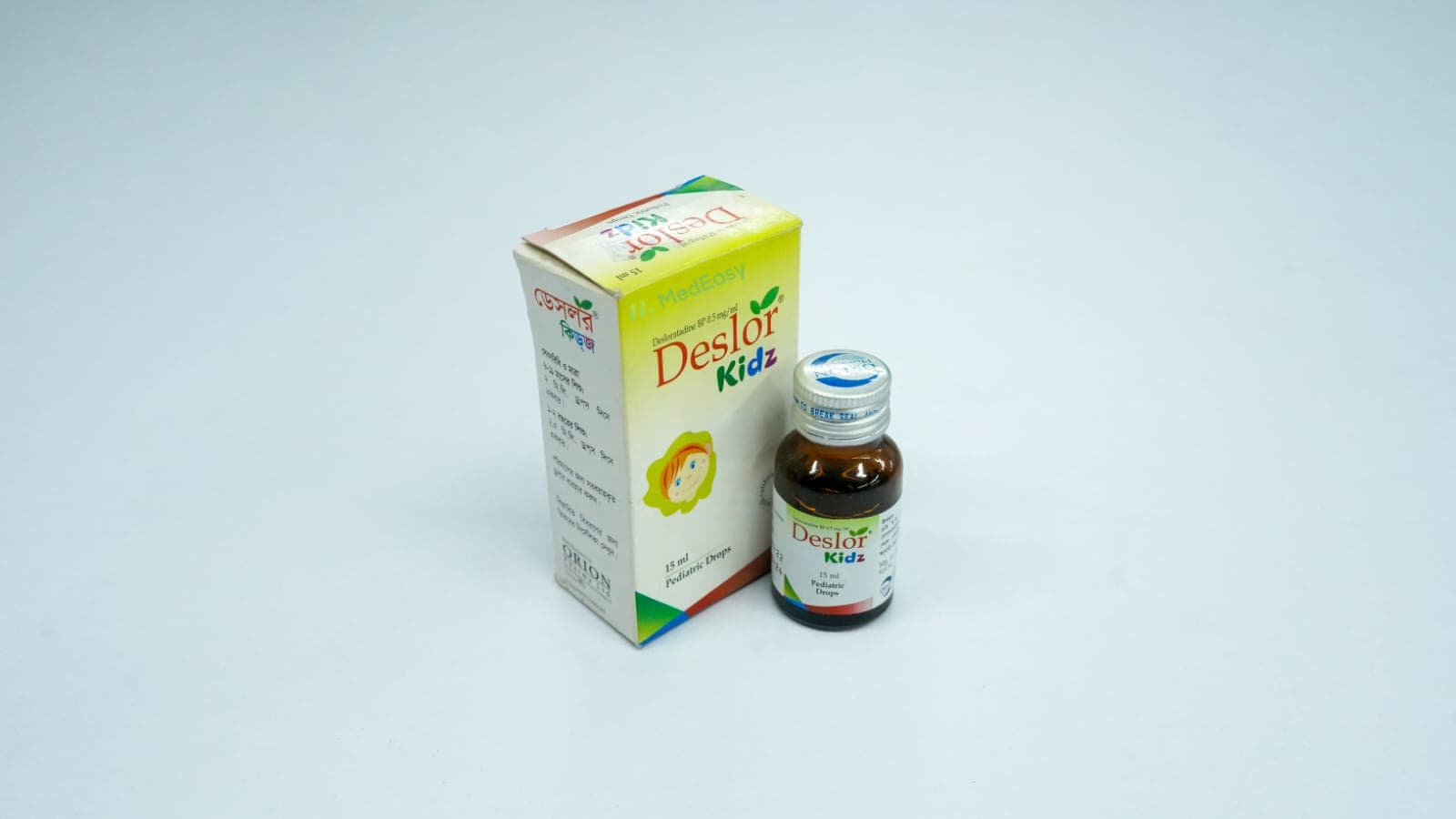

Medicine overview
Indications of Deslor Kids 15 ml
Deslor Kids 15 ml is a non-sedating antihistamine prescribed for the relief of symptoms associated with allergic conditions. It is indicated for the treatment of:
- Seasonal and perennial allergic rhinitis — providing relief from sneezing, runny nose (nasal discharge), nasal itching, congestion or stuffiness, and postnasal drip.
- Allergy-related ocular symptoms — including itchy, watery (tearing) and red eyes.
- Upper respiratory allergic symptoms — such as itching of the palate and allergy-associated coughing.
- Chronic idiopathic urticaria (chronic hives) — reducing the intensity of itching (pruritus) as well as the size and number of hives (wheals).
By blocking histamine activity, Deslor Kids 15 ml helps control both nasal and non-nasal symptoms of allergy, improving daily comfort and quality of life for patients with seasonal, year-round, or chronic allergic disorders.
Theropeutic Class
Non-sedating antihistamines
Pharmacology
Deslor Kids 15 ml is the major active metabolite of Loratadine. It is a long-acting, non-sedating tricyclic antihistamine that acts as a selective, peripheral histamine H1-receptor antagonist. By competitively binding to peripheral H1-receptors, Deslor Kids 15 ml prevents histamine—one of the key mediators released during an allergic reaction—from triggering the cascade of allergy symptoms such as itching, sneezing, nasal discharge and hives.
In addition to blocking H1-receptors, Deslor Kids 15 ml demonstrates anti-allergic and anti-inflammatory properties, including the inhibition of histamine release from human mast cells. Because it does not readily cross the blood-brain barrier at recommended doses, it produces minimal sedation compared with older, first-generation antihistamines.
Following oral administration, Deslor Kids 15 ml is well absorbed, with plasma concentrations becoming detectable within about 30 minutes. Its long duration of action allows for convenient once-daily dosing, providing 24-hour symptom control. The drug is extensively metabolised in the liver to 3-hydroxyDeslor Kids 15 ml, an active metabolite, and is eliminated via both urine and faeces.
Dosage & Administration of Deslor Kids 15 ml
Deslor Kids 15 ml is taken orally, once daily, with or without food. The appropriate dosage form and dose depend on the patient's age.
The recommended dosing schedule is outlined below:
The medicine may be taken at any time of day, independent of meals. Do not exceed the recommended dose, as higher doses do not increase effectiveness and may raise the risk of side effects. Dosage should always be adjusted according to a registered physician's advice, particularly in patients with hepatic or renal impairment.
Interaction of Deslor Kids 15 ml
No clinically relevant drug interactions have been reported.
No clinically relevant drug interactions have been reported with Deslor Kids 15 ml in clinical studies. When co-administered with erythromycin, ketoconazole or azithromycin, no clinically significant changes in the plasma concentration or safety profile of Deslor Kids 15 ml were observed.
Deslor Kids 15 ml does not appear to potentiate the sedative effect of alcohol at recommended doses. Nevertheless, to ensure safe use, patients should always inform their doctor or pharmacist of all prescription medicines, over-the-counter products, herbal preparations and supplements they are taking before starting Deslor Kids 15 ml.
Contraindications
Deslor Kids 15 ml is contraindicated in patients with known hypersensitivity or allergy to Deslor Kids 15 ml, to Loratadine, or to any of the excipients contained in the formulation. It should not be used by anyone who has previously experienced an allergic reaction to this medication or its components.
Side Effects of Deslor Kids 15 ml
Deslor Kids 15 ml is generally well tolerated. Most side effects are mild and less common, and may include:
- Headache
- Nausea
- Fatigue or tiredness
- Dizziness
- Pharyngitis (sore throat)
- Dyspepsia (indigestion)
- Myalgia (muscle pain)
- Dry mouth
Rarely, hypersensitivity reactions such as rash, itching, hives, swelling and, very rarely, anaphylaxis have been reported. Patients who experience severe allergic reactions, palpitations, or any unusual or persistent symptoms should discontinue the medicine and seek medical attention promptly.
Pregnancy & Lactation
Pregnancy (Category C): The safety of Deslor Kids 15 ml during pregnancy has not been firmly established. It should not be used during pregnancy unless clearly necessary and only when the potential benefit to the mother outweighs any possible risk to the foetus, as judged by a physician.
Lactation: Deslor Kids 15 ml passes into breast milk. A decision should therefore be made—together with the treating doctor—whether to discontinue breastfeeding or to discontinue the medication, taking into account the importance of the drug to the mother. Nursing mothers should use Deslor Kids 15 ml only under medical supervision.
Precautions & Warnings
Deslor Kids 15 ml should be used with caution in the following situations:
- Hepatic or renal impairment: In adult patients with liver or kidney impairment, a reduced starting dose of one 5 mg tablet every other day is recommended, based on pharmacokinetic data.
- History of seizures: Caution is advised in patients with a personal or family history of seizures (convulsions).
Patients should take the medicine strictly as directed and should not exceed the recommended dose. If symptoms persist or worsen despite treatment, a physician should be consulted for further evaluation.
Overdose Effects of Deslor Kids 15 ml
No clinically relevant adverse effects have been reported following overdose with Deslor Kids 15 ml at doses within the studied range. In the event of a suspected overdose, standard supportive and symptomatic measures should be instituted and continued as required. Patients or caregivers should contact a physician or the nearest emergency department if a significant overdose is suspected.
Storage Conditions
Store in a cool, dry place, protected from light. Keep the temperature below 30°C. Do not freeze. Keep the medicine in its original packaging and out of the reach and sight of children. Do not use after the expiry date printed on the package.
Use In Special Populations
Deslor Kids 15 ml, in appropriate age-specific dosage forms and doses, is recommended for use in children and adolescents. Pediatric drops and syrup formulations allow accurate dosing for infants and young children, while tablets are intended for children 12 years of age and older and for adults.
In elderly patients and in those with hepatic or renal impairment, dosage adjustment may be required and treatment should be individualised under medical supervision.
Drug Classes
Non-sedating antihistamines
Mode Of Action
Deslor Kids 15 ml, the major active metabolite of Loratadine, is a non-sedating; long acting tricyclic histamine antagonist with selective H1-receptor histamine antagonist activity. Deslor Kids 15 ml also inhibits histamine release from human mast cell.
Pregnancy
Pregnancy Category C. The safe use of Deslor Kids 15 ml during pregnancy has not been established. Therefore, Deslor Kids 15 ml is not to be used during pregnancy unless clearly indicated. Deslor Kids 15 ml passes into breast milk, therefore a decision should be made whether to discontinue nursing or to discontinue Deslor Kids 15 ml taking into account the importance of the drug to the mother.
Pediatric Uses
Recommended in the use in children & adolescents.
Frequently Asked Questions
What is Deslor Kids 15 ml used for?
Deslor Kids 15 ml is a non-sedating antihistamine prescribed for the relief of symptoms associated with allergic conditions. It is indicated for the treatment of: Seasonal and perennial allergic rhinitis — providing relief from sneezing, runny nose (nasal discharge), nasal itching, congestion or stuffiness, and postnasal drip. Allergy-related ocular symptoms — including itchy, watery (tearing) and…
What is the dosage of Deslor Kids 15 ml?
Deslor Kids 15 ml is taken orally, once daily, with or without food. The appropriate dosage form and dose depend on the patient's age. The recommended dosing schedule is outlined below: Dosage Form Age Group Recommended Dose Pediatric Drops Children 6–11 months 2 ml once daily Pediatric Drops Children 1–2 years 2.5 ml once daily Syrup Children 6–11 months 2 ml once daily Syrup Children 1–5 years 2…
What are the side effects of Deslor Kids 15 ml?
Deslor Kids 15 ml is generally well tolerated. Most side effects are mild and less common, and may include: Headache Nausea Fatigue or tiredness Dizziness Pharyngitis (sore throat) Dyspepsia (indigestion) Myalgia (muscle pain) Dry mouth Rarely, hypersensitivity reactions such as rash, itching, hives, swelling and, very rarely, anaphylaxis have been reported. Patients who experience severe allergic…
Who should not take Deslor Kids 15 ml?
Deslor Kids 15 ml is contraindicated in patients with known hypersensitivity or allergy to Deslor Kids 15 ml, to Loratadine, or to any of the excipients contained in the formulation. It should not be used by anyone who has previously experienced an allergic reaction to this medication or its components.
What precautions should be taken with Deslor Kids 15 ml?
Deslor Kids 15 ml should be used with caution in the following situations: Hepatic or renal impairment: In adult patients with liver or kidney impairment, a reduced starting dose of one 5 mg tablet every other day is recommended, based on pharmacokinetic data. History of seizures: Caution is advised in patients with a personal or family history of seizures (convulsions). Patients should take the m…
Is Deslor Kids 15 ml safe during pregnancy and breastfeeding?
Pregnancy (Category C): The safety of Deslor Kids 15 ml during pregnancy has not been firmly established. It should not be used during pregnancy unless clearly necessary and only when the potential benefit to the mother outweighs any possible risk to the foetus, as judged by a physician. Lactation: Deslor Kids 15 ml passes into breast milk. A decision should therefore be made—together with the tre…
The information provided is accurate to our best practices, but it does not replace professional medical advice. We cannot guarantee its completeness or accuracy. The absence of specific information about a drug should not be seen as an endorsement. We are not responsible for any consequences resulting from this information, so consult a healthcare professional for any concerns or questions.
