10% Off
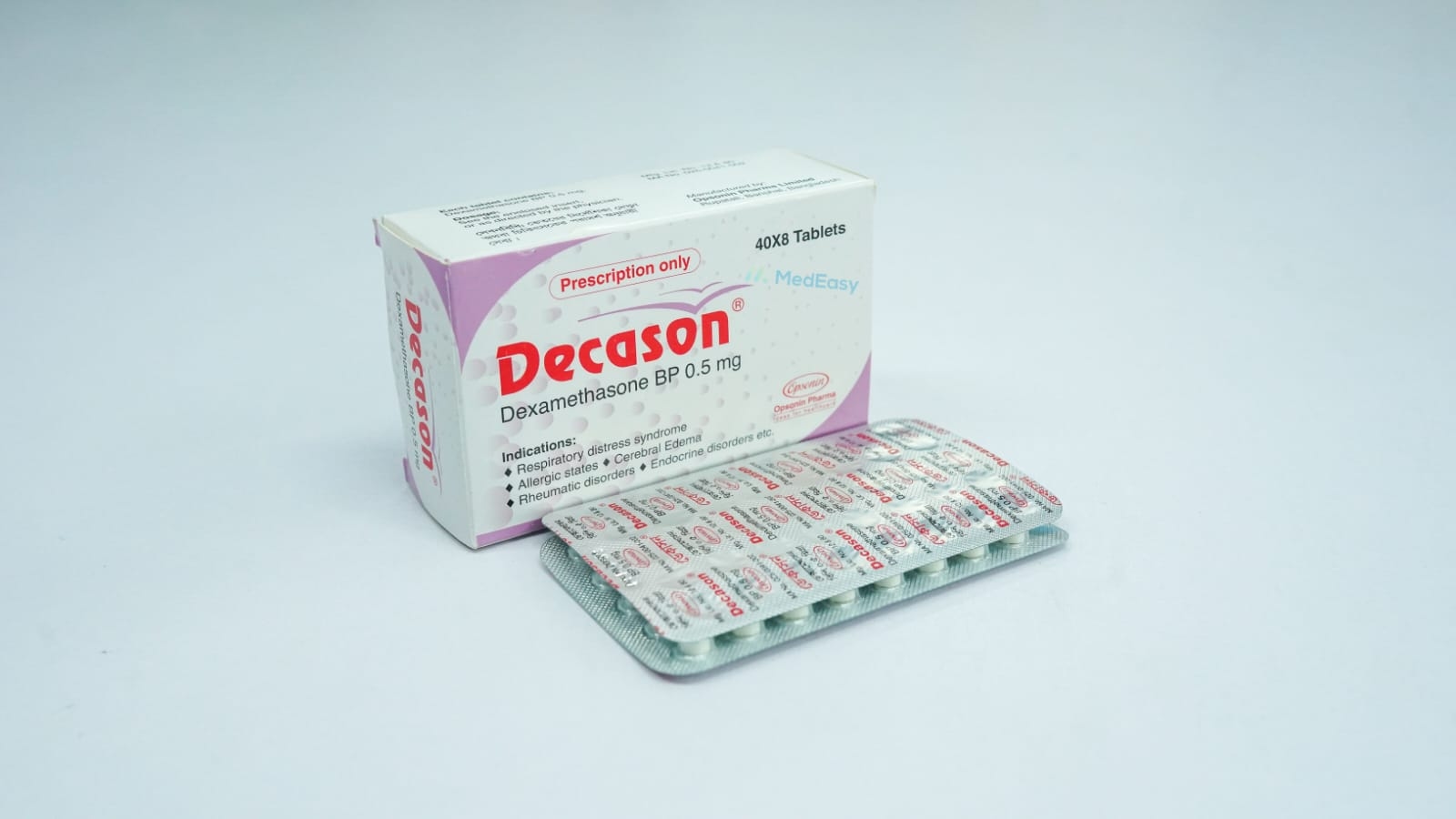
Decason0.5 mg
Opsonin Pharma Ltd.
৳0.91
Add to cart


Dexcor is a water-soluble corticosteroid (glucocorticoid) injection used, per physician direction, for a wide range of conditions. Indications are classified below by strength of evidence.
Dexcor is not effective against systemic fungal infections and is not an antibiotic.
Each mL of Dexamethasone Sodium Phosphate injection typically contains dexamethasone sodium phosphate equivalent to a stated amount of dexamethasone phosphate (commonly available as 4 mg/mL, 5 mg/mL, or 8 mg/mL strengths, depending on manufacturer), along with preservatives (e.g., sodium sulfite/sodium bisulfite as antioxidant, and a suitable preservative for multi-dose vials) and water for injection, with pH adjusted using sodium hydroxide or hydrochloric acid as needed.
Dexcor is the water-soluble ester salt form of dexamethasone, a potent, long-acting synthetic glucocorticoid (adrenocortical steroid) with minimal mineralocorticoid activity. Its water solubility allows formulation as a clear, sterile solution suitable for intravenous (IV), intramuscular (IM), intra-articular, intralesional, and soft-tissue injection.
Dexcor exerts broad anti-inflammatory and immunosuppressive effects and is used across endocrine, rheumatic, allergic, dermatologic, ophthalmic, gastrointestinal, respiratory, neurologic, and hematologic conditions, as well as for cerebral edema and as adjunctive antiemetic therapy in chemotherapy, always per physician direction.
Dexcor belongs to the corticosteroid (glucocorticoid) class of medicines — specifically, a synthetic long-acting glucocorticoid used for systemic and local anti-inflammatory/immunosuppressive therapy.
Dexamethasone Sodium Phosphate is hydrolyzed in vivo to release free dexamethasone, the active moiety. Dexamethasone binds to the intracellular glucocorticoid receptor; the activated receptor-steroid complex translocates to the nucleus and modulates gene transcription, upregulating anti-inflammatory proteins (e.g., lipocortin-1, which inhibits phospholipase A2) and downregulating pro-inflammatory mediators (cytokines, prostaglandins, leukotrienes).
This results in suppression of the migration of inflammatory cells, reduced capillary permeability, and inhibition of the inflammatory and immune response. Dexamethasone Sodium Phosphate has essentially no mineralocorticoid (sodium/water-retaining) activity at usual doses, distinguishing it from corticosteroids such as hydrocortisone. It has a long biological half-life (36-54 hours), allowing once-daily or intermittent dosing for sustained anti-inflammatory effect.
Dosage of Dexcor is individualized based on the condition being treated, its severity, and the patient's response, and should always be the lowest dose that achieves the desired clinical effect.
| Indication | Typical Adult Dosing |
|---|---|
| General anti-inflammatory/immunosuppressive therapy | 0.5-9 mg per day IV or IM, in divided doses, depending on the condition and severity |
| Cerebral edema | Initial 10 mg IV, then 4 mg IM every 6 hours until symptoms subside, followed by tapering over 5-7 days |
| Shock (adjunctive, unresponsive shock) | 1-6 mg/kg as a single IV dose, or up to 40 mg initially, may be repeated per physician judgment |
| Acute allergic disorders/status asthmaticus | 4-20 mg IV or IM, then tapered as symptoms improve, usually over 5-7 days |
| Antiemetic (chemotherapy adjunct) | 10-20 mg IV as a single dose before chemotherapy, per oncology protocol |
| Intra-articular/soft tissue (local) | Large joints: 2-4 mg; small joints: 0.8-1 mg; soft tissue: 2-6 mg, depending on site |
Approximately 0.02-0.3 mg/kg/day (or 0.6-9 mg/m2/day) IV or IM in divided doses, adjusted to the specific disease and response; lower end of the range preferred whenever possible given growth-suppression risk with prolonged use.
No formal fixed dose adjustment is well established, but Dexcor should be used cautiously and at the lowest effective dose in patients with hepatic impairment (reduced metabolism may prolong effect) and in those with significant renal impairment (fluid/electrolyte monitoring advised).
Administer by slow IV injection/infusion, IM injection, or by intra-articular, intralesional, or soft-tissue injection, using strict aseptic technique. Do not administer via the epidural route (associated with serious neurologic events). Prolonged courses should be tapered gradually rather than stopped abruptly (see Precautions and Warnings).
Dexcor may be given by slow intravenous injection or infusion, intramuscular injection, or by local (intra-articular, intralesional, or soft-tissue) injection, under aseptic conditions and physician supervision. It must not be given by the epidural route. Do not mix with other medications in the same syringe unless compatibility has been confirmed.
Dexcor has several well-documented, clinically significant drug interactions:
Dexamethasone Sodium Phosphate is contraindicated in:
Side effects of Dexcor are generally related to dose and duration of therapy. Short courses at low doses are usually well tolerated.
Patients should report unusual symptoms promptly; most systemic side effects are more likely with high doses or prolonged therapy rather than short courses.
Dexcor should be used during pregnancy only if the potential benefit justifies the potential risk to the fetus. Corticosteroids cross the placenta; animal studies have shown reproductive risk, and infants born to mothers who received substantial corticosteroid doses during pregnancy should be observed for signs of adrenal insufficiency. Dexcor should not be used for prolonged periods in pregnant patients without careful specialist assessment of risk versus benefit.
Corticosteroids are excreted in human milk in small amounts. Because of the potential for growth suppression and other effects on the nursing infant, a decision should be made whether to discontinue breastfeeding or discontinue Dexcor, taking into account the importance of the drug to the mother; women on high-dose or prolonged therapy are generally advised not to breastfeed without medical guidance.
In all cases, consult a physician before using Dexcor during pregnancy or while breastfeeding.
The following precautions apply to the use of Dexcor:
Acute overdosage with Dexcor is unlikely to cause life-threatening effects, but repeated or very high-dose overdosage can worsen known corticosteroid side effects such as marked fluid retention, hypertension, hyperglycemia, and psychiatric disturbances. There is no specific antidote.
In case of suspected overdose, seek immediate medical attention or contact a poison control center/emergency services. Treatment is supportive and symptomatic, based on the clinical condition of the patient; do not attempt unsupervised home treatment for a suspected overdose.
Store at room temperature (below 30°C), protected from light and freezing. Do not autoclave. Keep out of reach of children.
Elderly: Dexcor should be used with caution in elderly patients, who may be more susceptible to osteoporosis, hypertension, hypokalemia, diabetes, infection, and skin thinning; use the lowest effective dose for the shortest duration necessary.
Pediatric patients: Dexcor should be used cautiously in children, with close monitoring of growth and development during prolonged therapy; safety and efficacy for indications outside the studied age ranges and doses have not been established, and pediatric dosing should be individualized by weight/body surface area rather than adult fixed dosing.
Hepatic impairment: use with caution; impaired hepatic function may slow metabolism of Dexcor and prolong its effect.
Renal impairment: use with caution, with attention to fluid and electrolyte status, as Dexcor can promote sodium/fluid retention.
Diabetic patients: Dexcor can worsen glycemic control; blood glucose should be monitored and antidiabetic therapy adjusted as needed.
Duration of treatment with Dexcor depends on the condition being treated. Acute conditions (e.g., severe allergic reactions, acute exacerbations) are typically treated for a short course of a few days, while chronic inflammatory or autoimmune conditions may require longer courses under close physician supervision. Whenever therapy extends beyond a few weeks, the dose should be tapered gradually rather than stopped abruptly, to avoid adrenal insufficiency and rebound of the underlying disease. The treating physician determines the exact duration based on clinical response and risk of long-term corticosteroid side effects.
Corticosteroids (Glucocorticoids); Anti-inflammatory and immunosuppressive agents
Dexamethasone Sodium Phosphate is hydrolyzed to free dexamethasone, which binds cytoplasmic glucocorticoid receptors. The activated receptor complex enters the cell nucleus and regulates transcription of target genes, increasing synthesis of anti-inflammatory proteins and suppressing synthesis of pro-inflammatory cytokines, prostaglandins, and leukotrienes. This produces potent anti-inflammatory, immunosuppressive, and anti-allergic effects with minimal mineralocorticoid (sodium-retaining) activity compared with other corticosteroids.
Category C (FDA legacy pregnancy category)
Dexcor is used in pediatric patients for conditions such as severe allergic reactions, cerebral edema, certain rheumatic and hematologic disorders, and as directed by a pediatrician, generally dosed by body weight or body surface area (approximately 0.02-0.3 mg/kg/day in divided doses, individualized to the condition). Safety and efficacy for indications and doses outside established pediatric labeling have not been established. Prolonged use in children requires monitoring of growth, development, and adrenal function because of the risk of growth suppression with long-term corticosteroid therapy. Dexcor should be used in children only under close physician supervision, at the lowest effective dose for the shortest duration required.
Q: What is Dexcor 0.5 mg Tablet used for?
A: Dexcor 0.5 mg Tablet is a corticosteroid injection used to treat a wide range of inflammatory, allergic, and autoimmune conditions, including severe allergic reactions, asthma exacerbations, cerebral edema, certain rheumatic and skin disorders, some blood disorders, and as an adjunct in specific cancer treatments and chemotherapy-induced nausea, always as directed by a physician.
Q: Can Dexcor 0.5 mg Tablet be used for COVID-19?
A: In hospitalized patients with severe COVID-19 requiring supplemental oxygen or ventilatory support, dexamethasone-based therapy (including Dexcor 0.5 mg Tablet) is used based on treatment guidelines; this is a guideline-supported use rather than a routine indication, and it should only be used under physician supervision following current protocols.
Q: Is Dexcor 0.5 mg Tablet safe during pregnancy?
A: Dexcor 0.5 mg Tablet should be used during pregnancy only if the potential benefit clearly justifies the potential risk to the fetus, and only under a physician's guidance. It is not considered routinely safe for casual or prolonged use in pregnancy, and any use should be closely supervised by a specialist.
Q: Can I stop Dexcor 0.5 mg Tablet suddenly if I feel better?
A: No. If you have been receiving Dexcor 0.5 mg Tablet for more than a short period, it must not be stopped abruptly. Sudden discontinuation after prolonged use can cause adrenal insufficiency, a potentially serious condition. Your physician will taper the dose gradually.
Q: What are the common side effects of Dexcor 0.5 mg Tablet?
A: Common side effects of Dexcor 0.5 mg Tablet include increased appetite, fluid retention, mood changes, insomnia, elevated blood sugar, and, with longer use, increased risk of infection, osteoporosis, muscle weakness, and stomach ulcers (especially if combined with NSAIDs). Most short-course, low-dose use is well tolerated, but you should report any unusual symptoms to your physician.
Q: Who should not receive Dexcor 0.5 mg Tablet?
A: Dexcor 0.5 mg Tablet should not be given to anyone with a known hypersensitivity to dexamethasone or its components, anyone with an active systemic fungal infection, or anyone due to receive a live vaccine while on immunosuppressive doses of the drug. It should never be given by the epidural route.
Disclaimer
The information provided is accurate to the best of our knowledge, but it does not replace professional medical advice. We cannot guarantee its completeness or accuracy, and the absence of specific information about a drug should not be taken as an endorsement. We are not responsible for any consequences arising from this information, so please consult a healthcare professional for any concerns or questions.