10% Off
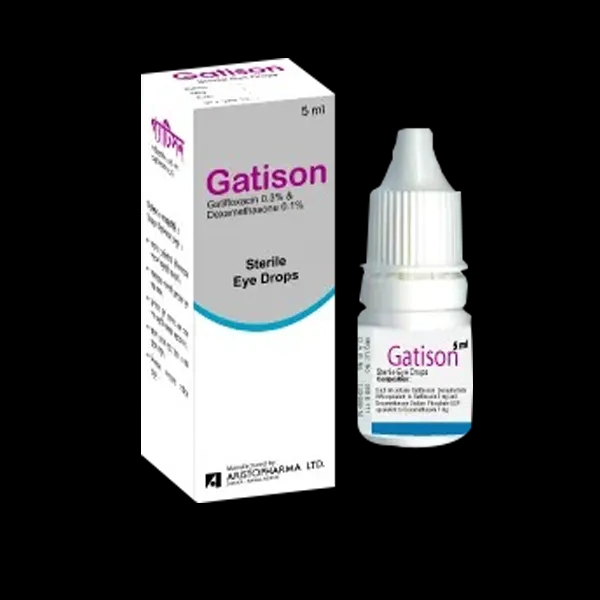
Gatison0.3%+0.1%
Aristopharma Ltd.
৳108.00
Add to cart

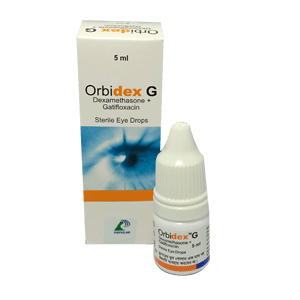
Dexon-G 0.3%+0.1% Ophthalmic Solution is available on MedEasy for ৳108.00 per 5 ml drop, with home delivery anywhere in Bangladesh. It is manufactured by Ibn-Sina Pharmaceuticals Ltd. Its generic name is Gatifloxacin + Dexamethasone.

Dexon-G is an ophthalmic (eye) combination of a fluoroquinolone antibiotic and a corticosteroid, indicated for the treatment of steroid-responsive ocular inflammatory conditions where a bacterial infection or risk of bacterial infection is present or suspected.
May be used as an adjunct alongside systemic therapy in more severe inflammatory or infective ocular conditions, at the treating ophthalmologist's discretion.
This combination is intended only for conditions in which both an antibiotic and a corticosteroid are appropriate together; it should not be used for purely inflammatory conditions without infection risk, or for infections without significant inflammation, where a single-agent product is preferred.
Each mL of ophthalmic solution typically contains Gatifloxacin 0.3% (as gatifloxacin sesquihydrate) and Dexamethasone 0.1% (as dexamethasone sodium phosphate or dexamethasone alcohol, depending on manufacturer formulation), along with ophthalmic-grade preservatives and buffering/tonicity agents.
Dexon-G is a fixed-dose ophthalmic combination product. Gatifloxacin is a fourth-generation fluoroquinolone antibiotic with broad-spectrum bactericidal activity against many Gram-positive and Gram-negative ocular pathogens. Dexamethasone is a potent synthetic corticosteroid that reduces inflammation, edema, and fibrin deposition in ocular tissue.
By combining an antibiotic with a corticosteroid, Dexon-G is formulated for situations where controlling ocular inflammation is needed while simultaneously covering for, or treating, a bacterial infection, reducing the risk of untreated inflammation worsening outcomes and the risk of steroid use unmasking or worsening an infection when used alone.
Dexon-G belongs to the therapeutic class of ophthalmic anti-infective and anti-inflammatory combinations, combining a fluoroquinolone antibacterial with a corticosteroid for topical ocular use.
Gatifloxacin + Dexamethasone combines two agents with complementary mechanisms:
Gatifloxacin is a fourth-generation fluoroquinolone that inhibits bacterial DNA gyrase (topoisomerase II) and topoisomerase IV, enzymes required for bacterial DNA replication, transcription, repair, and recombination. This dual-target activity gives it bactericidal action against a broad range of Gram-positive organisms (including Staphylococcus aureus, Staphylococcus epidermidis, Streptococcus pneumoniae) and Gram-negative organisms (including Haemophilus influenzae, Pseudomonas aeruginosa).
Dexamethasone suppresses the inflammatory response by inhibiting phospholipase A2, reducing release of arachidonic acid derivatives (prostaglandins and leukotrienes), decreasing capillary permeability, and suppressing migration of inflammatory cells, thereby reducing edema, redness, and fibrin/collagen deposition in ocular tissue.
Instill 1-2 drops of Dexon-G into the conjunctival sac of the affected eye(s) 3 to 4 times daily, or as directed by the ophthalmologist. In more severe infections, dosing may initially be more frequent, tapering as clinical improvement occurs.
Treatment duration should be individualized by the prescribing ophthalmologist based on clinical response, generally not exceeding 7-10 days without re-evaluation, since prolonged corticosteroid use increases the risk of intraocular pressure elevation and other steroid-related ocular complications.
Complete the full course of Dexon-G exactly as prescribed by your physician; do not stop, extend, skip doses, or share this medicine with others without medical advice, even if symptoms improve early, to reduce the risk of incomplete treatment of infection and antibiotic resistance.
For ophthalmic (topical eye) use only. Not for injection, oral ingestion, or use in the ear. See Dosage and Administration for step-by-step instillation technique.
Formal systemic drug-interaction studies with topical ophthalmic Dexon-G are limited, since systemic absorption from ocular administration is minimal. However, the following points are clinically relevant:
Gatifloxacin + Dexamethasone is contraindicated in:
These conditions are absolute contraindications because the corticosteroid component may mask, delay diagnosis of, or worsen these infections when the underlying pathogen is not adequately covered by the antibiotic component.
Pregnancy: There are no adequate and well-controlled studies of Dexon-G in pregnant women. Although systemic absorption from topical ocular use is minimal, this medicine should be used during pregnancy only if the potential benefit justifies the potential risk to the fetus. Consult a physician before use.
Lactation: It is not known whether topically applied gatifloxacin is excreted in human milk; systemically administered dexamethasone is excreted in breast milk. Caution should be exercised, and a physician should be consulted, when Dexon-G is considered for a nursing mother.
Prolonged use precautions: Extended use of Dexon-G (generally beyond 10 days) may result in elevated intraocular pressure/glaucoma with possible optic nerve damage, defects in visual acuity or visual field, posterior subcapsular cataract formation, and delayed wound healing. Intraocular pressure should be monitored periodically if treatment continues beyond 10 days.
Secondary infection risk: Corticosteroid use may suppress the host immune response and permit secondary ocular infection with bacteria, fungi, or viruses; prolonged use increases this risk. If signs of infection persist or worsen after appropriate use, discontinue and re-evaluate.
Herpetic disease: Use with caution in patients with a history of herpes simplex keratitis, as corticosteroids may prolong the course and exacerbate the severity of many viral eye infections.
Not for injection: This product is for topical ophthalmic use only and must not be injected into the eye or used systemically.
Contact lenses: Avoid wearing contact lenses during an active ocular infection.
Antibiotic stewardship: Take Dexon-G exactly as prescribed by your physician; do not stop, extend, skip doses, or share this medicine with others without medical advice, to reduce the risk of resistance development and incomplete treatment.
Topical ocular overdose of Dexon-G is unlikely to cause significant systemic toxicity, but excessive or prolonged use may increase the risk of local adverse effects such as elevated intraocular pressure. If accidental ingestion occurs or if excessive amounts are instilled and irritation, vision changes, or other concerning symptoms develop, seek immediate medical attention or contact a poison control center or emergency services rather than attempting home treatment. If the medicine is accidentally swallowed, flush the eye with water in case of accidental over-instillation and seek medical advice.
Store at room temperature (below 30°C), away from light and moisture. Keep the bottle tightly closed when not in use. Do not freeze. Keep out of reach of children. Discard any remaining solution after the manufacturer-specified period following first opening (commonly 4 weeks), even if the bottle is not empty.
Use only if the potential benefit justifies the potential risk to the fetus; consult a physician. See Pregnancy and Lactation.
Use with caution and physician consultation. See Pregnancy and Lactation.
Safety and efficacy of Dexon-G in pediatric patients below the age range established by the product labeling have not been definitively established; use only under close physician supervision when prescribed for a child, with attention to the same intraocular pressure and infection-risk precautions as in adults.
No overall differences in safety or effectiveness have been established between elderly and younger adult patients; standard adult dosing generally applies.
Because systemic absorption from topical ocular use is minimal, no dose adjustment is typically required for renal or hepatic impairment; however, caution and physician judgment are advised.
Duration should be individualized by the prescribing ophthalmologist based on the condition being treated and clinical response. Treatment generally should not extend beyond 7-10 days without re-evaluation of intraocular pressure and clinical response, given the risks of prolonged corticosteroid exposure. Complete the full prescribed course; do not stop early even if symptoms improve, and do not continue beyond the prescribed duration without medical advice.
Fluoroquinolone antibiotic (gatifloxacin) combined with a corticosteroid (dexamethasone); ophthalmic anti-infective/anti-inflammatory combination.
Gatifloxacin exerts bactericidal activity by inhibiting bacterial DNA gyrase and topoisomerase IV, blocking bacterial DNA replication and repair. Dexamethasone suppresses inflammation by inhibiting phospholipase A2 and the downstream inflammatory cascade (prostaglandins, leukotrienes), reducing capillary permeability, cellular infiltration, and fibrin deposition in ocular tissue. Together, Gatifloxacin + Dexamethasone treats bacterial infection while controlling the associated inflammatory response.
The safety and efficacy of Dexon-G have not been definitively established in young children/infants. When prescribed for a child by an ophthalmologist, use exactly as directed, with careful attention to correct instillation technique to limit systemic absorption, and monitor for the same precautions as in adults (intraocular pressure, secondary infection, delayed healing) if treatment is prolonged. Parents/caregivers should not use this medicine in children without a physician's specific direction.
Q: What is Dexon-G 0.3%+0.1% Ophthalmic Solution used for?
A: Dexon-G 0.3%+0.1% Ophthalmic Solution is an eye drop used to treat bacterial eye infections that are accompanied by significant inflammation, such as certain forms of conjunctivitis, blepharitis, keratitis, and post-operative inflammation, where both antibiotic and anti-inflammatory action are needed together.
Q: How should I use Dexon-G 0.3%+0.1% Ophthalmic Solution eye drops?
A: Typically, 1-2 drops are instilled into the affected eye 3-4 times daily, or as directed by your ophthalmologist. Wash your hands first, avoid touching the dropper tip to the eye, and complete the full prescribed course even if your symptoms improve early - do not stop, extend, skip doses, or share this medicine with others without medical advice.
Q: Can I use Dexon-G 0.3%+0.1% Ophthalmic Solution for a long time?
A: No, prolonged use (generally beyond 7-10 days) is not recommended without ophthalmologist supervision, because extended corticosteroid exposure can raise eye pressure (glaucoma risk), cause cataracts, delay wound healing, and permit secondary fungal or viral infections. Your doctor may need to check your eye pressure if longer treatment is required.
Q: Is Dexon-G 0.3%+0.1% Ophthalmic Solution safe during pregnancy or breastfeeding?
A: There is limited data on use of Dexon-G 0.3%+0.1% Ophthalmic Solution in pregnant or breastfeeding women. It should be used during pregnancy only if the potential benefit justifies the potential risk to the fetus, and with caution during breastfeeding. Always consult your physician before use in these situations.
Q: Who should not use Dexon-G 0.3%+0.1% Ophthalmic Solution?
A: This medicine should not be used by people with known hypersensitivity to gatifloxacin, other fluoroquinolones, or dexamethasone; those with most viral eye infections such as herpes simplex keratitis, vaccinia, or varicella; those with mycobacterial (e.g., tuberculous) eye infections; or those with fungal eye infections, because the steroid component can worsen these conditions.
Q: What should I do if I accidentally use too much Dexon-G 0.3%+0.1% Ophthalmic Solution or swallow it?
A: If excessive amounts are instilled in the eye or the medicine is accidentally swallowed, seek immediate medical attention or contact a poison control center or emergency services; do not attempt to treat an overdose at home.
Disclaimer
The information provided is accurate to the best of our knowledge, but it does not replace professional medical advice. We cannot guarantee its completeness or accuracy, and the absence of specific information about a drug should not be taken as an endorsement. We are not responsible for any consequences arising from this information, so please consult a healthcare professional for any concerns or questions.