10% Off
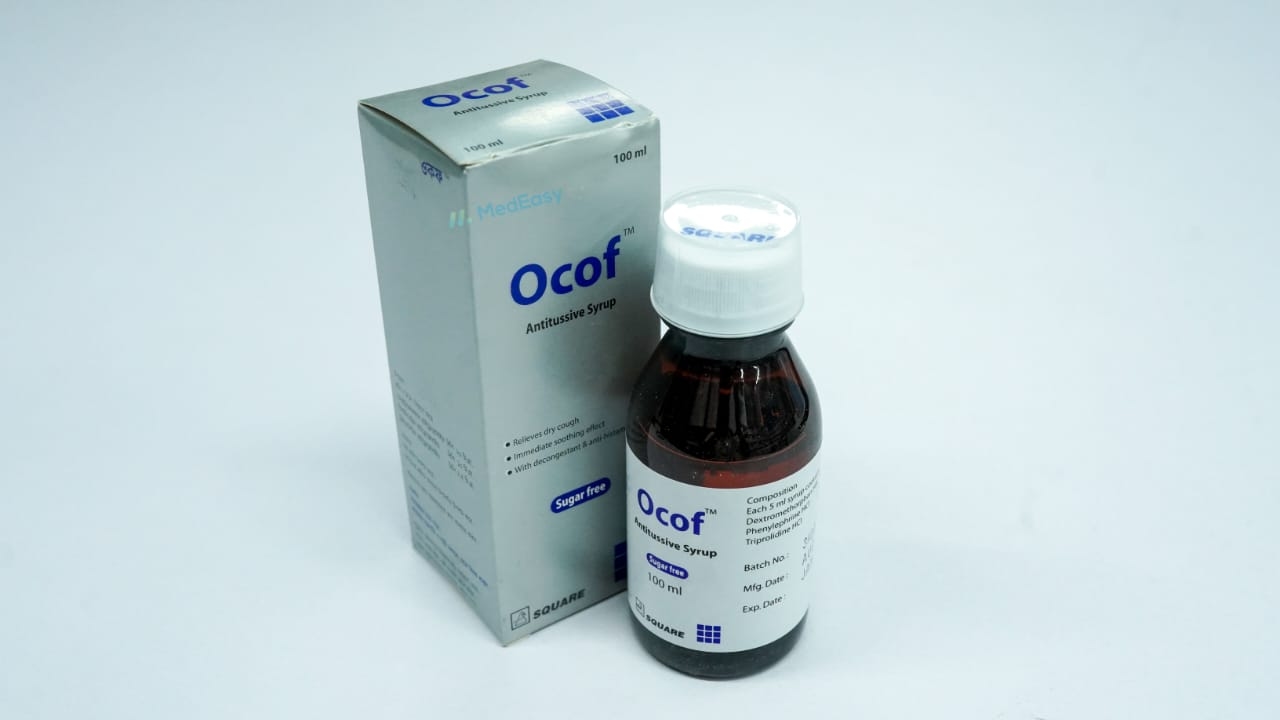
Ocof100 ml
Square Pharmaceuticals PLC.
৳99.00
Add to cart
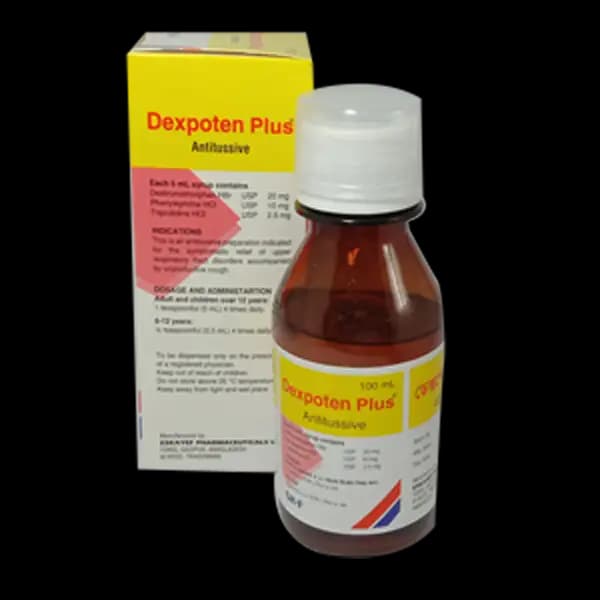
Dexpoten Plus 100 ml Syrup is available on MedEasy for ৳102.30 per 100 ml bottle, with home delivery anywhere in Bangladesh. It is manufactured by Eskayef Bangladesh Ltd. Its generic name is Dextromethorphan + Phenylephrine + Triprolidine.

Dexpoten Plus is indicated for the temporary symptomatic relief of cough and upper respiratory symptoms associated with the common cold, upper respiratory tract infections, sinusitis, and allergic rhinitis, including:
Dexpoten Plus treats symptoms only and does not treat the underlying cause of cough or cold (e.g., viral infection, bacterial sinusitis, asthma). It is not indicated for chronic cough associated with asthma, emphysema, or smoking, or for a cough accompanied by excessive phlegm (productive cough), unless directed by a physician.
Dextromethorphan + Phenylephrine + Triprolidine is a fixed-dose combination oral preparation (syrup/tablet, depending on manufacturer) containing three active ingredients:
Exact strength of each component per tablet or per 5 mL of syrup varies by manufacturer and market formulation; always check the product label/carton for the precise strength before use.
Dexpoten Plus is a combination medicine widely used for short-term symptomatic relief of common cold and upper respiratory allergy symptoms. It combines an antitussive, a decongestant, and an antihistamine so that a single preparation addresses cough, nasal/sinus congestion, and allergic symptoms such as sneezing and runny nose together.
It is intended for short-term, symptomatic use and does not cure or shorten the course of the underlying cold or infection.
Dexpoten Plus belongs to the therapeutic class of cough and cold combination preparations, combining an antitussive, an alpha-adrenergic nasal decongestant, and a first-generation (sedating) antihistamine.
Dextromethorphan + Phenylephrine + Triprolidine combines three agents that act by different but complementary mechanisms:
Following oral administration, all three components are absorbed from the gastrointestinal tract. Dextromethorphan undergoes extensive hepatic first-pass metabolism, chiefly via CYP2D6, to its active metabolite dextrorphan. Phenylephrine also undergoes significant first-pass metabolism. Triprolidine is metabolized hepatically with a relatively short elimination half-life. All three are eliminated primarily via the kidneys as metabolites.
Dosage of Dexpoten Plus should follow the specific product label, as component strengths differ between manufacturers. General dosing guidance (based on typical fixed-dose oral cough-cold combination products) is as follows:
| Age group | Typical dose | Frequency |
|---|---|---|
| Adults and children ≥ 12 years | 1 tablet or 10 mL syrup (per label strength) | Every 4–6 hours, as needed |
| Children 6 to < 12 years | Half tablet or 5 mL syrup (per label strength), only under medical advice | Every 4–6 hours, as needed |
| Children 2 to < 6 years | Not recommended except on specific physician advice | — |
| Children < 2 years | Contraindicated — do not use | — |
Do not exceed 4 doses (or the manufacturer-specified maximum) in 24 hours. Do not use for more than 7 days for symptomatic relief unless advised by a physician. See Dosage and Administration for further detail, and Pediatric Uses for important age restrictions.
Dexpoten Plus is for oral use only.
Dexpoten Plus has the following clinically significant drug interactions:
Dextromethorphan + Phenylephrine + Triprolidine is contraindicated in the following situations:
Side effects of Dexpoten Plus arise from its three components and may include:
Patients should seek medical attention promptly if serious or persistent side effects occur.
Pregnancy: Data on the use of Dexpoten Plus in pregnancy are limited. As with most cold/cough combination products, Dexpoten Plus should be used during pregnancy only if clearly needed and if the potential benefit justifies the potential risk to the fetus. Phenylephrine, being a vasoconstrictor, has a theoretical potential to reduce placental blood flow and should be used cautiously, especially in the first trimester. A physician should be consulted before use in pregnancy.
Lactation: The components of Dexpoten Plus may pass into breast milk in small amounts. Triprolidine (a sedating antihistamine) may cause drowsiness or irritability in a breastfed infant, and antihistamines may also reduce milk supply. Use during breastfeeding should occur only under medical advice, weighing benefits against potential risk to the infant.
Use Dexpoten Plus with caution in the following situations:
Overdose of Dexpoten Plus can be serious, particularly in children, and may cause central nervous system depression (drowsiness, lethargy) or, paradoxically, CNS stimulation (excitability, tremor, hallucinations, seizures), severe hypertension, cardiac arrhythmias, respiratory depression, and anticholinergic toxicity (dilated pupils, dry flushed skin, urinary retention, hyperthermia).
If overdose is suspected, seek immediate medical attention or contact a poison control center/emergency services right away. Do not attempt to treat an overdose at home; supportive and symptomatic treatment should be provided under medical supervision.
Store at room temperature (below 30°C), away from light and moisture. Keep out of reach of children.
Dexpoten Plus is intended for short-term symptomatic use only, generally not exceeding 7 days. If symptoms persist beyond 7 days, worsen, or are accompanied by fever, rash, or persistent headache, discontinue use and consult a physician.
Antitussive + Alpha-adrenergic nasal decongestant + First-generation (sedating) antihistamine (combination)
Dextromethorphan + Phenylephrine + Triprolidine works through three complementary mechanisms: dextromethorphan suppresses the cough reflex by acting centrally on the cough center in the medulla; phenylephrine constricts dilated nasal blood vessels via alpha-1 adrenergic stimulation, relieving nasal/sinus congestion; and triprolidine blocks histamine H1 receptors to reduce sneezing, itching, and rhinorrhea, while also contributing anticholinergic and sedative effects.
Dexpoten Plus is contraindicated in children under 2 years of age due to reports of serious, life-threatening adverse effects associated with cough and cold combination medicines in this age group.
Consistent with FDA/manufacturer voluntary labeling guidance on cough and cold combination products, Dexpoten Plus is not recommended for children under 4–6 years unless specifically directed by a physician, given the risk of serious side effects and the lack of demonstrated benefit in this age group.
For children 6 years and older, use only under medical advice at reduced, age-appropriate doses (see Dosage and Administration). Safety and efficacy in children have not been established to the same standard as in adults, and the lowest effective dose for the shortest necessary duration should be used.
Q: What is Dexpoten Plus 100 ml Syrup used for?
A: Dexpoten Plus 100 ml Syrup is used for the short-term relief of cough, nasal and sinus congestion, sneezing, and runny nose associated with the common cold, upper respiratory infections, or allergic rhinitis. It treats symptoms only, not the underlying cause.
Q: Can I give Dexpoten Plus 100 ml Syrup to my child?
A: Dexpoten Plus 100 ml Syrup is contraindicated in children under 2 years of age due to the risk of serious, life-threatening side effects. It is also not recommended for children under 4–6 years except on specific medical advice. For children 6 years and older, use only under a physician's guidance at an appropriate reduced dose.
Q: Is it safe to take Dexpoten Plus 100 ml Syrup during pregnancy?
A: Dexpoten Plus 100 ml Syrup should be used during pregnancy only if clearly needed and if the potential benefit outweighs the potential risk, as data are limited and the phenylephrine component may theoretically reduce blood flow to the placenta. Always consult a physician before using it during pregnancy.
Q: Can I drive or drink alcohol while taking Dexpoten Plus 100 ml Syrup?
A: No, it is not advisable. Dexpoten Plus 100 ml Syrup contains triprolidine, a sedating antihistamine that can cause significant drowsiness; combining it with alcohol or other sedatives increases this effect. Avoid driving or operating machinery until you know how this medicine affects you.
Q: What should I do if I miss a dose or take too much Dexpoten Plus 100 ml Syrup?
A: If you miss a dose, take it when you remember but skip it if it is almost time for the next dose — do not double the dose. If you suspect an overdose of Dexpoten Plus 100 ml Syrup (symptoms may include severe drowsiness or agitation, hallucinations, rapid heartbeat, or very high blood pressure), seek immediate medical attention or contact a poison control center.
Q: Can Dexpoten Plus 100 ml Syrup be taken with other cold or allergy medicines?
A: Taking Dexpoten Plus 100 ml Syrup together with other cough, cold, or allergy products that contain similar ingredients (e.g., another decongestant or antihistamine) can lead to overdose of these components. Always check labels and consult a pharmacist or physician before combining products.
Disclaimer
The information provided is accurate to the best of our knowledge, but it does not replace professional medical advice. We cannot guarantee its completeness or accuracy, and the absence of specific information about a drug should not be taken as an endorsement. We are not responsible for any consequences arising from this information, so please consult a healthcare professional for any concerns or questions.