10% Off
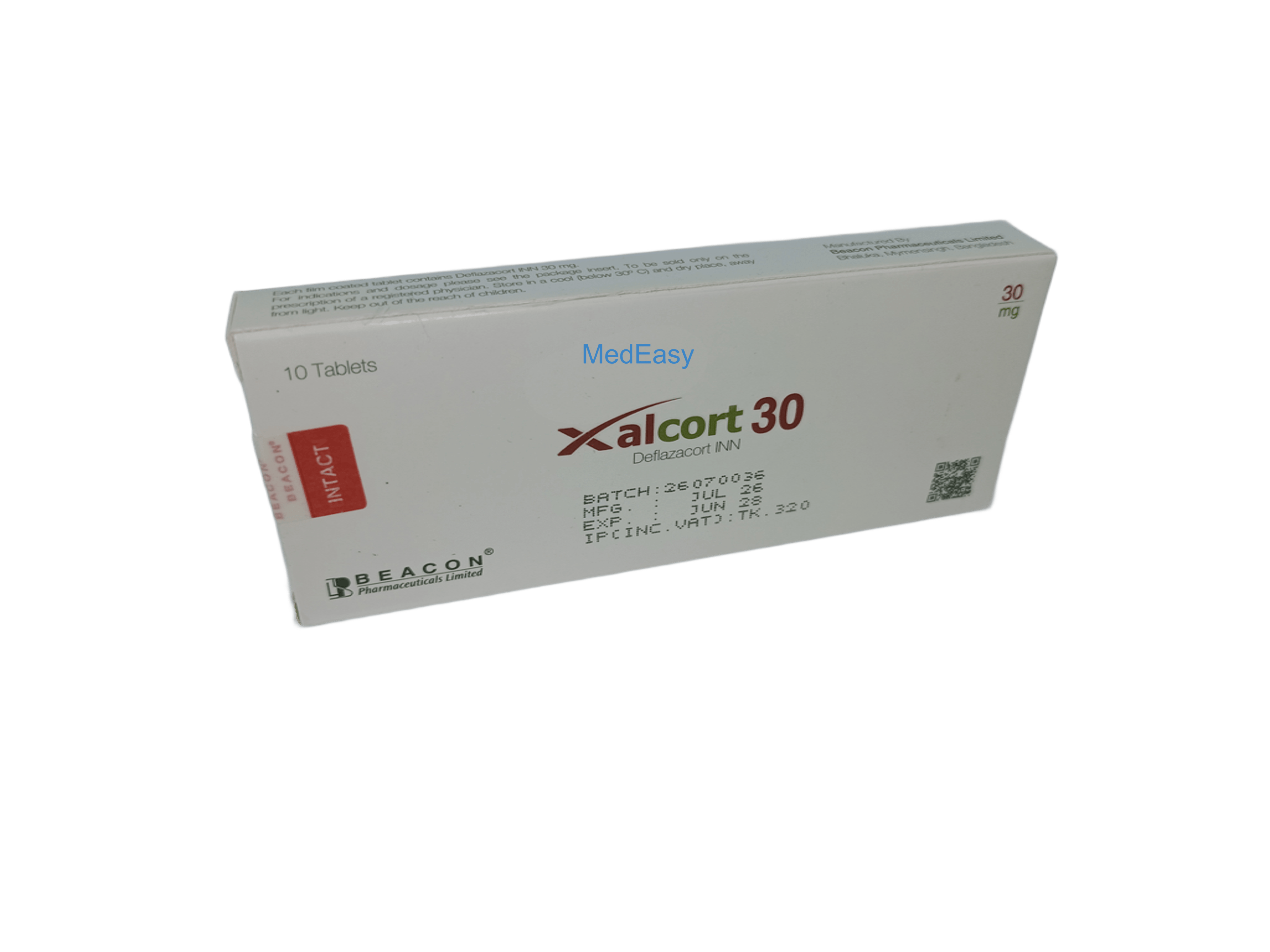
Deflacort30 mg
Square Pharmaceuticals PLC.
৳288.00
Add to cart


Dezacot is FDA-approved (established indication) for the treatment of Duchenne muscular dystrophy (DMD) in patients 2 years of age and older. Dezacot is used to help slow the decline in muscle strength associated with this genetic muscle-wasting disease.
Outside the United States - including in Bangladesh, where Dezacot is widely prescribed - Dezacot is also used as a general corticosteroid for a broad range of inflammatory, allergic, and autoimmune conditions. These uses are guideline-supported or established in regional clinical practice but are not part of the US FDA-approved label for Dezacot:
Dosing and duration for each condition should be individualized by a qualified physician.
Each Deflazacort tablet contains Deflazacort INN as the active ingredient, available in strengths of 6 mg, 18 mg, 24 mg, 30 mg, and 36 mg. Deflazacort is also available as an oral suspension (22.75 mg/mL) and, in some markets, an oral syrup (6 mg/5 mL).
Dezacot is a corticosteroid (glucocorticoid) medicine used to reduce inflammation and calm an overactive immune system. In the United States, Dezacot is FDA-approved specifically for Duchenne muscular dystrophy in children aged 2 years and older, where Dezacot helps preserve muscle strength. In many other countries, including Bangladesh, Dezacot is also used more broadly for allergic, autoimmune, and inflammatory conditions such as asthma, arthritis, and certain kidney and blood disorders. Dezacot works by binding to glucocorticoid receptors and suppressing inflammatory pathways throughout the body. Because Dezacot affects multiple body systems, Dezacot should only be used under close medical supervision, with the dose tailored to each patient's condition.
Corticosteroid (Glucocorticoid)
Deflazacort is a prodrug that is rapidly converted by esterases in the body to Deflazacort's pharmacologically active metabolite, 21-desDFZ. This active metabolite binds to the glucocorticoid receptor, producing anti-inflammatory and immunosuppressive effects, including inhibition of phospholipase A2 (which reduces the production of inflammatory mediators) and suppression of the release of pro-inflammatory cytokines and other immune mediators. Through these actions, Deflazacort reduces inflammation, edema, and immune-mediated tissue damage across multiple organ systems.
The dose and duration of Dezacot must be determined by a qualified healthcare professional based on the specific condition being treated, patient age, body weight, and response to therapy - there is no single dose of Dezacot that applies to all patients. For most conditions, Dezacot is taken once daily by mouth. If Dezacot has been taken for more than a few days, the dose of Dezacot must be reduced gradually (tapered) under medical supervision rather than stopped abruptly, because sudden discontinuation of Dezacot can cause life-threatening adrenal insufficiency.
Deflazacort is contraindicated in:
Dezacot readily crosses the placenta. As with other corticosteroids, use of Dezacot during pregnancy has been associated with a small increase in the risk of orofacial clefts when Dezacot is used in the first trimester, and with intrauterine growth restriction and lower birth weight when Dezacot is used later in pregnancy. Dezacot should be used during pregnancy only if the potential benefit to the mother justifies the potential risk to the fetus, and only under close medical supervision. Infants born to mothers who received substantial doses of Dezacot during pregnancy should be monitored for signs of adrenal insufficiency.
Corticosteroids, including Dezacot, pass into breast milk. Low to moderate doses of Dezacot are generally considered unlikely to cause adverse effects in a breastfed infant, but higher or prolonged doses of Dezacot could theoretically affect infant growth or adrenal function. A doctor should weigh the mother's need for Dezacot against the possible effects on the breastfed infant, and the infant should be monitored if the mother is taking Dezacot.
There is no specific antidote for Dezacot overdose. In cases of acute overdose of Dezacot, treatment with gastric lavage or induced emesis may be considered, but only if directed by a healthcare professional or poison control - do not induce vomiting on your own unless instructed to do so. Management is otherwise supportive and symptomatic. Chronic overexposure to Dezacot (excessive dosing over time) may require temporary dose reduction or a switch to alternate-day dosing under medical guidance. If Dezacot overdose is suspected, contact emergency medical services or a poison control center immediately.
Store Dezacot according to the product label. In general, keep Dezacot in a cool, dry place below 25°C, protected from light and moisture, and out of the reach of children. Do not use Dezacot after the expiry date printed on the pack.
Dezacot is FDA-approved for Duchenne muscular dystrophy in children 2 years of age and older, and is also used more broadly for pediatric inflammatory and autoimmune conditions. Long-term corticosteroid use, including use of Dezacot, can suppress growth in children; height and growth should be monitored regularly during prolonged Dezacot therapy, and growth typically resumes after Dezacot is discontinued in most cases. The oral suspension formulation of Dezacot (which may contain benzyl alcohol) should not be used in infants under 2 years of age.
No specific dose adjustment of Dezacot is required based on age alone in elderly patients, but elderly patients receiving Dezacot should be monitored closely, as age-related conditions such as osteoporosis, diabetes, and hypertension can make the adverse effects of Dezacot more serious.
No specific dose adjustment of Dezacot is generally required in renal impairment; standard precautions for corticosteroid use apply.
In patients with significant hepatic impairment, blood levels of Dezacot's active metabolite may increase; Dezacot should be used with caution and the dose of Dezacot monitored carefully in these patients.
Dezacot can raise blood glucose levels; patients with diabetes may need closer glucose monitoring and adjustment of their antidiabetic medications while taking Dezacot.
For acute conditions (such as a severe allergic reaction or an asthma exacerbation), Dezacot is typically used as a short course at a higher dose, then tapered and stopped once the condition resolves. For chronic conditions, including Duchenne muscular dystrophy and long-term autoimmune or inflammatory diseases, Dezacot is often continued for months to years at the lowest effective dose. Whenever Dezacot has been used for more than a few days, Dezacot must be tapered off gradually under medical supervision rather than stopped suddenly, to allow the body's own cortisol production to recover and to avoid adrenal insufficiency.
Corticosteroid; Glucocorticoid; Anti-inflammatory and immunosuppressive agent
Deflazacort is a prodrug converted to Deflazacort's active metabolite, 21-desDFZ, which binds to the glucocorticoid receptor. This receptor binding modulates gene transcription, reducing the production of inflammatory mediators (including inhibition of phospholipase A2) and suppressing the migration and activity of immune cells, resulting in anti-inflammatory and immunosuppressive effects.
Dezacot is FDA-approved for the treatment of Duchenne muscular dystrophy in children 2 years of age and older, based on clinical trial data in boys aged 5 to 15 years, with safety and efficacy in younger children (2 to 5 years) extrapolated from this data. Dezacot is also used more broadly in pediatric patients outside the US for conditions such as juvenile chronic (idiopathic) arthritis, nephrotic syndrome, and acute severe asthma, generally at doses of 0.25-1.5 mg/kg/day depending on the condition. Because long-term use of Dezacot and other corticosteroids can suppress linear growth in children, height, weight, and growth velocity should be monitored regularly throughout Dezacot treatment, and a pediatric specialist should be involved in long-term management.
Q: What is Dezacot 30 mg Tablet used for?
A: Dezacot 30 mg Tablet is a corticosteroid medicine. In the United States, Dezacot 30 mg Tablet is FDA-approved specifically to treat Duchenne muscular dystrophy in patients 2 years of age and older. In many other countries, including Bangladesh, Dezacot 30 mg Tablet is also used more broadly to treat inflammatory and autoimmune conditions such as asthma, rheumatoid arthritis, lupus, nephrotic syndrome, and severe allergic reactions.
Q: How is the dose of Dezacot 30 mg Tablet determined?
A: The dose of Dezacot 30 mg Tablet depends on the condition being treated, the patient's body weight, age, and response to treatment. For Duchenne muscular dystrophy, Dezacot 30 mg Tablet is usually dosed at about 0.9 mg/kg/day. There is no single dose of Dezacot 30 mg Tablet suitable for everyone, so the dose of Dezacot 30 mg Tablet must always be determined by a qualified healthcare professional.
Q: Can I stop taking Dezacot 30 mg Tablet suddenly?
A: No. If Dezacot 30 mg Tablet has been taken for more than a few days, Dezacot 30 mg Tablet must not be stopped suddenly. Dezacot 30 mg Tablet must be tapered off gradually under medical supervision, because abrupt discontinuation of Dezacot 30 mg Tablet can cause serious adrenal insufficiency.
Q: What medicines interact with Dezacot 30 mg Tablet?
A: Dezacot 30 mg Tablet can interact with CYP3A4 inhibitors (such as ketoconazole or clarithromycin), CYP3A4 inducers (such as rifampicin or carbamazepine), NSAIDs, diuretics, antidiabetic medications, live vaccines, and other immunosuppressants. Always tell your doctor about all medicines you are taking before starting Dezacot 30 mg Tablet.
Q: Is Dezacot 30 mg Tablet safe during pregnancy?
A: Dezacot 30 mg Tablet should be used during pregnancy only if the potential benefit outweighs the potential risk, since Dezacot 30 mg Tablet crosses the placenta and corticosteroids have been associated with a small increased risk of birth defects and low birth weight. Always consult a doctor before using Dezacot 30 mg Tablet during pregnancy.
Q: Can children take Dezacot 30 mg Tablet?
A: Yes. Dezacot 30 mg Tablet is FDA-approved for Duchenne muscular dystrophy in children 2 years of age and older, and Dezacot 30 mg Tablet is also used for other pediatric inflammatory conditions. Because Dezacot 30 mg Tablet can affect growth in children, height and growth should be monitored regularly during treatment with Dezacot 30 mg Tablet.
Q: What are the common side effects of Dezacot 30 mg Tablet?
A: Common side effects of Dezacot 30 mg Tablet include weight gain, increased appetite, a Cushingoid (rounded) facial appearance, excess hair growth, mood or behavioral changes, and increased susceptibility to infections.
Q: Should Dezacot 30 mg Tablet be taken with food?
A: Dezacot 30 mg Tablet may be taken with or without food, but taking Dezacot 30 mg Tablet with food can help reduce stomach upset. Dezacot 30 mg Tablet should not be taken with grapefruit or grapefruit juice.
Q: What should I do if I miss a dose of Dezacot 30 mg Tablet?
A: If you miss a dose of Dezacot 30 mg Tablet, take the missed dose as soon as you remember, unless it is almost time for your next dose of Dezacot 30 mg Tablet - in that case, skip the missed dose and continue your regular Dezacot 30 mg Tablet schedule. Do not take a double dose of Dezacot 30 mg Tablet to make up for a missed one.
Disclaimer
The information provided is accurate to the best of our knowledge, but it does not replace professional medical advice. We cannot guarantee its completeness or accuracy, and the absence of specific information about a drug should not be taken as an endorsement. We are not responsible for any consequences arising from this information, so please consult a healthcare professional for any concerns or questions.