

10% Off
G-Thiazide T25 mg+50 m
Gonoshasthaya Pharmaceuticals Limited
৳0.45
Add to cart
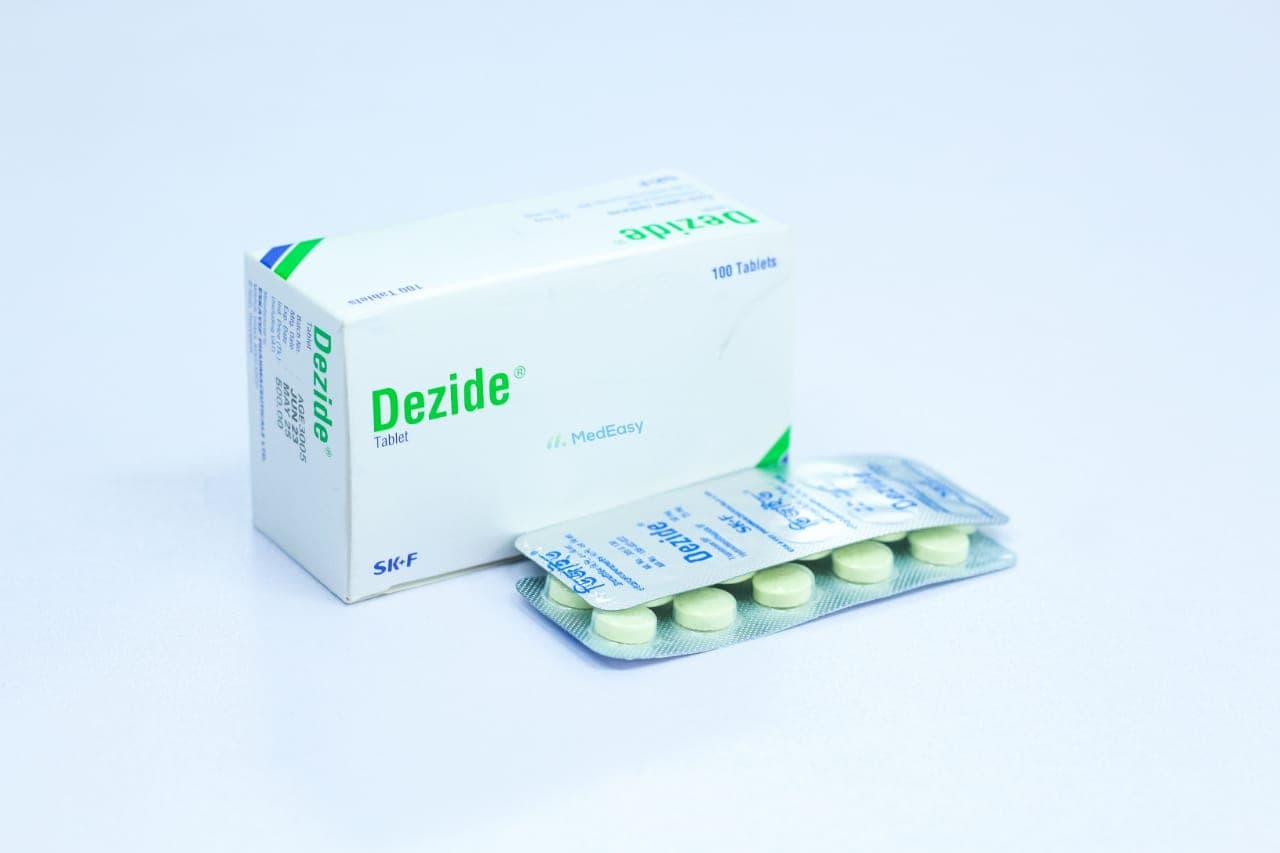

Dezide is a fixed-dose combination of a thiazide diuretic (hydrochlorothiazide) and a potassium-sparing diuretic (triamterene). It is FDA-approved for use in patients for whom this specific combination is considered appropriate, generally including:
Dezide is intended for patients in whom the combination of a kaliuretic (potassium-wasting) and a potassium-conserving diuretic is felt to be a clinically appropriate strategy — it is not first-line therapy for every patient with hypertension or edema, and the decision to use it should follow evaluation of individual electrolyte and renal status.
Each tablet of Hydrochlorothiazide + Triamterene is a fixed-dose combination typically available in two commonly used strengths (formulation and strength availability can vary by market/manufacturer):
Hydrochlorothiazide is a thiazide-type diuretic and triamterene is a potassium-sparing diuretic; they are combined to promote diuresis and blood pressure control while reducing the risk of thiazide-induced potassium loss.
Dezide is an oral fixed-dose diuretic (water pill) combination used mainly to treat high blood pressure and fluid retention (edema). It pairs hydrochlorothiazide, which promotes sodium, chloride, and water excretion but also causes potassium loss, with triamterene, which conserves potassium in the kidney's distal tubule. This pairing is designed to achieve the blood-pressure-lowering and fluid-reducing benefits of a thiazide diuretic while lowering the likelihood of thiazide-induced hypokalemia. Despite the potassium-sparing component, electrolyte imbalances (including hyperkalemia) can still occur, so periodic monitoring is required.
Dezide belongs to the therapeutic class of diuretic combinations — specifically a thiazide diuretic combined with a potassium-sparing diuretic, used as an antihypertensive and antiedema agent.
Hydrochlorothiazide + Triamterene combines two diuretics with complementary and distinct mechanisms:
The net pharmacologic effect is diuresis and reduction of blood pressure and edema with a more neutral effect on serum potassium than a thiazide diuretic used alone — although hyperkalemia can still occur, particularly in patients with renal impairment or those on other potassium-elevating drugs.
| Indication | Typical Adult Dosing |
|---|---|
| Hypertension | Usually one tablet of the lower-strength combination (hydrochlorothiazide 25 mg/triamterene 37.5 mg) once or twice daily, individualized to blood pressure response; higher-strength tablets are used when clinically indicated. |
| Edema (cardiac, hepatic, renal/nephrotic, or drug-induced) | One to two tablets daily, adjusted according to clinical response and serum electrolytes; the lowest effective dose should be used. |
Safety and effective dosing of Dezide have not been established in children; it is generally not recommended for pediatric use (see Use in Special Populations).
Dezide is contraindicated in patients with anuria or significant renal impairment because both components depend on adequate renal function and the risk of dangerous hyperkalemia rises sharply (see Contraindications).
Use with caution in hepatic impairment; diuretic-induced electrolyte and fluid shifts can precipitate hepatic encephalopathy in patients with liver disease.
Take exactly as directed by the prescribing physician. Do not increase, decrease, stop, or restart doses without medical advice, and attend scheduled blood tests to monitor kidney function and electrolytes.
Dezide should be taken by mouth, preferably with food to reduce stomach upset. It is best taken earlier in the day (e.g., with breakfast) to avoid the need to urinate during the night. Swallow the tablet whole with a glass of water unless the physician has advised otherwise. Maintain adequate but not excessive fluid intake, and avoid potassium supplements or salt substitutes containing potassium unless specifically directed by a physician.
Hydrochlorothiazide + Triamterene is contraindicated in:
Pregnancy: Dezide should be used during pregnancy only if clearly needed and the potential benefit to the mother justifies the potential risk to the fetus. Thiazide diuretics cross the placenta and have been associated with fetal or neonatal jaundice, thrombocytopenia, and other adverse effects, and diuretics do not prevent and may worsen conditions like pre-eclampsia. A physician should be consulted before use in pregnancy, and treatment of chronic hypertension in pregnancy is generally managed with agents with a better-established safety profile.
Lactation: Thiazide diuretics are excreted in breast milk and can suppress lactation; whether triamterene is excreted in human milk is not well established. Dezide should be used during breastfeeding only under medical supervision, weighing the benefits of treatment against potential risk to the nursing infant.
Overdose with Dezide may cause severe electrolyte disturbances (hyperkalemia or hypokalemia, hyponatremia), dehydration, low blood pressure, dizziness, weakness, cardiac arrhythmias, and reduced kidney function. In case of a known or suspected overdose, seek immediate medical attention or contact a poison control center / emergency services right away. Treatment is supportive and should be carried out under medical supervision (e.g., correction of fluid and electrolyte imbalance, cardiac monitoring); do not attempt to manage a suspected overdose at home.
Store at room temperature (below 30°C), away from light and moisture. Keep out of reach of children.
Duration of treatment with Dezide is individualized by the prescribing physician based on the condition being treated, blood pressure or edema response, and periodic monitoring of renal function and electrolytes. Hypertension and chronic edema often require long-term, ongoing therapy with regular follow-up visits and laboratory monitoring; the drug should not be stopped or the dose changed without medical advice.
Thiazide diuretic + Potassium-sparing diuretic (fixed-dose antihypertensive/diuretic combination)
Hydrochlorothiazide + Triamterene works through the combined action of hydrochlorothiazide (inhibits sodium/chloride reabsorption in the distal convoluted tubule, increasing sodium, chloride, water, and potassium excretion) and triamterene (blocks epithelial sodium channels in the distal tubule/collecting duct, reducing sodium reabsorption while conserving potassium). See Pharmacology for full details.
C
The safety and efficacy of Dezide have not been established in pediatric patients. Its use in children is generally not recommended, and it should only be considered in a pediatric patient if a physician specifically judges it necessary, with close monitoring of renal function, growth, and electrolytes.
Q: What is Dezide 25 mg+50 mg Tablet used for?
A: Dezide 25 mg+50 mg Tablet is a combination diuretic used mainly to treat high blood pressure and fluid retention (edema) associated with conditions such as heart failure, liver disease, kidney disease, or steroid use, especially when maintaining normal blood potassium is important.
Q: Can I take potassium supplements while using Dezide 25 mg+50 mg Tablet?
A: You should not take potassium supplements or potassium-containing salt substitutes while on Dezide 25 mg+50 mg Tablet unless your physician specifically instructs you to, because the triamterene component already conserves potassium and adding more can lead to dangerous hyperkalemia (high blood potassium).
Q: Is Dezide 25 mg+50 mg Tablet safe during pregnancy?
A: Dezide 25 mg+50 mg Tablet should be used in pregnancy only if clearly needed and the potential benefit justifies the potential risk to the fetus, since thiazide diuretics cross the placenta and have been linked to fetal or newborn jaundice and thrombocytopenia. Always consult your physician before use during pregnancy.
Q: What are the main side effects of Dezide 25 mg+50 mg Tablet?
A: Common side effects of Dezide 25 mg+50 mg Tablet include dizziness, headache, nausea, muscle cramps, and increased urination. More serious but less common effects include high or low blood potassium, low blood sodium, kidney stones, increased sun sensitivity, and raised blood sugar or uric acid levels.
Q: Who should not take Dezide 25 mg+50 mg Tablet?
A: Dezide 25 mg+50 mg Tablet should not be used by people with anuria (no urine output), severe kidney impairment, hyperkalemia or conditions that predispose to it, or known hypersensitivity to hydrochlorothiazide, triamterene, or sulfonamide-derived medicines.
Q: What should I do if I miss a dose or take too much Dezide 25 mg+50 mg Tablet?
A: If you miss a dose of Dezide 25 mg+50 mg Tablet, take it as soon as you remember unless it is almost time for your next dose — do not double up. If you suspect an overdose, seek immediate medical attention or contact emergency services/poison control, as overdose can cause dangerous electrolyte imbalances and low blood pressure.
Disclaimer
The information provided is accurate to the best of our knowledge, but it does not replace professional medical advice. We cannot guarantee its completeness or accuracy, and the absence of specific information about a drug should not be taken as an endorsement. We are not responsible for any consequences arising from this information, so please consult a healthcare professional for any concerns or questions.
