8% Off
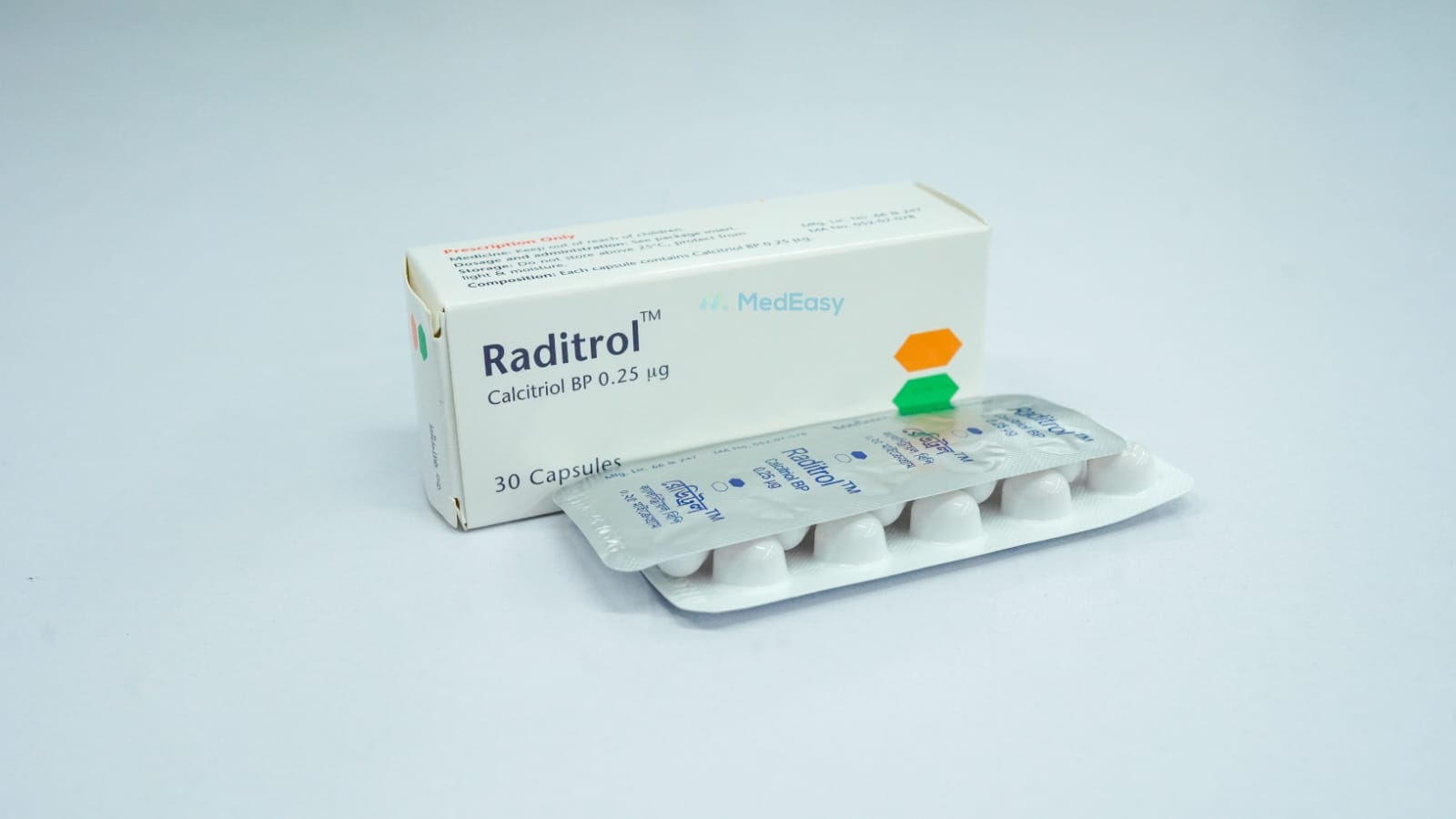
Raditrol0.25 mcg
Radiant Pharmaceuticals Ltd.
৳184.55
Add to cart
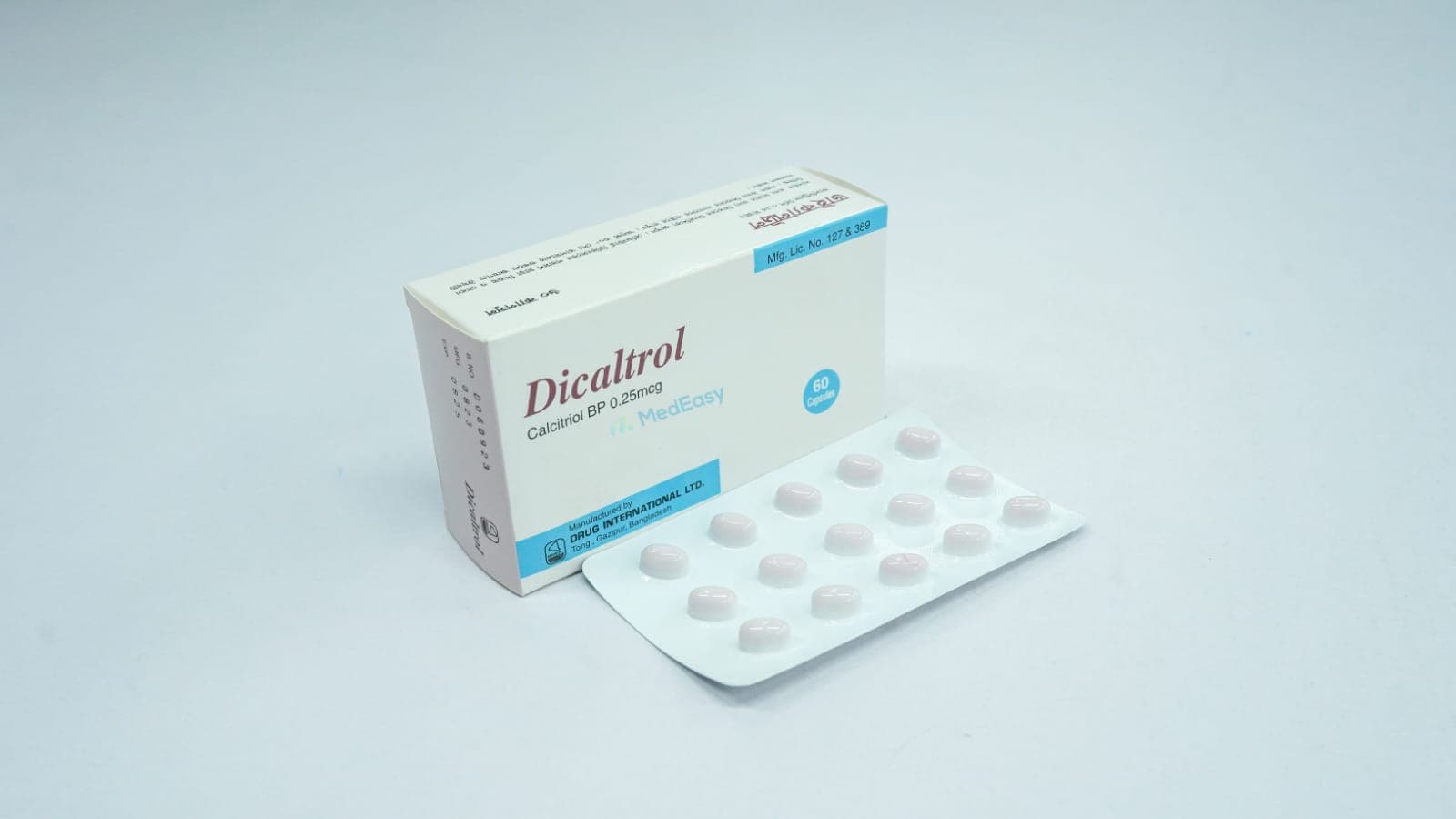
Dicaltrol 0.25 mcg Capsule is available on MedEasy for ৳162.00 per 15's Strip, with home delivery anywhere in Bangladesh. It is manufactured by Drug International Ltd. Its generic name is Calcitriol.

Dicaltrol is the active hormonal form of vitamin D3 (1,25-dihydroxycholecalciferol). It is FDA-approved and guideline-supported for the following indications:
Dicaltrol is a synthetic form of the biologically active metabolite of vitamin D3, chemically identical to the hormone produced naturally by the kidneys. Unlike inactive vitamin D precursors (cholecalciferol, ergocalciferol), Dicaltrol does not require renal 1-alpha-hydroxylation to become active, which makes it particularly useful in patients with impaired kidney function who cannot adequately convert vitamin D to its active form.
Vitamin D analogs / Active vitamin D3 hormone (fat-soluble vitamin, calcium and bone metabolism regulator).
Calcitriol is the hormonally active form of vitamin D3. It binds to the vitamin D receptor (VDR) present in target tissues, primarily the small intestine, bone, kidney, and parathyroid glands. Through this receptor, Calcitriol:
Because it is already the active metabolite, Calcitriol acts more rapidly and predictably than vitamin D precursors, particularly in patients with renal impairment.
| Indication | Adult Dose | Pediatric Dose |
|---|---|---|
| Secondary hyperparathyroidism / hypocalcemia in dialysis patients | Initial: 0.25 mcg orally once daily; may increase by 0.25 mcg/day at 4-8 week intervals based on serum calcium and PTH levels (typical range 0.25-1 mcg/day). | Not well established in dialysis patients under 3 years; specialist-guided weight-based dosing used in older children. |
| Predialysis chronic kidney disease | 0.25 mcg orally once daily; may increase to 0.5 mcg/day if needed under monitoring. | Safety and efficacy not well established; use only under specialist supervision. |
| Hypoparathyroidism (surgical/idiopathic) | Initial: 0.25 mcg orally once daily in the morning; titrate by 0.25 mcg/day every 2-4 weeks based on serum calcium (usual maintenance 0.5-2 mcg/day). | Children 1-5 years: 0.25-0.75 mcg/day; children over 6 years: dosed as adults, under specialist supervision. |
Doses must always be individualized based on serum calcium, phosphate, and PTH levels, with regular monitoring, particularly during dose titration.
Dicaltrol capsules are usually taken orally, once daily, with or without food, at approximately the same time each day. The injectable form is administered intravenously by a healthcare professional, typically at the end of a dialysis session. Do not change the dose or frequency without consulting a physician.
Dicaltrol has several clinically significant drug interactions:
Calcitriol is contraindicated in patients with:
The most significant adverse effect of Dicaltrol is hypercalcemia (vitamin D toxicity), which requires prompt medical attention. Symptoms and effects may include:
Report any symptoms suggestive of hypercalcemia to a physician promptly, as this is the central safety concern requiring regular calcium monitoring during treatment.
Dicaltrol should be used during pregnancy only if clearly needed and if the potential benefit justifies the potential risk to the fetus; maternal hypercalcemia associated with excessive vitamin D-type activity has been linked to fetal harm in animal studies. Serum calcium should be monitored closely if Dicaltrol is used during pregnancy.
Dicaltrol is excreted in breast milk; caution is advised, and infants of mothers taking Dicaltrol should be monitored for signs of hypercalcemia. Use only under close physician supervision and consult a physician before use while breastfeeding.
Hypercalcemia / hypervitaminosis D: This is the central safety concern with Dicaltrol. Regular monitoring of serum calcium (and phosphate) is essential throughout treatment, especially during dose titration, to detect early hypercalcemia before symptoms become severe. Patients should be counseled on symptoms of hypercalcemia and instructed to seek medical attention if these occur.
Use with caution in patients taking cardiac glycosides (digoxin), as hypercalcemia increases the risk of arrhythmia (see Interactions). Adequate but not excessive dietary calcium intake should be maintained, and excessive intake of vitamin D from other sources should be avoided during treatment. Use cautiously in patients with a history of nephrolithiasis (kidney stones), and periodically monitor renal function, urinary calcium excretion, and bone status as clinically indicated.
Overdose or excessive intake of Dicaltrol can lead to acute or chronic hypercalcemia and vitamin D toxicity. Symptoms may include severe nausea, vomiting, weakness, confusion, and in severe cases, cardiac arrhythmia or kidney injury. If overdose is suspected, seek immediate medical attention or contact a poison control center right away. Treatment typically involves stopping Dicaltrol, discontinuing calcium supplements, and hospital-based management with close monitoring of serum calcium; do not attempt to manage a suspected overdose at home.
Store at room temperature (below 30°C), protected from light and moisture. Keep out of reach of children.
Renal impairment: Dicaltrol is specifically indicated for use in patients with chronic kidney disease, including dialysis-dependent patients; dosing requires close monitoring of calcium, phosphate, and PTH.
Hepatic impairment: No formal dose adjustment guidelines are well established; use with caution and monitor calcium levels, as hepatic disease may alter vitamin D metabolism.
Elderly: No specific dose adjustment is required based on age alone, but elderly patients may be more susceptible to hypercalcemia; monitor closely.
Pediatric: Used under specialist supervision in hypoparathyroidism and renal osteodystrophy in children; safety and efficacy in very young children (under 1 year, and in dialysis patients under 3 years) are not well established. See Dosage and Administration for indication-specific pediatric dosing.
Vitamin D analog; active vitamin D3 hormone; calcium and bone metabolism regulator.
Category C
Dicaltrol is used in children for management of hypocalcemia due to hypoparathyroidism and for renal osteodystrophy associated with chronic kidney disease, under close specialist supervision. Dosing is age- and weight-based, with frequent monitoring of serum calcium, phosphate, and growth parameters. Safety and efficacy of Dicaltrol have not been well established in dialysis patients under 3 years of age; use in this population requires careful specialist judgment.
Q: What is Dicaltrol 0.25 mcg Capsule used for?
A: Dicaltrol 0.25 mcg Capsule is used to treat and prevent low calcium levels (hypocalcemia) and secondary hyperparathyroidism in patients with chronic kidney disease, including those on dialysis, as well as in patients with hypoparathyroidism. It is the active form of vitamin D3 and helps the body absorb calcium properly.
Q: What is the most important side effect to watch for with Dicaltrol 0.25 mcg Capsule?
A: The most important concern with Dicaltrol 0.25 mcg Capsule is hypercalcemia (too much calcium in the blood), which can cause headache, nausea, vomiting, constipation, weakness, and excessive urination. Regular blood tests to monitor calcium levels are essential during treatment, and any of these symptoms should be reported to a physician promptly.
Q: Can I take calcium supplements or other vitamin D products with Dicaltrol 0.25 mcg Capsule?
A: Only under medical supervision. Combining Dicaltrol 0.25 mcg Capsule with calcium supplements, other vitamin D products, or magnesium-containing antacids can increase the risk of hypercalcemia or hypermagnesemia, especially in patients with kidney failure. Always inform your physician about all supplements you are taking.
Q: Is Dicaltrol 0.25 mcg Capsule safe during pregnancy or breastfeeding?
A: Dicaltrol 0.25 mcg Capsule should be used during pregnancy only if clearly needed, with the potential benefit outweighing potential risk, and with close monitoring of calcium levels. It passes into breast milk, so breastfeeding mothers should use it only under close physician supervision, with monitoring of the infant for signs of hypercalcemia.
Q: What should I do if I miss a dose or think I have taken too much Dicaltrol 0.25 mcg Capsule?
A: If you miss a dose of Dicaltrol 0.25 mcg Capsule, take it as soon as you remember unless it is close to the next dose; do not double the dose. If you suspect an overdose, showing symptoms like severe nausea, vomiting, confusion, or weakness, seek immediate medical attention or contact a poison control center right away, as overdose can cause dangerous hypercalcemia.
Q: Can I take Dicaltrol 0.25 mcg Capsule with digoxin (heart medicine)?
A: Caution is needed. If Dicaltrol 0.25 mcg Capsule causes hypercalcemia while you are taking digoxin, this combination increases the risk of dangerous heart rhythm problems (digitalis toxicity). Your physician will monitor your calcium levels and heart function closely if you need both medications.
Disclaimer
The information provided is accurate to the best of our knowledge, but it does not replace professional medical advice. We cannot guarantee its completeness or accuracy, and the absence of specific information about a drug should not be taken as an endorsement. We are not responsible for any consequences arising from this information, so please consult a healthcare professional for any concerns or questions.