

10% Off
Nebilol5 mg
Opsonin Pharma Ltd.
৳101.56
Add to cart
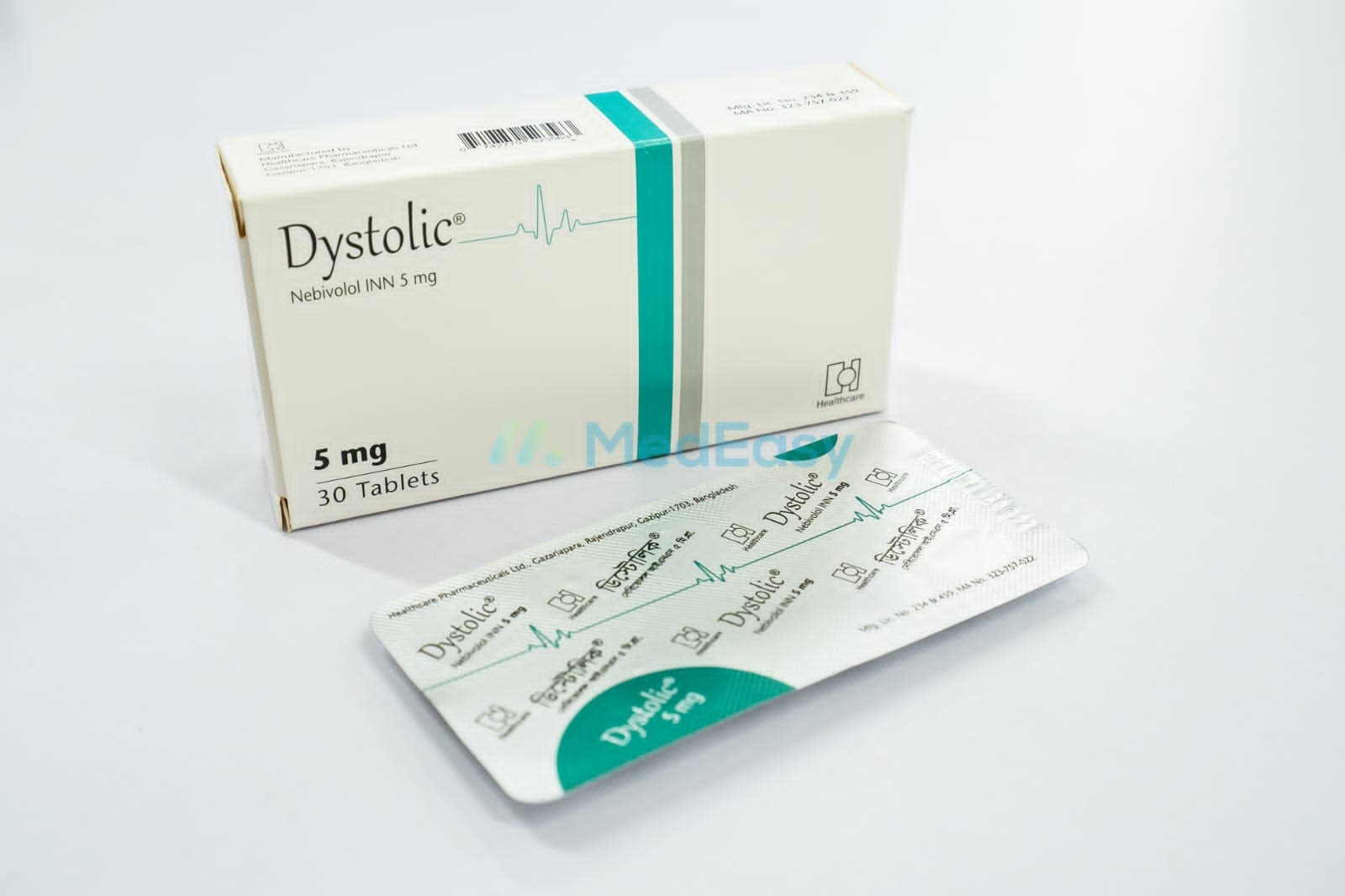

Dystolic is a beta-1 selective adrenergic receptor blocker with additional vasodilating properties. Its established and guideline-supported uses include:
Dystolic is not approved for acute decompensated heart failure or as first-line monotherapy in unstable cardiac conditions.
Each tablet contains Nebivolol Hydrochloride equivalent to nebivolol base, commonly available in strengths of 2.5 mg and 5 mg in Bangladesh. Other market strengths (10 mg, 20 mg) may be available internationally. Excipients typically include microcrystalline cellulose, lactose, hypromellose, and other standard tablet-forming agents.
Dystolic is a third-generation, cardioselective beta-1 adrenergic receptor antagonist distinguished from older beta-blockers by its additional nitric-oxide-mediated vasodilating activity. This dual mechanism allows it to lower blood pressure and reduce cardiac workload while causing less peripheral vasoconstriction than non-vasodilating beta-blockers. Dystolic is administered orally, once daily, and is used primarily in the long-term management of hypertension and, in select patients, chronic heart failure.
Dystolic belongs to the class of cardioselective (beta-1 selective) adrenergic beta-blocking agents with vasodilating properties.
Nebivolol Hydrochloride is a racemic mixture of two enantiomers: d-nebivolol, a highly selective beta-1 adrenergic receptor antagonist, and l-nebivolol, which produces mild vasodilation through stimulation of endothelial nitric oxide release. Together, these actions reduce heart rate, myocardial contractility, and peripheral vascular resistance, resulting in lowered blood pressure without significant reflex tachycardia.
Dosing of Dystolic should be individualized and titrated according to patient response and tolerability.
| Indication | Population | Dosing |
|---|---|---|
| Hypertension | Adults | Initiate at 5 mg once daily; may be increased at 2-week intervals to 10 mg, 20 mg, and up to a maximum of 40 mg once daily as needed for blood pressure control. |
| Chronic heart failure (adjunct therapy) | Elderly adults (typically ≥70 years, in markets where approved) | Initiate at a very low dose (e.g., 1.25 mg once daily) with slow up-titration at 1-2 week intervals as tolerated, under close medical supervision, to a target maintenance dose. |
| Severe renal impairment (CrCl <30 mL/min) | Adults | Initiate at 2.5 mg once daily; titrate cautiously. |
| Moderate hepatic impairment | Adults | Initiate at 2.5 mg once daily; titrate cautiously. See Contraindications for severe hepatic impairment. |
| Pediatric use | Under 18 years | Safety and efficacy not established; not recommended. |
Discontinuation of Dystolic should always be gradual, tapering the dose over 1-2 weeks; see Precautions and Warnings.
Dystolic tablets are taken orally, once daily, at approximately the same time each day, with or without food. Tablets should be swallowed and not crushed or chewed unless directed otherwise by a physician. Do not stop taking Dystolic suddenly without medical advice.
Dystolic has the following clinically significant drug interactions:
Nebivolol Hydrochloride is contraindicated in patients with:
Dystolic is generally well tolerated, with a favorable side-effect profile attributed to its vasodilating action. Reported adverse effects include:
Pregnancy: Animal studies with Dystolic have shown adverse fetal effects (reduced fetal body weight, prolonged gestation) at high doses; there are no adequate and well-controlled studies in pregnant women. Dystolic should be used during pregnancy only if the potential benefit justifies the potential risk to the fetus; consult a physician before use.
Lactation: It is not known whether Dystolic passes into human breast milk, but animal data suggest it crosses into milk. Because of the potential for serious adverse effects (such as bradycardia) in a nursing infant, use of Dystolic during breastfeeding is generally not recommended; a physician should be consulted to weigh benefits and risks.
The following precautions apply to the use of Dystolic:
Overdose with Dystolic may cause severe bradycardia, hypotension, cardiac failure, bronchospasm, and hypoglycemia. If an overdose of Dystolic is suspected, seek immediate medical attention or contact emergency services/poison control right away. Treatment is supportive and symptomatic and should be carried out in a hospital setting under medical supervision; do not attempt home treatment.
Store at room temperature (below 30°C), away from light and moisture. Keep out of reach of children.
Pediatric patients: Safety and efficacy of Dystolic have not been established in patients under 18 years of age; use is not recommended in this population.
Geriatric patients: No overall differences in safety or efficacy have been observed between elderly and younger adult patients; no dose adjustment is generally required based on age alone, though age-related renal/hepatic changes should be considered.
Renal impairment: Dose adjustment is required in severe renal impairment; see Dosage and Administration.
Hepatic impairment: Dose adjustment is required in moderate impairment; Dystolic is contraindicated in severe hepatic impairment.
Dystolic is generally used long-term for chronic conditions such as hypertension and heart failure. Duration should be determined by the prescribing physician based on ongoing blood pressure/cardiac status monitoring; it is not intended for short-term or as-needed use, and therapy should not be stopped abruptly.
Cardioselective (beta-1 selective) adrenergic beta-blocker with vasodilating properties.
Nebivolol Hydrochloride selectively blocks beta-1 adrenergic receptors in the heart, reducing heart rate, myocardial contractility, and renin release, thereby lowering blood pressure and cardiac oxygen demand. In addition, it promotes endothelial release of nitric oxide, producing vasodilation that further contributes to blood pressure reduction and reduces peripheral vascular resistance without significant reflex tachycardia.
Category C
The safety and efficacy of Dystolic have not been established in pediatric patients (under 18 years of age). Use in children and adolescents is not recommended outside of specialist supervision, and pediatric trials have not adequately characterized developmental toxicity risks.
Q: What is Dystolic 5 mg Tablet used for?
A: Dystolic 5 mg Tablet is mainly used to treat high blood pressure (hypertension) and, in some patients, as an add-on treatment for stable chronic heart failure. It works by relaxing blood vessels and slowing the heart rate.
Q: How should I take Dystolic 5 mg Tablet?
A: Dystolic 5 mg Tablet is usually taken once daily, at the same time each day, with or without food. Your doctor will start you on a low dose and may gradually increase it based on your response.
Q: Can I stop taking Dystolic 5 mg Tablet suddenly?
A: No. Stopping Dystolic 5 mg Tablet abruptly, especially if you have coronary artery disease, can cause a sudden worsening of chest pain, heart attack, or dangerous heart rhythm problems. Always taper off gradually under your doctor's supervision.
Q: Who should not take Dystolic 5 mg Tablet?
A: Dystolic 5 mg Tablet should not be used by people with severe slow heart rate, certain heart blocks without a pacemaker, decompensated heart failure, cardiogenic shock, severe liver impairment, or known allergy to the drug.
Q: Is Dystolic 5 mg Tablet safe during pregnancy or breastfeeding?
A: Dystolic 5 mg Tablet should be used during pregnancy only if clearly needed, since animal studies suggest possible risk to the fetus and there is limited human data; it is generally not recommended while breastfeeding due to possible effects on the infant. Always consult your physician before use in these situations.
Q: What should I do if I miss a dose or take too much Dystolic 5 mg Tablet?
A: If you miss a dose, take it as soon as you remember unless it is close to your next dose; do not double up. If you suspect an overdose of Dystolic 5 mg Tablet, seek emergency medical attention immediately.
Disclaimer
The information provided is accurate to the best of our knowledge, but it does not replace professional medical advice. We cannot guarantee its completeness or accuracy, and the absence of specific information about a drug should not be taken as an endorsement. We are not responsible for any consequences arising from this information, so please consult a healthcare professional for any concerns or questions.
