
5% Off
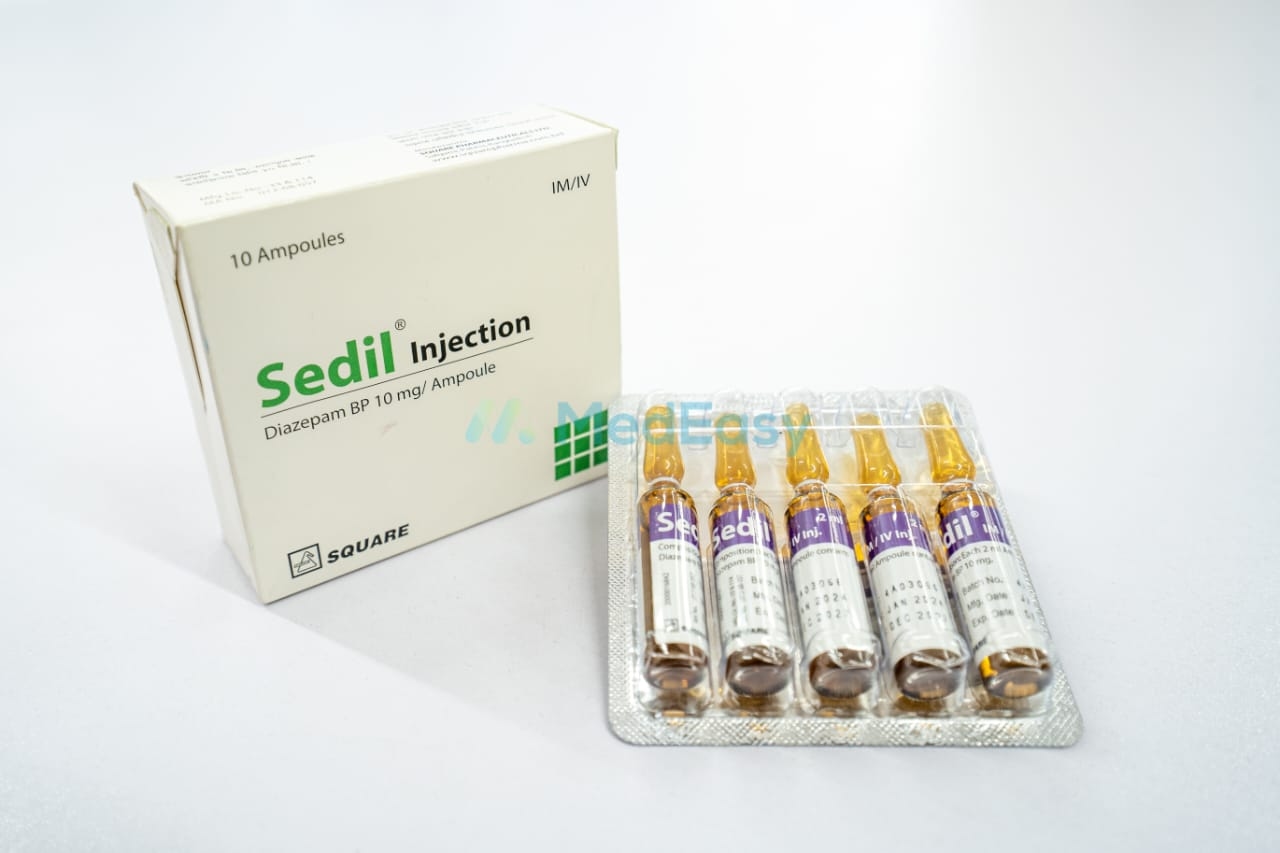
Sedil10 mg/2 ml
Square Pharmaceuticals PLC.
৳6.65
Add to cart
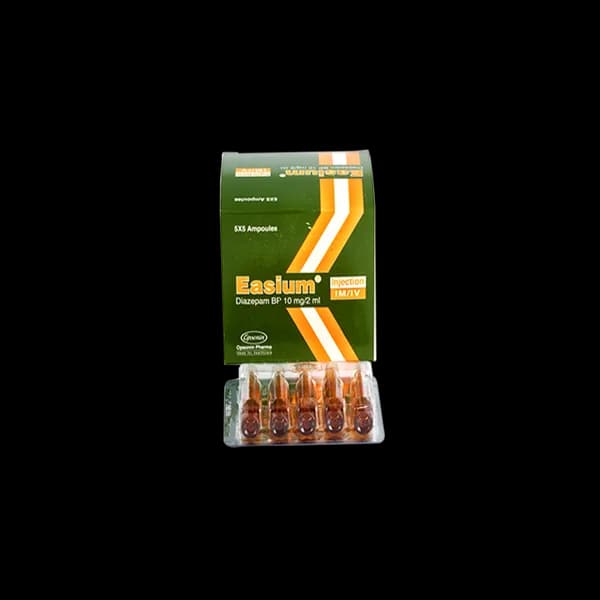

Easium is a long-acting benzodiazepine indicated for several distinct clinical uses, which vary in the strength of supporting evidence.
Easium is not approved for long-term, first-line treatment of chronic anxiety or as monotherapy for epilepsy, and should be reserved for short-term or adjunctive use given the risks of dependence.
Each formulation of Diazepam contains diazepam as the active pharmaceutical ingredient. Diazepam is commonly available as:
Exact inactive ingredients vary by manufacturer and formulation; patients should check the product-specific leaflet for excipient details, particularly if they have known excipient allergies.
Easium is a long-acting benzodiazepine derivative that has been used in clinical practice for decades. It acts on the central nervous system to produce anxiolytic, sedative, muscle-relaxant, anticonvulsant, and amnestic effects.
Because of its long elimination half-life and active metabolites, Easium has a prolonged duration of action compared with shorter-acting benzodiazepines, which is useful for withdrawal management and seizure control but also means effects and accumulation risk can persist for days, especially with repeated dosing or in patients with reduced hepatic clearance.
Easium carries a boxed warning (applicable to the benzodiazepine class) regarding risks of abuse, misuse, addiction, physical dependence, and serious, potentially fatal respiratory depression when combined with opioids or other central nervous system (CNS) depressants.
Benzodiazepine — anxiolytic, sedative-hypnotic, skeletal muscle relaxant, and anticonvulsant.
Diazepam binds to a specific site on the GABA-A receptor complex in the central nervous system, acting as a positive allosteric modulator. This enhances the inhibitory effect of gamma-aminobutyric acid (GABA) by increasing the frequency of chloride-channel opening, resulting in neuronal hyperpolarization and generalized CNS depression. This mechanism underlies its anxiolytic, sedative, muscle-relaxant, anticonvulsant, and amnestic properties.
Dosage of Easium must be individualized for maximum therapeutic benefit, using the lowest effective dose for the shortest duration appropriate to the indication.
| Indication | Adult dose | Pediatric dose |
|---|---|---|
| Anxiety | 2–10 mg orally, 2–4 times daily depending on severity | Not recommended under 6 months of age; in older children, low doses individualized by a physician |
| Muscle spasm | 2–10 mg orally, 3–4 times daily | Individualized; used with caution under specialist supervision |
| Alcohol withdrawal | 10 mg orally 3–4 times in first 24 hours, reduced to 5 mg 3–4 times daily as needed | Not applicable |
| Seizures / status epilepticus | IV: 5–10 mg, may repeat every 10–15 minutes up to a defined maximum under medical supervision | IV dosing is weight-based and age-restricted; rectal gel is approved from 2 years of age for acute repetitive seizures under a physician-directed protocol |
| Preoperative sedation | 10 mg IM/IV before the procedure, or 5–10 mg orally the night before/hours before | Not routinely used; specialist-directed only |
Use with caution and at reduced doses in renal impairment. Easium is contraindicated in severe hepatic insufficiency, and doses should be reduced and closely monitored in mild-to-moderate hepatic impairment due to reduced clearance and metabolite accumulation.
Easium tablets/oral solution may be taken with or without food. Injectable Easium should be administered slowly by trained personnel with resuscitation equipment available, due to the risk of respiratory depression. Rectal gel is administered per the specific applicator instructions provided with the product. Do not stop Easium abruptly after regular use for more than a few weeks — dose must be tapered gradually under medical supervision to reduce the risk of withdrawal symptoms, including withdrawal seizures.
Easium oral tablets and solution can be taken with or without food, swallowed with water. Injectable forms are for IV or deep IM administration by trained healthcare personnel only, given slowly to reduce the risk of respiratory or cardiovascular depression. Rectal gel is for rectal administration only, using the supplied applicator, by a caregiver trained in its use. Easium should not be discontinued abruptly after prolonged regular use; the dose should be tapered gradually as directed by a physician.
Diazepam is contraindicated in patients with:
Easium should be used in pregnancy only if clearly needed and if the potential benefit justifies the potential risk to the fetus; patients should always consult a physician before use. Benzodiazepines including Easium have been associated with potential fetal risk, and use near the time of delivery has been associated with neonatal flaccidity ("floppy infant syndrome"), respiratory and feeding difficulties, and neonatal withdrawal symptoms.
Easium and its active metabolites pass into breast milk and may cause sedation, poor feeding, and weight loss in the nursing infant. Breastfeeding is generally not recommended during regular use of Easium; a physician should be consulted to weigh benefits and risks.
Overdose of Easium may cause somnolence, confusion, slurred speech, impaired coordination, diminished reflexes, respiratory depression, hypotension, coma, and, rarely, death — particularly when combined with alcohol or other CNS depressants.
Suspected overdose of Easium is a medical emergency. Seek immediate medical attention or contact emergency services / a poison control center right away. Do not attempt to manage a suspected overdose at home. Hospital management may include supportive care (airway protection, monitoring) and, in select cases under medical supervision, the benzodiazepine antagonist flumazenil.
Store at room temperature (below 30°C), away from light and moisture. Keep out of reach of children.
For anxiety, Easium is generally intended for short-term use (a few weeks, including a tapering period), as effectiveness and safety for use longer than about 4 months has not been systematically evaluated. For alcohol withdrawal and preoperative/procedural sedation, treatment is typically brief (days). For seizure disorders and spasticity, Easium may be used longer term as an adjunct under ongoing specialist supervision, with periodic reassessment of continued need. Regardless of indication, therapy should use the lowest effective dose for the shortest duration necessary, given the risk of dependence with prolonged use.
Benzodiazepines; anxiolytics; sedative-hypnotics; skeletal muscle relaxants; anticonvulsants.
Diazepam exerts its effects by binding to the benzodiazepine site on the GABA-A receptor complex, acting as a positive allosteric modulator of GABA, the principal inhibitory neurotransmitter in the CNS. This increases the frequency of GABA-gated chloride channel opening, enhancing inhibitory neurotransmission and producing dose-dependent CNS depression that manifests as anxiolysis, sedation, muscle relaxation, anticonvulsant activity, and amnesia.
D
Use of Easium in pediatric patients is age- and indication-specific:
Q: What is Easium 10 mg/2 ml IM/IV Injection used for?
A: Easium 10 mg/2 ml IM/IV Injection is a long-acting benzodiazepine used for short-term relief of anxiety, symptomatic management of acute alcohol withdrawal, as an adjunct for skeletal muscle spasm, as an adjunct for seizure disorders (including status epilepticus), and for preoperative sedation.
Q: Is Easium 10 mg/2 ml IM/IV Injection addictive?
A: Yes. Easium 10 mg/2 ml IM/IV Injection carries a risk of abuse, misuse, and addiction, and can lead to physical dependence with regular use. It should be used at the lowest effective dose for the shortest time needed, and only as prescribed by a physician.
Q: Can I stop taking Easium 10 mg/2 ml IM/IV Injection suddenly?
A: No. Stopping Easium 10 mg/2 ml IM/IV Injection abruptly after regular use for more than a few weeks can cause withdrawal symptoms, including potentially life-threatening seizures. The dose must be tapered down gradually under a physician's supervision.
Q: Can Easium 10 mg/2 ml IM/IV Injection be taken with opioid painkillers?
A: Easium 10 mg/2 ml IM/IV Injection should not be combined with opioid medicines unless specifically directed by a physician, because the combination can cause profound sedation, dangerously slowed breathing, coma, and death. Always tell your doctor about all medicines you are taking.
Q: Is Easium 10 mg/2 ml IM/IV Injection safe during pregnancy or breastfeeding?
A: Easium 10 mg/2 ml IM/IV Injection should be used in pregnancy only if clearly needed, as it may affect the fetus, particularly if used near delivery. It also passes into breast milk and can sedate a nursing infant. Always consult a physician before using Easium 10 mg/2 ml IM/IV Injection during pregnancy or while breastfeeding.
Q: What should I do if I miss a dose or think I've taken too much Easium 10 mg/2 ml IM/IV Injection?
A: If you miss a dose, take it as soon as you remember unless it is close to the next dose — do not double up. If you suspect you or someone else has taken too much Easium 10 mg/2 ml IM/IV Injection, seek immediate medical attention or contact emergency services / a poison control center right away.
Disclaimer
The information provided is accurate to the best of our knowledge, but it does not replace professional medical advice. We cannot guarantee its completeness or accuracy, and the absence of specific information about a drug should not be taken as an endorsement. We are not responsible for any consequences arising from this information, so please consult a healthcare professional for any concerns or questions.
