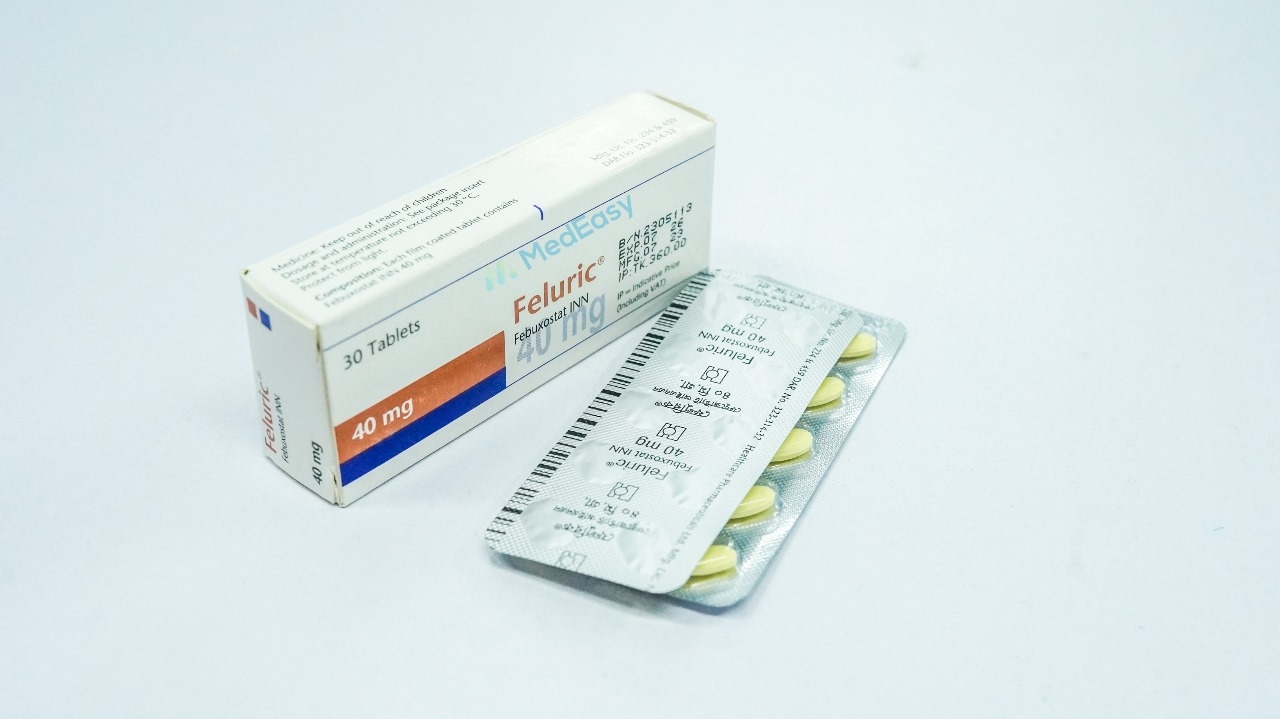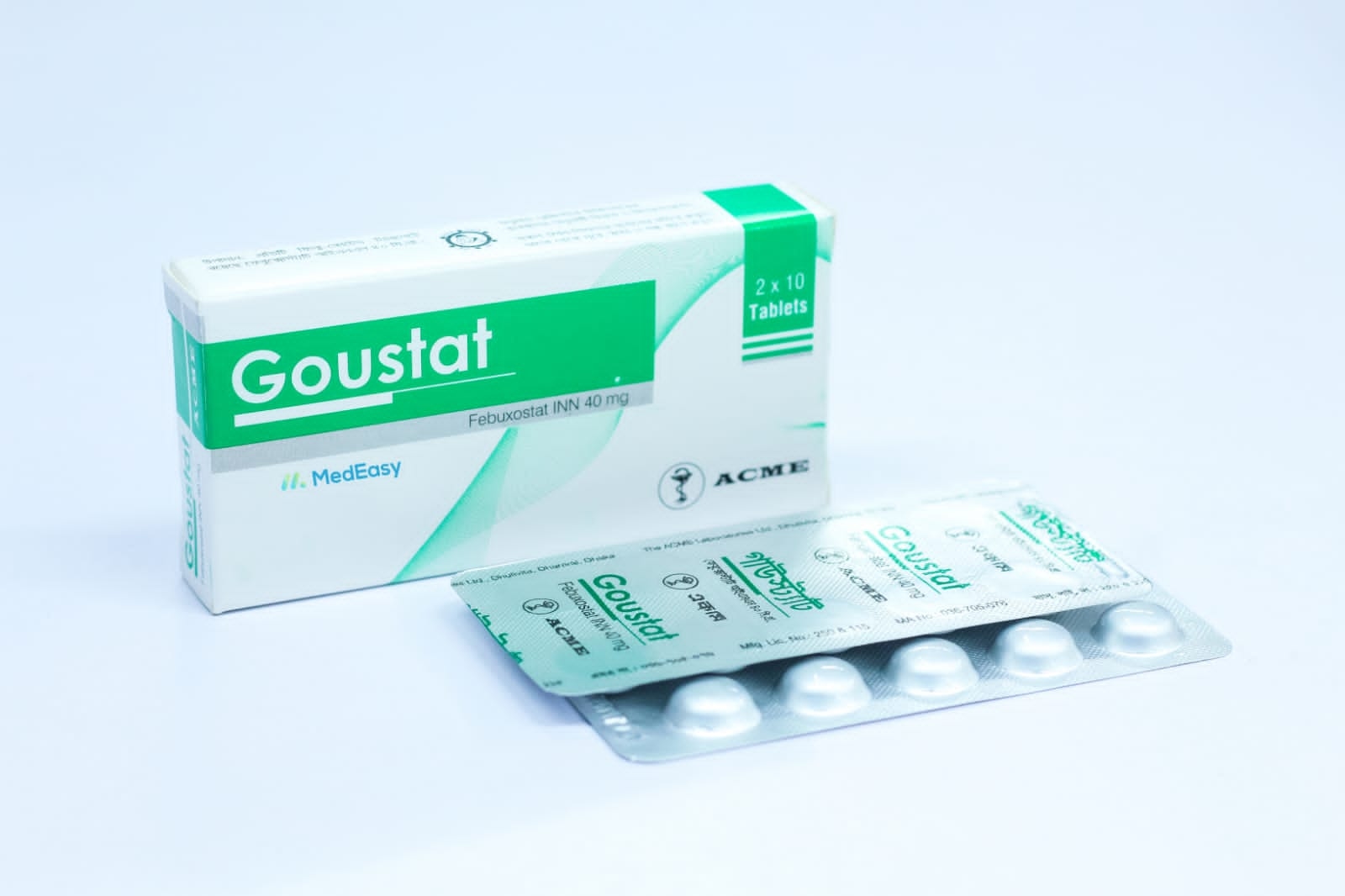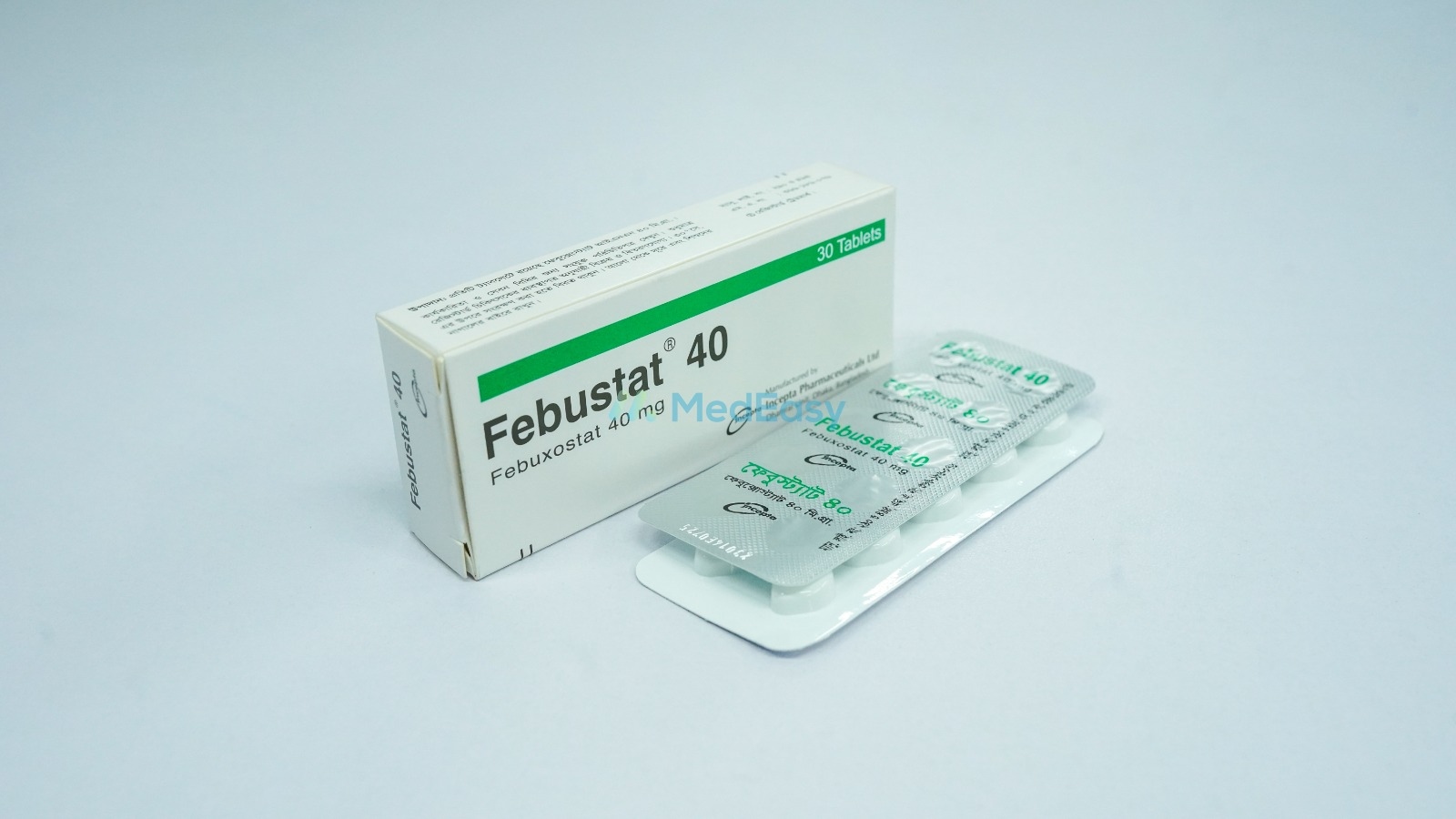
10% Off
Febustat40 mg
Incepta Pharmaceuticals Ltd.
৳117.00
Add to cart

Eburic 40 mg Tablet is available on MedEasy for ৳108.09 per 10's Strip, with home delivery anywhere in Bangladesh. It is manufactured by Beximco Pharmaceuticals Ltd. Its generic name is Febuxostat.

Eburic is a xanthine oxidase inhibitor used for the chronic management of hyperuricemia (high uric acid) in adult patients with gout.
Eburic is not used to treat an acute gout flare. It is a long-term urate-lowering therapy; starting it can transiently increase the frequency of gout flares due to mobilization of urate crystals from tissue deposits, so flare prophylaxis (e.g. an NSAID or colchicine) is often co-prescribed at initiation.
Each tablet contains Febuxostat as the active pharmaceutical ingredient, commonly available as 40 mg, 80 mg, and 120 mg film-coated tablets, along with standard pharmaceutical excipients such as binders, fillers, and coating agents.
Eburic is a non-purine selective inhibitor of xanthine oxidase, used orally as a urate-lowering agent in the long-term management of chronic gout. Unlike allopurinol, it is not a purine analog, which allows it to be used in some patients who cannot tolerate allopurinol.
It is supplied as oral film-coated tablets and is intended for once-daily dosing as part of long-term gout management, not for treatment of acute attacks.
Eburic belongs to the therapeutic class of antigout agents, specifically the xanthine oxidase inhibitors (non-purine selective inhibitor class), used as urate-lowering therapy.
Febuxostat works by selectively inhibiting xanthine oxidase, the enzyme responsible for converting hypoxanthine to xanthine and xanthine to uric acid. By blocking this enzyme, Febuxostat reduces the production of uric acid, lowering serum uric acid levels and reducing urate deposition in tissues and joints over time.
Unlike allopurinol, Febuxostat is a non-purine compound, so it does not directly interfere with other purine and pyrimidine synthesis or metabolism pathways at therapeutic doses (though it does inhibit xanthine oxidase-mediated metabolism of certain other drugs — see Drug Interactions).
Febuxostat is metabolized mainly in the liver (via glucuronidation and oxidation) and eliminated through both hepatic and renal pathways, which allows use with only modest dose restriction in mild-to-moderate renal impairment.
| Step | Dose |
|---|---|
| Starting dose | 40 mg orally once daily |
| If serum uric acid remains ≥ 6 mg/dL after 2 weeks | Increase to 80 mg orally once daily |
No dose adjustment is needed in mild-to-moderate renal impairment. Data in severe renal impairment are limited; use with caution and physician-guided dose limitation.
No dose adjustment is needed in mild-to-moderate hepatic impairment. Use with caution in severe hepatic impairment, as it has not been well studied.
Safety and efficacy have not been established in pediatric patients; not recommended for use in children.
Eburic is administered orally, once daily, with or without food. Tablets should be swallowed whole with water. It should be taken consistently at the same time each day to help maintain steady urate-lowering effect. Do not stop or change the dose without consulting a physician, even if symptoms of a gout flare occur after starting treatment.
No clinically significant interactions have been established with NSAIDs, colchicine, or warfarin at recommended doses. Always inform the physician of all medications being taken, including over-the-counter drugs and supplements.
Febuxostat is contraindicated in the following situations:
Pregnancy: Data on the use of Eburic in pregnant women are limited. Animal studies have not shown adverse fetal effects at doses well above the human dose, but this does not guarantee human safety. Eburic should be used during pregnancy only if clearly needed and the potential benefit justifies the potential risk to the fetus; consult a physician before use.
Lactation: It is not known whether Eburic passes into human breast milk (it has been detected in the milk of lactating animals). Because of the potential for adverse effects in a breastfeeding infant, a decision should be made to discontinue breastfeeding or discontinue the drug, taking into account the importance of the drug to the mother, in consultation with a physician.
Gout patients with pre-existing major cardiovascular disease treated with Eburic had a higher rate of cardiovascular death compared with those treated with allopurinol in a large cardiovascular outcomes trial (CARES). Eburic should generally be reserved for patients who have had an inadequate response, intolerance, or contraindication to allopurinol. Discuss the risks and benefits, including cardiovascular risk factors, with a physician before starting therapy, and seek prompt medical attention for chest pain, shortness of breath, or other signs of a heart attack or stroke.
Starting Eburic may increase gout flares initially due to mobilization of urate from tissue deposits. Do not discontinue therapy solely because of a flare; flare prophylaxis is often used during the first months of treatment as directed by a physician.
Liver function abnormalities have been reported, and rare cases of hepatic failure (some fatal) have occurred. Liver function testing is recommended before starting and periodically during treatment. Discontinue and seek medical attention if signs of liver injury appear.
Rare but serious skin/hypersensitivity reactions (Stevens-Johnson syndrome, toxic epidermal necrolysis, DRESS) have been reported, generally within the first month of treatment. Discontinue immediately and seek medical care if a serious skin reaction or hypersensitivity is suspected.
Eburic has not been adequately studied in organ transplant recipients and is not recommended in this population unless specifically advised by a physician, partly due to the interaction risk with azathioprine (see Contraindications).
Limited data are available on overdose with Eburic; doses up to several times the usual maximum have been tolerated without specific dose-limiting toxicity in studies, but overdose should still be treated seriously. If an overdose is suspected, seek immediate medical attention or contact a poison control center / emergency services right away. Treatment of overdose is supportive and symptomatic, based on the patient's clinical condition, and should only be managed by medical professionals.
Store at room temperature (below 30°C), protected from light and moisture. Keep out of reach of children.
Safety and efficacy of Eburic have not been established in patients under 18 years of age; it is not recommended for pediatric use.
No overall differences in safety or effectiveness have been observed between elderly and younger adult patients, but caution is advised given the higher likelihood of decreased hepatic, renal, or cardiac function and concomitant disease or other drug therapy in this age group.
No dosage adjustment is needed for mild-to-moderate renal impairment. Data are limited in severe renal impairment (CrCl 15–29 mL/min); use with caution and typically limit to the lower (40 mg) dose under physician guidance.
No dosage adjustment is needed for mild-to-moderate hepatic impairment. Not well studied in severe hepatic impairment; use with caution.
Eburic is a long-term, ongoing therapy for chronic gout management rather than a short-course treatment. It is typically continued indefinitely to keep serum uric acid below target levels and prevent future gout flares and tophi formation, with periodic monitoring of uric acid and liver function as directed by a physician. Treatment duration should be individualized and reviewed regularly by the prescribing physician.
Antigout agent; Xanthine oxidase inhibitor (non-purine selective inhibitor).
Febuxostat selectively and potently inhibits xanthine oxidase in both its oxidized and reduced forms, blocking the conversion of hypoxanthine to xanthine and xanthine to uric acid. This reduces serum uric acid production, allowing gradual dissolution of urate crystal deposits and prevention of new crystal formation, thereby reducing the frequency of gout flares over time.
C
The safety and efficacy of Eburic have not been established in pediatric patients (under 18 years of age). It is therefore not recommended for use in children or adolescents outside of specialist clinical judgement in rare, specific circumstances (e.g. certain pediatric hematology/oncology settings for tumor lysis syndrome prevention, only under specialist direction). Routine use in the pediatric population for gout is not supported by current data.
Q: What is Eburic 40 mg Tablet used for?
A: Eburic 40 mg Tablet is used for the long-term (chronic) management of high uric acid levels (hyperuricemia) in adults with gout, typically in patients who have not responded well to, or cannot tolerate, allopurinol. It is not used to treat a sudden gout attack.
Q: Why do gout flares sometimes get worse when I start Eburic 40 mg Tablet?
A: When you start Eburic 40 mg Tablet, uric acid crystals stored in your joints and tissues begin to be mobilized and dissolved, which can temporarily trigger more frequent gout flares in the first weeks to months. Your physician may prescribe an anti-inflammatory medicine (such as an NSAID or colchicine) alongside Eburic 40 mg Tablet at the start of treatment to help prevent this. Do not stop Eburic 40 mg Tablet on your own if this happens — contact your physician.
Q: Is Eburic 40 mg Tablet safe for the heart?
A: Eburic 40 mg Tablet carries a boxed warning because, in a large clinical trial of gout patients with existing heart disease, those taking Eburic 40 mg Tablet had a higher rate of cardiovascular death than those taking allopurinol. For this reason, Eburic 40 mg Tablet is generally reserved for patients who cannot use allopurinol, and physicians will weigh personal cardiovascular risk factors before prescribing it. Report any chest pain, shortness of breath, or symptoms of stroke to a doctor immediately.
Q: Can I take Eburic 40 mg Tablet with azathioprine or mercaptopurine?
A: No. Eburic 40 mg Tablet must not be taken with azathioprine or mercaptopurine (6-mercaptopurine), because it blocks the enzyme that breaks these drugs down, which can cause dangerous, potentially life-threatening drops in blood cell counts. Tell your physician about all medicines you take before starting Eburic 40 mg Tablet.
Q: Can pregnant or breastfeeding women take Eburic 40 mg Tablet?
A: Data in pregnancy are limited, so Eburic 40 mg Tablet should be used in pregnancy only if clearly needed and a physician determines the benefit outweighs the potential risk to the baby. It is not known whether Eburic 40 mg Tablet passes into human breast milk, so breastfeeding mothers should consult their physician, who will weigh the benefits of breastfeeding against the mother's need for the medicine.
Q: What should I do if I miss a dose or take too much Eburic 40 mg Tablet?
A: If you miss a dose, take it as soon as you remember unless it is almost time for your next dose — do not double up. If you or someone else has taken more Eburic 40 mg Tablet than prescribed, seek immediate medical attention or contact emergency services/poison control right away, even if no symptoms are present yet.
Disclaimer
The information provided is accurate to the best of our knowledge, but it does not replace professional medical advice. We cannot guarantee its completeness or accuracy, and the absence of specific information about a drug should not be taken as an endorsement. We are not responsible for any consequences arising from this information, so please consult a healthcare professional for any concerns or questions.