

10% Off
Cystosan100 mg
Incepta Pharmaceuticals Ltd.
৳360.00
Add to cart
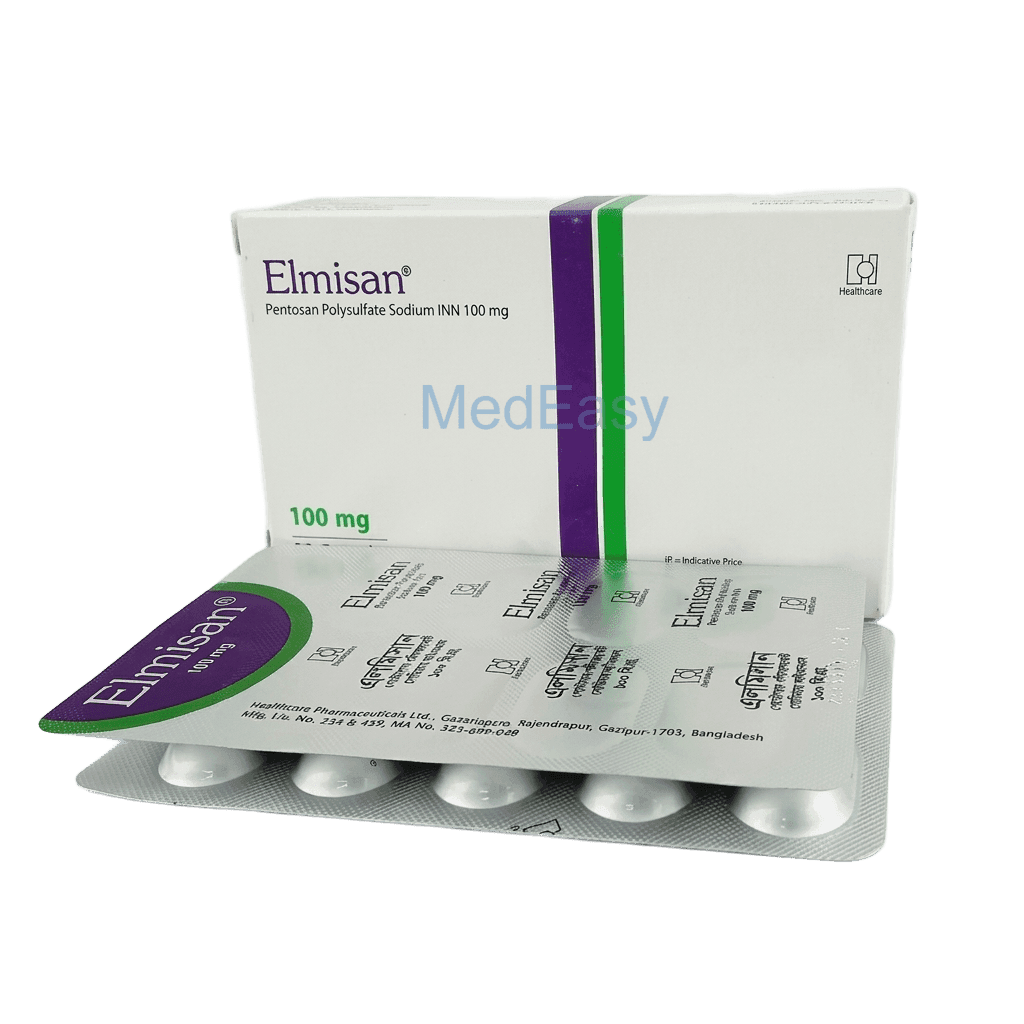

Elmisan is an oral medication indicated for the relief of bladder pain or discomfort associated with interstitial cystitis (also known as painful bladder syndrome).
Elmisan is not indicated for the treatment of urinary tract infection, overactive bladder, or other unrelated urologic conditions, and is not approved for pediatric use. No other well-established guideline-supported or off-label uses are recognized for Elmisan; it should be used only for the labeled indication above.
Each capsule/tablet contains Pentosan Polysulfate Sodium as the active pharmaceutical ingredient, formulated for oral administration. Pentosan Polysulfate Sodium is a semi-synthetic sulfated polysaccharide (heparin-like glycosaminoglycan analogue) derived from beechwood hemicellulose (xylan).
Elmisan is a semi-synthetic, low-molecular-weight heparinoid compound structurally similar to glycosaminoglycans (GAGs) that occur naturally in the bladder wall lining. It is administered orally and is used specifically to relieve bladder pain and discomfort in patients with interstitial cystitis. Unlike typical analgesics, Elmisan is thought to act by helping restore the protective mucosal (glycosaminoglycan) layer of the bladder wall rather than by direct pain-blocking action.
Elmisan belongs to the class of urinary tract analgesics / bladder-protectant agents (glycosaminoglycan [GAG] analogues). It is a heparinoid compound distinct from conventional analgesics, antispasmodics, or antibiotics used in urologic conditions.
Pentosan Polysulfate Sodium is a low-molecular-weight heparin-like compound. After oral absorption, it is thought to adhere to the bladder wall mucosal membrane, where it may help restore and reinforce the protective glycosaminoglycan (GAG) layer that is deficient or damaged in patients with interstitial cystitis. This barrier normally prevents irritating solutes in the urine from penetrating the bladder wall and triggering pain; when this layer is compromised, Pentosan Polysulfate Sodium is believed to reduce mucosal permeability and consequently reduce bladder pain and discomfort.
Pentosan Polysulfate Sodium is poorly absorbed from the gastrointestinal tract (oral bioavailability is low, roughly 3%). Food further reduces its absorption, so it is recommended to be taken on an empty stomach. It also possesses a mild anticoagulant (heparin-like) effect due to its structural similarity to heparin, which is why caution is needed in patients at risk of bleeding.
Clinical improvement in bladder pain symptoms with Pentosan Polysulfate Sodium is often gradual and may take several months of continued therapy to become apparent; a treatment trial of up to 3-6 months is generally recommended before concluding lack of efficacy.
| Indication | Dose | Frequency |
|---|---|---|
| Interstitial cystitis (bladder pain relief) | 100 mg orally | Three times daily (with water, on an empty stomach - at least 1 hour before or 2 hours after meals) |
No formal dose adjustment has been well established for renal impairment; however, Elmisan should be used with caution in patients with hepatic impairment because of the associated risk of coagulopathy and its mild anticoagulant effect (see Precautions and Warnings).
Safety and efficacy of Elmisan have not been established in pediatric patients; it is not recommended for use in children.
Elmisan capsules should be swallowed whole with a full glass of water, taken at least one hour before or two hours after meals, since food reduces absorption. Do not crush, chew, or open the capsule.
Elmisan has a mild heparin-like anticoagulant effect, which is the basis for its main clinically significant interactions:
Inform the prescriber of all medications, supplements, and planned surgical or dental procedures before starting or continuing Elmisan, given its effect on coagulation.
Pentosan Polysulfate Sodium is contraindicated in patients with known hypersensitivity to Pentosan Polysulfate Sodium or to any component of the formulation.
The most commonly reported side effects of Elmisan involve the gastrointestinal system and hair:
Patients should report any unusual bleeding, vision changes, or persistent gastrointestinal symptoms to their physician.
Pregnancy: Data on the use of Elmisan in pregnant women are limited. Elmisan should be used during pregnancy only if clearly needed and if the potential benefit justifies the potential risk to the fetus; consult a physician before use.
Lactation: It is not known whether Elmisan or its metabolites are excreted in human breast milk. Caution is advised, and a physician should be consulted to weigh the benefits of treatment against potential risk to the nursing infant.
Pigmentary changes in the retina (maculopathy) have been reported in patients taking Elmisan, particularly with long-term, cumulative use over several years. This is a recognized, potentially vision-threatening adverse effect. A baseline ophthalmologic examination is recommended before starting therapy, with periodic eye examinations during long-term treatment. Patients should seek prompt ophthalmologic evaluation if they notice any visual changes (e.g., difficulty reading, adapting to low light, or blurred vision), and continued use should be reassessed if maculopathy is diagnosed.
Elmisan has a weak anticoagulant/heparin-like effect. Caution is advised in patients with bleeding disorders, those on anticoagulant or antiplatelet therapy, those with hepatic impairment (which carries its own coagulopathy risk), and prior to surgical, dental, or invasive procedures - such procedures may need to be planned with temporary interruption of Elmisan in consultation with a physician.
Alopecia has been reported with Elmisan use; it is generally mild and reversible after discontinuation.
Gastrointestinal symptoms such as nausea, diarrhea, and abdominal discomfort are common with Elmisan and should be reported if severe or persistent.
Improvement in bladder pain/discomfort with Elmisan may not be apparent for several months of continued treatment; patients should be counseled on this delayed onset of benefit to support adherence.
There is limited clinical experience with Elmisan overdose. Based on its pharmacologic profile, the primary concern with overdose would be an increased risk of bleeding due to its anticoagulant-like effect, along with possible exaggeration of gastrointestinal side effects. There is no specific antidote for Elmisan overdose. In case of a suspected overdose, seek immediate medical attention or contact a poison control center; treatment should be supportive, with monitoring for signs of bleeding.
Store at room temperature (below 30°C), away from light and moisture. Keep out of reach of children.
Safety and efficacy of Elmisan have not been established in patients under 18 years of age; it is not recommended for pediatric use.
Clinical studies of Elmisan have not identified differences in response between elderly and younger patients; however, elderly patients may be more likely to have bleeding risk factors (e.g., concomitant anticoagulant use) or hepatic/renal impairment, so use with appropriate caution and monitoring.
No specific dose adjustment has been well established; use with caution and physician oversight.
Use with caution due to the mild anticoagulant effect of Elmisan and the increased coagulopathy risk associated with hepatic impairment (see Precautions and Warnings).
Treatment duration with Elmisan is individualized based on symptom response; since benefit may take up to several months to become apparent, an initial treatment trial of 3 to 6 months is generally recommended before assessing effectiveness. Long-term use should be periodically reassessed by the prescribing physician, with attention to cumulative dose given the risk of retinal pigmentary maculopathy with prolonged therapy.
Urinary tract analgesic; glycosaminoglycan (GAG) analogue; semi-synthetic heparinoid compound. Pentosan Polysulfate Sodium is not classified as a conventional NSAID, opioid, antispasmodic, or antibiotic.
Pentosan Polysulfate Sodium is thought to bind to the bladder wall mucosal membrane, helping to restore the protective glycosaminoglycan layer that is deficient in interstitial cystitis. This is believed to reduce the ability of irritating solutes in the urine to penetrate the bladder wall, thereby reducing bladder pain and discomfort over time.
B
Safety and efficacy of Elmisan have not been established in children and adolescents. It is not recommended for use in pediatric patients, and no pediatric dosing regimen has been established.
Q: What is Elmisan 100 mg Capsule used for?
A: Elmisan 100 mg Capsule is an oral medication used to relieve bladder pain and discomfort associated with interstitial cystitis (painful bladder syndrome). It is not a general painkiller or antibiotic.
Q: How long does it take for Elmisan 100 mg Capsule to work?
A: Improvement in bladder pain with Elmisan 100 mg Capsule is often gradual and may take up to several months of continuous use to become noticeable. Patients are generally advised to continue treatment for at least 3 to 6 months before concluding it is not effective, unless a physician advises otherwise.
Q: How should I take Elmisan 100 mg Capsule?
A: Elmisan 100 mg Capsule should be taken orally, swallowed whole with a full glass of water, on an empty stomach - at least 1 hour before or 2 hours after meals - because food reduces its absorption. The usual adult dose is 100 mg three times daily unless a physician prescribes otherwise.
Q: Can Elmisan 100 mg Capsule affect my eyes?
A: Yes. Long-term use of Elmisan 100 mg Capsule, especially over several years, has been associated with retinal pigmentary maculopathy, a potentially vision-threatening eye condition. A baseline eye examination before starting treatment and periodic eye exams during long-term use are recommended. Report any vision changes to your doctor promptly.
Q: Is Elmisan 100 mg Capsule safe to take with blood thinners?
A: Elmisan 100 mg Capsule has a mild heparin-like anticoagulant effect and can increase bleeding risk when combined with anticoagulants, antiplatelet agents (like aspirin), or NSAIDs. Inform your physician about all medications you take, especially before surgery or dental procedures.
Q: Can Elmisan 100 mg Capsule be used during pregnancy or breastfeeding?
A: Data on Elmisan 100 mg Capsule use during pregnancy are limited, and it is not known whether it passes into breast milk. It should be used during pregnancy or lactation only if clearly needed and a physician determines the benefit outweighs the potential risk.
Disclaimer
The information provided is accurate to the best of our knowledge, but it does not replace professional medical advice. We cannot guarantee its completeness or accuracy, and the absence of specific information about a drug should not be taken as an endorsement. We are not responsible for any consequences arising from this information, so please consult a healthcare professional for any concerns or questions.
