

10% Off
Bupro-D45 mg+105
Square Pharmaceuticals PLC.
৳135.00
Add to cart
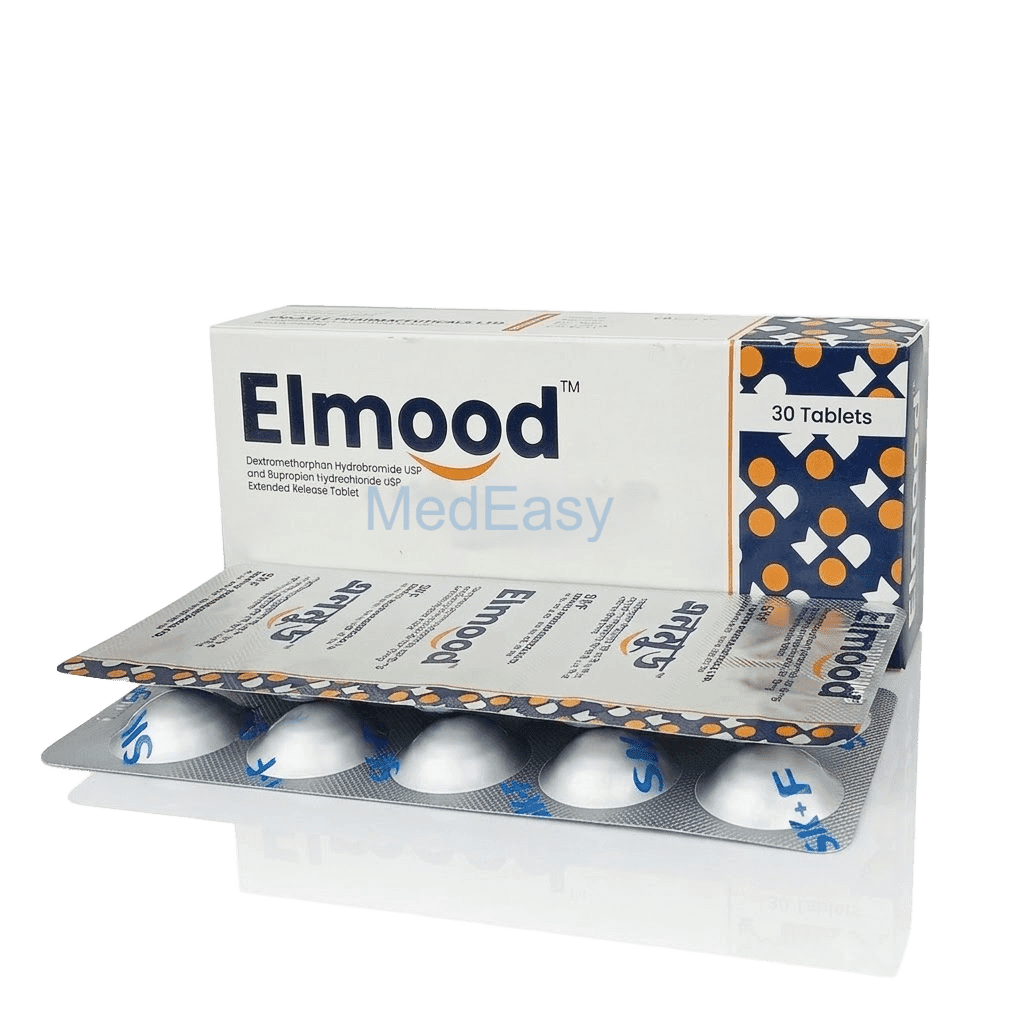

Elmood is an oral combination product containing dextromethorphan (an NMDA receptor antagonist and sigma-1 receptor agonist) and bupropion (which here also acts as a CYP2D6 inhibitor to raise dextromethorphan exposure). It represents a non-monoaminergic mechanism distinct from traditional antidepressants.
Elmood has not been shown to be effective, and is not indicated, for anxiety disorders, cough suppression, or any use in patients under 18 years of age. It should be prescribed only for its approved indications, under medical supervision.
Each extended-release tablet of Dextromethorphan + Bupropion contains a fixed-dose combination of dextromethorphan hydrobromide and bupropion hydrochloride, most commonly available as a 45 mg/105 mg (dextromethorphan/bupropion) strength tablet. Exact strengths and available dosage forms may vary by manufacturer and market; only the studied and approved fixed-dose combination should be used.
Elmood is a fixed-dose oral combination of dextromethorphan (an NMDA receptor antagonist and sigma-1 receptor agonist) and bupropion (an aminoketone that inhibits the CYP2D6 enzyme, increasing and prolonging dextromethorphan exposure). Together these components produce a glutamatergic, non-monoaminergic antidepressant effect that is mechanistically distinct from SSRIs, SNRIs, and other traditional antidepressants. Elmood is supplied as an extended-release tablet taken by mouth and carries a boxed warning regarding suicidal thoughts and behavior.
Elmood belongs to a novel antidepressant class combining an NMDA receptor antagonist/sigma-1 receptor agonist (dextromethorphan) with an aminoketone norepinephrine-dopamine reuptake inhibitor that also serves as a CYP2D6 inhibitor (bupropion). It is classified as a non-monoaminergic antidepressant, mechanistically distinct from SSRIs, SNRIs, and tricyclic antidepressants.
The dextromethorphan component of Dextromethorphan + Bupropion acts as an NMDA receptor antagonist and sigma-1 receptor agonist, effects thought to underlie its rapid-acting antidepressant activity. The bupropion component independently contributes antidepressant activity as a norepinephrine-dopamine reuptake inhibitor, and importantly inhibits the CYP2D6 enzyme, which markedly increases plasma exposure and prolongs the half-life of dextromethorphan, allowing sustained NMDA/sigma-1 activity at lower dextromethorphan doses than would otherwise be required.
Dosing of Elmood differs by indication and is titrated over the first 1-2 weeks of treatment.
| Indication/Population | Dose | Notes |
|---|---|---|
| Adults - Major depressive disorder | One tablet (45 mg/105 mg) once daily (morning) for the first 3 days, then increase to one tablet twice daily, at least 8 hours apart, from day 4 onward | Maximum 2 tablets (90 mg/210 mg) per 24 hours |
| Adults - Agitation associated with Alzheimer's disease dementia | Lower starting dose once daily for the first week, increased to twice daily (at least 8 hours apart) in the second week, with further increase to the standard twice-daily dose from around day 15 based on response and tolerability | Titration schedule and target dose are determined by the prescriber; not for as-needed use |
| Moderate renal impairment | Reduced to once-daily dosing | Severe renal impairment/end-stage renal disease: not recommended (not adequately studied) |
| Known CYP2D6 poor metabolizers or concurrent strong CYP2D6 inhibitor use | Reduced to once-daily dosing | Higher dextromethorphan exposure expected; see Interactions |
| Moderate-to-severe hepatic impairment | Not recommended | Bupropion exposure is significantly increased |
| Children/adolescents | Not approved | Safety and efficacy not established (see Pediatric Uses) |
Tablets of Elmood should be swallowed whole with water and must not be crushed, split, or chewed, as this could increase the rate of drug release. It may be taken with or without food; avoid dosing close to bedtime because of the risk of insomnia.
Elmood tablets should be swallowed whole with a glass of water; do not crush, divide, or chew the tablet, as this may cause more rapid release of the medication and increase the risk of adverse effects. It may be taken with or without food. When dosed twice daily, doses should be separated by at least 8 hours, and the second daily dose should be timed to reduce the risk of insomnia. See Dosage and Administration for full titration schedules.
Elmood has clinically significant interactions with the following:
| Interacting Drug/Class | Mechanism | Clinical Consequence |
|---|---|---|
| Monoamine oxidase inhibitors (MAOIs), including linezolid and intravenous methylene blue | Combined serotonergic/adrenergic effects | Risk of serotonin syndrome and hypertensive crisis; contraindicated within 14 days of MAOI use (see Contraindications) |
| Other serotonergic drugs (SSRIs, SNRIs, triptans, tramadol, St. John's Wort) | Additive serotonergic activity, partly via the dextromethorphan component | Increased risk of serotonin syndrome; use with caution and monitor closely |
| Strong CYP2D6 inhibitors (e.g., paroxetine, fluoxetine, quinidine) | Further inhibition of dextromethorphan/bupropion metabolism | Substantially increased drug exposure; dose reduction of Elmood is required |
| Drugs metabolized by CYP2D6 (e.g., tricyclic antidepressants, certain antipsychotics, metoprolol, flecainide, propafenone) | Bupropion component inhibits CYP2D6 | Increased levels/toxicity of the co-administered drug; dose adjustment of that drug may be needed |
| Drugs that lower seizure threshold (antipsychotics, other antidepressants, systemic corticosteroids, theophylline, tramadol) | Additive seizure risk (bupropion component) | Increased risk of seizure; avoid combination when possible |
| Alcohol and CNS depressants; abrupt discontinuation of alcohol, benzodiazepines, or sedative-hypnotics | Additive CNS effects; lowered seizure threshold on abrupt withdrawal | Increased sedation and seizure risk (see Contraindications for abrupt discontinuation) |
| Dopaminergic drugs (e.g., levodopa, amantadine) | Additive CNS/dopaminergic stimulation (bupropion component) | Increased risk of agitation, restlessness, tremor; use with caution |
See Precautions and Warnings for cautions and risk factors that do not amount to absolute contraindications.
Side effects of Elmood reported in clinical studies include:
Patients should seek prompt medical attention for a seizure, chest pain, signs of an allergic reaction, confusion, hallucinations, or thoughts of self-harm.
Elmood is not recommended during pregnancy. Animal reproduction studies with the components of Elmood have shown evidence of developmental toxicity, including fetal malformations and embryo-fetal loss, at doses relevant to human exposure. Elmood should be used during pregnancy only if the potential benefit to the mother clearly justifies the potential risk to the fetus, and only under close medical supervision; a physician should always be consulted before use in pregnancy or if pregnancy occurs during treatment.
The bupropion component of Elmood is known to pass into human breast milk. Breastfeeding is not recommended during treatment with Elmood and for a short period after discontinuation, given the potential for adverse effects in a nursing infant. A physician should be consulted to weigh the benefits of treatment against potential infant exposure and to discuss alternatives.
Antidepressants, including Elmood, increase the risk of suicidal thinking and behavior in children, adolescents, and young adults, particularly during the first months of treatment or after dose changes. Elmood is not approved for use in patients under 18 years of age. All patients on Elmood should be monitored closely for clinical worsening, unusual changes in behavior, or emergence of suicidal thoughts, especially early in treatment.
The bupropion component of Elmood is associated with a dose-dependent risk of seizure. Risk is increased at higher doses, in patients with predisposing factors, and with concurrent use of other drugs that lower seizure threshold or with abrupt discontinuation of alcohol or sedative-hypnotics (see Contraindications and Interactions).
Because dextromethorphan has serotonergic activity, concurrent use of Elmood with other serotonergic drugs (SSRIs, SNRIs, triptans, and others) or MAOIs can cause a potentially life-threatening serotonin syndrome, with symptoms such as agitation, hallucination, tachycardia, hyperthermia, tremor, and incoordination. Discontinue immediately and seek medical care if this is suspected.
Elmood can cause dizziness and dissociative or psychoactive effects, including new or worsening mania, hypomania, hallucinations, delusions, or paranoia, particularly at treatment initiation or after a dose increase. Patients should avoid driving or operating hazardous machinery until they know how Elmood affects them.
Elmood can cause or worsen hypertension. Blood pressure should be assessed before starting treatment and monitored periodically during treatment.
Pupillary dilation associated with the bupropion component can precipitate an attack in patients with anatomically narrow angles who lack a protective iridectomy. Hyponatremia has also been reported rarely with antidepressants of this general type.
The mechanism of Elmood relies in part on CYP2D6 inhibition by its bupropion component; concurrent strong CYP2D6 inhibitors or known CYP2D6 poor-metabolizer status significantly raise dextromethorphan exposure and require dose limitation (see Dosage and Administration and Interactions).
Overdose of Elmood may cause seizures, hallucinations, agitation, tachycardia, tremor, loss of consciousness, and cardiac conduction disturbances (including arrhythmias associated with the bupropion component), among other effects. There is no specific antidote for Elmood overdose.
If overdose of Elmood is suspected, seek immediate medical attention or contact emergency services/a poison control center right away. Overdose should be managed in a monitored medical setting with supportive and symptomatic care by trained personnel; do not attempt any specific treatment at home.
Store at room temperature (below 30°C), away from light and moisture. Keep out of reach of children.
Elmood is not approved for use in children or adolescents; see Pediatric Uses for full detail, including the boxed warning on suicidal thoughts and behavior in this age group.
Patients treated for agitation associated with Alzheimer's disease dementia with Elmood are typically elderly; use general antidepressant precautions, start at the lower end of dosing where applicable, and monitor closely for adverse effects, falls, and changes in renal function.
Dose of Elmood is reduced to once daily in moderate renal impairment; use in severe renal impairment or end-stage renal disease is not recommended (not adequately studied).
Use of Elmood is not recommended in moderate-to-severe hepatic impairment because of significantly increased exposure to the bupropion component.
See Pregnancy and Lactation section for full details.
The need for continued treatment with Elmood should be reassessed periodically by the prescribing physician, weighing ongoing benefit against risks such as seizure and suicidality. There is no fixed maximum duration, but treatment should not be continued beyond what is clinically necessary, and Elmood should not be stopped abruptly without medical guidance, as antidepressant discontinuation can cause withdrawal-type symptoms.
Dextromethorphan + Bupropion combines an NMDA receptor antagonist/sigma-1 receptor agonist (dextromethorphan) with an aminoketone norepinephrine-dopamine reuptake inhibitor and CYP2D6 inhibitor (bupropion), together forming a non-monoaminergic antidepressant class distinct from SSRIs, SNRIs, and tricyclic antidepressants.
Dextromethorphan + Bupropion works through the combined action of dextromethorphan (NMDA receptor antagonism and sigma-1 receptor agonism, contributing glutamatergic antidepressant effects) and bupropion, which both contributes independent antidepressant activity and inhibits the CYP2D6 enzyme, increasing and prolonging dextromethorphan exposure so that its central effects are sustained at lower doses. See Pharmacology for full detail.
The safety and efficacy of Elmood in children and adolescents have not been established, and it is not approved for use in patients under 18 years of age. As with other antidepressants, Elmood carries a boxed warning for increased risk of suicidal thinking and behavior in children, adolescents, and young adults; it should never be used in pediatric patients outside of this approved population without explicit medical direction.
Q: What is Elmood 45 mg+105 mg Tablet (Extended Release) used for?
A: Elmood 45 mg+105 mg Tablet (Extended Release) is used to treat major depressive disorder (MDD) in adults and agitation associated with dementia due to Alzheimer's disease. It works through a non-monoaminergic mechanism involving NMDA receptor antagonism, different from most other antidepressants.
Q: How is Elmood 45 mg+105 mg Tablet (Extended Release) taken?
A: Elmood 45 mg+105 mg Tablet (Extended Release) is taken as a tablet by mouth, swallowed whole with water, and must not be crushed, split, or chewed. Dosing usually starts once daily and is increased to twice daily (at least 8 hours apart) after the first few days, following your physician's instructions.
Q: Can Elmood 45 mg+105 mg Tablet (Extended Release) cause seizures?
A: Yes. The bupropion component of Elmood 45 mg+105 mg Tablet (Extended Release) carries a dose-dependent seizure risk, which is why it is contraindicated in people with a seizure disorder, a history of bulimia or anorexia nervosa, or recent abrupt discontinuation of alcohol or certain sedatives, and should be used cautiously with other drugs that lower seizure threshold.
Q: Can I take Elmood 45 mg+105 mg Tablet (Extended Release) if I am pregnant or breastfeeding?
A: Elmood 45 mg+105 mg Tablet (Extended Release) is not recommended during pregnancy, as animal studies have shown potential harm to the fetus; it should be used only if a physician determines the benefit clearly outweighs the risk. Breastfeeding is not recommended during treatment because the bupropion component passes into breast milk. Always consult your physician.
Q: Can Elmood 45 mg+105 mg Tablet (Extended Release) be combined with antidepressants like SSRIs?
A: Combining Elmood 45 mg+105 mg Tablet (Extended Release) with other serotonergic medicines such as SSRIs, SNRIs, or triptans can increase the risk of a serious condition called serotonin syndrome, and Elmood 45 mg+105 mg Tablet (Extended Release) must never be combined with an MAOI or used within 14 days of stopping one. Discuss all your current medicines with your physician before starting Elmood 45 mg+105 mg Tablet (Extended Release).
Q: What should I do if I miss a dose or take too much Elmood 45 mg+105 mg Tablet (Extended Release)?
A: If you miss a dose, take it as soon as you remember unless it is close to your next scheduled dose; do not double up. If you suspect you have taken too much Elmood 45 mg+105 mg Tablet (Extended Release), seek immediate medical attention or contact emergency services or a poison control center right away, as overdose can cause seizures and other serious effects.
Disclaimer
The information provided is accurate to the best of our knowledge, but it does not replace professional medical advice. We cannot guarantee its completeness or accuracy, and the absence of specific information about a drug should not be taken as an endorsement. We are not responsible for any consequences arising from this information, so please consult a healthcare professional for any concerns or questions.
