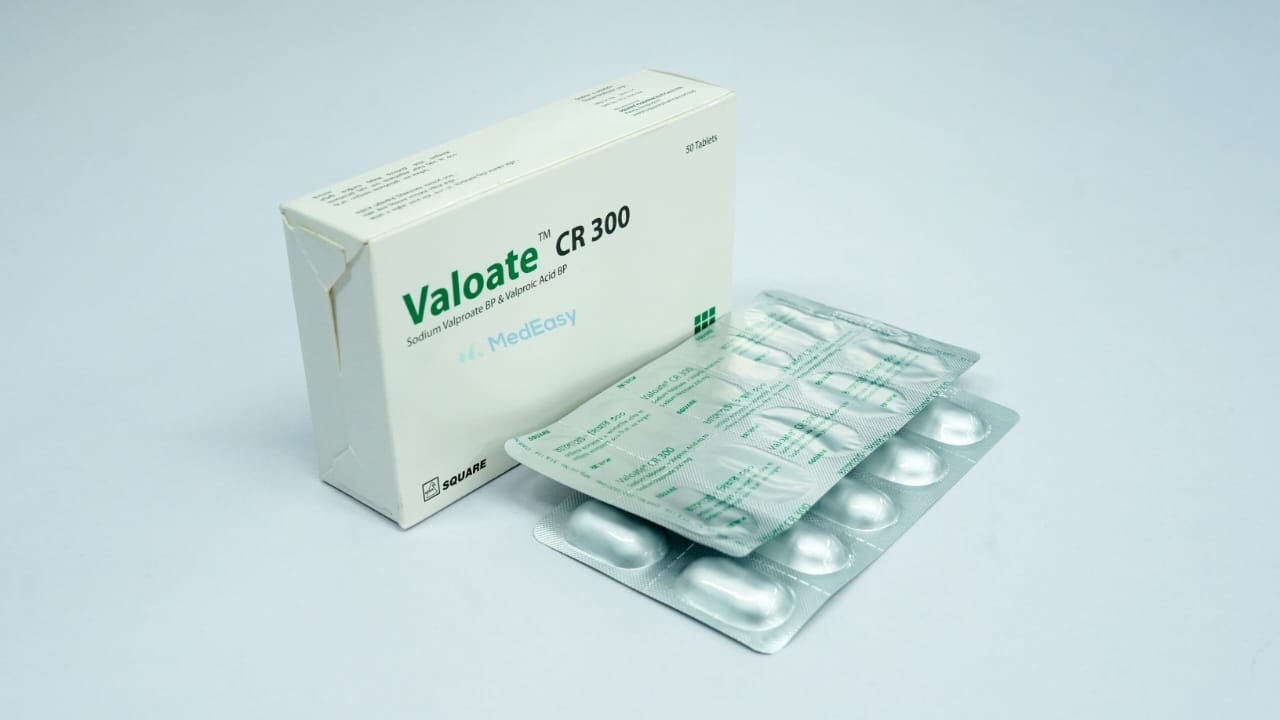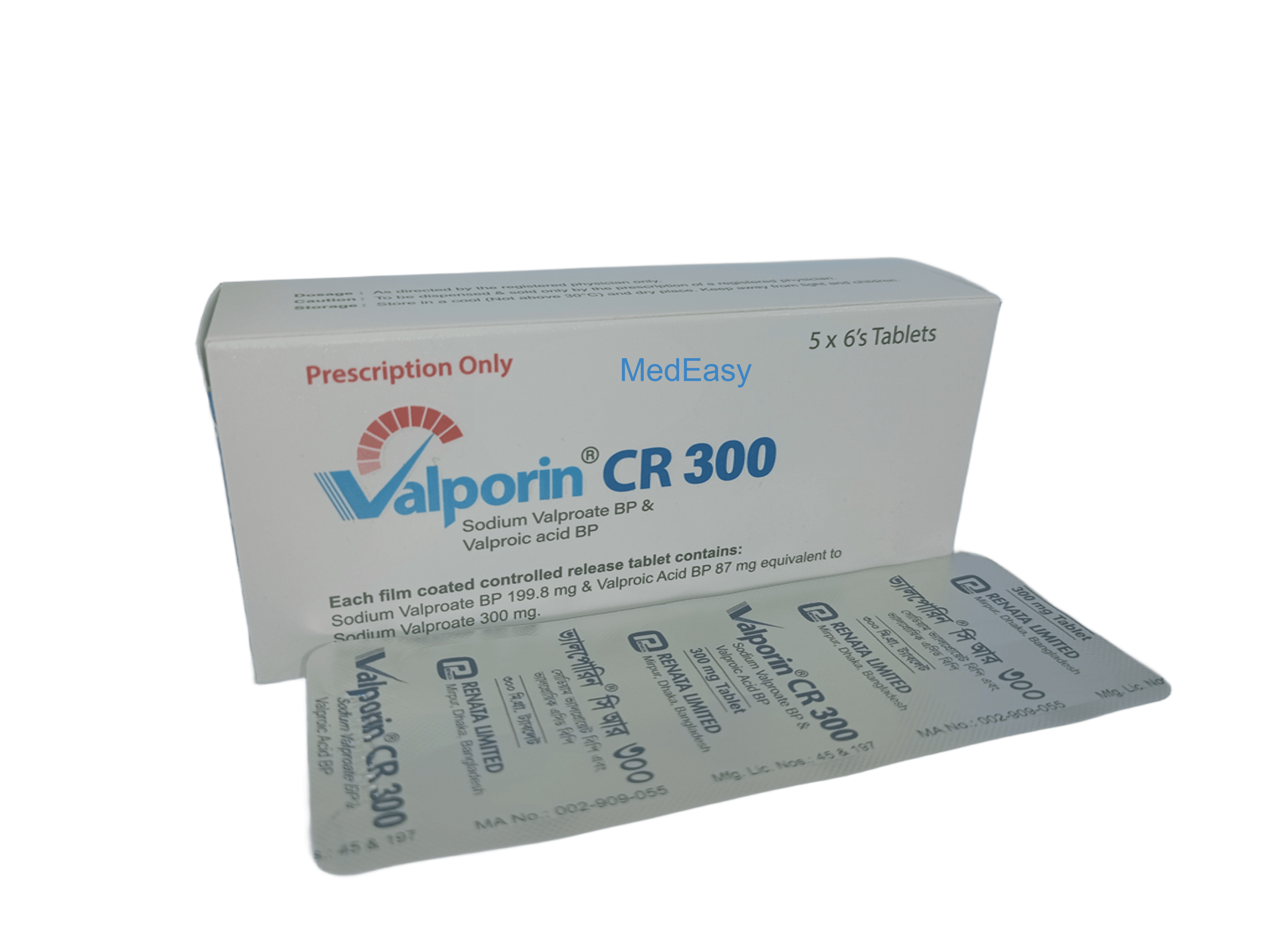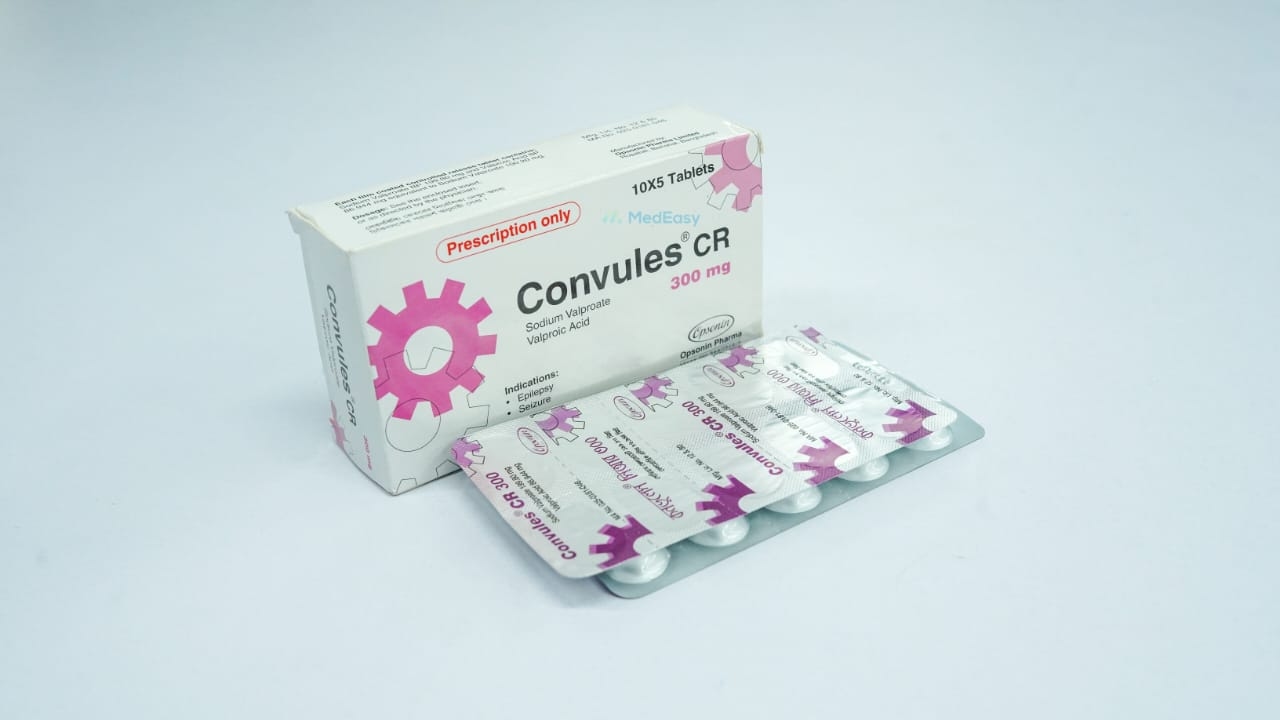
10% Off
Convules CR300 mg
Opsonin Pharma Ltd.
৳72.00
Add to cart
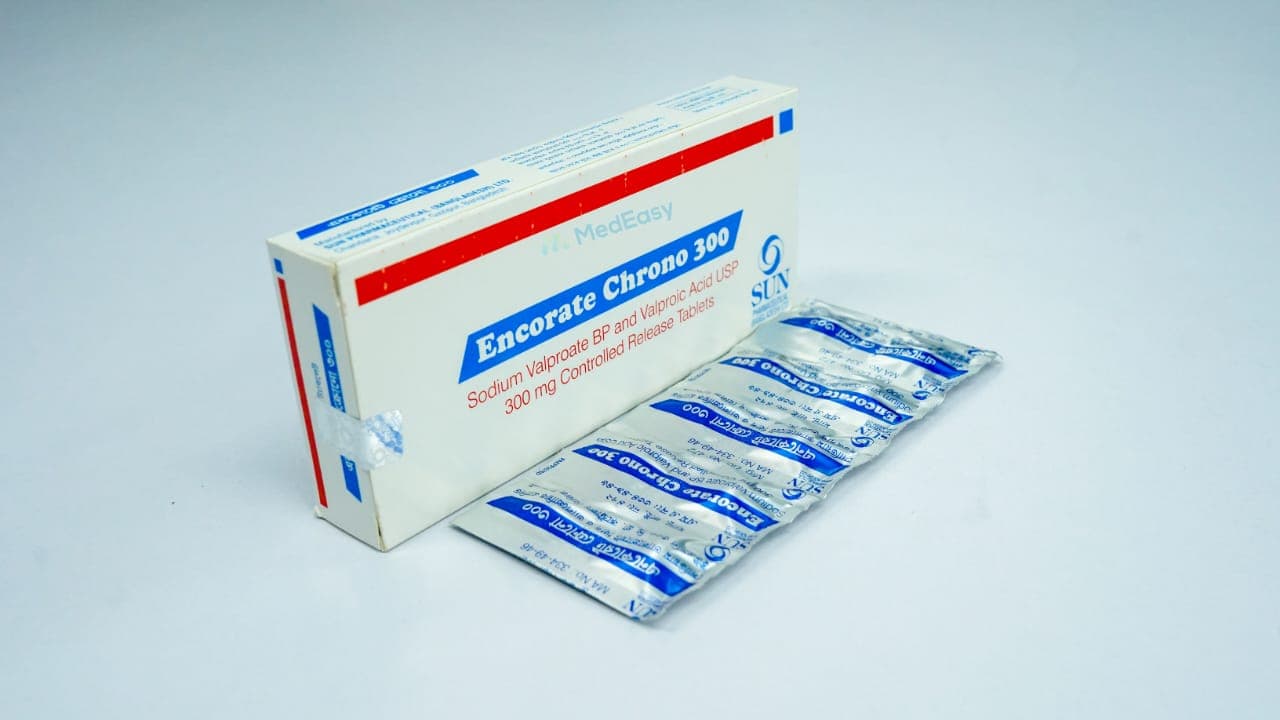
Encorate Chrono 300 mg Tablet is available on MedEasy for ৳82.80 per 10's Strip, with home delivery anywhere in Bangladesh. It is manufactured by Sun Pharmaceutical Ltd. Its generic name is Sodium Valproate.

Encorate Chrono is an anticonvulsant and mood-stabilising medicine used in the following conditions:
Use of Encorate Chrono for indications outside of epilepsy, bipolar mania and migraine prophylaxis should be guided by a specialist physician.
Each formulation of Sodium Valproate contains sodium valproate as the active pharmaceutical ingredient. Sodium Valproate is available in several dosage forms, including:
Excipients vary by manufacturer and formulation; refer to the specific product packaging for full excipient details.
Encorate Chrono is a broad-spectrum anticonvulsant (antiepileptic) and mood-stabilising agent, chemically related to valproic acid. Encorate Chrono is used in the long-term management of epilepsy, in the treatment of acute mania associated with bipolar disorder, and for prevention of migraine headaches.
Encorate Chrono carries several serious, well-recognised safety concerns — including liver toxicity, pancreatitis, and major risk to a developing fetus during pregnancy — which is why it requires careful patient selection, monitoring, and physician supervision throughout treatment.
Encorate Chrono belongs to the anticonvulsant (antiepileptic drug) class and is also classified as a mood stabiliser used in bipolar disorder, and as an antimigraine prophylactic agent.
The precise mechanism by which Sodium Valproate exerts its therapeutic effects is not completely understood. Proposed mechanisms include:
Sodium Valproate is well absorbed orally, is highly (~80-94%) bound to plasma proteins (binding is saturable and reduced in hepatic/renal disease and in the elderly), and is metabolised mainly in the liver via glucuronidation, mitochondrial beta-oxidation, and (to a lesser extent) cytochrome P450 pathways. It is excreted primarily in urine as glucuronide conjugates. Elimination half-life is roughly 9-16 hours in adults on monotherapy but varies considerably by age and hepatic function.
Dosage of Encorate Chrono must be individualised based on indication, response, and, where relevant, plasma valproate concentration (a typical therapeutic reference range is approximately 50-100 micrograms/mL, though clinical response guides dosing more than levels alone).
| Indication | Typical Adult Dosing |
|---|---|
| Epilepsy (monotherapy or adjunct) | Start around 10-15 mg/kg/day in divided doses; increase gradually (e.g. by 5-10 mg/kg/week) to effect. Usual maintenance 20-30 mg/kg/day (commonly 1-2 g/day); maximum generally 60 mg/kg/day. |
| Acute mania (bipolar disorder) | Initial dose commonly 750 mg/day in divided doses (or a loading regimen under specialist supervision), titrated to clinical response; maximum 60 mg/kg/day. |
| Migraine prophylaxis | Typically 400-600 mg/day in divided doses, increased as needed up to about 1000-1500 mg/day; not for treating an acute migraine attack. |
Dosing in children is weight-based, generally 15-30 mg/kg/day in divided doses depending on age and indication, increased gradually under specialist supervision. See Use in Special Populations and Pediatric Uses for important age-related cautions.
Encorate Chrono is contraindicated in patients with hepatic disease or significant hepatic dysfunction — see Contraindications.
Dose adjustment is not usually required based on renal function alone, but the free (unbound) fraction of the drug is increased, so lower total doses with closer monitoring may be prudent in significant renal impairment.
Doses of Encorate Chrono should be taken as regularly scheduled. In patients being treated for epilepsy, Encorate Chrono must never be stopped abruptly, as this can precipitate withdrawal seizures or status epilepticus; discontinuation should always be tapered gradually under medical supervision.
Encorate Chrono enteric-coated and controlled-release tablets should be swallowed whole with water and should not be crushed or chewed, as this can affect drug release and increase gastrointestinal irritation. Encorate Chrono may be taken with or after food to reduce stomach upset. The oral syrup should be measured using an appropriate dosing device.
The injectable form of Encorate Chrono is intended for intravenous administration by a healthcare professional when oral therapy is temporarily not possible, and should be switched back to an equivalent oral dose as soon as feasible.
Encorate Chrono has clinically significant interactions with a number of medicines, largely through effects on hepatic metabolism and protein binding:
Always inform the prescribing physician of all other medicines being taken before starting Encorate Chrono.
Sodium Valproate is contraindicated in:
For epilepsy or bipolar disorder, use in pregnancy or in women of childbearing potential is not an absolute contraindication but requires specialist risk-benefit assessment — see Pregnancy and Lactation.
Side effects of Encorate Chrono range from common and mild to rare but serious.
Patients should seek prompt medical attention for unusual bruising/bleeding, yellowing of skin or eyes, severe abdominal pain, unusual drowsiness/confusion, or any new mood or behaviour changes while taking Encorate Chrono.
Pregnancy: Encorate Chrono carries a major risk of birth defects, including neural tube defects (such as spina bifida), and has been associated with decreased IQ and neurodevelopmental problems in children exposed in utero. Encorate Chrono is contraindicated in pregnancy when used for migraine prophylaxis. When used for epilepsy or bipolar disorder, Encorate Chrono should be avoided in women who are pregnant or of childbearing potential unless alternative treatments are ineffective or not tolerated, and only if the potential benefit is judged to justify the potential risk to the fetus; use should follow specialist risk-management guidance, with folic acid supplementation considered, and always under close physician supervision. Women of childbearing potential should use effective contraception while on Encorate Chrono unless planning pregnancy under specialist care. Do not stop Encorate Chrono abruptly without medical advice, as uncontrolled seizures also pose serious risk to mother and fetus.
Lactation: Encorate Chrono passes into breast milk in relatively small amounts. Many specialists consider breastfeeding compatible with maternal Encorate Chrono use, but the decision should be individualised in consultation with a physician, with the infant monitored for possible drowsiness or feeding problems.
Overdose of Encorate Chrono is a medical emergency. Symptoms can include deep sedation, coma, muscle weakness, low blood pressure, heart rhythm/conduction disturbances, and, in severe cases, death. If overdose of Encorate Chrono is suspected, seek immediate medical attention or contact emergency services/a poison control centre right away. Do not attempt to treat an overdose at home. Hospital management is supportive and may include gastric decontamination if appropriate and, in severe cases, hemodialysis.
Store at room temperature (below 30°C), away from light and moisture. Keep out of reach of children.
Duration of treatment with Encorate Chrono is individualised by the treating physician based on the condition being treated. In epilepsy, treatment is typically long-term/chronic, often continued for years, with periodic reassessment of continued need. In acute mania, treatment continues through the acute episode with ongoing reassessment for maintenance therapy. For migraine prophylaxis, response is usually assessed after several weeks to months, with periodic review of continued need. Encorate Chrono should never be stopped abruptly without medical advice.
Sodium Valproate is classified under: Anticonvulsants / Antiepileptic drugs; Mood stabilisers (used in bipolar disorder); Antimigraine prophylactic agents.
Sodium Valproate is thought to increase concentrations of the inhibitory neurotransmitter GABA in the brain, block voltage-gated sodium channels to reduce repetitive neuronal firing, and modulate T-type calcium channels — together raising the seizure threshold and stabilising abnormal neuronal excitability. The exact mechanism underlying its antimanic and antimigraine effects is less well defined but is believed to relate to these same GABAergic and neuronal-excitability effects.
D
Encorate Chrono is used in children for epilepsy, with dosing individualised by weight and age under specialist supervision. Use in bipolar mania has not been systematically studied in patients under 18 years, and use for migraine prophylaxis has not been established in children.
Important safety note: Children under two years of age are at considerably increased risk of fatal hepatotoxicity with Encorate Chrono, particularly when receiving multiple anticonvulsants, or with congenital metabolic disorders, severe seizure disorders with mental retardation, or organic brain disease. Encorate Chrono should be used with extreme caution as monotherapy in this age group, and only when the anticipated benefits clearly outweigh the risks. Testing for underlying mitochondrial disorders (e.g. POLG mutations) should be considered before use in children with suggestive clinical features, as Encorate Chrono is contraindicated in known POLG-related disorders in children under two. Safety and efficacy for indications other than epilepsy are not established in the pediatric population.
Q: What is Encorate Chrono 300 mg Tablet used for?
A: Encorate Chrono 300 mg Tablet is used to treat and control epilepsy (several seizure types), to treat acute manic episodes in bipolar disorder, and to prevent (not treat) migraine headaches.
Q: Can I stop taking Encorate Chrono 300 mg Tablet suddenly if I feel better?
A: No. If you are being treated for epilepsy, Encorate Chrono 300 mg Tablet must never be stopped abruptly, as this can trigger withdrawal seizures or a dangerous prolonged seizure (status epilepticus). Any change in dose or discontinuation must be done gradually and only under a physician's guidance.
Q: Is Encorate Chrono 300 mg Tablet safe during pregnancy?
A: Encorate Chrono 300 mg Tablet carries a well-established risk of major birth defects (including neural tube defects such as spina bifida) and of reduced IQ/neurodevelopmental problems in children exposed during pregnancy. It is contraindicated in pregnancy when used to prevent migraine. For epilepsy or bipolar disorder, it should only be used in pregnancy or in women who could become pregnant if no safer alternative is effective, and only under close specialist supervision with the smallest effective dose. Never stop Encorate Chrono 300 mg Tablet on your own if you become pregnant — discuss this urgently with your physician, since uncontrolled seizures are also dangerous.
Q: What are the most serious risks of Encorate Chrono 300 mg Tablet?
A: Encorate Chrono 300 mg Tablet carries boxed warnings for potentially fatal liver failure (most common in young children), life-threatening pancreatitis, and major risk of birth defects if taken during pregnancy. Regular liver function monitoring, prompt reporting of abdominal pain or unusual tiredness/jaundice, and specialist guidance around pregnancy are all essential.
Q: Can Encorate Chrono 300 mg Tablet affect my blood clotting?
A: Yes. Encorate Chrono 300 mg Tablet can lower platelet counts and impair platelet function, increasing the risk of bruising or bleeding. Your doctor may check blood counts and clotting tests periodically, and especially before any surgery.
Q: What should I do if I miss a dose of Encorate Chrono 300 mg Tablet or think I've taken too much?
A: If you miss a dose of Encorate Chrono 300 mg Tablet, take it as soon as you remember unless it is close to the next dose — do not double up. If you or someone else has taken more Encorate Chrono 300 mg Tablet than prescribed, this is a medical emergency: seek immediate medical attention or contact emergency services/poison control right away rather than attempting to manage it at home.
Disclaimer
The information provided is accurate to the best of our knowledge, but it does not replace professional medical advice. We cannot guarantee its completeness or accuracy, and the absence of specific information about a drug should not be taken as an endorsement. We are not responsible for any consequences arising from this information, so please consult a healthcare professional for any concerns or questions.