5% Off
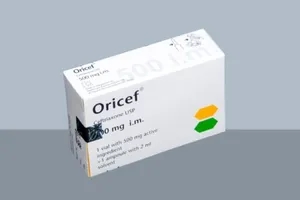
Ceftron500 mg/via
Square Pharmaceuticals PLC.
৳190.00
Add to cart


Enocef is an established treatment for a wide range of serious bacterial infections caused by susceptible organisms, including:
The exact indication, dose, and duration of Enocef therapy should always be individualized by a qualified physician based on the site and severity of infection, suspected or confirmed organism, and local susceptibility patterns.
Each vial contains Ceftriaxone (as Ceftriaxone sodium) equivalent to 250 mg, 500 mg, 1 g, or 2 g of Ceftriaxone, as a sterile powder for reconstitution and administration by intravenous or intramuscular injection.
Enocef is a third-generation cephalosporin antibiotic given by injection (intravenous or intramuscular route only; it is not absorbed orally). Enocef has broad-spectrum bactericidal activity against many gram-positive and gram-negative bacteria and is notably stable against many bacterial beta-lactamase enzymes that inactivate older antibiotics. Because Enocef has a comparatively long half-life, it can typically be given once daily for most infections, which makes it convenient for hospital and outpatient parenteral antibiotic therapy. Enocef is used only under medical supervision, typically in a hospital, clinic, or supervised outpatient infusion setting, and should be given exactly as prescribed by a qualified physician.
Third-generation cephalosporin antibiotic (parenteral)
Ceftriaxone is a bactericidal, third-generation cephalosporin that inhibits bacterial cell wall synthesis by binding to penicillin-binding proteins located on the inner membrane of the bacterial cell wall. This action interferes with the final cross-linking (transpeptidation) step of peptidoglycan synthesis, leading to cell wall instability and bacterial cell death. Ceftriaxone is stable to hydrolysis by many common bacterial beta-lactamases, which broadens its activity against organisms resistant to some older penicillins and cephalosporins.
After intramuscular or intravenous administration, Ceftriaxone achieves high, sustained concentrations in plasma and diffuses well into most body tissues and fluids, including cerebrospinal fluid when the meninges are inflamed, which supports its use in bacterial meningitis. Ceftriaxone is extensively (approximately 85–95%) bound to plasma proteins in a concentration-dependent manner. It is not significantly metabolized; approximately 33–67% is excreted unchanged in the urine, and the remainder is eliminated unchanged in the bile and ultimately in the feces. The elimination half-life of Ceftriaxone is approximately 6–9 hours in adults with normal renal and hepatic function, which permits once-daily or twice-daily dosing for most indications.
The dose, frequency, and duration of Enocef vary by the site and severity of infection, the susceptibility of the causative organism, and patient-specific factors such as age and renal/hepatic function; treatment must be individualized and prescribed by a qualified physician. Enocef is administered only by intravenous infusion/injection or by deep intramuscular injection; it is not given orally.
Antibiotic stewardship: Take Enocef exactly as prescribed by your physician; do not stop, extend, skip doses, or share this medicine with others without medical advice, even if symptoms improve before the full course is completed.
Tell your physician or pharmacist about all other medicines, supplements, and intravenous fluids you are receiving before starting Enocef.
Ceftriaxone is contraindicated in:
Data on Enocef use in human pregnancy have not shown clear evidence of harm, and animal reproduction studies have not demonstrated fetal harm at doses used clinically. However, adequate and well-controlled studies in pregnant women are limited. Enocef should be used during pregnancy only if clearly needed, and only after the prescribing physician has judged that the potential benefit to the mother justifies the potential (though not well-established) risk to the fetus. Enocef is generally considered an acceptable option for serious bacterial infections in pregnancy when a suitable alternative is not available, but any use should be individually assessed and supervised by a qualified physician.
Enocef is excreted into breast milk in low concentrations. Caution is advised, and effects on the nursing infant (such as diarrhea or effects on infant gut flora, or interference with interpretation of infant fever workups) should be considered. A physician should be consulted to weigh the benefits of breastfeeding against the mother's need for Enocef therapy.
There is no specific antidote for Enocef overdose. Excessive doses of Enocef may increase the risk of the side effects described above, particularly gastrointestinal symptoms and, rarely, neurological effects such as seizures. Enocef concentrations are not significantly reduced by hemodialysis or peritoneal dialysis. If an overdose of Enocef is suspected, seek immediate medical attention or contact emergency services/a poison control center; treatment is supportive and symptomatic, guided by a physician.
Store unreconstituted vials at room temperature (below 30°C), protected from light and moisture. Once reconstituted, use the solution according to the timing and storage instructions on the product label (reconstituted solutions may need to be used promptly or refrigerated for a limited period, depending on the diluent used). Keep out of reach of children.
Dose adjustment of Enocef is generally not required in isolated renal impairment when hepatic function is normal, because biliary excretion can compensate. Patients with renal impairment should still be monitored during Enocef therapy.
Dose adjustment of Enocef is generally not required in isolated hepatic impairment when renal function is normal, because renal excretion can compensate.
In patients with significant impairment of both renal and hepatic function, Enocef doses should not exceed 2 g/day unless serum concentrations of Enocef are monitored, and treatment should be closely supervised by a physician.
No specific dose adjustment of Enocef is required for elderly patients based on age alone, although age-related decline in renal function should be considered by the prescriber.
Enocef is contraindicated in neonates with hyperbilirubinemia, in premature neonates, and in any neonate requiring calcium-containing intravenous products — see Contraindications and Precautions and Warnings for full detail.
The duration of Enocef therapy is determined by the treating physician based on the site and severity of infection and clinical response. As general guidance, treatment is typically continued for at least 2 days after signs of infection have resolved, with most infections requiring a total of 4 to 14 days of therapy; bacterial meningitis is generally treated for 7 to 14 days depending on the causative organism; uncomplicated gonorrhea and surgical prophylaxis typically require only a single dose of Enocef. Patients should complete the full course of Enocef exactly as prescribed and should not stop early, even if symptoms improve, without consulting their physician.
Enocef for injection is supplied as a sterile powder that must be reconstituted before use, according to the manufacturer's instructions and the intended route of administration:
Cephalosporins (third-generation, parenteral)
Ceftriaxone exerts a bactericidal effect by binding to penicillin-binding proteins (PBPs) on the bacterial cell membrane. This binding inhibits the transpeptidation step of bacterial cell wall (peptidoglycan) synthesis, weakening the cell wall and ultimately leading to bacterial cell lysis and death. Ceftriaxone is resistant to hydrolysis by many bacterial beta-lactamase enzymes, which extends its activity against a broad range of gram-positive and gram-negative organisms compared with earlier-generation cephalosporins.
B (legacy FDA pregnancy category, assigned prior to the 2015 Pregnancy and Lactation Labeling Rule)
Enocef is used in infants (1 month of age and older) and children for the same range of susceptible bacterial infections as in adults, at weight-based doses (typically 50–75 mg/kg/day for most infections, up to 100 mg/kg/day for meningitis, not exceeding the adult maximum dose). Enocef is contraindicated in neonates (28 days of age or younger) who have hyperbilirubinemia, in premature neonates, and in any neonate requiring or expected to require calcium-containing intravenous products, because of the risk of bilirubin displacement (kernicterus) and fatal Enocef-calcium precipitation, respectively — see Contraindications for full detail. Safety and efficacy of Enocef in neonates outside these specific concerns should still be established by the treating physician on a case-by-case basis, and Enocef should only be given to infants and children under close medical supervision, with attention to correct weight-based dosing.
Q: What is Enocef 500 mg/vial IM Injection used for?
A: Enocef 500 mg/vial IM Injection is a third-generation cephalosporin antibiotic given by injection to treat serious bacterial infections, including pneumonia, meningitis, complicated urinary tract infections, skin and soft-tissue infections, bone and joint infections, intra-abdominal infections, septicemia, gonorrhea, and pelvic inflammatory disease, and it is also used as a single dose for surgical infection prevention. Enocef 500 mg/vial IM Injection only works against bacteria and will not treat viral infections such as the common cold or flu.
Q: How is Enocef 500 mg/vial IM Injection given?
A: Enocef 500 mg/vial IM Injection is given only by injection — either as a slow intravenous injection or infusion, or as a deep intramuscular injection — by or under the supervision of a qualified healthcare professional. It is not available as an oral tablet or capsule, so it cannot be taken by mouth at home without medical supervision.
Q: Can Enocef 500 mg/vial IM Injection be mixed with other IV fluids?
A: Enocef 500 mg/vial IM Injection must never be mixed or infused through the same line as calcium-containing intravenous solutions or products (including certain parenteral nutrition solutions), because this can form dangerous precipitates; this combination is strictly avoided in newborns and given only sequentially with careful line flushing in older patients if both are required. Other intravenous medicines such as vancomycin, aminoglycosides, and fluconazole should also not be physically mixed with Enocef 500 mg/vial IM Injection in the same solution.
Q: Is Enocef 500 mg/vial IM Injection safe during pregnancy and breastfeeding?
A: Enocef 500 mg/vial IM Injection is generally considered an acceptable option during pregnancy when a bacterial infection genuinely needs treatment and no better alternative exists, because available data have not shown clear evidence of fetal harm, although well-controlled human studies are limited; it should be used only if a physician judges the benefit outweighs the potential risk. Enocef 500 mg/vial IM Injection passes into breast milk in low amounts, so breastfeeding mothers should discuss the risks and benefits with their doctor before use.
Q: Can Enocef 500 mg/vial IM Injection be given to babies and children?
A: Yes, Enocef 500 mg/vial IM Injection is commonly used in infants one month of age and older and in children, at doses calculated by body weight. However, Enocef 500 mg/vial IM Injection must not be given to newborns (28 days old or younger) who have jaundice/high bilirubin, to premature babies, or to any newborn who needs calcium-containing intravenous fluids or nutrition, because of a risk of serious harm in these specific situations. A pediatrician will determine whether and how Enocef 500 mg/vial IM Injection should be used in a particular infant or child.
Q: What are the common side effects of Enocef 500 mg/vial IM Injection?
A: Common side effects of Enocef 500 mg/vial IM Injection include diarrhea, nausea, vomiting, skin rash, pain or swelling at the injection site, and mild changes in blood tests. Less commonly, Enocef 500 mg/vial IM Injection can cause severe diarrhea from C. difficile infection, gallbladder sludge with abdominal pain, allergic reactions, or (rarely) a blood or neurological problem — see the Side Effects and Precautions and Warnings sections for details on when to seek urgent medical care.
Q: What should I do if a dose of Enocef 500 mg/vial IM Injection is missed or an overdose is suspected?
A: Because Enocef 500 mg/vial IM Injection is given by a healthcare professional in a clinical setting, missed or extra doses are managed directly by the treating team. If an overdose of Enocef 500 mg/vial IM Injection is suspected, seek immediate medical attention or contact emergency services, as there is no specific antidote; treatment is supportive and dialysis does not effectively remove Enocef 500 mg/vial IM Injection from the blood.
Disclaimer
The information provided is accurate to the best of our knowledge, but it does not replace professional medical advice. We cannot guarantee its completeness or accuracy, and the absence of specific information about a drug should not be taken as an endorsement. We are not responsible for any consequences arising from this information, so please consult a healthcare professional for any concerns or questions.