

10% Off
Purinol100 mg
Drug International Ltd.
৳3.64
Add to cart
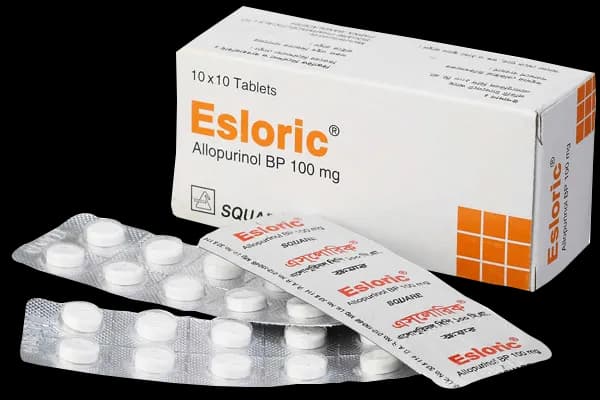

Each tablet contains Allopurinol INN 100 mg or 300 mg as the active ingredient.
Esloric is an oral xanthine oxidase inhibitor used for the long-term control of hyperuricemia associated with gout, certain cancer chemotherapy regimens, and recurrent calcium oxalate kidney stones. By reducing the production of uric acid rather than increasing its excretion, Esloric lowers serum urate levels over time, which helps prevent the formation of urate crystals in joints and tissues and reduces the frequency of gout flares with continued use. It is taken as a once-daily or divided-dose oral tablet and is intended for chronic, ongoing management rather than treatment of an acute attack.
Esloric belongs to the Xanthine Oxidase Inhibitor class of anti-gout / uric acid-lowering agents.
Allopurinol and its active metabolite, oxypurinol (alloxanthine), inhibit xanthine oxidase, the enzyme responsible for converting hypoxanthine to xanthine and xanthine to uric acid. By blocking this final step in purine metabolism, Allopurinol lowers plasma and urinary uric acid concentrations, unlike uricosuric agents that increase renal excretion.
| Indication | Typical Adult Dosing |
|---|---|
| Chronic gout / hyperuricemia of gout | Initiate at 100 mg once daily; increase in increments of 100 mg at weekly intervals as needed to reach target serum uric acid, typically to a maintenance dose of 200-300 mg/day for mild disease or 400-600 mg/day for moderate-to-severe tophaceous gout. Maximum recommended dose is 800 mg/day. Doses above 300 mg/day are usually given in divided doses. |
| Secondary hyperuricemia with chemotherapy (tumor lysis prevention) | 600-800 mg/day in divided doses, usually started 1-2 days before initiating chemotherapy, together with adequate hydration. |
| Recurrent calcium oxalate stones with hyperuricosuria | 200-300 mg/day, often as a single daily dose, alongside adequate fluid intake and dietary measures. |
Give Esloric by mouth, preferably after food, with plenty of water. Doses over 300 mg/day are usually divided through the day unless the prescriber specifies a single daily dose. Swallow tablets whole; do not crush without checking with a pharmacist. Continue treatment even between gout flares - it is a preventive, long-term therapy, not a treatment for an ongoing attack.
Allopurinol is contraindicated in patients with known hypersensitivity to Allopurinol or any component of the formulation.
Pregnancy: Data on the use of Esloric in human pregnancy are limited. Esloric should be used during pregnancy only if clearly needed and the potential benefit to the mother justifies the potential risk to the fetus; a physician should be consulted before use.
Lactation: Esloric and its active metabolite oxypurinol are excreted into breast milk. Because effects on the nursing infant have not been fully established, Esloric should be used during breastfeeding only under medical supervision, weighing the benefits of treatment against potential risk to the infant.
Esloric can rarely cause severe, potentially fatal hypersensitivity reactions, including Stevens-Johnson syndrome, toxic epidermal necrolysis, and DRESS syndrome (drug reaction with eosinophilia and systemic symptoms). These reactions may present with fever, skin rash, blistering, mucosal lesions, lymphadenopathy, and organ involvement. Esloric should be discontinued immediately and permanently at the first sign of rash or other symptoms suggesting hypersensitivity, and medical attention should be sought without delay.
Carriers of the HLA-B*5801 allele have a substantially increased risk of severe hypersensitivity reactions to Esloric. This allele is more prevalent in certain populations, including some Asian ancestries (e.g., Han Chinese, Thai, Korean). Genetic screening for HLA-B*5801 before starting Esloric is recommended by some guidelines in these higher-risk populations.
Esloric should not be started during an acute attack of gout, as this may worsen or prolong the attack; therapy is typically initiated only after the acute episode has resolved. Paradoxically, starting Esloric can itself precipitate an acute gout flare due to mobilization of urate stores; low-dose colchicine or an NSAID is often used as prophylaxis during the first several months of therapy.
Reported overdose experience with Esloric is limited. Suspected overdose may present with gastrointestinal upset or other exaggerated adverse effects. There is no specific antidote. In case of suspected overdose, seek immediate medical attention or contact a poison control center; general supportive measures and adequate hydration are used, and hemodialysis can effectively remove Esloric and its active metabolite if clinically indicated. Do not attempt to manage a suspected overdose at home.
Store at room temperature (below 30°C), away from light and moisture. Keep out of reach of children.
Dose reduction is required because oxypurinol, the active metabolite, is renally excreted and accumulates in renal impairment, increasing toxicity risk. Lower starting doses and slower titration are used, with dosing intervals or amounts adjusted according to creatinine clearance under medical supervision.
Use with caution; lower doses may be required, and periodic liver function monitoring is recommended.
Older adults often have reduced renal function; start at the lower end of the dosing range and titrate cautiously, with monitoring of renal function.
See Pediatric Uses section.
Patients of certain ancestries (e.g., Han Chinese, Thai, Korean) carrying the HLA-B*5801 allele are at higher risk of severe hypersensitivity reactions; genetic testing before starting Esloric is recommended by some guidelines in these groups (see Precautions and Warnings).
Esloric is generally used as a long-term, often lifelong, maintenance therapy for chronic gout and recurrent hyperuricemia-related conditions, since stopping treatment typically allows uric acid levels to rise again. For prevention of hyperuricemia during cancer chemotherapy, Esloric is usually given for a defined short course around the treatment period. Duration should be determined by the prescribing physician based on the indication and response to therapy.
Xanthine oxidase inhibitors; Antigout / uric acid-lowering agents.
Allopurinol and its major active metabolite, oxypurinol, inhibit the enzyme xanthine oxidase, which normally converts hypoxanthine to xanthine and then xanthine to uric acid. By blocking this pathway, Allopurinol reduces the synthesis of uric acid, lowering serum and urinary urate concentrations and reducing the tendency for urate crystal deposition in joints and tissues.
C
The established pediatric use of Esloric is for the management of hyperuricemia secondary to malignancy in children receiving chemotherapy for leukemia, lymphoma, and other cancers, using weight-based dosing under specialist supervision (commonly around 10 mg/kg/day in divided doses, not exceeding 800 mg/day, with age-based dose bands used in some regimens for children age 6-10 years and under 6 years). Primary gout is rare in children, and the safety and efficacy of Esloric for chronic primary gout in the pediatric population have not been established; use in this setting should be guided by a pediatric specialist.
Q: What is Esloric 100 mg Tablet used for?
A: Esloric 100 mg Tablet is used for the long-term control of high uric acid levels in chronic gout, to prevent dangerous uric acid spikes during certain cancer chemotherapy, and to help prevent recurrent calcium oxalate kidney stones in people with high urinary uric acid. It is not used to treat an acute gout attack that is already happening.
Q: Can I start Esloric 100 mg Tablet during a gout flare?
A: No. Esloric 100 mg Tablet should not be started during an acute gout attack because it can worsen or prolong the flare. Your physician will usually wait until the attack has settled before starting Esloric 100 mg Tablet, and may prescribe a low dose of colchicine or an anti-inflammatory medicine for the first few months to help prevent new flares as treatment begins.
Q: What should I do if I get a skin rash while taking Esloric 100 mg Tablet?
A: Stop taking Esloric 100 mg Tablet and seek medical attention immediately if you develop a skin rash, blistering, mouth sores, fever, or swollen glands while on treatment. In rare cases, Esloric 100 mg Tablet can cause severe, potentially life-threatening skin reactions such as Stevens-Johnson syndrome or DRESS syndrome, and early recognition and discontinuation are important for safety.
Q: Are there important drug interactions with Esloric 100 mg Tablet?
A: Yes. Esloric 100 mg Tablet significantly raises blood levels of azathioprine and mercaptopurine, so their doses must be reduced substantially if used together. It can also increase bleeding risk with warfarin, increase the chance of rash with ampicillin or amoxicillin, and interact with thiazide diuretics and ACE inhibitors, raising hypersensitivity risk. Always tell your physician about all medicines you take before starting Esloric 100 mg Tablet.
Q: Is Esloric 100 mg Tablet safe during pregnancy or breastfeeding?
A: Information on Esloric 100 mg Tablet use in pregnancy is limited, so it should be used in pregnancy only if clearly needed, as judged by your physician, weighing benefits against potential risks to the baby. Esloric 100 mg Tablet passes into breast milk, so it should also be used during breastfeeding only under medical supervision.
Q: What happens if I take too much Esloric 100 mg Tablet?
A: If an overdose of Esloric 100 mg Tablet is suspected, seek emergency medical attention or contact a poison control center immediately. Do not try to treat an overdose at home; a doctor will provide supportive care, and in some cases dialysis may be used to help remove the drug from the body.
Disclaimer
The information provided is accurate to the best of our knowledge, but it does not replace professional medical advice. We cannot guarantee its completeness or accuracy, and the absence of specific information about a drug should not be taken as an endorsement. We are not responsible for any consequences arising from this information, so please consult a healthcare professional for any concerns or questions.
