
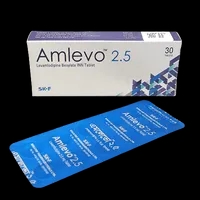
7% Off
Amlevo2.5 mg
Eskayef Bangladesh Ltd.
৳65.10
Add to cart


Esodip is indicated for the treatment of hypertension (high blood pressure), to lower blood pressure. Lowering blood pressure reduces the risk of fatal and non-fatal cardiovascular events, primarily strokes and myocardial infarctions.
Esodip contains the pharmacologically active S-enantiomer of amlodipine, allowing effective blood pressure control at approximately half the milligram dose of racemic amlodipine.
Each tablet of Levamlodipine Maleate contains Levamlodipine Maleate equivalent to 2.5 mg or 5 mg of levamlodipine (the active S-isomer of amlodipine). Other commonly used strengths in the region include 1.25 mg. Inactive ingredients typically include microcrystalline cellulose, pregelatinized starch, silicon dioxide, and magnesium stearate.
Esodip is the maleate salt of levamlodipine, the pharmacologically active S-enantiomer of the racemic dihydropyridine calcium channel blocker amlodipine. Because most of the antihypertensive activity of amlodipine resides in the S-isomer, Esodip produces comparable blood-pressure-lowering effects to amlodipine at roughly half the dose, which some clinicians consider may translate to a reduced burden of dose-related adverse effects such as peripheral edema, although this has not been definitively established in large comparative trials.
Esodip is administered orally, once daily, and is used long-term for chronic blood pressure control.
Esodip belongs to the dihydropyridine calcium channel blocker (CCB) class of antihypertensive agents. It is the single active enantiomer of amlodipine.
Levamlodipine Maleate inhibits the transmembrane influx of calcium ions into vascular smooth muscle and, to a lesser extent, cardiac muscle. This selectively relaxes vascular smooth muscle, causing peripheral arterial vasodilation and a reduction in peripheral vascular resistance, which lowers blood pressure. Levamlodipine Maleate is the pharmacologically active, antihypertensive isomer of amlodipine; the R-enantiomer contributes minimally to the antihypertensive effect.
| Population | Recommended Dose |
|---|---|
| Usual adults | Initial: 2.5 mg orally once daily; may be increased to a maximum of 5 mg once daily based on blood pressure response |
| Small, fragile, elderly patients or those with hepatic insufficiency | Initial: 1.25 mg orally once daily |
Dose titration should generally occur over 7–14 days, based on individual response, unless more rapid titration is clinically indicated.
Initial dose: 1.25 mg to 2.5 mg orally once daily. Doses above 2.5 mg daily have not been studied in pediatric patients. Safety and efficacy in children under 6 years have not been established (see Use in Special Populations).
Specific dosage adjustment studies have not been conducted, but because Esodip is extensively metabolized by the liver and its half-life is prolonged with hepatic impairment, start at 1.25 mg once daily and titrate slowly with close monitoring.
No dosage adjustment is required, as Esodip pharmacokinetics are not significantly influenced by renal impairment.
Esodip is administered orally, once daily, with or without food, at approximately the same time each day. Tablets may be swallowed whole; do not stop taking Esodip abruptly without medical advice, particularly in patients with underlying coronary artery disease, as abrupt discontinuation may be associated with worsening symptoms.
The following interactions with Esodip are clinically significant and well documented:
Levamlodipine Maleate is contraindicated in patients with known hypersensitivity to levamlodipine, amlodipine, or other dihydropyridine calcium channel blockers.
Adverse effects of Esodip are generally dose-related.
Data on the use of Esodip in pregnant women are limited and insufficient to establish a drug-associated risk of major birth defects or miscarriage. Animal reproduction studies with amlodipine showed no evidence of teratogenicity at doses many times the maximum recommended human dose, though decreased litter size and increased intrauterine deaths were observed at very high doses. Esodip should be used during pregnancy only if clearly needed and the potential benefit justifies the potential risk to the fetus; consult a physician before use.
Amlodipine (and therefore levamlodipine) is present in human milk at low levels, with no reported adverse effects on breastfed infants in available data. Because information is limited, Esodip should be used during breastfeeding only after consultation with a physician, weighing the benefits of treatment against any potential risk to the infant, with monitoring of the infant for any adverse effects.
Overdose of Esodip may cause excessive peripheral vasodilation, marked and potentially prolonged systemic hypotension, and reflex tachycardia. In case of a known or suspected overdose, seek immediate medical attention or contact emergency services / a poison control center right away. Management is supportive and may include cardiovascular monitoring, elevation of the extremities, careful monitoring of fluid status, and vasopressor support if clinically indicated; because Esodip is highly protein-bound, hemodialysis is unlikely to be of benefit. Do not attempt to manage a suspected overdose at home.
Store at room temperature (below 30°C), away from light and moisture. Keep out of reach of children.
Safety and effectiveness of Esodip for hypertension have been established in pediatric patients 6 to 17 years of age; doses above 2.5 mg daily have not been studied in this group. Safety and efficacy in children under 6 years of age have not been established.
Elderly patients may have reduced clearance of Esodip, with increased systemic exposure. Dose selection for an elderly patient should be cautious, usually starting at the lower end of the dosing range (e.g., 1.25 mg once daily), reflecting the greater frequency of decreased hepatic, renal, or cardiac function and concomitant disease or other drug therapy in this population.
Use the lowest starting dose (1.25 mg once daily) with slow titration and close monitoring (see Precautions and Warnings).
No dose adjustment is required.
Esodip is generally used as a long-term, chronic therapy for the management of hypertension. Duration of treatment is determined by the prescribing physician based on ongoing blood pressure control and cardiovascular risk, and treatment is typically continued indefinitely unless a change in therapy is medically indicated. Do not stop Esodip abruptly without consulting your physician.
Dihydropyridine Calcium Channel Blocker (CCB); Antihypertensive
Levamlodipine Maleate works by inhibiting the influx of calcium ions through L-type calcium channels in vascular smooth muscle cell membranes. This reduces intracellular calcium, leading to relaxation of vascular smooth muscle (particularly arterial/arteriolar smooth muscle), decreased peripheral vascular resistance, and a resulting reduction in blood pressure. As the pharmacologically active S-enantiomer of amlodipine, Levamlodipine Maleate achieves this effect at approximately half the milligram dose of the racemic mixture.
Esodip is approved for the treatment of hypertension in pediatric patients 6 to 17 years of age, at an initial dose of 1.25–2.5 mg once daily; doses greater than 2.5 mg daily have not been studied in this age group. Safety and efficacy in children younger than 6 years of age have not been established, and Esodip is not recommended for use in this younger population outside specialist guidance.
Q: What is Esodip 2.5 mg Tablet used for?
A: Esodip 2.5 mg Tablet is used to treat high blood pressure (hypertension) in adults and children 6 years and older. It helps lower blood pressure, which reduces the risk of stroke and heart attack.
Q: How should I take Esodip 2.5 mg Tablet?
A: Take Esodip 2.5 mg Tablet exactly as prescribed, once daily, with or without food, at the same time each day. Do not stop taking it suddenly without talking to your doctor, especially if you have heart disease.
Q: What are the common side effects of Esodip 2.5 mg Tablet?
A: The most common side effects are swelling of the ankles or feet, flushing, palpitations, dizziness, headache, and tiredness. These effects tend to be dose-related. Contact your doctor if swelling or other side effects are bothersome or severe.
Q: Can I take Esodip 2.5 mg Tablet during pregnancy or while breastfeeding?
A: Data on Esodip 2.5 mg Tablet use in pregnancy are limited, so it should be used only if your doctor decides the benefit clearly outweighs the potential risk to the baby. Small amounts pass into breast milk; discuss breastfeeding plans with your physician, who will weigh the benefits and risks for you and your infant.
Q: Who should not take Esodip 2.5 mg Tablet?
A: Esodip 2.5 mg Tablet should not be used by anyone with a known allergy (hypersensitivity) to levamlodipine, amlodipine, or other dihydropyridine calcium channel blockers.
Q: What should I do if I take too much Esodip 2.5 mg Tablet?
A: An overdose of Esodip 2.5 mg Tablet can cause dangerously low blood pressure and a fast heart rate. If an overdose is suspected, seek immediate medical attention or contact emergency services or a poison control center right away; do not try to manage it at home.
Disclaimer
The information provided is accurate to the best of our knowledge, but it does not replace professional medical advice. We cannot guarantee its completeness or accuracy, and the absence of specific information about a drug should not be taken as an endorsement. We are not responsible for any consequences arising from this information, so please consult a healthcare professional for any concerns or questions.

