
8% Off
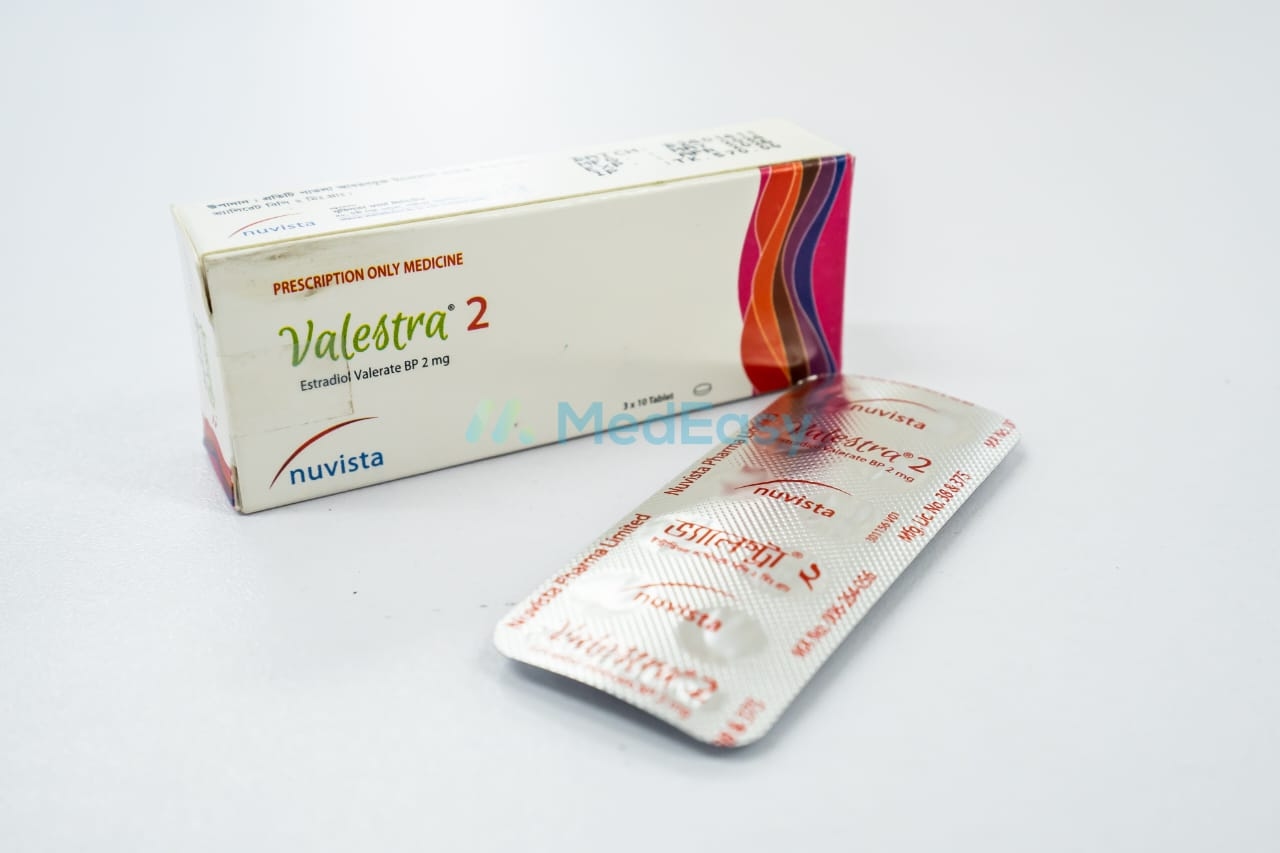
Valestra2 mg
Nuvista Pharma Ltd.
৳174.80
Add to cart


Evadol is an injectable estrogen ester used mainly in postmenopausal hormone therapy. Established, FDA-approved indications include:
Evadol is also used as a component of certain combined estrogen-progestin hormone replacement or contraceptive regimens; it is not intended for use as a contraceptive on its own.
Evadol is not indicated for the prevention of cardiovascular disease or dementia and should not be used for this purpose.
Each formulation of Estradiol Valerate is typically supplied as a sterile injectable solution in an oil-based vehicle (e.g., castor oil), commonly available in strengths such as 10 mg/mL, 20 mg/mL, or 40 mg/mL. Exact composition, strength, and excipients vary by manufacturer and country of registration; refer to the specific product's package insert for confirmed details.
Evadol is a synthetic ester of the natural human estrogen 17β-estradiol. After intramuscular injection, it is slowly hydrolyzed to release free estradiol, providing a sustained, long-acting source of estrogen. It belongs to the estrogen class of hormonal medicines and is used mainly to replace declining estrogen levels in postmenopausal women or women with ovarian insufficiency, and as palliative therapy in advanced prostate cancer.
Evadol belongs to the therapeutic class of natural/synthetic estrogens, used in hormone replacement therapy (HRT) and, in combination with a progestin, in some hormonal contraceptive regimens.
Estradiol Valerate is a prodrug ester that is hydrolyzed after intramuscular injection to release free estradiol, the principal biologically active human estrogen. Estradiol binds to estrogen receptors in target tissues (uterus, vagina, breast, pituitary, hypothalamus, bone) and modulates transcription of estrogen-responsive genes, restoring estrogenic activity in estrogen-deficient women. It reduces vasomotor symptoms, maintains vaginal and urogenital epithelium, and helps preserve bone mineral density.
| Indication | Typical Adult Dose of Evadol |
|---|---|
| Vasomotor symptoms of menopause / vulvovaginal atrophy | 10-20 mg by deep intramuscular injection every 4 weeks; use the lowest effective dose and attempt to taper or discontinue at 3-6 month intervals. |
| Female hypoestrogenism (hypogonadism, castration, primary ovarian failure) | 10-20 mg by deep intramuscular injection every 4 weeks, individualized to symptom control. |
| Palliative therapy of advanced androgen-dependent prostate cancer | 30 mg or more by deep intramuscular injection every 1-2 weeks, under specialist supervision. |
Women with an intact uterus generally require concomitant progestin therapy alongside Evadol to reduce the risk of endometrial hyperplasia/cancer associated with unopposed estrogen use (see Precautions and Warnings).
Evadol injection is for deep intramuscular injection only, given into the upper outer quadrant of the gluteal muscle using aseptic technique. It must not be given intravenously. The solution should be visually inspected for particulate matter or discoloration before use; it should appear clear to pale yellow. Dry needles and syringes should be used, as moisture can cause cloudiness. Injection sites should be rotated with repeated dosing.
Evadol is partly metabolized via hepatic CYP3A4, so drugs affecting this enzyme can alter its blood levels and effects:
Always inform your physician of all medicines being taken before starting Evadol.
Estradiol Valerate must not be used in patients with any of the above conditions.
Evadol may cause the following adverse effects:
Patients should seek prompt medical attention for chest pain, sudden shortness of breath, leg swelling/pain, sudden severe headache, vision changes, or signs of jaundice while using Evadol.
Evadol is contraindicated in known or suspected pregnancy. There is no indication for its use during pregnancy, and it should be discontinued immediately if pregnancy occurs or is suspected during treatment.
Estrogen administration to nursing mothers has been shown to decrease the quantity and quality of breast milk, and detectable amounts pass into breast milk. Evadol should generally be avoided during breastfeeding; if hormone therapy is needed, it should be used only after consultation with a physician, who will weigh potential benefits against possible risks to the infant.
Evadol carries important warnings requiring careful patient selection and monitoring:
Overdose of Evadol may cause nausea, vomiting, breast tenderness, abdominal bloating, and withdrawal bleeding in women. Serious acute toxicity has not been well documented, but any suspected overdose should be treated as a medical emergency. If overdose is suspected, seek immediate medical attention or contact a poison control center; treatment is supportive, as there is no specific antidote.
Store at room temperature (below 30°C), away from light and moisture. Keep out of reach of children. Do not freeze.
Safety and efficacy of Evadol in children have not been established, except in defined situations such as induction of puberty under specialist endocrinology supervision. Prolonged high-dose use may accelerate epiphyseal closure and should be monitored with periodic bone age assessments.
Data on Evadol use in women 65 years and older are limited. Increased risk of dementia and cardiovascular events has been observed with estrogen therapy in older postmenopausal women; use with caution at the lowest effective dose.
Evadol is contraindicated in patients with active liver disease or severe hepatic impairment. No well-established dose adjustment is defined for renal impairment; use with caution and monitor for fluid retention.
The duration of Evadol therapy should be individualized. For menopausal symptom relief, it is generally used at the lowest effective dose for the shortest duration consistent with treatment goals, with periodic attempts (every 3-6 months) to taper or discontinue therapy and reassess the need for continued treatment. For hypoestrogenism due to hypogonadism or ovarian failure, and for palliative prostate cancer therapy, duration is determined by the treating physician based on clinical response and ongoing risk-benefit assessment.
Estradiol Valerate belongs to the drug class of estrogens (steroid hormones), specifically a long-acting injectable estrogen ester used in hormone replacement therapy.
Estradiol Valerate is hydrolyzed in vivo to 17β-estradiol, which binds to nuclear estrogen receptors (ERα and ERβ) in target tissues. This receptor complex binds estrogen-response elements on DNA, regulating gene transcription that restores or maintains normal estrogenic effects, including relief of vasomotor symptoms, maintenance of vaginal and urinary tract epithelium, and support of bone density in estrogen-deficient states.
X — systemic estrogens including Evadol fall under the legacy FDA pregnancy category X and are contraindicated in pregnancy.
The safety and effectiveness of Evadol in children have not been established for general use. It may be used off-label in specialized pediatric endocrinology settings (e.g., pubertal induction in girls with hypogonadism) under close specialist supervision, with periodic monitoring of growth and bone age, since high-dose or prolonged use can accelerate epiphyseal closure and affect final adult height.
Q: What is Evadol 2 mg Tablet used for?
A: Evadol 2 mg Tablet is mainly used to relieve moderate to severe menopausal symptoms such as hot flashes and vaginal dryness, to treat low estrogen levels caused by ovarian failure or removal of the ovaries, and as palliative treatment for advanced prostate cancer in men.
Q: How is Evadol 2 mg Tablet given?
A: Evadol 2 mg Tablet is given as a deep intramuscular injection, usually every 4 weeks for menopausal symptoms, by a trained healthcare professional. It should never be self-injected without medical guidance.
Q: Can Evadol 2 mg Tablet be used during pregnancy?
A: No. Evadol 2 mg Tablet is contraindicated during pregnancy, and treatment should be stopped immediately if pregnancy occurs or is suspected.
Q: Is Evadol 2 mg Tablet safe while breastfeeding?
A: Evadol 2 mg Tablet can reduce the amount and quality of breast milk and passes into breast milk in small amounts, so it should generally be avoided during breastfeeding unless a physician determines the benefits outweigh the risks.
Q: What are the serious risks of Evadol 2 mg Tablet?
A: Estrogen therapy, including Evadol 2 mg Tablet, carries an increased risk of blood clots, stroke, heart attack, and — in women with an intact uterus who are not also taking a progestin — endometrial cancer. Long-term use is also associated with a higher risk of breast cancer. Report unusual vaginal bleeding, leg swelling, chest pain, or sudden severe headache to your doctor immediately.
Q: Who should not use Evadol 2 mg Tablet?
A: Women with undiagnosed vaginal bleeding, known or suspected breast cancer, a history of blood clots or stroke, active liver disease, or known/suspected pregnancy should not use Evadol 2 mg Tablet. Always disclose your full medical history to your physician before starting treatment.
Disclaimer
The information provided is accurate to the best of our knowledge, but it does not replace professional medical advice. We cannot guarantee its completeness or accuracy, and the absence of specific information about a drug should not be taken as an endorsement. We are not responsible for any consequences arising from this information, so please consult a healthcare professional for any concerns or questions.
