8% Off
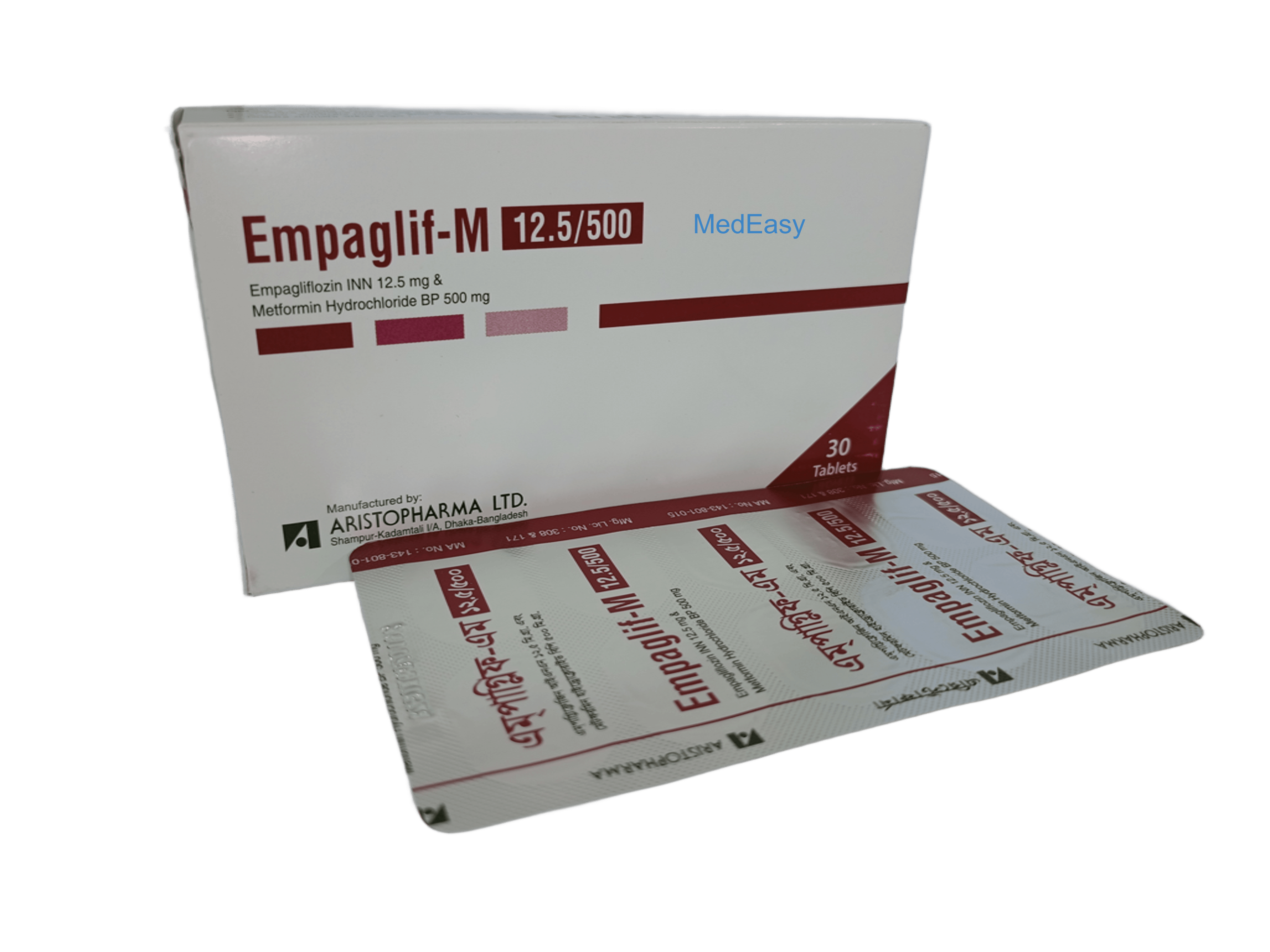
Empaglif-M12.5 mg+50
Aristopharma Ltd.
৳184.00
Add to cart

Evania M 12.5 mg+500 mg Tablet is available on MedEasy for ৳198.00 per 10's Strip, with home delivery anywhere in Bangladesh. It is manufactured by Healthcare Pharmaceuticals Ltd. Its generic name is Empagliflozin + Metformin Hydrochloride.

Evania M is indicated as an adjunct to diet and exercise to improve glycemic control in adults with type 2 diabetes mellitus, in patients who are:
Some evidence for cardiovascular risk reduction (reduced cardiovascular death in patients with established cardiovascular disease) and renoprotective benefit (slower decline in kidney function/reduced progression of chronic kidney disease) has been demonstrated specifically for the empagliflozin component in dedicated outcome trials; this fixed-dose combination itself has not been separately studied for these outcomes, and any such benefit should be discussed with a physician on an individual basis.
Evania M is not indicated for type 1 diabetes mellitus or diabetic ketoacidosis.
Each film-coated tablet of Empagliflozin + Metformin Hydrochloride contains empagliflozin and metformin hydrochloride in fixed-dose combination. It is commercially available in multiple strength combinations (for example, empagliflozin 5 mg/12.5 mg with metformin hydrochloride 500 mg/1000 mg per tablet), allowing dose individualization. Refer to the specific product label for the exact strength dispensed.
Evania M is an oral fixed-dose combination antidiabetic medicine that brings together two complementary classes of glucose-lowering agents: empagliflozin, a sodium-glucose co-transporter-2 (SGLT2) inhibitor, and metformin hydrochloride, a biguanide. Together they are used to improve blood glucose control in adults with type 2 diabetes mellitus as an adjunct to diet and exercise, allowing lower pill burden compared with taking each component separately.
Oral antidiabetic combination: SGLT2 (sodium-glucose co-transporter-2) inhibitor plus Biguanide.
Empagliflozin + Metformin Hydrochloride combines two agents with complementary and independent mechanisms of action to lower blood glucose in type 2 diabetes:
Absorption, metabolism, and elimination of the two components proceed largely independently; empagliflozin is metabolized mainly by glucuronidation and eliminated renally and via feces, while metformin is not metabolized and is eliminated unchanged by the kidneys, so renal function is a key determinant of dosing and safety for both components.
The dose of Evania M must be individualized based on the patient's current antidiabetic regimen, glycemic response, renal function, and tolerability. Baseline renal function (eGFR) should be assessed before starting therapy and monitored periodically thereafter. See the separate dosage and administration fields below for detailed titration schedules and intake instructions.
Evania M immediate-release tablets are generally taken twice daily, with meals, to reduce gastrointestinal side effects and improve tolerability. Tablets should be swallowed whole with a glass of water and not crushed or chewed unless the specific product labeling states otherwise. Extended-release formulations, where available, are typically taken once daily with the morning meal and must be swallowed whole. Patients should take the medicine at consistent times each day and should not skip meals while on this medicine, given the metformin component's dependence on food intake for GI tolerability.
Evania M has several clinically significant drug interactions:
Always inform the prescribing physician or pharmacist of all other medicines, supplements, and herbal products being used before starting Evania M.
Empagliflozin + Metformin Hydrochloride is contraindicated in:
Side effects of Evania M reflect both component drugs:
Patients should seek prompt medical attention for any serious or persistent side effect. See precautions_and_warnings for detailed guidance on warning signs.
Pregnancy: Evania M is generally not recommended for the management of type 2 diabetes during pregnancy, particularly during the second and third trimesters, based on animal data suggesting potential effects on fetal kidney development with the empagliflozin component. Insulin is generally the preferred agent for glycemic control during pregnancy. Poorly controlled diabetes in pregnancy carries risks of diabetic ketoacidosis, preeclampsia, macrosomia, and other adverse outcomes, so any change in therapy must be made only in consultation with a physician. Women of reproductive potential should discuss pregnancy planning and contraception with their doctor, as metformin may improve ovulation in some women with anovulatory infertility.
Lactation: Use of Evania M is generally not recommended while breastfeeding, as effects on the nursing infant (particularly from the empagliflozin component, based on animal data) are not fully established, although metformin itself is present in breast milk in low amounts. Consult a physician before use while breastfeeding.
Lactic acidosis: The metformin component carries a rare but serious risk of lactic acidosis, which can be fatal. Risk is increased by renal impairment, hepatic impairment, alcohol use, dehydration, sepsis, acute heart failure, hypoxic conditions, and advanced age. Symptoms may be subtle and include malaise, muscle pain, respiratory distress, unusual sleepiness, and abdominal pain. Seek immediate medical attention if these symptoms occur, and discontinue the medicine.
Iodinated contrast procedures: Hold Evania M before or at the time of an iodinated contrast imaging procedure, as directed by the physician, and resume only after renal function has been re-checked and confirmed stable.
Diabetic ketoacidosis (including euglycemic DKA): The empagliflozin component can rarely cause ketoacidosis even when blood glucose levels are only mildly elevated or near normal ("euglycemic DKA"). Seek medical attention immediately for nausea, vomiting, abdominal pain, unusual fatigue, or difficulty breathing, even if blood glucose appears normal. Temporary discontinuation may be advised before scheduled surgery or during acute serious illness.
Volume depletion and hypotension: The empagliflozin component can cause a mild diuretic effect. Elderly patients, patients with renal impairment, and those taking diuretics or other blood-pressure-lowering medicines are at increased risk of volume depletion, dehydration, dizziness, and hypotension.
Genital mycotic infections and urinary tract infections: Increased urinary glucose can increase the risk of genital yeast infections and urinary tract infections; maintain good genital hygiene and report symptoms such as itching, discharge, burning, or urinary symptoms promptly.
Necrotizing fasciitis of the perineum (Fournier's gangrene): A rare but serious and life-threatening infection of the tissue surrounding the genitals and perineum has been reported with SGLT2 inhibitors. Seek urgent medical attention for severe pain, tenderness, redness, or swelling in the genital or perineal area accompanied by fever or general malaise.
Lower limb amputation: An increased risk of lower-limb amputation (usually toe) has been observed with some SGLT2 inhibitors in clinical trials, particularly in patients with peripheral vascular disease, prior amputation, neuropathy, or diabetic foot ulcers. Monitor feet regularly for infection, ulceration, or pain, and seek prompt care for any foot problems.
Vitamin B12 deficiency: Long-term metformin use may reduce vitamin B12 absorption; periodic monitoring of hematological parameters and B12 levels is advisable, especially with anemia or peripheral neuropathy.
General advice: Take with meals to reduce gastrointestinal side effects. Avoid excessive alcohol intake. Use caution in elderly patients and those with hepatic impairment. Do not use in patients with acute or unstable medical conditions predisposing to hypoxia or dehydration without physician guidance.
Overdose of Evania M carries a risk of hypoglycemia (particularly if combined with insulin or sulfonylureas) and, more seriously, lactic acidosis from the metformin component, which is a medical emergency. Symptoms of lactic acidosis include marked weakness, muscle pain, difficulty breathing, abdominal discomfort, and lowered blood pressure. Excessive doses of the empagliflozin component may also increase the risk of diabetic ketoacidosis and dehydration. In case of suspected overdose, seek immediate medical attention or contact a poison control center; hospital management may include supportive care, monitoring of renal function and acid-base status, and hemodialysis in confirmed lactic acidosis or severe renal impairment.
Store at room temperature (below 30°C), away from light and moisture. Keep out of reach of children.
Renal impairment: Dose and eligibility depend on eGFR; contraindicated below eGFR 30 mL/min/1.73 m², not recommended for initiation at eGFR 30-44 mL/min/1.73 m², and requires periodic renal monitoring at eGFR ≥45 mL/min/1.73 m² (see dosage).
Hepatic impairment: Use with caution; hepatic impairment increases the risk of metformin-associated lactic acidosis, so this medicine should generally be avoided in patients with significant hepatic dysfunction unless directed by a physician.
Elderly: Older patients are at higher risk of renal impairment, volume depletion, and lactic acidosis; renal function should be monitored more frequently and dosing individualized.
Pediatric use: See pediatric_uses.
Pregnancy and lactation: See pregnancy_and_lactation.
Evania M is generally used as a long-term, ongoing treatment for type 2 diabetes mellitus, as diabetes is a chronic condition requiring sustained glycemic control. The duration of treatment should be determined by the treating physician based on regular monitoring of blood glucose (including HbA1c), renal function, and overall response to therapy. Treatment should not be stopped or altered without medical advice, as doing so may lead to loss of glycemic control.
SGLT2 (sodium-glucose co-transporter-2) inhibitor combined with a Biguanide; oral antidiabetic fixed-dose combination.
Empagliflozin + Metformin Hydrochloride lowers blood glucose through two complementary and independent mechanisms. The empagliflozin component inhibits SGLT2 in the renal proximal tubule, reducing glucose reabsorption and promoting urinary glucose excretion in an insulin-independent manner. The metformin component reduces hepatic glucose production and improves peripheral insulin sensitivity without stimulating insulin secretion. Together, this dual mechanism provides complementary glycemic control while minimizing the risk of hypoglycemia when used without insulin or sulfonylureas.
The safety and efficacy of the immediate-release formulation of Evania M have been established for some pediatric patients aged 10 years and older with type 2 diabetes mellitus, based on clinical trial data, and may be used as an adjunct to diet and exercise in this age group under specialist supervision. Notably, pediatric patients showed a higher rate of hypoglycemia compared with adults, regardless of concomitant insulin use, so closer monitoring is warranted. Extended-release formulations of this combination have not been established as safe and effective in pediatric patients. Use in children below 10 years of age is not recommended. Any pediatric use should be initiated and supervised by a pediatric endocrinologist or specialist physician.
Q: What is Evania M 12.5 mg+500 mg Tablet used for?
A: It is used, together with diet and exercise, to improve blood sugar control in adults with type 2 diabetes mellitus.
Q: How should I take Evania M 12.5 mg+500 mg Tablet?
A: It is usually taken twice daily with meals to reduce stomach upset. Follow your physician's exact instructions and never change your dose on your own.
Q: Can I take Evania M 12.5 mg+500 mg Tablet if I have kidney problems?
A: It depends on how severe your kidney impairment is. It is contraindicated in severe renal impairment and must be used cautiously, with close monitoring, in moderate renal impairment. Your doctor will check your kidney function (eGFR) before and during treatment.
Q: What should I do if I need a CT scan or an X-ray with contrast dye?
A: Tell your doctor that you are taking Evania M 12.5 mg+500 mg Tablet. It usually needs to be stopped before or at the time of the contrast procedure and only restarted after your kidney function has been checked and confirmed to be stable.
Q: What are the warning signs of a serious problem I should watch for?
A: Seek immediate medical attention for unusual tiredness, muscle pain, difficulty breathing, or abdominal pain (possible lactic acidosis); nausea, vomiting, or abdominal pain even with normal-seeming blood sugar (possible ketoacidosis); or severe pain, redness, or swelling around the genitals or perineum with fever (possible serious infection).
Q: Is Evania M 12.5 mg+500 mg Tablet safe during pregnancy or breastfeeding?
A: It is generally not recommended during pregnancy or breastfeeding. Please consult your physician, who may recommend insulin instead for blood sugar control during this time.
Disclaimer
The information provided is accurate to the best of our knowledge, but it does not replace professional medical advice. We cannot guarantee its completeness or accuracy, and the absence of specific information about a drug should not be taken as an endorsement. We are not responsible for any consequences arising from this information, so please consult a healthcare professional for any concerns or questions.