
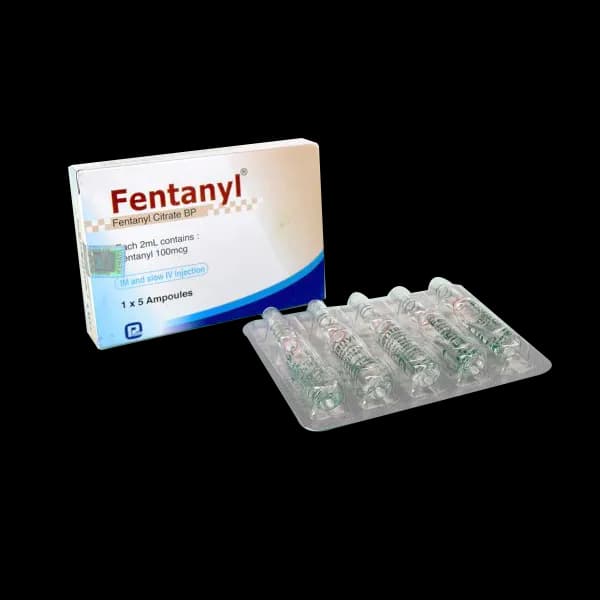

Medicine overview
Indications of Fentanyl
Fentanyl is a potent synthetic opioid analgesic. Its indications are classified below by strength of evidence.
Established / FDA-approved uses
- Management of moderate to severe acute pain, including postoperative pain, when administered parenterally by or under the supervision of qualified anesthesia personnel.
- As an analgesic component of general anesthesia, and as an anesthetic agent with oxygen in selected high-risk patients (e.g., cardiac surgery).
- Management of breakthrough pain in cancer patients who are already receiving and tolerant to opioid therapy, using transmucosal formulations (buccal tablet, sublingual tablet/spray, nasal spray, lozenge).
- Management of persistent, moderate to severe chronic pain requiring continuous around-the-clock opioid therapy in opioid-tolerant patients, using the transdermal patch, when alternative treatments are inadequate.
Adjunct uses
- Adjunct to regional or general anesthesia and in monitored anesthesia care, to supplement sedation and reduce overall anesthetic requirements.
Transmucosal and transdermal forms of Fentanyl are restricted to opioid-tolerant patients only, because of the risk of fatal respiratory depression in opioid-naive individuals, and are not indicated for acute, postoperative, mild, or intermittent pain.
Composition
Each formulation contains Fentanyl Citrate as the active ingredient, expressed as the equivalent amount of fentanyl base. Available presentations include injection (sterile solution for intravenous or intramuscular use), transdermal patches, transmucosal lozenges ("oral transmucosal"), buccal tablets, sublingual tablets/sprays, and nasal spray, each labeled by strength in fentanyl base equivalents. Inactive excipients vary by manufacturer and dosage form.
Description
Fentanyl is a potent synthetic opioid agonist of the phenylpiperidine class, approximately 50 to 100 times more potent than morphine on a milligram-for-milligram basis. It is used in the management of severe pain and as an adjunct to anesthesia. Because of its high potency, rapid onset, and significant risk of respiratory depression, abuse, and diversion, Fentanyl is classified as a controlled substance and is reserved for use by, or under the close supervision of, clinicians experienced in opioid therapy and the management of opioid-related emergencies.
Therapeutic Class
Fentanyl belongs to the therapeutic class of opioid analgesics (narcotic analgesics), specifically the phenylpiperidine-derivative synthetic opioids, and is also used as a general anesthesia adjunct/anesthetic agent.
Pharmacology
Fentanyl Citrate is a full agonist at mu-opioid receptors distributed throughout the central nervous system, including the brain and spinal cord, where it inhibits ascending pain transmission and alters perception of and emotional response to pain.
Pharmacokinetics
- Onset: Rapid (within minutes) after intravenous administration; onset with transdermal and transmucosal routes is slower and formulation-dependent.
- Distribution: Highly lipophilic; extensive tissue distribution, including into fat, which contributes to a prolonged terminal effect with repeated or transdermal dosing.
- Metabolism: Primarily hepatic, via CYP3A4, to the largely inactive metabolite norfentanyl.
- Elimination half-life: Approximately 2–4 hours after intravenous dosing; substantially longer with the transdermal patch because of a subcutaneous depot effect (fentanyl continues to be absorbed for up to 17 hours after patch removal).
- Excretion: Mainly renal, chiefly as metabolites.
Dosage & Administration of Fentanyl
Adult dose — injection (anesthesia/analgesia)
| Indication | Typical dose |
|---|---|
| Adjunct to general anesthesia (low dose) | 2 mcg/kg intravenously |
| Adjunct to general anesthesia (moderate dose) | 2–20 mcg/kg intravenously |
| Adjunct to general anesthesia (high dose, e.g., cardiac surgery) | 20–50 mcg/kg intravenously |
| General anesthesia with oxygen (selected high-risk patients) | 50–100 mcg/kg intravenously |
Breakthrough cancer pain (transmucosal forms, opioid-tolerant patients only)
Start at the lowest available strength (typically 100 mcg) for a given episode, and titrate upward step-wise only under close physician supervision, following the specific product's titration schedule. Transmucosal Fentanyl products are not interchangeable on a microgram-for-microgram basis.
Chronic pain (transdermal patch, opioid-tolerant patients only)
The initial dose is individualized based on the patient's existing opioid tolerance (commonly starting at 12–25 mcg/hour), applied to intact, non-irritated skin and replaced every 72 hours. Dose increases are made no more often than every 6 days.
All dosing of Fentanyl must be individualized according to the patient's opioid tolerance, age, body weight, clinical status, and concurrent medications, and must be administered only by, or under the direction of, personnel experienced in the use of potent opioids and the management of respiratory depression, with resuscitative equipment immediately available.
Administration of Fentanyl
Fentanyl injection is given by slow intravenous or intramuscular injection by personnel trained in its use, with resuscitation equipment and an opioid antagonist immediately available. Transdermal patches are applied to a flat, non-irritated, non-irradiated, hairless area of intact skin (e.g., chest, back, flank, or upper arm), pressed firmly in place for about 30 seconds, and left on continuously for 72 hours, rotating the application site with each change. Transmucosal products (lozenge, buccal or sublingual tablet, sublingual or nasal spray) must be administered exactly as directed for that specific product: buccal/sublingual tablets should not be chewed, sucked, or swallowed whole, and the lozenge should be allowed to dissolve slowly against the cheek rather than chewed. Fentanyl should never be administered by, or dispensed to, individuals who are not specifically trained and authorized to use it.
Interaction of Fentanyl
Clinically significant interactions with Fentanyl include:
- CNS depressants (benzodiazepines, other sedative-hypnotics, alcohol, other opioids, general anesthetics, muscle relaxants): Concomitant use markedly increases the risk of profound sedation, respiratory depression, coma, and death; reserve concomitant use for patients with no alternative options, at the lowest effective doses and durations.
- CYP3A4 inhibitors (e.g., ketoconazole, itraconazole, ritonavir and other ritonavir-boosted antivirals, clarithromycin): Can substantially increase fentanyl plasma concentrations, increasing the risk of fatal respiratory depression; avoid where possible or use with extreme caution and close monitoring.
- CYP3A4 inducers (e.g., rifampin, carbamazepine, phenytoin): May reduce fentanyl efficacy, and discontinuation of the inducer can lead to a significant, potentially fatal, increase in fentanyl effect.
- Serotonergic drugs (SSRIs, SNRIs, MAO inhibitors, triptans): Risk of serotonin syndrome; avoid use of Fentanyl within 14 days of an MAO inhibitor.
- Mixed opioid agonist/antagonists (e.g., butorphanol, nalbuphine, pentazocine) and partial agonists (e.g., buprenorphine): May reduce the analgesic effect of Fentanyl and/or precipitate withdrawal symptoms.
Contraindications
Fentanyl Citrate is contraindicated in:
- Known hypersensitivity to fentanyl or any component of the specific formulation.
- Significant respiratory depression, particularly in unmonitored settings.
- Acute or severe bronchial asthma in an unmonitored setting or in the absence of resuscitative equipment.
- Known or suspected gastrointestinal obstruction, including paralytic ileus.
Transdermal and transmucosal formulations of Fentanyl Citrate are additionally contraindicated in opioid-non-tolerant patients and for management of acute or postoperative pain, including mild, intermittent, or short-duration pain.
Side Effects of Fentanyl
Adverse effects reported with Fentanyl include:
Common
- Nausea, vomiting, constipation
- Drowsiness, dizziness, sedation
- Headache
- Pruritus (itching)
- Confusion
- Application-site reactions (with transdermal patches)
Serious or less common
- Life-threatening respiratory depression (see Precautions and Warnings)
- Hypotension, bradycardia
- Muscle rigidity, including chest-wall rigidity with rapid intravenous administration
- Physical dependence, tolerance, and opioid use disorder with prolonged use
- Serotonin syndrome when combined with serotonergic medications
- Adrenal insufficiency and androgen deficiency with long-term use
Pregnancy & Lactation
Fentanyl should be used during pregnancy only if the potential benefit justifies the potential risk to the fetus, and only under close physician supervision — consult a physician before use. Prolonged use of Fentanyl during pregnancy can cause neonatal opioid withdrawal syndrome, which can be life-threatening if not recognized and treated; neonates exposed in utero should be monitored. Use during labor may cause respiratory depression in the newborn.
Fentanyl is excreted in human breast milk. Breastfeeding is generally not recommended during, and for a period after, treatment because of the risk of sedation and respiratory depression in the breastfed infant; consult a physician before breastfeeding.
Precautions & Warnings
Boxed Warning
- Addiction, abuse, and misuse: Fentanyl exposes patients and other users to the risks of addiction, abuse, and misuse, which can lead to overdose and death; assess each patient's risk before prescribing and monitor regularly.
- Life-threatening respiratory depression: Serious, life-threatening, or fatal respiratory depression may occur, particularly during initiation or following a dose increase; use only where resuscitative equipment and trained personnel are available.
- Accidental exposure: Accidental exposure to even one dose of Fentanyl, especially by children, can result in a fatal overdose.
- Neonatal opioid withdrawal syndrome: Prolonged use during pregnancy can result in a withdrawal syndrome in the newborn.
- CYP3A4 interaction: Concomitant use with CYP3A4 inhibitors or inducers can significantly increase or decrease fentanyl levels.
- Risks from concomitant use with benzodiazepines or other CNS depressants: Can result in profound sedation, respiratory depression, coma, and death.
Other precautions
- Confirm opioid-tolerance status before starting transdermal or transmucosal Fentanyl; these forms are not for opioid-naive patients.
- Use with caution in elderly, cachectic, or debilitated patients, and in those with chronic pulmonary disease, head injury or raised intracranial pressure, hepatic or renal impairment, or cardiac conduction abnormalities (bradyarrhythmias).
- Avoid abrupt discontinuation after prolonged use; taper the dose gradually to reduce the risk of withdrawal.
- Not intended for management of acute, mild, or intermittent pain, or as a first opioid analgesic.
Overdose Effects of Fentanyl
Overdose of Fentanyl is a medical emergency and can be fatal. Features include severe respiratory depression or respiratory arrest, extreme drowsiness progressing to stupor or coma, pinpoint pupils, cold and clammy skin, hypotension, bradycardia, and circulatory collapse. If overdose is suspected, seek immediate emergency medical attention or contact a poison control center without delay; treatment may require an opioid antagonist (naloxone), with repeated dosing as the effects of Fentanyl may outlast a single naloxone dose, along with airway management, oxygen, and ventilatory support as needed. Do not attempt to manage a suspected overdose at home.
Storage Conditions
Store at room temperature (below 30°C), protected from light and moisture. Keep transdermal patches sealed in their original pouch until immediately before use, and dispose of used and unused patches safely (e.g., folded with the adhesive sides together) as residual Fentanyl remains in the patch after use. Keep all forms of Fentanyl in a secure location out of reach of children, pets, and unauthorized individuals, given its status as a controlled substance and the risk of fatal accidental exposure.
Use In Special Populations
Elderly
Use Fentanyl with caution in elderly patients, starting at a lower dose because of increased sensitivity to its respiratory and central nervous system depressant effects.
Renal impairment
Use with caution; reduced clearance of fentanyl and its metabolites may occur. Consider dose reduction and closer monitoring.
Hepatic impairment
Use with caution; hepatic impairment can reduce fentanyl clearance and prolong its effect. Consider dose reduction and closer monitoring.
Opioid-tolerant vs. opioid-naive patients
Transdermal and transmucosal Fentanyl formulations must be used only in patients who are already opioid-tolerant; use in opioid-naive patients can cause fatal respiratory depression.
Pediatric
See Pediatric Uses.
Duration Of Treatment
Duration of treatment with Fentanyl depends on the indication. Intraoperative doses for anesthesia are used only for the duration of the procedure. Transmucosal forms are used intermittently, as needed, for individual breakthrough-pain episodes, not exceeding the prescribed maximum number of doses per day. Transdermal patches are used continuously for chronic pain, replaced every 72 hours, for as long as clinically indicated, with the ongoing need for opioid therapy reassessed regularly by the prescriber. Fentanyl should be used for the shortest duration consistent with treatment goals.
Drug Classes
Fentanyl Citrate belongs to the opioid analgesic (narcotic analgesic) drug class, specifically the phenylpiperidine-derivative synthetic opioids, and is classified as a Schedule II controlled substance in most jurisdictions because of its high potential for abuse and dependence.
Mode Of Action
Fentanyl Citrate acts as a potent agonist at mu-opioid receptors located throughout the central nervous system, including the brain and spinal cord, mimicking the action of endogenous opioid peptides. Activation of mu-receptors inhibits ascending pain-transmission pathways and alters the perception of and emotional response to pain, while also producing generalized central nervous system depression — resulting in analgesia, sedation, and euphoria, along with respiratory depression, miosis, and reduced gastrointestinal motility.
Pregnancy
C
Pediatric Uses
Safety and efficacy of transdermal and transmucosal Fentanyl formulations have not been established below the age and weight thresholds specified in individual product labeling; transmucosal products are generally not recommended in patients under 18 years of age, and transdermal patches are restricted to opioid-tolerant pediatric patients meeting specific age and weight criteria. Injectable Fentanyl is used in pediatric anesthesia and critical care by qualified specialists, with doses calculated strictly on a microgram-per-kilogram basis and adjusted for age and clinical status. Because children — especially those who are opioid-naive — are highly sensitive to the respiratory depressant effects of Fentanyl, its use in this population requires continuous monitoring in an appropriately equipped setting.
Frequently Asked Questions
Q: What is Fentanyl 100 mcg/2 ml Injection used for?
A: Fentanyl 100 mcg/2 ml Injection is a potent opioid analgesic used for management of moderate to severe acute pain (typically by injection under anesthesia supervision), as part of general anesthesia, for breakthrough cancer pain in opioid-tolerant patients (transmucosal forms), and for chronic pain requiring around-the-clock opioid therapy in opioid-tolerant patients (transdermal patch).
Q: Is Fentanyl 100 mcg/2 ml Injection addictive?
A: Yes. Fentanyl 100 mcg/2 ml Injection carries a boxed warning for addiction, abuse, and misuse, which can lead to overdose and death even when taken as prescribed. It should be used at the lowest effective dose for the shortest duration necessary, with regular monitoring by a physician.
Q: Can Fentanyl 100 mcg/2 ml Injection patches or lozenges be used for occasional or mild pain?
A: No. Transdermal and transmucosal forms of Fentanyl 100 mcg/2 ml Injection are intended only for opioid-tolerant patients with chronic or breakthrough cancer pain, not for acute, postoperative, mild, or intermittent pain, because of the risk of fatal respiratory depression in patients who are not already tolerant to opioids.
Q: What should I avoid while using Fentanyl 100 mcg/2 ml Injection?
A: Avoid alcohol and other central nervous system depressants such as benzodiazepines, sedatives, or other opioids unless specifically directed by a physician, as combining these with Fentanyl 100 mcg/2 ml Injection can cause profound sedation, respiratory depression, coma, and death. Also inform your physician of all other medicines you take, since certain drugs (e.g., some antifungals, antibiotics, and antivirals) can dangerously increase Fentanyl 100 mcg/2 ml Injection levels in the body.
Q: Is Fentanyl 100 mcg/2 ml Injection safe during pregnancy or breastfeeding?
A: Fentanyl 100 mcg/2 ml Injection should be used in pregnancy only if the potential benefit justifies the potential risk to the fetus, and only under close physician supervision, since prolonged use can cause a withdrawal syndrome in the newborn. It passes into breast milk, and breastfeeding is generally not recommended during and for a period after treatment because of the risk of sedation and breathing problems in the infant. Always consult a physician first.
Q: What should I do if I suspect an overdose of Fentanyl 100 mcg/2 ml Injection?
A: An overdose of Fentanyl 100 mcg/2 ml Injection is a medical emergency that can be fatal. Seek immediate emergency medical attention or contact a poison control center right away; do not attempt to manage it at home. Signs include severe difficulty breathing, extreme drowsiness or unresponsiveness, and pinpoint pupils.
Disclaimer
The information provided is accurate to the best of our knowledge, but it does not replace professional medical advice. We cannot guarantee its completeness or accuracy, and the absence of specific information about a drug should not be taken as an endorsement. We are not responsible for any consequences arising from this information, so please consult a healthcare professional for any concerns or questions.
