
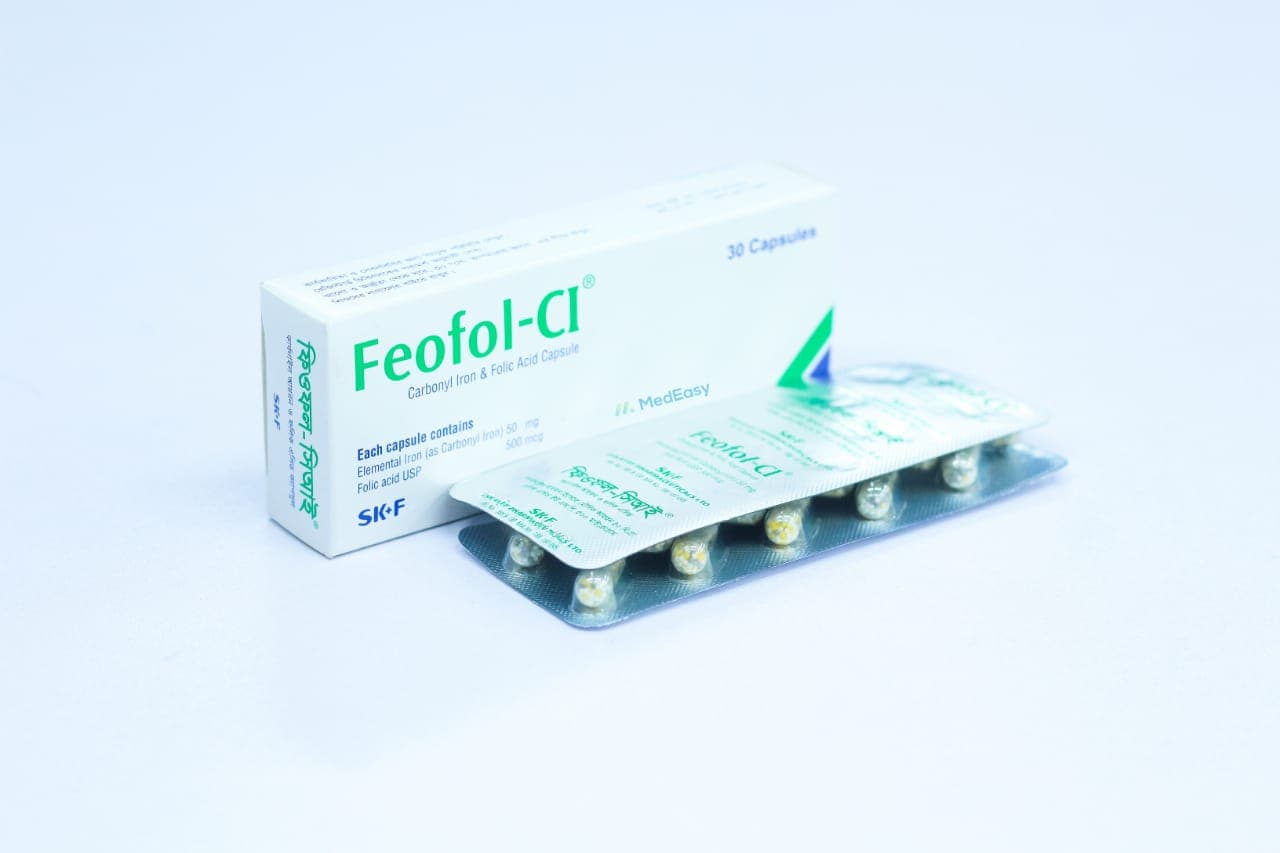

Medicine overview
Indications of Feofol-Cl
Feofol-Cl is indicated for the prevention and treatment of the following conditions:
- Iron-deficiency anemia - established use for treatment and prevention of anemia caused by inadequate dietary iron intake, chronic blood loss, or increased iron requirements.
- Nutritional anemia of pregnancy - guideline-supported use for prevention and treatment of iron and folate deficiency anemia during pregnancy, when requirements for both iron and folate rise substantially.
- Prevention of neural tube defects - the folic acid component supports guideline-recommended periconceptional and antenatal folate supplementation.
- Nutritional supplementation in infancy and childhood - adjunct use for correcting combined iron and folate deficiency in growing children, at appropriately reduced doses.
- Megaloblastic anemia due to folate deficiency - the folic acid component treats folate-deficiency megaloblastic anemia; this combination is not appropriate as sole therapy for anemia caused primarily by vitamin B12 deficiency.
Feofol-Cl is not intended for anemias unrelated to iron or folate deficiency (e.g., hemolytic anemia, thalassemia without deficiency).
Composition
Each formulation of Carbonyl Iron + Folic Acid typically contains elemental iron in the form of carbonyl iron (a highly purified, fine iron powder that is ≥98% elemental iron) combined with folic acid. Common strengths marketed include combinations such as carbonyl iron 100 mg (equivalent to approximately 100 mg elemental iron) with folic acid 1.5 mg or 5 mg, and pediatric drop/syrup formulations with lower per-dose amounts. Exact strength varies by brand and dosage form; refer to the specific product label for exact composition.
Description
Feofol-Cl is a fixed-dose combination hematinic product used to prevent and treat iron-deficiency anemia together with folate deficiency. Carbonyl iron is an elemental iron form manufactured as ultra-fine metallic iron particles; it must be oxidized and dissolved by gastric acid before absorption, which gives it a slower, more controlled release compared with ionic iron salts (such as ferrous sulfate or ferrous fumarate). This is associated with generally better gastrointestinal tolerability and a substantially lower acute toxicity risk in overdose, because absorption is self-limiting. Folic acid, a water-soluble B-vitamin, is required for DNA synthesis and red blood cell maturation. Combining the two allows correction of the two nutritional deficiencies that most commonly co-exist in pregnancy, childhood growth, and chronic dietary insufficiency.
Therapeutic Class
Feofol-Cl belongs to the therapeutic class of hematinics / anti-anemia preparations, specifically the iron and folate combination supplement subclass, used for the management of nutritional (iron and folate deficiency) anemias.
Pharmacology
Carbonyl iron is elemental iron produced by thermal decomposition of iron pentacarbonyl into extremely pure, fine spherical particles. Unlike iron salts, which dissociate immediately in solution, carbonyl iron must first be oxidized by gastric acid and gut secretions to the ferrous (Fe2+) state before it can be absorbed via the divalent metal transporter in duodenal enterocytes. This stepwise, acid-dependent conversion limits the rate of iron release and absorption, which is thought to underlie its comparatively milder gastrointestinal side-effect profile and its markedly reduced acute toxicity if accidentally ingested in excess, compared with ferrous salts of equivalent elemental iron content. Absorbed iron is transported bound to transferrin to the bone marrow for incorporation into hemoglobin, and to storage sites (ferritin, hemosiderin).
Folic acid is reduced in the body to tetrahydrofolate, an essential cofactor for one-carbon transfer reactions required for purine and pyrimidine synthesis, and hence for DNA synthesis and normal erythropoiesis. Folate deficiency impairs nuclear maturation of erythroid precursors, producing megaloblastic changes; folic acid supplementation corrects this defect and supports normal fetal neural tube development when taken periconceptionally.
Dosage & Administration of Feofol-Cl
| Indication | Population | Typical Dose |
|---|---|---|
| Iron-deficiency anemia (treatment) | Adults | 1 tablet/capsule of Feofol-Cl (typically providing ~100 mg elemental iron) once or twice daily, or as directed by the physician, until hemoglobin normalizes; continued for 2-3 months thereafter to replenish iron stores. |
| Prevention of nutritional anemia in pregnancy | Pregnant women | 1 tablet/capsule of Feofol-Cl once daily throughout pregnancy and, where recommended, continued during lactation, as directed by the physician. |
| Iron/folate deficiency in children | Pediatric (weight/age-based) | Pediatric drop/syrup formulations of Feofol-Cl dosed according to body weight and product labeling; consult the specific product insert and a pediatrician for exact volume/frequency. |
Administration: Best taken on an empty stomach (before food) for optimal absorption, but may be taken with food if gastric irritation occurs, understanding that food may modestly reduce iron absorption. Swallow tablets/capsules whole; do not crush unless the product is specifically designed to be chewed or dispersed. Doses of Feofol-Cl should be separated by at least 2-3 hours from antacids, calcium supplements, tetracyclines, fluoroquinolones, and levothyroxine (see Interactions).
Administration of Feofol-Cl
Take Feofol-Cl preferably on an empty stomach, at least one hour before or two hours after meals, with a full glass of water, unless gastrointestinal upset requires taking it with a small amount of food. Avoid taking it at the same time as tea, coffee, milk, calcium, or antacids, as these can reduce iron absorption.
Interaction of Feofol-Cl
Feofol-Cl has the following clinically significant interactions:
- Tetracyclines and fluoroquinolone antibiotics: Iron chelates with these antibiotics, substantially reducing absorption of both the antibiotic and the iron. Separate administration by at least 2-3 hours.
- Levothyroxine: Iron can reduce absorption of levothyroxine, potentially reducing its effectiveness. Administer levothyroxine at least 4 hours apart from Feofol-Cl.
- Antacids and calcium/magnesium salts: Reduce iron absorption when taken concurrently; separate dosing by 2-3 hours.
- Levodopa and methyldopa: Iron may form chelates that reduce absorption and effectiveness of these agents; separate dosing where possible.
- Antiepileptic drugs (phenytoin, phenobarbital, primidone): Folic acid may lower plasma levels of these drugs, potentially reducing seizure control; monitor anticonvulsant levels/seizure control if co-administered long-term.
- Methotrexate and other folate antagonists: Folic acid may reduce the therapeutic/toxic effect of folate-antagonist drugs used for chemotherapy or other indications; use only under specialist guidance in such patients.
Contraindications
Carbonyl Iron + Folic Acid is contraindicated in:
- Known hypersensitivity to carbonyl iron, folic acid, or any excipient in the formulation.
- Iron overload/storage disorders, including hemochromatosis and hemosiderosis.
- Hemolytic anemias and other anemias not due to iron or folate deficiency, where iron/folate supplementation is inappropriate and potentially harmful.
- Undiagnosed anemia where vitamin B12 (pernicious anemia) deficiency has not been excluded, since folic acid can correct the hematologic picture while allowing progression of neurological damage (see Precautions).
Side Effects of Feofol-Cl
Most adverse effects of Feofol-Cl are gastrointestinal and generally milder than with ferrous iron salts due to the controlled-release nature of carbonyl iron:
- Common: mild nausea, epigastric discomfort, constipation, or occasionally diarrhea; dark/black stools (an expected, harmless effect of unabsorbed iron and not a sign of bleeding).
- Less common: vomiting, abdominal cramping, temporary staining of teeth if liquid formulations are not properly diluted/administered.
- Rare: allergic reactions/hypersensitivity to folic acid (skin rash, itching); constipation severe enough to cause fecal impaction, particularly in elderly patients.
Most gastrointestinal effects are dose-related and may improve by taking Feofol-Cl with a small amount of food or by temporarily reducing the dose.
Pregnancy & Lactation
Feofol-Cl is widely used and generally recommended during pregnancy and lactation, as both iron and folate requirements increase substantially during these periods; folic acid supplementation, in particular, is guideline-recommended before conception and during early pregnancy to reduce the risk of neural tube defects. However, supplementation should be guided by a physician to ensure the dose is appropriate for individual nutritional status - use only if clearly indicated, and consult a physician before use, since excessive iron intake without documented need is not advised. During breastfeeding, Feofol-Cl is generally considered compatible, but should still be taken under medical supervision.
Precautions & Warnings
Use Feofol-Cl with caution in the following situations:
- Peptic ulcer disease, active gastritis, or inflammatory bowel disease: iron can worsen gastrointestinal irritation, though carbonyl iron is generally better tolerated than ferrous salts.
- Unexplained anemia: confirm the diagnosis of iron and/or folate deficiency before starting therapy; folic acid can mask the hematologic signs of vitamin B12 deficiency while neurological damage continues to progress, so B12 status should be assessed first when clinically relevant.
- Concurrent medications: see Interactions - separate dosing from tetracyclines, fluoroquinolones, levothyroxine, and antacids by several hours.
- Children: keep out of reach of children - accidental ingestion of iron-containing products is a recognized cause of serious poisoning in young children (see Overdose).
- Hereditary hemochromatosis carriers or family history of iron overload: use only under medical supervision with monitoring of iron status.
Overdose Effects of Feofol-Cl
Acute overdose of Feofol-Cl is generally less toxic than overdose of ferrous iron salts because carbonyl iron's absorption is slow and self-limited by the need for gastric acid oxidation; nevertheless, very large ingestions can still cause toxicity. Symptoms may include nausea, vomiting, abdominal pain, diarrhea, and in severe cases, lethargy, drowsiness, or metabolic disturbances. If overdose is suspected, especially in a child, seek immediate medical attention or contact a poison control center/emergency services right away - do not wait for symptoms to appear. Bring the product packaging when seeking care. Do not attempt specific home treatment; management requires medical assessment and may include supportive care and, if indicated by a physician, chelation therapy.
Storage Conditions
Store at room temperature (below 30°C), away from light and moisture. Keep out of reach of children.
Use In Special Populations
Pediatric use: Feofol-Cl pediatric drop/syrup formulations may be used in infants and children for treatment or prevention of combined iron and folate deficiency, dosed according to body weight per the product labeling and pediatrician guidance. Keep all iron-containing formulations securely out of reach of children, as accidental overdose is a recognized cause of serious pediatric poisoning.
Elderly: No specific dose adjustment is generally required, but elderly patients are more susceptible to constipation and fecal impaction with iron therapy; monitor bowel function and adjust dose or add stool softeners as needed.
Renal impairment: No well-established dose adjustment is required for standard oral hematinic dosing, but iron and folate status should be monitored, particularly in patients with chronic kidney disease who may have altered iron metabolism.
Hepatic impairment: No specific dose adjustment is established; use with routine clinical monitoring.
Duration Of Treatment
Treatment duration for Feofol-Cl depends on the indication: for iron-deficiency anemia, therapy is typically continued for 2-3 months after hemoglobin normalizes to replenish iron stores, guided by follow-up blood counts. For prevention during pregnancy, it is generally continued throughout pregnancy and, where advised, during the postpartum/lactation period. The physician should determine the exact duration based on response and laboratory monitoring.
Drug Classes
Hematinic; Iron supplement (elemental/carbonyl iron); Folic acid (vitamin B9) supplement; Antianemic combination preparation.
Mode Of Action
Carbonyl Iron + Folic Acid works through two complementary mechanisms: carbonyl iron provides elemental iron that, once oxidized and absorbed in the duodenum, is incorporated into hemoglobin to restore oxygen-carrying capacity of red blood cells; its slow, acid-dependent release moderates the rate of absorption compared with iron salts. Folic acid is converted to its active cofactor form, tetrahydrofolate, which is essential for DNA synthesis and normal maturation of red blood cell precursors in the bone marrow, correcting megaloblastic changes caused by folate deficiency.
Pediatric Uses
Feofol-Cl is used in pediatric patients for the prevention and treatment of nutritional iron and folate deficiency, typically via drop or syrup formulations dosed by body weight. Safety and efficacy of specific fixed adult-strength tablet formulations have not been established for use in young children; use only the pediatric formulation and dose recommended by a pediatrician. Iron-containing products must be stored securely, as accidental ingestion by children can cause serious, potentially fatal poisoning.
Frequently Asked Questions
Q: What is Feofol-Cl 50 mg+0.5 mg Capsule used for?
A: Feofol-Cl 50 mg+0.5 mg Capsule is used to prevent and treat iron-deficiency anemia and folate-deficiency megaloblastic anemia, and is commonly recommended during pregnancy to meet increased iron and folate needs.
Q: How should I take Feofol-Cl 50 mg+0.5 mg Capsule?
A: Take Feofol-Cl 50 mg+0.5 mg Capsule preferably on an empty stomach with water, as directed by your physician. If it causes stomach upset, it can be taken with a small amount of food. Avoid taking it with tea, coffee, milk, or antacids, which can reduce absorption.
Q: Is it normal for my stool to turn black while taking Feofol-Cl 50 mg+0.5 mg Capsule?
A: Yes, dark or black stools are a common and harmless effect of unabsorbed iron passing through the digestive tract while taking Feofol-Cl 50 mg+0.5 mg Capsule. This is not a sign of bleeding, but tell your doctor if you notice actual blood or black tarry stools with abdominal pain.
Q: Can I take Feofol-Cl 50 mg+0.5 mg Capsule during pregnancy?
A: Feofol-Cl 50 mg+0.5 mg Capsule is commonly recommended during pregnancy because iron and folate needs increase, and folic acid helps reduce the risk of neural tube defects. However, use only as directed by your physician, since the dose should match your individual nutritional needs.
Q: What should I do if a child accidentally swallows Feofol-Cl 50 mg+0.5 mg Capsule?
A: Accidental iron overdose in children can be serious or even fatal. If a child has swallowed Feofol-Cl 50 mg+0.5 mg Capsule, seek immediate medical attention or contact a poison control center right away, even if the child appears well. Always keep this medicine out of reach of children.
Q: Who should not take Feofol-Cl 50 mg+0.5 mg Capsule?
A: People with iron overload conditions such as hemochromatosis or hemosiderosis, those with known hypersensitivity to iron or folic acid, and those with hemolytic anemias not caused by deficiency should not take Feofol-Cl 50 mg+0.5 mg Capsule unless specifically directed by a physician.
Disclaimer
The information provided is accurate to the best of our knowledge, but it does not replace professional medical advice. We cannot guarantee its completeness or accuracy, and the absence of specific information about a drug should not be taken as an endorsement. We are not responsible for any consequences arising from this information, so please consult a healthcare professional for any concerns or questions.
