10% Off
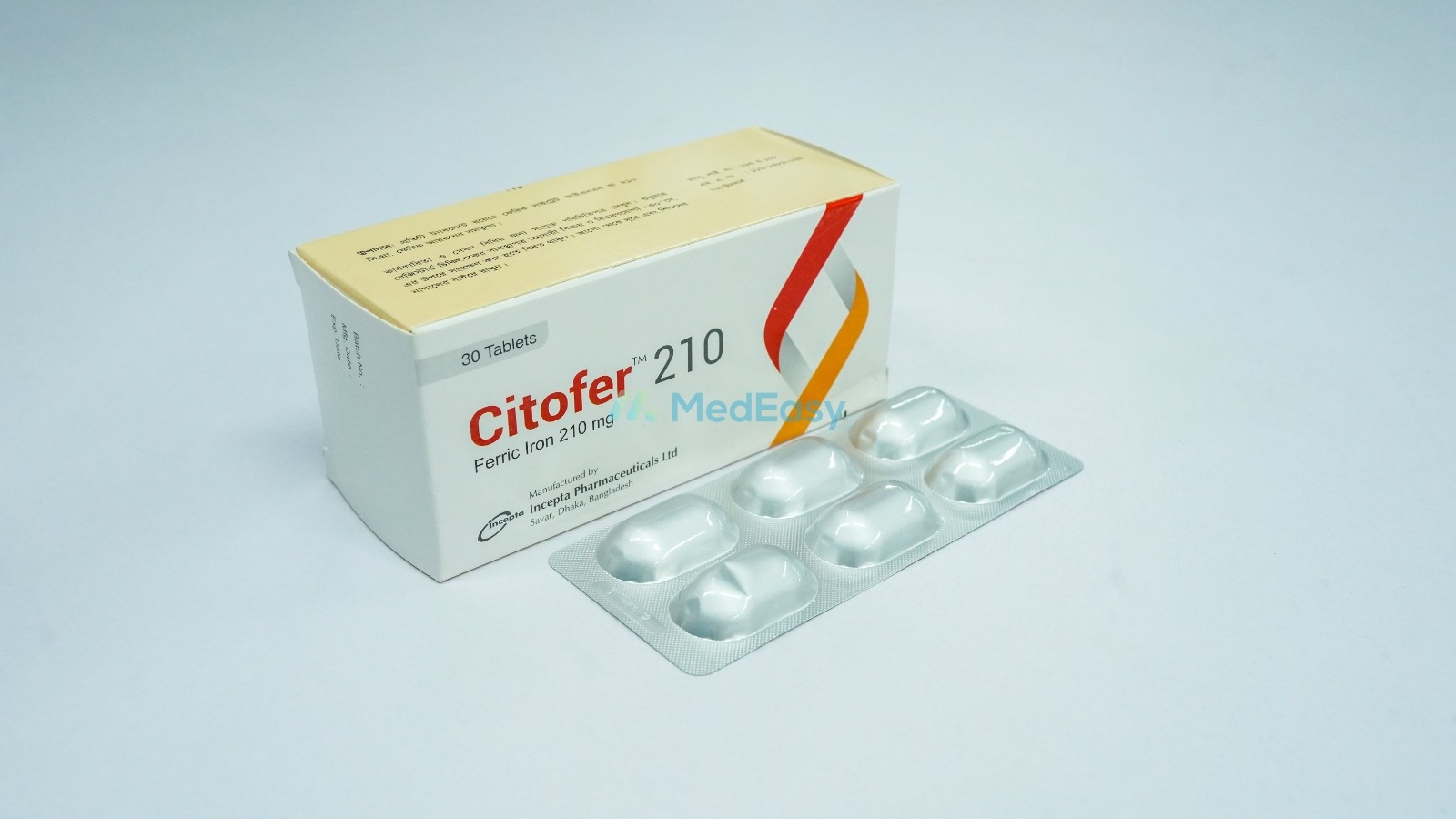
Citofer210 mg
Incepta Pharmaceuticals Ltd.
৳180.00
Add to cart


Fericit has two distinct, FDA-approved indications depending on the clinical context (phosphate control on dialysis vs. anemia treatment off dialysis), and the dosing target differs accordingly (serum phosphorus vs. hemoglobin).
Each film-coated tablet of Ferric Citrate typically contains ferric citrate equivalent to approximately 210 mg of ferric iron (marketed in Bangladesh as 210 mg tablets). The tablet core also contains standard pharmaceutical excipients.
Fericit is an iron-based, orally administered medicine that functions both as a phosphate binder and as a source of absorbable iron. It is a coordination compound of ferric iron and citric acid, presented as a film-coated tablet for oral use.
Fericit is indicated for use in adults with chronic kidney disease, either to control elevated serum phosphorus levels in patients on dialysis, or to treat iron deficiency anemia in patients not yet requiring dialysis.
Phosphate binder (iron-based) and oral iron replacement product; classified within oral iron preparations used in the management of chronic kidney disease-related complications.
In the gastrointestinal tract, the ferric iron component of Ferric Citrate binds dietary phosphate, forming insoluble ferric phosphate complexes. These complexes are not absorbed and are eliminated in the feces, thereby lowering serum phosphorus concentrations in patients with reduced renal phosphate clearance.
A portion of the ferric iron in Ferric Citrate is reduced to the ferrous form and absorbed across the intestinal mucosa. Absorbed iron is bound to transferrin and delivered for incorporation into hemoglobin, increasing serum iron parameters (ferritin, transferrin saturation) and hemoglobin over time.
| Indication | Starting Dose | Titration | Maximum |
|---|---|---|---|
| Hyperphosphatemia in CKD on dialysis | 2 tablets orally three times daily with meals | Adjust in increments of 1-2 tablets/day at intervals of ≥1 week, based on serum phosphorus levels | 12 tablets/day |
| Iron deficiency anemia in CKD not on dialysis | 1 tablet orally three times daily with meals | Adjust in increments of 1-2 tablets/day at intervals of ≥1 week, based on hemoglobin response | 12 tablets/day |
Dose adjustments and monitoring (serum phosphorus for the dialysis indication; hemoglobin, ferritin, and transferrin saturation for the anemia indication) should be guided by a physician.
Fericit tablets should be taken orally with meals, swallowed whole with water. Do not crush or chew the tablets, as this can discolor the teeth and mouth. Consistent administration with each meal helps maximize the phosphate-binding effect and supports steady iron absorption.
Many commonly used medications (e.g., statins, beta-blockers, warfarin) do not require dose separation from Fericit, but any new medication should be reviewed with a physician or pharmacist.
Ferric Citrate is contraindicated in:
The most common side effects of Fericit are gastrointestinal and generally dose-related, often improving with continued use:
Iron overload (elevated ferritin/transferrin saturation) can occur with excessive intake - see Contraindications and Precautions.
Data on the use of Fericit during pregnancy are limited. Fericit should be used during pregnancy only if clearly needed and if the potential benefit justifies the potential risk to the fetus; consult a physician before use.
It is not known whether the iron from Fericit is excreted into human breast milk in clinically significant amounts. Because iron is a normal component of breast milk, caution and physician guidance are advised, particularly regarding maternal iron status, before and during use of Fericit while breastfeeding.
Overdose of Fericit can lead to excessive iron absorption and iron toxicity, as well as pronounced gastrointestinal symptoms. Accidental ingestion by children is particularly dangerous and can be life-threatening.
If an overdose of Fericit is suspected, seek immediate medical attention or contact a poison control center/emergency services right away. Do not attempt specific home treatment; management of iron overdose requires prompt medical assessment and may involve supportive care and, in a hospital setting, specific treatment for iron toxicity under close medical supervision.
Store at room temperature (below 30°C), away from light and moisture. Keep out of reach of children.
Fericit is specifically indicated for use in patients with chronic kidney disease (both on and not on dialysis); dosing is individualized and titrated to disease-specific targets rather than by creatinine clearance.
No well-established dose adjustment is defined for hepatic impairment; use with appropriate clinical monitoring.
No specific dose adjustment is required based on age alone, though elderly patients should be monitored as clinically appropriate.
Safety and efficacy of Fericit have not been established in pediatric patients (see Pediatric Uses).
For control of serum phosphorus in patients on dialysis, Fericit is typically used as ongoing, long-term therapy for as long as dialysis and phosphate control are needed, with dose adjusted periodically based on serum phosphorus levels.
For treatment of iron deficiency anemia in non-dialysis CKD, Fericit is generally continued until hemoglobin and iron parameters reach target levels, with ongoing use and dose reassessed by a physician based on response and iron status.
Phosphate binder (iron-based); oral iron replacement product / oral iron preparation.
Ferric Citrate acts through two related mechanisms: in the gut, its ferric iron binds dietary phosphate to form insoluble ferric phosphate that is excreted in stool, lowering serum phosphorus; separately, a portion of its iron is absorbed, reduced to the ferrous state, and used by the body for hemoglobin synthesis, raising iron stores and hemoglobin in iron deficiency anemia.
The safety and efficacy of Fericit have not been established in pediatric patients, and it is not recommended for use in children. Iron-containing products such as Fericit carry a serious risk of toxicity if accidentally ingested by young children, and all iron-containing medicines should be kept in child-resistant packaging, out of reach and sight of children.
Q: What is Fericit 210 mg Tablet used for?
A: Fericit 210 mg Tablet is used to control high serum phosphorus levels in adults with chronic kidney disease who are on dialysis, and to treat iron deficiency anemia in adults with chronic kidney disease who are not on dialysis.
Q: How should I take Fericit 210 mg Tablet?
A: Fericit 210 mg Tablet should be taken by mouth with meals, swallowing the tablet whole. Do not crush or chew it, as this can discolor the teeth and mouth. Your physician will determine the correct number of tablets based on your condition and lab results.
Q: Will Fericit 210 mg Tablet change the color of my stool?
A: Yes, dark or black stools are a common and expected effect of Fericit 210 mg Tablet due to its iron content, and this is not usually a cause for concern. However, if you have persistent abdominal pain or other concerning symptoms, contact your physician.
Q: Can I take iron supplements while using Fericit 210 mg Tablet?
A: Taking additional oral or intravenous iron together with Fericit 210 mg Tablet increases the risk of iron overload. Your physician will monitor your iron levels (ferritin and transferrin saturation) and adjust treatment as needed; do not add other iron products without medical advice.
Q: Who should not take Fericit 210 mg Tablet?
A: Fericit 210 mg Tablet should not be used by patients with iron overload conditions such as hemochromatosis, or by anyone with a known hypersensitivity to Fericit 210 mg Tablet.
Q: Is Fericit 210 mg Tablet safe during pregnancy or breastfeeding?
A: Data on Fericit 210 mg Tablet use during pregnancy and breastfeeding are limited. It should be used during pregnancy only if clearly needed, when the potential benefit justifies the potential risk to the fetus, and only under medical supervision; the same caution applies while breastfeeding. Always consult your physician.
Disclaimer
The information provided is accurate to the best of our knowledge, but it does not replace professional medical advice. We cannot guarantee its completeness or accuracy, and the absence of specific information about a drug should not be taken as an endorsement. We are not responsible for any consequences arising from this information, so please consult a healthcare professional for any concerns or questions.