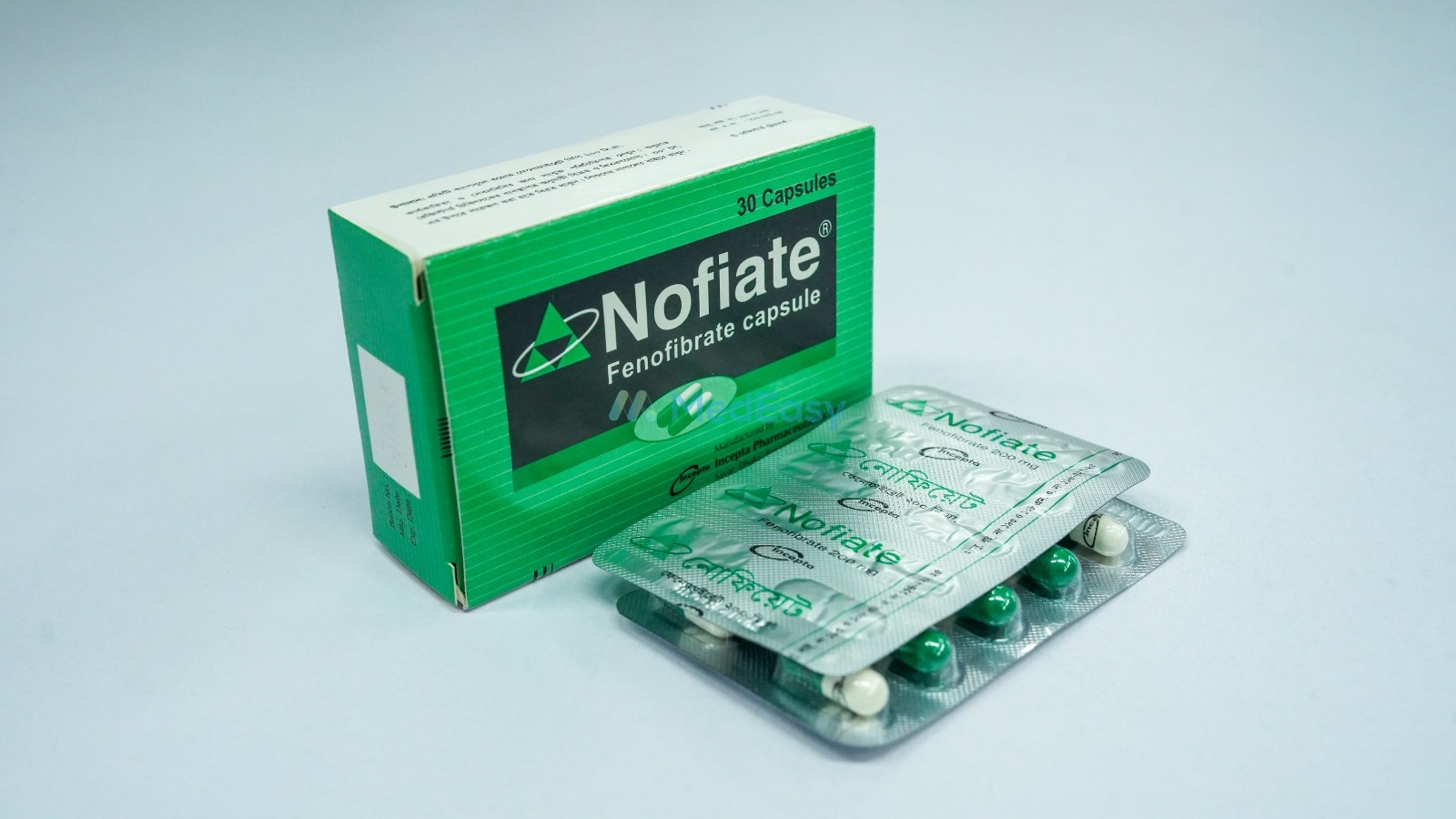
10% Off
Nofiate200 mg
Incepta Pharmaceuticals Ltd.
৳63.00
Add to cart
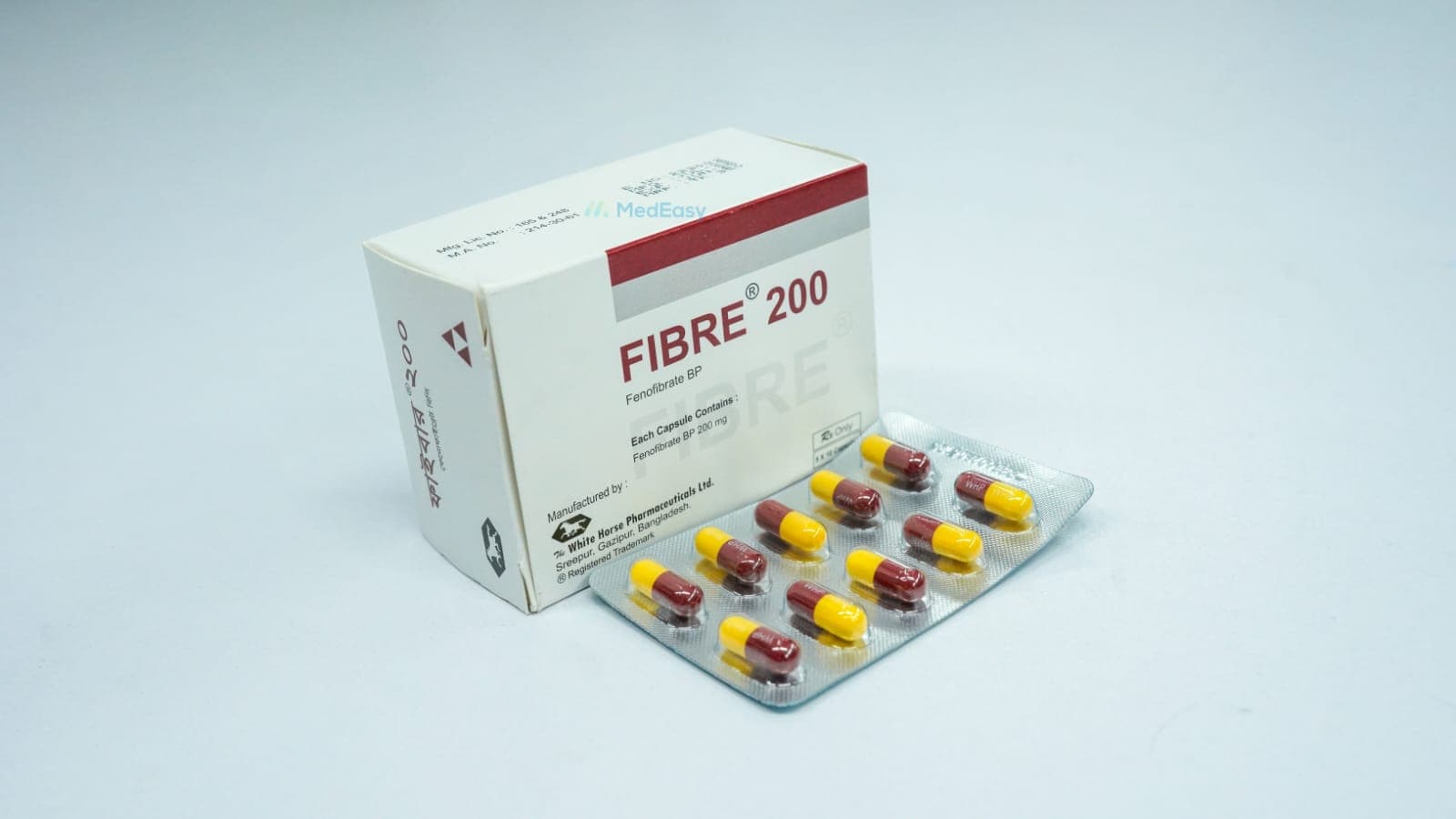

Fibre is a fibric acid derivative (fibrate) used as an adjunct to diet for the management of lipid disorders. Its evidence-based uses include:
Fibre has not been shown to reduce coronary heart disease morbidity or mortality in controlled clinical trials, and it is not indicated to prevent cardiovascular events on its own.
Fibre is an oral lipid-regulating agent belonging to the fibric acid derivative (fibrate) class. It works primarily by activating a nuclear receptor that regulates lipid and lipoprotein metabolism, leading to reductions in triglycerides and LDL cholesterol along with an increase in HDL cholesterol.
It is available in Bangladesh and internationally as capsules and tablets in various micronized and non-micronized formulations, taken once daily, typically with a meal to improve absorption.
Fibre belongs to the fibric acid derivative (fibrate) class of lipid-regulating agents, a group of antihyperlipidemic drugs distinct from statins, bile acid sequestrants, and niacin.
Fenofibrate is a prodrug that is rapidly hydrolyzed by esterases to its active form, fenofibric acid. Fenofibric acid activates peroxisome proliferator-activated receptor alpha (PPAR-α), which increases lipolysis and elimination of triglyceride-rich particles from plasma by activating lipoprotein lipase and reducing production of apolipoprotein C-III. Activation of PPAR-α also induces synthesis of apolipoproteins A-I and A-II, raising HDL cholesterol.
Overall, therapy with Fenofibrate reduces total cholesterol, LDL cholesterol, triglycerides, and apolipoprotein B, while increasing HDL cholesterol. Peak plasma concentrations of fenofibric acid occur several hours after an oral dose; absorption is enhanced when taken with food. Fenofibric acid is highly protein-bound, metabolized mainly by glucuronidation, and eliminated primarily in urine, with an elimination half-life of approximately 20 hours.
| Indication | Typical starting dose | Notes |
|---|---|---|
| Primary hypercholesterolemia / mixed dyslipidemia | ~145 mg once daily (tablet) or ~130–200 mg once daily depending on formulation | Adjust after 4–8 weeks based on lipid response |
| Severe hypertriglyceridemia | ~48–145 mg once daily initially (tablet) or ~67–200 mg once daily depending on formulation | May titrate up to the maximum labeled dose for the product if response is inadequate |
Doses are not interchangeable across different Fibre brands/formulations (micronized vs. non-micronized, tablet vs. capsule) because bioavailability differs; always follow the strength and schedule specified for the exact product dispensed, per physician instructions.
Fibre should be taken with a meal, as food increases the extent of absorption of some formulations. Capsules/tablets should be swallowed whole and not crushed or chewed unless the product labeling states otherwise.
In patients with mild-to-moderate renal impairment (eGFR 30–59 mL/min/1.73 m²), treatment should be initiated at the lowest available dose and increased only after assessing effects on renal function and lipid levels. Fibre should be avoided in severe renal impairment (eGFR <30 mL/min/1.73 m²), including patients on dialysis (see Contraindications).
Use has not been systematically studied in hepatic impairment; avoid use in patients with active liver disease (see Contraindications) and monitor liver function during therapy.
Lipid levels should be monitored periodically; if an adequate triglyceride/cholesterol response is not obtained after about 2 months on the maximum dose, Fibre should be discontinued and alternative therapy considered.
Concomitant use of Fibre with a statin increases the risk of myopathy and rhabdomyolysis. This combination should be reserved for patients in whom the benefit is judged to outweigh the risk, and only under close medical supervision with monitoring for muscle pain, tenderness, or weakness.
Fibre can potentiate the anticoagulant effect of warfarin and other coumarin-type anticoagulants, prolonging prothrombin time/INR and increasing bleeding risk. The anticoagulant dose should be reduced and INR monitored more frequently when Fibre is started, adjusted, or stopped.
Co-administration with cyclosporine or tacrolimus may increase the risk of renal function deterioration; the lowest effective doses of both drugs should be used, with renal function monitored closely.
Resins such as cholestyramine can bind Fibre and reduce its absorption; if co-administered, doses should be separated by at least 1 hour before or 4–6 hours after the resin.
Combined use has been associated with reports of myopathy, including rhabdomyolysis; caution is advised, particularly in elderly patients or those with renal impairment.
Like most medicines, Fibre can cause side effects in some patients, though not everyone experiences them.
Pregnancy: There are insufficient data on the use of Fibre in pregnant women to establish safety. Fibre should be used during pregnancy only if the potential benefit clearly justifies the potential risk to the fetus, and only under a physician's guidance.
Lactation: It is not known whether Fibre or its metabolites pass into human breast milk; because of the potential for serious adverse reactions in a nursing infant, a decision should be made to discontinue nursing or discontinue Fibre, taking into account the importance of the drug to the mother. Many product labels consider breastfeeding a contraindication to use (see Contraindications). Always consult a physician before use during pregnancy or breastfeeding.
Fibre can cause muscle injury, including rare rhabdomyolysis with acute kidney injury. Risk is higher in elderly patients, those with diabetes, renal impairment, hypothyroidism, or when combined with a statin or colchicine. Patients should be advised to report unexplained muscle pain, tenderness, or weakness, particularly if accompanied by fever or malaise; therapy should be discontinued if myopathy is suspected or creatine kinase is markedly elevated.
Dose-related increases in liver transaminases can occur. Liver function should be monitored periodically, and Fibre discontinued if enzyme elevations persist (greater than 3 times the upper limit of normal) or if signs of liver injury develop.
Fibre increases cholesterol excretion into the bile, which may increase the risk of gallstone formation. If gallstones are suspected, gallbladder studies are indicated; if gallstones are found, Fibre should be discontinued.
Reversible increases in serum creatinine may occur. Renal function should be monitored, especially in patients with pre-existing renal impairment; treatment should be interrupted if renal function meaningfully deteriorates.
Pancreatitis has been reported, including in patients with severe hypertriglyceridemia during treatment; consider this if unexplained abdominal pain develops.
Mild decreases in haemoglobin, haematocrit, and white cell count have been observed; periodic blood counts are advisable during the first year of therapy.
There is no specific antidote for Fibre overdose. In case of suspected overdose, seek immediate medical attention or contact a poison control center right away. Treatment is supportive and symptomatic, and may include general measures to reduce further drug absorption if the overdose is recent and the patient presents promptly to a healthcare facility; Fibre is not removed by hemodialysis. Do not attempt to manage a suspected overdose at home.
Store at room temperature (below 30°C), away from light and moisture. Keep out of reach of children.
Dose selection should be cautious, generally starting at the lower end of the dosing range, reflecting the greater frequency of decreased hepatic, renal, or cardiac function and concomitant disease or other drug therapy in this population. Elderly patients are also at higher risk of myopathy.
Use the lowest available dose in mild-to-moderate impairment and monitor closely; avoid use in severe renal impairment/dialysis (see Contraindications).
Not systematically studied; avoid in active liver disease and monitor liver enzymes during use.
Safety and efficacy of Fibre have not been established in patients under 18 years of age; it is not recommended for use in children.
Safety and efficacy of Fibre have not been established in children and adolescents under 18 years of age. Fibre is not recommended for pediatric use outside of specialist care for rare, severe inherited lipid disorders, and only under close physician supervision.
Q: What is Fibre 200 mg Capsule (Micronized) used for?
A: Fibre 200 mg Capsule (Micronized) is used along with diet to treat high cholesterol and high triglycerides (a type of blood fat) in adults, when diet alone has not been enough to control lipid levels.
Q: How should I take Fibre 200 mg Capsule (Micronized)?
A: Take Fibre 200 mg Capsule (Micronized) exactly as prescribed, usually once daily with a meal to help your body absorb it properly. Do not switch brands or strengths on your own, since different Fibre 200 mg Capsule (Micronized) products are not interchangeable.
Q: Can Fibre 200 mg Capsule (Micronized) be taken with a statin for cholesterol?
A: Fibre 200 mg Capsule (Micronized) can sometimes be combined with a statin, but this combination increases the risk of muscle problems (myopathy), including rare but serious muscle breakdown (rhabdomyolysis). This should only be done under close medical supervision, and you should tell your doctor right away about any unexplained muscle pain, tenderness, or weakness.
Q: Is Fibre 200 mg Capsule (Micronized) safe during pregnancy or breastfeeding?
A: There is not enough safety data on Fibre 200 mg Capsule (Micronized) in pregnancy, so it should be used only if your doctor decides the benefit clearly outweighs the potential risk to the baby. Fibre 200 mg Capsule (Micronized) is generally not recommended while breastfeeding because it may pass into breast milk and affect a nursing infant, so most product labels treat breastfeeding as a reason to avoid it; discuss safer alternatives with your physician.
Q: Who should not take Fibre 200 mg Capsule (Micronized)?
A: Fibre 200 mg Capsule (Micronized) should not be used by people with a known allergy to it, severe kidney impairment (including dialysis patients), active liver disease, or pre-existing gallbladder disease/gallstones, and it should not be used by nursing mothers.
Q: What should I do if I take too much Fibre 200 mg Capsule (Micronized)?
A: If you or someone else has taken more Fibre 200 mg Capsule (Micronized) than prescribed, seek immediate medical attention or contact a poison control center right away; do not try to treat an overdose at home.
Disclaimer
The information provided is accurate to the best of our knowledge, but it does not replace professional medical advice. We cannot guarantee its completeness or accuracy, and the absence of specific information about a drug should not be taken as an endorsement. We are not responsible for any consequences arising from this information, so please consult a healthcare professional for any concerns or questions.